Prepaid cards can be a useful tool for managing money, but they often come with a complex mix of fees. Understanding how these fees work before you buy or use a card can help you avoid unpleasant surprises and keep more of your balance available for actual spending.
Why Prepaid Card Fees Matter
Unlike a traditional bank account, a prepaid card is usually not tied directly to a checking account or a line of credit. You load money onto the card and then use that balance for purchases, ATM withdrawals, or bill payments. Because the issuer earns revenue from fees rather than interest or overdraft charges, the fee structure can be extensive.
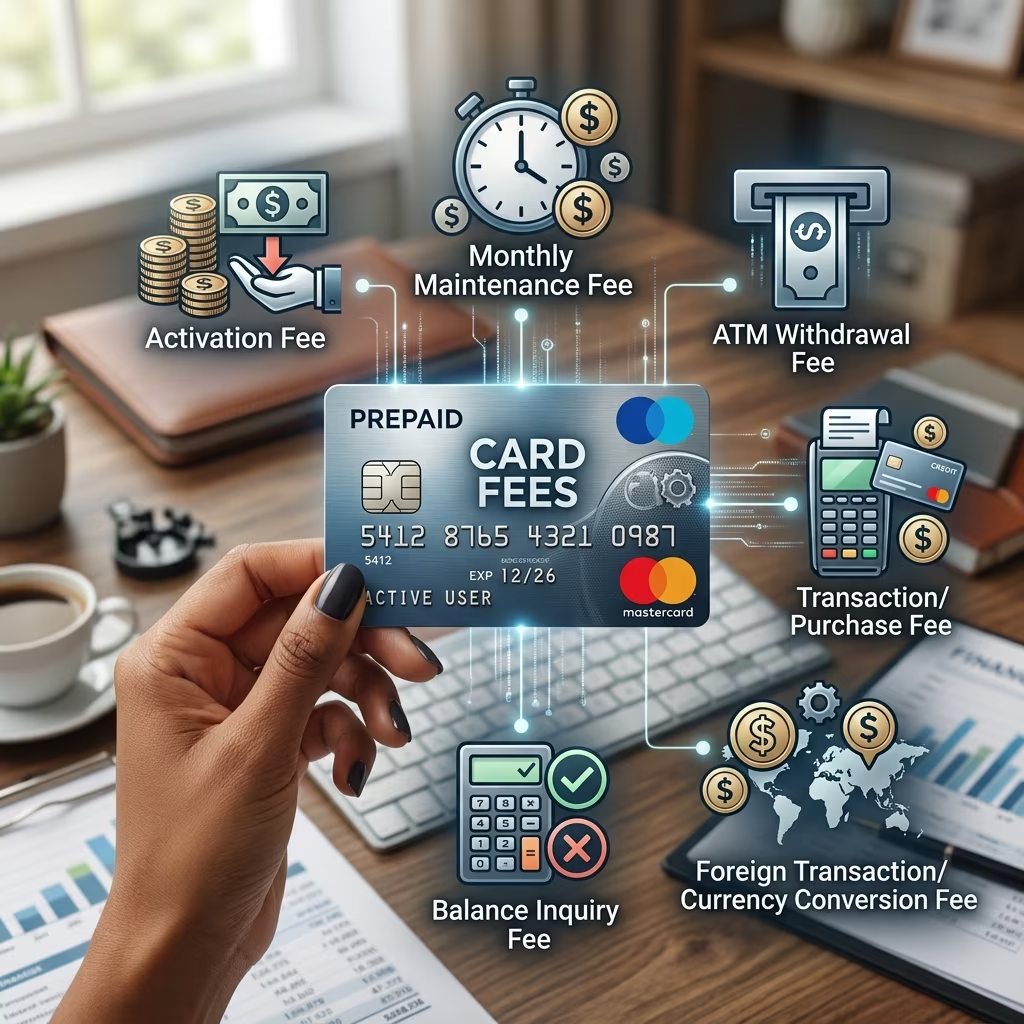
Common prepaid card fees can include charges for:
- Activating a new card
- Monthly maintenance or service
- Per-transaction purchases
- ATM use and cash withdrawals
- Reloading the card with cash
- Account inactivity
- Foreign transactions and currency conversion
- Declined transactions and other penalties
Knowing which fees apply to your card will help you decide whether it is a good fit compared with other payment options, such as a low-cost checking account or a different prepaid card.
Overview: Types of Prepaid Card Fees
Most prepaid cards charge at least some fees for holding or using the card. The amounts and frequency of these fees vary widely by provider and by how you use the card.
| Fee Category | Typical Examples | When It Applies |
|---|---|---|
| Account setup | Activation fee, card purchase cost | When you buy or first activate the card |
| Ongoing maintenance | Monthly service fee, inactivity fee | Monthly or after a period of no use |
| Spending and payments | Per-purchase fee, bill payment fee | Each purchase or bill you pay with the card |
| Cash and reload | ATM withdrawal fee, cash reload fee | When you add cash or withdraw money |
| Transfers and information | Card-to-card transfer fee, balance inquiry fee | Each transfer or certain balance checks |
| Special situations | Decline fee, foreign transaction fee, card replacement fee | When a transaction is declined, done abroad, or card is replaced |
Account Setup and Activation Costs
Some prepaid cards charge you right at the start, while others advertise “no activation fee.” These upfront costs affect how much money you actually have available on the card after purchase.
Activation and Purchase Fees
Activation fees typically apply when you first set up the card, either at a retail location or online. For example, some cards may charge a flat fee to buy the card itself, even if activation is free. Other providers may bundle the purchase price and activation cost into a single fee.
Key points to check before you buy a card:
- Is there a purchase price for the plastic card?
- Is the activation fee separate or included?
- Does the card come preloaded with funds, and does the fee reduce that initial balance?
If you plan to use a card only briefly, paying a high activation fee for a small balance may not make sense compared with other options.
Monthly and Maintenance Fees
Many prepaid cards charge ongoing fees simply for keeping the account open. These can erode your balance even if you rarely use the card.
Monthly Service Fees
A monthly fee is a fixed amount you pay every month to use the card, similar to a maintenance fee on some checking accounts. Some cards may offer ways to reduce or avoid the monthly fee, such as meeting a minimum direct deposit amount.
- Monthly fees can range from a few dollars to around ten dollars or more.
- Over a year, these charges can add up to a substantial amount compared with your card balance.
- Cards that appear inexpensive upfront may still cost more due to higher monthly fees.
Inactivity Fees
An inactivity fee is charged when you do not use your card for a certain period, such as several months. The provider may define “use” as making a purchase, reload, or other qualifying transaction.
- Review how long your card can sit unused before an inactivity fee applies.
- Consider cancelling or cashing out a card you no longer plan to use to avoid recurring charges.
Costs When You Spend or Pay Bills
Prepaid cards can be used to shop in stores, pay online, or settle bills. In some cases, these actions trigger separate fees.
Per-Purchase and Transaction Fees
Some cards charge a fee every time you make a purchase, especially under certain pricing plans. Others may allow unlimited purchases for a flat monthly fee but charge more in other areas.
- Per-purchase fees may apply to in-person or online transactions.
- Fees might differ based on whether you sign for a transaction or use a PIN.
- Cards marketed for frequent use may charge fewer per-transaction fees but more in monthly fees.
Bill Payment Fees
Many prepaid programs offer bill payment services, allowing you to send money to utilities, landlords, or other billers from your card balance. In some cases, providers charge a separate fee for each bill payment.
- Check whether bill pay is free or charged per transaction.
- Compare any bill payment fee with free alternatives, such as paying directly from a bank account.
Reload, ATM, and Cash Access Fees
Getting money onto and off of your card is convenient, but it may come at a cost. Card issuers and third parties often charge for cash reloads and ATM usage.
Reloading the Card
You can usually add money to a prepaid card through direct deposit, cash reloads at retail locations, electronic transfers, or mobile check deposits. Direct deposit is often free, but other methods may involve fees.
- Cash reload fees: Charged when you add cash to the card at a store or agent.
- Third-party fees: Retailers or reload networks may add their own charges.
- Combining reloads into fewer, larger deposits can help reduce total reload costs.
ATM Withdrawals and Balance Inquiries
Prepaid cards often allow cash withdrawals at ATMs. Fees can apply on each withdrawal, and additional fees may be charged by the ATM owner.
- Some cards provide a limited number of free ATM withdrawals, then charge a fee per transaction.
- Balance inquiries may be free at certain ATMs or charged after a number of free checks.
- Using in-network ATMs, if available, can lower or eliminate some fees.
Decline, Penalty, and Special Fees
Beyond the more obvious charges, some prepaid card programs apply fees for declined transactions, negative balances, or account closure. These fees may be less common but still important to understand.
Decline Fees
A decline fee is a charge when a transaction is refused because your card does not have enough money to cover the purchase. Many prepaid cards do not impose decline fees, but some do.
- Decline fees can make an already frustrating situation more expensive.
- Regularly checking your balance can help you avoid declines and related charges.
Negative Balance and Cash-Out Fees
Although prepaid cards are generally designed to prevent spending beyond your balance, certain scenarios can create a small negative amount, which may trigger a fee.
- Small negative balances can arise if delayed transaction amounts are higher than first authorized.
- Providers may charge a fee to clear a negative balance or when you cash out remaining funds.
Card Replacement and Account Closure
If your card is lost, stolen, damaged, or expires, the provider may charge a replacement fee. Cancelling the card is usually free, but you may pay to receive funds by check or other method.
- Consider how easy and costly it is to replace your card in case of loss or theft.
- Review any fees related to closing the account and obtaining remaining funds.
Foreign Transaction and Currency Conversion Fees
Using a prepaid card outside the country or with foreign merchants can introduce extra costs. Foreign transaction fees are typically a percentage of the purchase or withdrawal amount.
- Fees may apply both when a currency conversion occurs and sometimes even when it does not.
- Foreign transaction charges are added on top of any merchant or ATM fees.
- These fees can make prepaid cards less attractive for frequent international travel, especially compared with some bank accounts or credit cards that minimize foreign transaction costs.
How Prepaid Card Fee Disclosures Work
To help consumers compare prepaid cards, rules require that providers disclose important fees and key information clearly on card packaging for retail cards and online for digital purchases. A summary chart typically highlights major fees, and more detailed information is available on a website.
- Packaging should show major costs, such as monthly fees, ATM withdrawal costs, and reload charges.
- A reference website must provide more comprehensive terms and fee details.
- Studying both the summary and full fee schedule before purchase allows you to comparison shop more effectively.
Comparing Prepaid Cards and Minimizing Fees
Choosing a prepaid card should involve more than just grabbing the first option at a store. Comparing fee structures can save you money over time.
Steps to Compare Cards
- Identify how you will use the card: Frequent purchases, occasional ATM withdrawals, or primarily direct deposit.
- Review the fee chart: Focus on monthly, reload, ATM, and foreign transaction fees, as these often have the biggest impact.
- Estimate your annual cost: Multiply monthly fees by 12 and add likely reload and usage fees based on your habits.
- Consider alternatives: A low-fee bank account or another prepaid card may offer better value for your pattern of usage.
Practical Ways to Reduce Fee Impact
- Use direct deposit where possible to avoid cash reload fees.
- Limit the number of ATM withdrawals and choose in-network machines when available.
- Monitor your balance regularly to avoid decline and negative balance fees.
- Avoid long periods of inactivity or close unused cards to prevent inactivity fees.
- Read the full fee schedule before activating the card so you understand all potential charges.
FAQs About Prepaid Card Fees
Are prepaid cards always more expensive than bank accounts?
Not necessarily. Some low-fee prepaid cards may be competitive with basic bank accounts, especially for people who primarily use direct deposit and avoid frequent ATM withdrawals. However, many prepaid cards charge monthly fees and multiple usage fees that can make them costlier over time.
Can I use a prepaid card without paying any fees?
It is uncommon to avoid all fees completely. Some cards offer free activation and optional monthly plans, but you may still face charges for certain reloads, ATM withdrawals, foreign transactions, or special situations like card replacement. The best strategy is to select a card whose fee structure matches your usage and then minimize actions that trigger charges.
How do I find all the fees on my prepaid card?
Look at the card packaging or online description for a summary chart of key fees, then review the full terms and conditions and fee schedule on the issuer’s website. If you already own the card, the fee list may be available in your account documents or mobile app, and customer service can explain any items you do not understand.
Do prepaid cards charge overdraft fees?
Prepaid cards are generally designed to prevent spending more than your balance, so traditional overdraft fees are less common than with bank accounts. However, some programs may offer optional overdraft features or impose fees if your balance becomes negative in specific circumstances. It is important to review the terms carefully.
Is a prepaid card a good choice for travel?
Prepaid cards can be useful for budgeting on trips because you can limit spending to the loaded balance. However, foreign transaction and currency conversion fees can add up for international travel. If you travel frequently, you may want to compare prepaid cards with low-fee credit or debit options that reduce foreign transaction costs.
References
- VISA Prepaid Card Fee Summary — TCT Federal Credit Union. 2024-01-01. https://www.tctfcu.org/visa-prepaid-card-fee-summary
- What types of fees do prepaid cards typically charge? — Consumer Financial Protection Bureau. 2023-08-01. https://www.consumerfinance.gov/ask-cfpb/what-types-of-fees-do-prepaid-cards-typically-charge-en-2053/
- What Is a Prepaid Card and How Does It Work? — Capital One. 2023-04-15. https://www.capitalone.com/learn-grow/money-management/how-do-prepaid-debit-cards-work/
- What is a prepaid card? (How it works + pros and cons) — BILL. 2022-11-10. https://www.bill.com/blog/prepaid-card-for-business
- Gift Card vs. Prepaid Debit Card: What’s the Better Gift? — NerdWallet. 2022-09-05. https://www.nerdwallet.com/banking/learn/gift-card-vs-prepaid-debit-card-whats-the-better-gift