
Understanding Preliminary Hearings in Criminal Cases
A comprehensive guide to navigating preliminary hearings and understanding your rights.
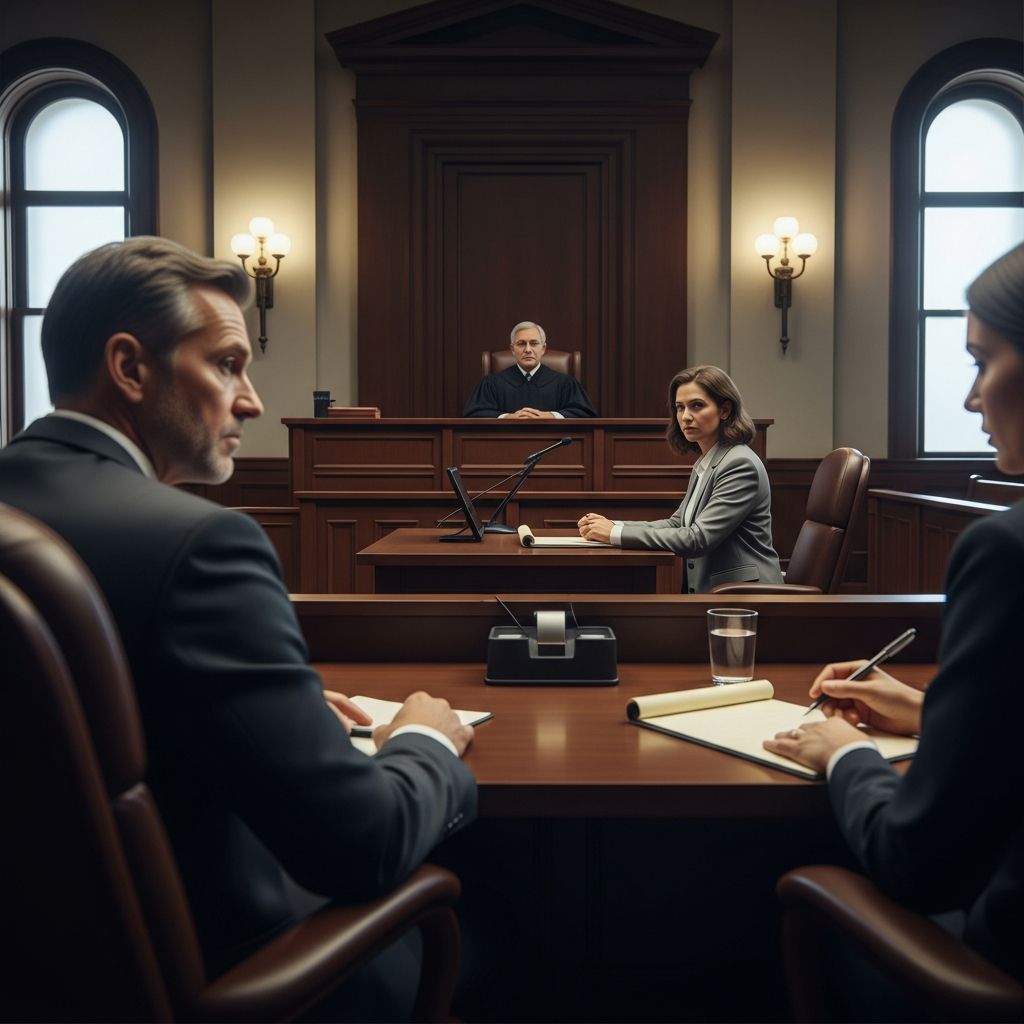
Navigating the Early Stages of Criminal Proceedings
When someone faces criminal charges, the legal journey can feel overwhelming and confusing. One of the most critical early steps in this process is the preliminary hearing, a stage that significantly influences the direction of your case. Understanding what happens during this hearing can help defendants, their families, and anyone involved in the criminal justice system prepare for what lies ahead.
A preliminary hearing serves as a crucial checkpoint in the criminal justice system. Rather than determining guilt or innocence, this hearing focuses on a single, fundamental question: does sufficient evidence exist to proceed with formal charges? This distinction is essential because the preliminary hearing operates under different standards and procedures than a trial.
The Core Purpose of a Preliminary Hearing
At its foundation, a preliminary hearing exists to protect individuals from baseless or insufficiently supported prosecutions. The judge’s role in this hearing is to evaluate whether the prosecution has gathered adequate evidence to establish probable cause—a legal standard requiring reasonable belief that a crime has occurred and that the defendant committed it.
The hearing acts as a filtering mechanism within the criminal justice system. Without this safeguard, individuals could theoretically be forced through the expense and burden of a full trial based on minimal or circumstantial evidence. The preliminary hearing ensures that cases moving forward to trial have met a foundational threshold of evidentiary support.
It’s important to recognize that a preliminary hearing is distinctly different from a trial. The prosecutor doesn’t need to prove guilt beyond a reasonable doubt—the standard required at trial. Instead, they must simply demonstrate that probable cause exists, a substantially lower evidentiary threshold. This distinction fundamentally shapes how evidence is presented and evaluated during the hearing.
When Preliminary Hearings Occur in the Criminal Process
The timing of a preliminary hearing depends on several factors, including the severity of charges and whether a defendant enters a not-guilty plea. Typically, preliminary hearings occur after an initial appearance where formal charges are presented and a plea is entered.
In federal cases, preliminary hearings must be scheduled with specific timeframes in mind. If a defendant is detained in custody, the hearing should take place within fourteen days of the initial appearance. For those released on bail or recognizance, the hearing must occur within twenty-one days of the initial appearance. These timeframes ensure that the process moves forward without unnecessary delays.
Preliminary hearings are not mandatory in all cases. Defendants have the option to waive their right to a preliminary hearing, which can accelerate the case toward trial or plea negotiations. When a waiver occurs, the case typically proceeds directly to arraignment in a trial court, where a trial date is established.
The Structure and Flow of a Preliminary Hearing
Unlike a formal trial with strict procedural requirements, a preliminary hearing operates in a more streamlined and informal manner. The courtroom atmosphere is generally less formal, and the procedural requirements are somewhat relaxed. This doesn’t mean the hearing is casual—it’s still an official court proceeding overseen by a judge or magistrate.
The hearing typically begins with the prosecution presenting its case. The prosecutor outlines the evidence the state believes supports the charges and calls witnesses to establish the foundation for probable cause. After the prosecutor presents evidence, the defense has an opportunity to challenge what has been presented through cross-examination of witnesses and introduction of their own evidence and arguments.
The duration of a preliminary hearing varies significantly depending on case complexity. Some straightforward cases may conclude in thirty minutes, while more complicated matters involving multiple witnesses or extensive evidence can extend for several hours. The judge determines how long the hearing will take based on the amount of evidence and testimony needed to make a determination about probable cause.
Evidence Presented During Preliminary Hearings
The types of evidence introduced during a preliminary hearing vary based on the specific facts of the case, but certain categories commonly appear:
Witness Testimony forms a significant portion of preliminary hearing evidence. Police officers frequently testify about the arrest, investigation procedures, and evidence collected. Other witnesses, including those present at the alleged crime or who have relevant knowledge, may also provide testimony about the events in question.
Physical Evidence such as photographs, weapons, documents, or other material items related to the alleged crime are introduced to support the prosecution’s narrative. Unlike at trial, the rules governing how evidence is presented and admitted are considerably more flexible at the preliminary hearing stage.
Statements and Admissions made by the defendant or other relevant individuals may be presented as evidence. These might include recorded statements, written confessions, or testimony from individuals who heard relevant statements.
An important distinction exists between preliminary hearings and trials regarding the rules of evidence. Evidence that might be excluded at trial due to technical violations or other procedural reasons may be admissible at a preliminary hearing. This flexibility reflects the hearing’s limited purpose—establishing only probable cause rather than proving guilt beyond a reasonable doubt.
The Prosecution’s Strategy and Presentation
The prosecutor’s approach at a preliminary hearing differs from trial strategy. Rather than presenting the most compelling version of events, prosecutors typically present sufficient evidence to meet the probable cause threshold. This often means calling fewer witnesses than might appear at trial and focusing on the most essential evidence rather than the most persuasive evidence.
The investigating officers usually carry much of the evidentiary burden at preliminary hearings. These officers testify about how the investigation unfolded, evidence discovered, and the circumstances leading to the defendant’s arrest. Their testimony often establishes the foundational facts the prosecution needs to demonstrate probable cause.
Prosecutors have discretion in how much evidence they present. They may not need to introduce every witness available or every piece of evidence collected. This strategic choice reflects the understanding that the preliminary hearing bar is relatively low compared to trial requirements.
The Defense’s Role and Opportunities
While the preliminary hearing is prosecution-focused in terms of burden, the defense plays a vital role in challenging the state’s case. The defense attorney has the opportunity to cross-examine prosecution witnesses, attempting to expose weaknesses in their testimony or create doubt about the credibility of the evidence presented.
The defense may also present evidence and call witnesses to rebut or contextualize the prosecution’s case. This doesn’t mean the defense needs to present a complete defense to the charges—they simply need to raise reasonable doubts about the sufficiency of probable cause.
One strategic advantage of the preliminary hearing for the defense is the opportunity to lock in prosecution witnesses’ testimony under oath. If testimony changes later or contradicts statements made at the preliminary hearing, defense attorneys can use the preliminary hearing transcript to challenge credibility at trial.
Participation Requirements for Defendants
The defendant’s presence at the preliminary hearing is generally required. While the defense attorney speaks on behalf of the defendant and handles legal arguments, the defendant’s physical presence demonstrates respect for the court and ensures the right to observe the proceedings.
Failing to appear at a preliminary hearing without valid justification can result in serious consequences, including the issuance of a bench warrant for arrest. This underscores the importance of compliance with court orders and scheduling requirements.
Defendants should work closely with their attorneys before the preliminary hearing to understand what to expect, what evidence will likely be presented, and what the defense strategy will be. While defendants don’t typically testify at their own preliminary hearings, being present and understanding the proceedings is important.
Outcomes and Consequences of the Preliminary Hearing
The judge’s determination at the conclusion of a preliminary hearing carries significant weight. If the judge finds insufficient probable cause, the charges may be dismissed, and the defendant may be released. This represents a favorable outcome for the defense and prevents the case from proceeding to trial.
More commonly, judges find probable cause exists and decide to “hold the defendant to answer” the charges at trial. When this occurs, the case advances to trial court where arraignment is conducted again, and a trial date is scheduled. Generally, trials are set to occur within sixty days of this new arraignment, though felony cases often require extended preparation time.
The preliminary hearing also establishes a record that can influence later proceedings. Information revealed at the preliminary hearing may lead to plea bargain negotiations, as both sides better understand the strength of the prosecution’s case. Some defendants may decide to accept a plea agreement rather than proceed to trial after seeing the evidence presented at a preliminary hearing.
Felony Cases and Enhanced Requirements
Preliminary hearings carry particular significance in felony cases, which involve serious crimes such as assault, robbery, or drug trafficking. Because the potential consequences are severe, preliminary hearings serve as an important safeguard against unjustified prosecutions.
In felony cases, the prosecution must demonstrate that probable cause exists that the defendant committed the specific felony charged and that evidence ties the defendant to the crime. The stakes are higher, making the preliminary hearing a more substantial proceeding than might occur in misdemeanor cases.
Some jurisdictions handle felony charges differently depending on whether they proceed by direct complaint or indictment. If charges arise through grand jury indictment rather than direct complaint, a preliminary hearing may not be required, as the grand jury’s finding of probable cause substitutes for the preliminary hearing.
Strategic Considerations for Defendants
Deciding whether to waive the right to a preliminary hearing involves strategic analysis. While waiving the hearing accelerates the case timeline, it also eliminates the opportunity to test the prosecution’s evidence early and lock in witness testimony.
Defendants should discuss with their attorneys whether proceeding with a preliminary hearing serves their interests. Factors influencing this decision include the strength of the prosecution’s case as understood at that time, the desire to expedite resolution, and the tactical advantages of challenging the prosecution’s evidence early.
Understanding Bail and Custody Decisions
While the primary purpose of a preliminary hearing focuses on establishing probable cause, bail considerations may also arise. If bail hasn’t been set during an initial appearance, it may be addressed during the preliminary hearing or in related proceedings.
The goal of preliminary hearing procedures is to ensure that cases moving forward have adequate evidentiary foundation while also protecting defendant rights throughout the process. Bail decisions help ensure defendant appearance at future proceedings while respecting the presumption of innocence.
Frequently Asked Questions About Preliminary Hearings
Q: Can I be forced to testify at my own preliminary hearing?
A: You have the right to remain silent and cannot be compelled to testify at your preliminary hearing. Your attorney can advise you on whether testifying would benefit your case or potentially harm your interests.
Q: What happens if the judge finds probable cause at the preliminary hearing?
A: If probable cause is found, your case proceeds to trial court for arraignment and trial scheduling. The case moves forward with the charges intact unless you negotiate a plea bargain.
Q: How long does a preliminary hearing typically last?
A: Preliminary hearings can range from thirty minutes for straightforward cases to several hours for complex matters involving multiple witnesses and substantial evidence.
Q: Can I appeal a preliminary hearing decision?
A: If the judge finds probable cause, you cannot appeal that decision directly. However, you proceed to trial where you have full appellate rights if convicted. If charges are dismissed at the preliminary hearing, the prosecution may appeal in certain circumstances.
Q: Is the preliminary hearing public or private?
A: Preliminary hearings are generally public proceedings that anyone can attend, though judges have discretion to limit attendance in certain circumstances involving sensitive matters.
Q: What role does my attorney play at the preliminary hearing?
A: Your attorney presents your interests, cross-examines prosecution witnesses, challenges evidence, may call defense witnesses, and makes arguments about whether probable cause has been established.
References
- What Is a Preliminary Hearing? — Arora Law Firm. https://thearoralawfirm.com/everything-you-need-to-know-about-preliminary-hearings-in-criminal-cases/
- preliminary hearing — Cornell Law School, Legal Information Institute. July 2025. https://www.law.cornell.edu/wex/preliminary_hearing
- Preliminary Hearing — U.S. Department of Justice, U.S. Attorneys. https://www.justice.gov/usao/justice-101/preliminary-hearing
- Arraignment vs Preliminary Hearing: Key Differences Explained — Hirsch Law Group. https://hirschlawgroup.com/arraignment-vs-preliminary-hearing/
- What to Expect During Preliminary Hearings in Criminal Cases — AGH Law. https://www.agh.law/blog/what-to-expect-during-preliminary-hearings-in-criminal-cases/
- What Happens at the Preliminary Hearing? — Lassen County Public Defender. https://co.lassen.ca.us/dept/public-defender/what-happens-preliminary-hearing
- FAQs: What happens at a preliminary hearing? — Maricopa County. https://www.maricopa.gov/Faq.aspx?QID=377
Similar Articles








Read full bio of medha deb




