
Practical Crime Prevention and Support Resources for Victims
A comprehensive, plain‑language guide to staying safer, understanding your rights, and finding trustworthy help after a crime.
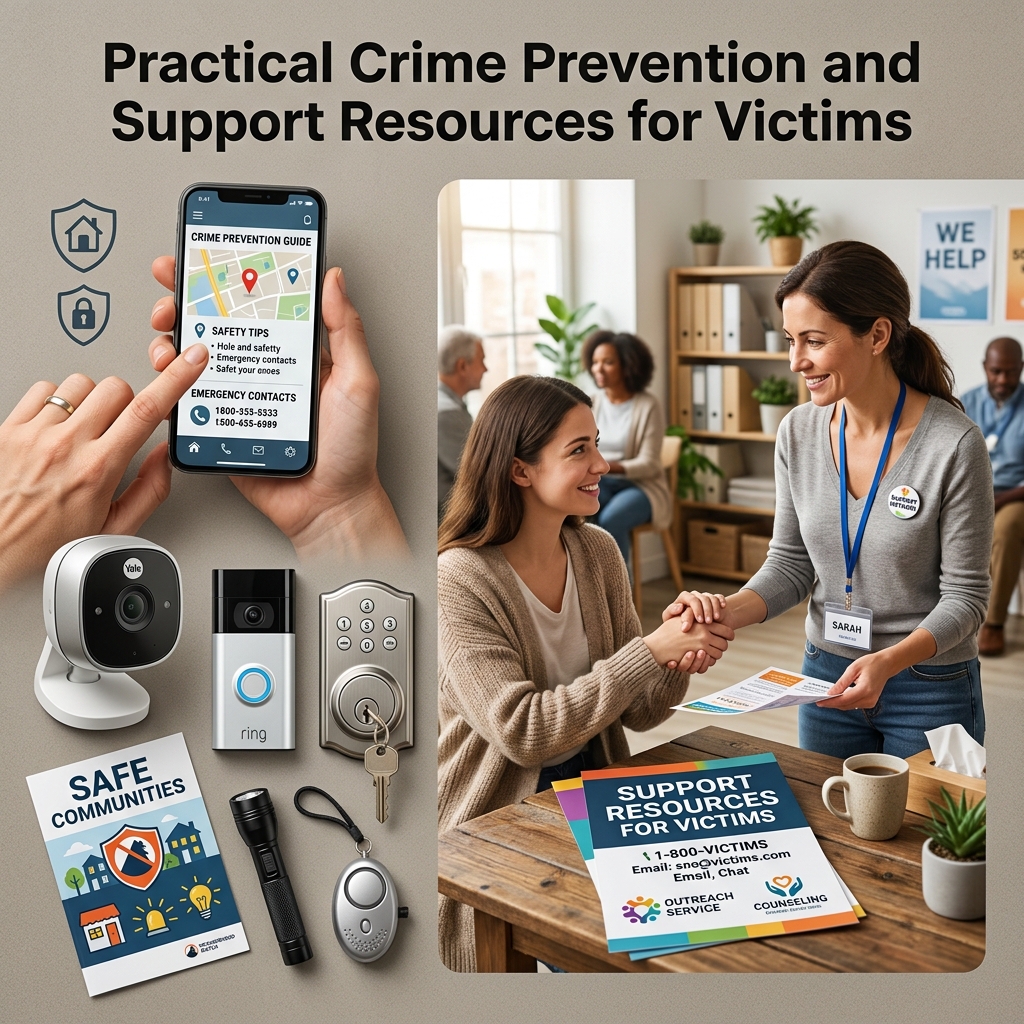
Crime can affect anyone, regardless of age, background, or neighborhood. When it happens, people often feel overwhelmed, unsure where to turn, and uncertain about their rights. This guide explains practical steps for crime prevention, what to do immediately after victimization, and how to find legal, financial, and emotional support using trustworthy public resources.
The information below is designed for everyday readers, not legal professionals. It does not replace advice from a lawyer, but it will help you understand the landscape of services and rights that exist to protect and assist victims of crime.
Understanding Crime Prevention: How Individuals and Communities Reduce Risk
No prevention strategy can guarantee that crime will never occur, but research shows that certain personal actions and community measures can make victimization less likely or reduce its impact. Public safety agencies and victim service programs often emphasize layered approaches to safety, combining physical security, awareness, and community support.
Personal Safety Habits That Make a Difference
Many police departments and victim assistance programs highlight simple, consistent habits rather than one-time actions. These habits focus on awareness, control of personal information, and planning.
- Stay aware of surroundings: Limit distraction in unfamiliar or isolated areas. Keep headphones volume low and avoid focusing entirely on your phone.
- Trust early warning signs: If a situation or person feels unsafe, remove yourself when possible, even if you cannot explain why.
- Control access to your home and vehicle: Use quality locks, secure windows, and avoid leaving keys or access cards in obvious places.
- Protect sensitive information: Be cautious about sharing addresses, daily routines, or financial details, especially online.
- Plan routes and backup options: Know multiple ways home, safe public spaces nearby, and how to reach emergency services quickly.
Digital Safety and Emerging Risks
Modern crimes increasingly involve technology, including identity theft, online harassment, and financial fraud. National victim support organizations note a growing need for basic cybersecurity awareness as part of crime prevention.
- Use strong, unique passwords: Avoid reusing passwords across accounts and enable multi‑factor authentication where available.
- Limit location sharing: Review privacy settings on social media and messaging apps to reduce automatic location disclosure.
- Be skeptical of urgent or threatening messages: Many scams rely on fear and time pressure. Verify requests directly with institutions using official contact information.
- Preserve evidence of harassment: Take screenshots, save messages, and note dates and times. These records can help law enforcement and victim advocates later.
Community‑Level Strategies
Beyond individual behavior, communities play a major role in crime prevention. Public safety agencies and victim support offices emphasize coordinated efforts between residents, law enforcement, schools, and service providers.
- Neighborhood networks: Informal check‑ins, community messaging groups, and neighborhood watch initiatives can increase awareness of suspicious activities.
- Lighting and environmental design: Well‑lit public areas, maintained properties, and clear sightlines can deter certain offenses.
- Partnerships with local services: Collaborations with crisis centers, victim organizations, and mental health providers help address underlying issues that contribute to crime.[10]
- Education programs: Training on domestic violence, sexual assault, bullying, and cybercrime helps community members recognize warning signs and respond safely.[10]
Immediate Steps to Take If You Are a Victim of Crime
After a crime, people often face a mix of shock, anger, fear, and confusion. In this early stage, focusing on safety, medical care, and preservation of evidence is more important than understanding every legal detail. Many victim service offices and law enforcement agencies recommend a structured approach to the first hours and days.
Prioritize Safety and Medical Care
- Move to a safe location: If you are in immediate danger, get to a public place or trusted person and call emergency services.
- Seek medical attention: Even if injuries appear minor, a healthcare professional can document harm and check for hidden issues. Medical records may later support compensation claims.[10]
- Consider forensic exams for certain crimes: In cases such as sexual assault, specialized medical examinations may collect evidence while also addressing health needs. Victim advocates can help you understand these options.
Contact Law Enforcement and Document the Incident
Reporting to police is a personal decision, but it is often necessary to access certain rights, protections, and financial assistance. Offices for victims of crime at state and federal levels encourage reporting when safe and feasible.
- File a police report: Provide as much detail as you can remember, including time, location, participants, and any witnesses.
- Preserve physical evidence: Avoid cleaning or repairing damaged property until law enforcement has documented it, unless safety requires immediate action.
- Save digital records: Keep copies of emails, messages, transaction logs, or social media posts related to the incident.
- Write down your recollection: Early written notes can help you remember specifics later, when you speak with attorneys or victim advocates.
Reach Out to Victim Assistance Programs Early
Many jurisdictions maintain formal victim assistance units within police departments or prosecutor offices, along with independent nonprofit organizations. These programs provide crisis intervention, information, and advocacy.
- Local victim assistance units: Police or district attorney offices often have staff dedicated to supporting victims, including help with safety planning and explaining the justice process.[10]
- State victim services offices: State‑level offices provide information on compensation programs, local resources, and specific protections under state law.
- National hotlines and directories: National organizations maintain databases of local agencies and provide confidential support by phone or online chat.
Key Legal Rights Commonly Available to Crime Victims
Victims’ rights vary by jurisdiction, but many areas recognize core principles: the right to be informed, to be heard, and to be treated with dignity and respect. State offices and national organizations compile summaries of these rights to help victims understand what they can expect from the justice system.
| Type of Right | What It Typically Means |
|---|---|
| Information Rights | Being told about case status, hearings, plea agreements, sentencing, and available services. |
| Participation Rights | Opportunities to attend hearings, give victim impact statements, and provide input on release decisions. |
| Protection Rights | Freedom from intimidation or harassment, and sometimes safety planning or no‑contact orders. |
| Privacy Rights | Limits on disclosure of certain personal information, especially in cases involving vulnerable victims. |
| Compensation and Restitution | Eligibility for state compensation funds and court‑ordered payment from offenders for certain losses. |
State Compensation and Financial Support
Many states operate crime victim compensation programs that can help reimburse certain costs related to violent crime, such as medical care, counseling, and funeral expenses. These programs typically require reporting the crime and cooperating with investigations, subject to specific rules.[10]
- Covered expenses often include: medical and dental care, mental health treatment, some lost wages, and funeral costs.
- Not all losses are covered: Property damage, pain and suffering, and other categories may fall outside compensation rules.
- Application deadlines: Each program sets its own timelines, so contacting the relevant office early is important.
- Help with applications: Victim advocates within state offices or community organizations can assist with paperwork and documentation.
Restitution Through the Criminal Court
In addition to state compensation, courts may order convicted offenders to pay restitution—money intended to cover specific losses directly caused by the crime. Victim assistance programs often help victims understand what documentation supports restitution requests.
Finding Trustworthy Victim Support Organizations
Victims may encounter many offers of assistance, some helpful and some not. Relying on established, reputable organizations helps ensure accurate information, confidentiality, and ethical practices. Government agencies and national nonprofits maintain directories and hotlines for this purpose.
Government‑Affiliated Resources
- Federal victim services: The U.S. Office for Victims of Crime provides information, program funding, and resources for victims of a wide range of offenses, including mass violence.
- State offices of victim services: Many states have dedicated agencies that oversee compensation, local victim assistance, and policy development.
- Local victim assistance units: Police departments and prosecutors’ offices frequently host victim advocates who can connect you with regional services.[10]
Independent and Nonprofit Organizations
Independent victim support organizations complement government programs by offering specialized, often more flexible services. Examples include hotlines, crisis centers, and legal advocacy groups.
- National resource centers: Some organizations maintain searchable databases of local programs, allowing victims to filter by crime type, location, or population.
- Helplines and chat services: Round‑the‑clock hotlines provide confidential emotional support, safety planning, and referrals.
- Issue‑specific agencies: Specialized nonprofits focus on domestic violence, sexual assault, child abuse, stalking, drunk driving, or other areas.[10]
Working with Victim Advocates, Attorneys, and Counselors
Victim assistance is not limited to emotional support—advocates and attorneys help people navigate complex systems, while counselors address trauma and mental health. Coordinating these roles gives victims a stronger foundation for recovery.
Role of Victim Advocates
- Explaining the criminal justice process: Advocates describe what to expect at each stage, from investigation through trial and post‑sentencing.
- Safety planning and referrals: They help assess risks and connect victims with shelters, legal aid, or mental health services.
- Assistance with paperwork: Advocates often support applications for compensation, protection orders, or workplace accommodations.
Legal Representation
While prosecutors represent the government, victims may need their own lawyer for civil claims, restraining orders, or to protect their interests in complex criminal proceedings. National legal and victim organizations emphasize the value of independent counsel in certain situations.
Mental Health and Trauma Support
Crime can trigger anxiety, depression, sleep problems, and post‑traumatic stress. Mental health organizations and victim assistance programs stress that psychological effects are normal responses, not signs of weakness.[10]
- Counseling and therapy: Individual, group, or family sessions can help victims process the experience and rebuild daily functioning.
- Crisis lines: Many regions offer general crisis hotlines and dedicated mental health support numbers.[10]
- Integrating support: Coordinating counseling with advocacy and legal support helps ensure that emotional needs are considered in safety and legal decisions.
Frequently Asked Questions (FAQs)
1. Do I have to report a crime to receive help?
Not always. Some services, such as confidential hotlines, shelters, and counseling programs, are available whether or not you make a formal police report. However, many state compensation programs and certain legal protections require reporting within specific time frames.
2. How can I find reliable victim resources in my area?
Start with government sources and established national organizations. State offices of victim services, local victim assistance units, and national victim resource databases allow you to search by location, crime type, and population.
3. What if I am worried about retaliation or harassment?
Victims typically have rights to be free from intimidation, harassment, or abuse, and courts can issue orders limiting contact. Discuss safety concerns with law enforcement, victim advocates, or attorneys, who can help you explore protection strategies and legal tools.
4. Can I get financial help if the offender is never caught?
In many states, crime victim compensation programs can assist even when an offender is unidentified or not convicted, as long as eligibility requirements are met. These programs are distinct from restitution, which generally depends on a criminal conviction.
5. Is it normal to feel guilty or ashamed after being victimized?
Feelings of guilt, shame, or self‑blame are common reactions to trauma, but responsibility for a crime lies with the person who committed it, not the victim. Mental health organizations and victim support services underline that seeking help is a sign of strength, not failure.[10]
References
- Victim Resources & Rights – Quickly Find Help Now — National Crime Victim Law Institute. 2024-01-01. https://ncvli.org/victim-resources-database/
- Victim Services — City and County of Denver Police Department. 2023-05-10. https://denvergov.org/Government/Agencies-Departments-Offices/Agencies-Departments-Offices-Directory/Police-Department/Programs-Services/Victim-Services
- FBCI: Victims of Crime — U.S. Department of Justice, Office of Justice Programs. 2016-09-01. https://www.justice.gov/archive/fbci/progmenu_voc.html
- Office for Victims of Crime — U.S. Department of Justice, Office of Justice Programs. 2024-02-15. https://ovc.ojp.gov/
- Victim Services — Metro Denver Crime Stoppers. 2022-11-01. https://www.metrodenvercrimestoppers.com/victim-services
- Office of Victim Services — New York State Office of Victim Services. 2023-08-30. https://ovs.ny.gov/
- Office for Victims Programs — Colorado Division of Criminal Justice. 2023-03-20. https://dcj.colorado.gov/dcj-offices/ovp/hmpage
- Victim Assistance — Colorado Attorney General. 2023-07-12. https://coag.gov/resources/victim-assistance/
- National Center for Victims of Crime — National Center for Victims of Crime. 2022-10-01. https://victimsofcrime.org/
Similar Articles








Read full bio of Sneha Tete




