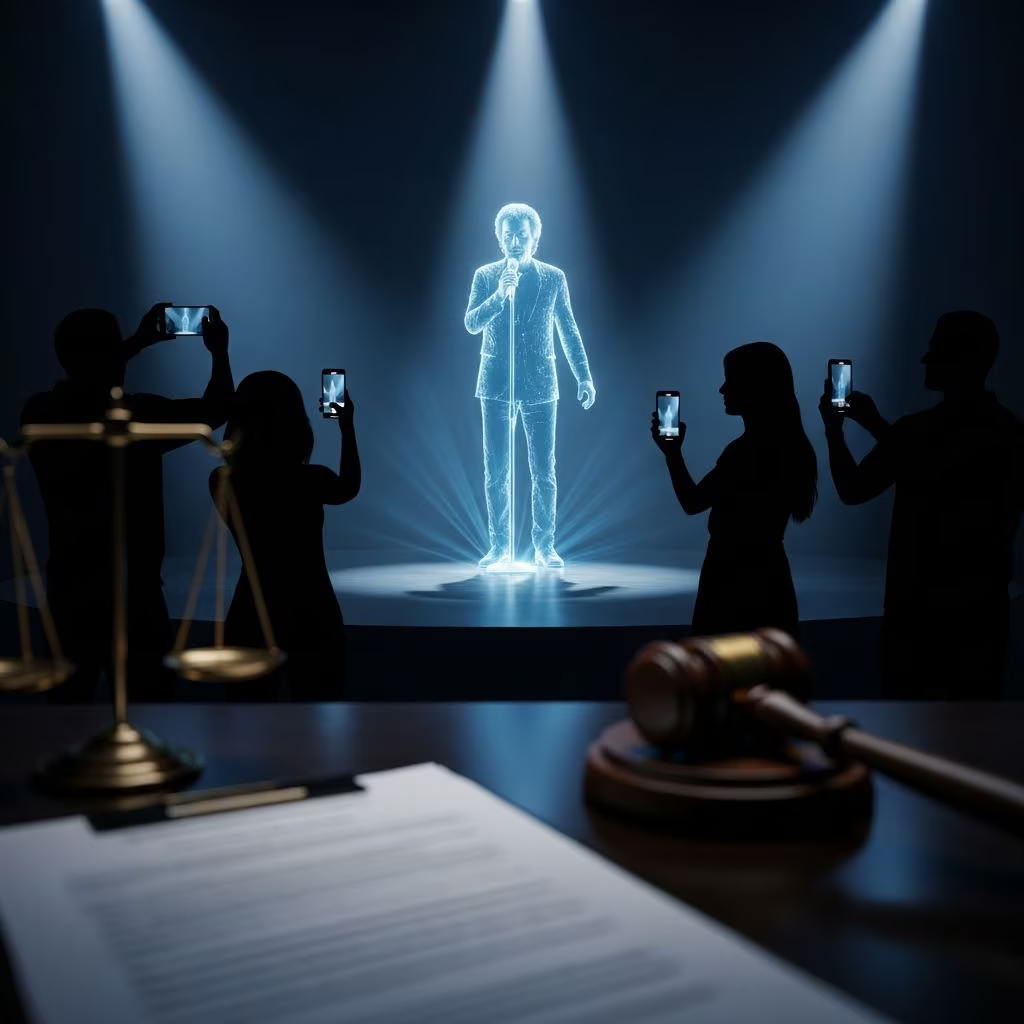
Understanding the Modern Phenomenon of Digital Celebrity Recreation
The entertainment industry has witnessed a remarkable technological shift over the past fifteen years, one that fundamentally challenges our traditional understanding of performance, legacy, and human presence. When audiences witnessed Tupac Shakur perform at the Coachella Music Festival in 2012, decades after his death, the spectacle captured global attention and sparked conversations that extend far beyond simple technological marvel. This moment crystallized a growing trend: the recreation of deceased performers through advanced holographic and artificial intelligence technologies, enabling what many describe as a form of digital immortality.
Today’s holographic performances leverage sophisticated projection systems combined with generative artificial intelligence to create remarkably lifelike recreations of departed entertainers. These digital appearances have evolved from simple novelty acts to full-scale touring productions, complete with original choreography, live interactions with contemporary performers, and even dynamic responses to audience engagement. The technology has become so refined that casual viewers often struggle to distinguish between a live performer and a sophisticated digital projection.
The Technical Foundation Behind Holographic Performance Systems
Modern celebrity holograms operate on principles that trace their ancestry to a 19th-century stage illusion technique known as Pepper’s Ghost. While the underlying optical principle remains fundamentally similar, contemporary implementations have transformed the approach through digital innovation. Current systems utilize advanced projection technology, often employing LED arrays mounted on rotating mechanisms or sophisticated light-modulation devices controlled by specialized computing systems.
These technological systems now incorporate streaming capabilities that enable real-time projection of digital content, moving beyond simple pre-recorded performances to allow for interactive elements and dynamic responses. The visual fidelity achieves such sophistication that companies can create convincing recreations using historical performance footage, voice recordings, and extensive archives of the deceased performer’s work, combined with modern generative AI trained on years of performance data.
The Intellectual Property Dimension of Digital Performers
One of the most significant legal challenges surrounding posthumous holographic performances involves intellectual property rights. The question of who possesses the authority to create, market, and profit from a digital recreation of a deceased performer creates a complex web of competing interests and legal uncertainties.
When a celebrity passes away, their intellectual property rights typically transfer to their estate or designated beneficiaries. However, the specific question of whether a deceased performer’s likeness, voice, and performance style constitute protected intellectual property that only the estate can license remains subject to interpretation across different jurisdictions. Some legal frameworks treat these elements as part of the performer’s image and brand value, while others may classify them differently.
Voice and Performance Recording Rights
The reproduction of a deceased performer’s voice and unique performance mannerisms introduces another layer of complexity. Historical recordings and filmed performances exist as distinct intellectual property, often controlled by record labels, production companies, or the performer’s estate. Creating a new holographic performance might require permissions from multiple rights holders, each possessing different claims to various components of the original performance.
Image and Likeness Protection
Most jurisdictions recognize what is termed the “right of publicity,” which protects individuals’ commercial interests in their own image and likeness. After death, this right typically transitions to the deceased’s estate or heirs, depending on local laws. The critical legal question becomes whether a holographic recreation represents a permissible use of the deceased’s likeness or constitutes an unauthorized exploitation of their image for commercial gain.
Rights of Publicity and Posthumous Authority
The right of publicity presents perhaps the most contentious legal issue in posthumous holographic entertainment. This legal doctrine generally protects an individual’s ability to control the commercial use of their identity, which encompasses their name, image, voice, likeness, and distinctive characteristics. The duration and transferability of these rights after death vary significantly depending on state and national laws.
In the United States, for example, the right of publicity does not consistently persist beyond death in all states. Some states recognize perpetual posthumous publicity rights that transfer to heirs, while others limit such protection to specific time periods. California, home to the entertainment industry and many celebrity estates, recognizes both statutory and common law posthumous publicity rights for approximately seventy years after death. This creates a framework where deceased celebrities’ estates can theoretically control holographic recreations of their clients.
Consent and Ethical Dimensions of Digital Resurrection
Perhaps the most profound legal and ethical challenge involves the question of consent. When a performer dies, they cannot retroactively grant permission for uses of their likeness that may not have existed during their lifetime. This raises fundamental questions about autonomy, dignity, and the appropriate boundaries between innovation and exploitation.
A deceased performer never had the opportunity to contemplate whether they would want their image perpetually resurrected for profit. The technology itself is novel enough that many historical performers could not have meaningfully considered it during their lifetimes. This creates a unique ethical situation where the deceased’s presumed wishes remain unknowable.
Estate Interests Versus Performer Intent
While an estate may possess legal authority to authorize holographic performances, this authority does not necessarily align with what the deceased performer would have chosen. The financial interests of an estate executor or heir may diverge substantially from the performer’s own values, artistic vision, or personal preferences. Legal systems that grant estates broad authority to commercialize deceased performers’ likenesses may inadvertently enable uses that contradict the performers’ actual wishes.
Comparative Legal Frameworks Across Jurisdictions
Different countries approach posthumous rights with varying degrees of stringency. European nations, particularly those influenced by civil law traditions, often provide stronger protections for personality rights and dignity even after death. The European Union’s approach emphasizes protection of personal dignity as a fundamental right that persists beyond death in many contexts.
In contrast, common law jurisdictions such as the United States, United Kingdom, and Canada have developed more fragmented approaches, with significant variations between states and provinces. This lack of uniformity creates opportunities for forum shopping, where production companies might seek jurisdiction in locations offering the most favorable legal treatment for posthumous holographic performances.
Derivative Works and Transformative Use Arguments
Some legal arguments attempt to justify posthumous holographic performances as transformative derivative works. Under this reasoning, a holographic recreation represents a substantially new artistic creation that transforms the original performances into a novel medium, thereby qualifying as fair use or protected transformative use under copyright law. This argument faces significant challenges, however, as courts increasingly recognize that transformative use does not automatically justify the commercial exploitation of another party’s identity and likeness.
Notable Examples and Their Legal Implications
Several high-profile holographic performances have set informal precedents and revealed the patchwork nature of legal protections. Michael Jackson’s 2014 performance at the Billboard Music Awards occurred with authorization from his estate, establishing a model of consensual estate participation. Similarly, Tupac’s 2012 Coachella performance reportedly involved complex negotiations regarding rights and permissions.
However, not all holographic performances have benefited from clear legal authorization. Some recreations have proceeded with ambiguous or contested rights status, creating potential liability for production companies and venues. These situations underscore the urgent need for clearer legal frameworks and standardized approaches to posthumous digital performances.
Emerging Legal and Regulatory Approaches
Lawmakers and legal scholars are beginning to recognize the need for comprehensive frameworks addressing posthumous holographic entertainment. Some jurisdictions have proposed or implemented legislation specifically addressing digital recreations of deceased individuals, requiring explicit prior consent or establishing clear rules regarding estate authority and limitations.
The European Union has explored regulations around deepfakes and synthetic media that could potentially extend to holographic recreations. Meanwhile, industry bodies and entertainment organizations have begun developing voluntary standards and best practices for posthumous digital performances, attempting to establish ethical guidelines even absent comprehensive legal mandates.
Financial Interests and Commercial Considerations
The financial stakes in posthumous holographic entertainment are substantial. Successful touring holograms can generate millions in revenue, creating powerful financial incentives for estates and production companies to authorize performances. This economic dimension intersects problematically with questions of dignity and consent, as financial motivation may drive decisions that prioritize profit over the deceased performer’s presumed values or dignity.
Technological Evolution and Legal Lag
One of the central challenges in regulating posthumous holograms is that legal frameworks consistently lag behind technological capabilities. The law develops through cases, legislation, and precedent, processes that inherently require time. Meanwhile, technology evolves with unprecedented speed, enabling uses that existing legal frameworks never anticipated.
Generative artificial intelligence compounds this challenge by creating the possibility of entirely synthetic performances that incorporate a deceased performer’s stylistic elements without relying on historical recordings. Such performances raise novel questions about whether they constitute unauthorized use of a performer’s likeness and artistic identity.
Frequently Asked Questions
Q: Can a celebrity’s estate legally authorize a holographic performance without the deceased’s written consent?
A: This depends heavily on jurisdiction and specific legal frameworks. In many locations, an estate possesses sufficient legal authority to license posthumous use of a deceased celebrity’s likeness and image, even without prior written consent from the performer. However, some jurisdictions impose additional requirements or recognize competing rights. The answer remains inconsistent across different legal systems.
Q: What protections exist for deceased performers against unauthorized holographic recreation?
A: The protections vary significantly by location. In jurisdictions recognizing perpetual posthumous publicity rights, an estate can generally prevent unauthorized commercial use of a deceased performer’s likeness. However, in regions without such protections or with limited duration of rights, a deceased performer may have minimal protection against unauthorized holographic recreations.
Q: Does creating a holographic performance constitute fair use of archived performances and recordings?
A: This remains legally uncertain. While some argue that creating a holographic recreation represents transformative fair use, courts have shown reluctance to extend fair use protections when the primary purpose is commercial exploitation of a person’s identity and likeness. Each case depends on its specific circumstances and jurisdictional fair use standards.
Q: How do artificial intelligence-generated performances differ legally from holographic recreations using archived footage?
A: AI-generated performances create entirely new content trained on a performer’s existing work, introducing different intellectual property and identity issues than recreations based on historical footage. However, legal frameworks addressing these novel scenarios remain underdeveloped, creating significant uncertainty about permissible uses.
Q: What steps can performers take during their lifetimes to control posthumous holographic use?
A: Performers can include specific provisions in wills, trusts, and estate plans addressing the use of their likeness and image after death. Some performers have explicitly prohibited holographic recreations or restricted authorized uses to specific contexts. However, the enforceability and scope of such provisions depends on jurisdictional law.
References
- Holograms and AI can bring dead celebrities back to ‘life’ — Engadget. 2024. https://www.engadget.com/immortal-hologram-celebrities-chatgpt-ai-deep-fake-back-catalogs-180030493.html
- AI Holograms: Bringing Celebrities Back to Life (Literally) — OmniSearch AI Blog. 2024. https://omnisearch.ai/blog/ai-holograms
- Holograms bringing deceased performers back to life — CGTN. 2024. https://www.youtube.com/watch?v=jpJCXnjvOlA
- How It Works: 13 Famous People Brought Back to Life as Holograms — Interesting Engineering. 2024. https://interestingengineering.com/innovation/how-it-works-13-famous-people-brought-back-to-life-as-holograms
- The Legal Landscape of Posthumous Holographic Performances — Columbia University Journal of Law and the Arts. 2024. https://journals.library.columbia.edu/index.php/lawandarts/announcement/view/700