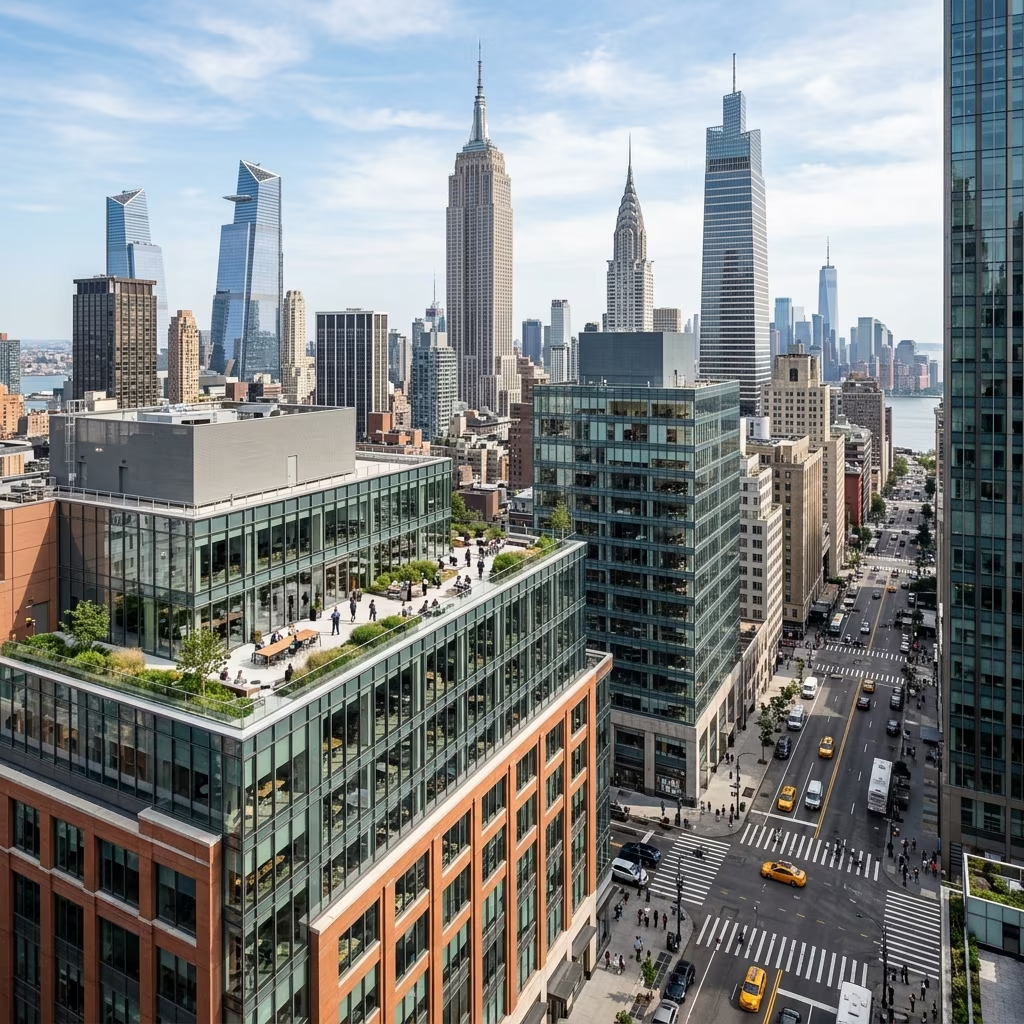
New York City’s commercial centers have undergone one of the most abrupt disruptions in modern history, followed by a complex and uneven recovery. As the immediate health crisis of COVID-19 has receded, office towers, shopping corridors, mixed‑use developments and neighborhood retail strips are all re‑defining their role in the city’s economic ecosystem. For owners, tenants and investors, understanding this new landscape is essential not only to making sound business decisions, but also to navigating the legal and regulatory framework that shapes commercial real estate in New York.
The Landscape of Recovery: Uneven But Advancing
Recovery in New York’s commercial real estate market is not a single story; it is a mosaic of sector‑specific trends, geographic differences and policy responses. Foot traffic in office buildings, for example, has rebounded much more strongly in New York than in many other major U.S. cities, with visits only modestly below pre‑pandemic levels according to mobility analytics data. At the same time, valuations for certain office towers, particularly older or less competitive assets, remain under pressure as hybrid work persists and capital markets reassess risk.
Retail corridors have likewise seen divergent outcomes. Prime locations with strong tourist and commuter flows have attracted new concepts and experiential tenants, while weaker corridors continue to wrestle with vacancies and rent adjustments. Across these segments, the overarching theme is stratification: high‑quality, well‑located assets are stabilizing or growing, while outdated or poorly situated properties face prolonged headwinds.
- Office use: near‑full recovery in physical visits compared to 2019, but with persistent hybrid work patterns.
- Retail: rediscovery of neighborhood shopping and experiential formats; mixed results in older malls and secondary corridors.
- Industrial and logistics: continued strength, driven by e‑commerce and supply‑chain reconfiguration.
- Hospitality: gradual but multi‑year recovery, sensitive to tourism and corporate travel cycles.
Office Markets: High Utilization, Complex Valuations
One of the most discussed questions in the post‑pandemic era is whether the office is “back.” In New York, the answer is nuanced. On the one hand, building visitation metrics show that New York leads the nation in back‑to‑office trends; recent data suggest that office visits are only roughly five percent below their 2019 level, far ahead of other major cities where attendance remains dramatically lower. This signals that employers and employees in New York have embraced some degree of return to physical workplaces.
On the other hand, capital markets tell a different story. Publicly listed landlords with substantial Manhattan office holdings have seen share prices fall below the levels observed during the height of pandemic shutdowns, reflecting investor concern about structural changes in office demand and potential impacts from automation and artificial intelligence on white‑collar employment. Meanwhile, reports focused on New York’s prime office assets show tightening vacancy and rising net effective rents for top‑tier buildings, even as valuations for more generic Class A properties remain significantly below pre‑COVID levels.
| Dimension | Trend | Implication |
|---|---|---|
| Foot traffic | Visits ~5.5% below 2019; leading national recovery. | Strong utilization supports services and retail proximate to office districts. |
| Prime Class A assets | Vacancy approaching single digits; double‑digit rent growth. | High‑quality assets benefit from flight to quality and limited new supply. |
| Older towers | Values below prior slump; investor concern over long‑term demand. | Pressure to reposition, convert or accept lower valuations. |
| Hybrid work | Persistent remote/office mix reduces peak demand. | Flex space, shorter terms and rightsizing strategies become more common. |
Retail and Commercial Centers: Reinvention Over Retreat
Retail and mixed‑use commercial centers experienced severe disruption during the pandemic, particularly in 2020 and 2021, when public health restrictions and shifts to online shopping reduced visitation and sales. Yet the post‑pandemic period has demonstrated that retail is far from obsolete; instead, it is evolving. New Yorkers have returned to stores and restaurants, drawn by the social and experiential aspects that online commerce cannot fully replicate.
At the same time, retail landlords must confront elevated operating costs, changes in consumer behavior and lingering vacancies. Some properties, particularly those with strong transportation access, vibrant streetscapes and complementary uses such as residential and cultural venues, have rebounded briskly. Others, often located in areas that rely heavily on office commuters, continue to recalibrate their tenant mix and rent levels. Economic analyses note that income at many commercial properties is below pre‑pandemic levels, and expenses are higher, contributing to downward pressure on values for a broad swath of assets.
- Neighborhood retail is benefiting from increased local shopping and work‑from‑home patterns.
- Destination centers are focusing on food, entertainment, health and wellness, and other experiential offerings.
- Older enclosed malls and marginal centers face continued challenges and may seek partial repurposing.
- Owners are more actively negotiating percentage‑rent arrangements, flexible lease terms and co‑tenancy protections.
Economic and Policy Drivers: Resilience Meets Structural Constraints
New York’s commercial recovery is occurring against a broader backdrop of urban economic resilience and structural constraints. Citywide employment has grown substantially over the past decade, including the post‑pandemic period, but housing production has lagged, contributing to a pronounced affordability crisis. The result is a paradox: commercial space and transit capacity are not currently constraining growth, because remote work has reduced peak demand, but the housing shortage has become a primary headwind for the city’s economy.
From a fiscal perspective, declining values in certain commercial segments, particularly office properties, have translated into expectations of lower property‑tax revenue compared with pre‑pandemic baselines. Owners of hotels, offices and retail properties are increasingly attentive to how only real estate income, and not business or personal property revenue, should factor into assessments. These economic dynamics influence city policy, zoning debates and the incentives offered for redevelopment and conversion.
Key Policy Responses Affecting Commercial Centers
- Zoning and conversions: Efforts to facilitate the transformation of obsolete offices into housing or mixed‑use projects, including proposals to streamline rezoning and reduce parking requirements.
- Incentives for residential development: Recognition that housing, not commercial capacity, is now the primary constraint has spurred measures to encourage new units, including in commercial districts.
- Assessment and tax relief mechanisms: Processes for owners to seek reduced assessments based on documented declines in income and occupancy, particularly for hospitality and retail assets.
Legal and Leasing Issues in the Post‑Pandemic Era
As physical conditions and market dynamics evolve, the legal framework governing New York commercial centers remains crucial. Owners, tenants and investors must carefully scrutinize leases, financing documents and local regulations to ensure that risk allocations and obligations reflect the realities of a post‑pandemic world.
Leasing Trends and Critical Clauses
Leasing activity has recovered but is more cautious and sophisticated. Tenants, particularly in office and retail settings, seek flexibility in term length, capacity to adapt space, and protections against unforeseen disruptions. Landlords, facing rising costs and uncertain demand, focus on preserving revenue stability and shifting certain risks back to occupants.
Some of the clauses drawing more attention in recent years include:
- Force majeure and business interruption: Parties are revisiting how pandemics, government shutdowns and public‑health emergencies affect rent obligations and performance duties.
- Use and occupancy provisions: With hybrid work and evolving retail concepts, definitions of permitted use, minimum operating requirements and continuous operation covenants are undergoing scrutiny.
- Rent structures: Percentage rents, step‑down or step‑up schedules, and rent abatements tied to performance metrics are more frequently negotiated in centers still stabilizing.
- Co‑tenancy and exclusivity: In multi‑tenant centers, anchor tenant performance and complementary uses have renewed importance; tenants often seek remedies if the overall mix deteriorates.
Property Tax, Valuation and Evidence
Valuation and taxation are pivotal issues for commercial owners. In New York, where real property tax is a major revenue source, the pandemic‑era decline in certain asset classes has prompted both city budget adjustments and property‑specific disputes. Expert analysis points to significant valuation declines for many commercial properties, with income depressed and expenses elevated.
Owners seeking assessment reductions must prepare robust documentation. This often includes historical financial statements, records of tenant vacancies and non‑payment, occupancy statistics, and evidence of pandemic‑related costs. It is also important to distinguish true real estate income from business income or personal property revenue, especially for hotels and retail operations. Legal counsel can play a central role in shaping the evidentiary record and presenting arguments before local assessment authorities or courts.
Conversions and Repositioning: Creating Future‑Proof Commercial Centers
One of the most vital strategies for post‑pandemic recovery is repositioning underperforming assets. In New York, this frequently means converting obsolete office buildings into residential or mixed‑use properties, or reconfiguring retail centers to emphasize uses that are more resistant to online competition, such as dining, entertainment, experiential retail and essential services.
Reports on New York’s real estate market suggest that removing local veto points and speeding up rezoning approvals could make more conversion projects financially viable. Reducing parking requirements and adapting building code provisions to older structures are also part of the policy conversation. For owners, repositioning requires a multi‑disciplinary approach that integrates architectural design, market analysis, legal planning and community engagement.
- Assess whether an asset’s physical layout can support alternative uses, such as housing or medical offices.
- Evaluate zoning, landmark status and environmental constraints early in the process.
- Analyze long‑term demand drivers, including demographic trends and transportation access.
- Engage with experienced real estate counsel to structure transactions, navigate approvals and align with community priorities.
Risk Management and Due Diligence for Investors
Investors examining New York commercial centers in the post‑pandemic era must incorporate both cyclical recovery dynamics and structural shifts into their due diligence. Higher‑quality assets that have shown tightening vacancy and rent growth may offer attractive entry points where pricing remains below replacement cost. However, the context of hybrid work, evolving retail patterns and technological disruption demands a careful assessment of long‑term resilience.
Key considerations include:
- Tenant mix and lease maturity: Concentration risk in specific sectors, and the timeline for lease expirations, can create either stability or volatility.
- Capital structure: Debt maturities, interest rate exposure and lender relationships are central in a higher‑rate environment.
- Physical adaptability: Properties that can be reconfigured for new uses or amenities are better positioned to weather structural changes.
- Regulatory trajectory: Anticipated zoning changes, tax policy shifts and incentives for housing or sustainability improvements may materially impact value.
Practical Steps for Owners and Tenants in New York
For both owners and tenants navigating post‑pandemic New York commercial centers, coordinated planning and professional advice are indispensable. The intersection of market recovery, policy change and legal complexity means that isolated decisions—such as signing a lease renewal or initiating a capital improvement—should be considered within a broader strategic framework.
Action Checklist for Property Owners
- Conduct a detailed financial and occupancy review to benchmark performance against pre‑pandemic levels.
- Evaluate whether current uses and tenant mix align with demand trends and neighborhood characteristics.
- Review leases for risk allocation clauses, including force majeure, operating covenants and rent adjustment mechanisms.
- Explore eligibility for assessment reductions and other relief, supported by comprehensive documentation.
- Assess the feasibility of repositioning or conversion where long‑term demand for existing uses appears weak.
Action Checklist for Commercial Tenants
- Analyze how hybrid work, e‑commerce and supply‑chain changes affect space needs and location strategy.
- Negotiate leases that preserve flexibility, such as options for expansion, contraction or assignment.
- Carefully review operating expense pass‑throughs, maintenance obligations and shared‑cost provisions.
- Seek legal advice on the impact of public‑health regulations, building rules and emergency orders on business operations.
- Consider co‑tenancy and exclusivity protections in multi‑tenant centers, particularly where anchor tenants drive traffic.
Frequently Asked Questions (FAQs)
Is the New York office market fully recovered from the pandemic?
Physical usage in New York’s office buildings has largely returned, with foot traffic only slightly below 2019 levels and stronger than in other major cities. However, the market is stratified: top‑tier assets are performing well and seeing rent growth, while many older or less competitive buildings face continued valuation pressure and higher vacancy.
Are retail centers in New York still struggling?
Conditions vary widely. Prime retail corridors and mixed‑use centers with strong experiential offerings have rebounded, whereas marginal locations and older formats confront elevated vacancies and lower income compared to pre‑pandemic levels. Owners are responding by revising tenant mixes and lease structures to align with new consumer behaviors.
How has remote and hybrid work affected commercial real estate in the city?
Remote and hybrid work reduced peak office demand and slowed leasing in some segments, but New York’s recovery has outpaced other cities. The long‑term impact is a shift in how companies use space—more emphasis on collaboration areas, flexible layouts and optional attendance—rather than wholesale abandonment of offices.
What legal issues should commercial landlords and tenants focus on post‑pandemic?
Parties should pay close attention to lease provisions on force majeure, business interruption, permitted use, operating covenants, rent structures and co‑tenancy. Property tax assessments and valuation evidence have also become more prominent topics, particularly for hotels, offices and retail centers that experienced material income declines.
Is conversion of office buildings to housing a realistic solution in New York?
Office‑to‑residential conversions are a serious policy and market focus in New York, especially given the city’s housing shortage and excess capacity in some office segments. Feasibility depends on building design, zoning, structural conditions and financial considerations, but regulatory reforms aimed at streamlining approvals could make more projects viable.
References
- NYC leads the pack in post-pandemic return to office — New York Post. 2025-05-18. https://nypost.com/2025/05/18/business/nyc-leading-in-back-to-office-after-pandemic/
- NYC Office Recovery: Repricing Physical Infrastructure — AFIRE / RXR. 2024-04-16. https://www.afire.org/summit/nycrecovery/
- NYC’s Post-Pandemic Real Estate Decline — American Property Tax Counsel. 2023-07-10. https://www.aptcnet.com/property-tax-resources/published-property-tax-articles/nyc-s-post-pandemic-real-estate-decline
- NYC’s Post-Pandemic Rebound: Resilience Meets Headwinds — Office of the New York City Comptroller. 2024-05-01. https://comptroller.nyc.gov/reports/nycs-post-pandemic-rebound-resilience-meets-headwinds/
- Will New York Real Estate Recover? — Manhattan Institute. 2021-06-09. https://media4.manhattan-institute.org/sites/default/files/will-new-york-real-estate-recover-AG.pdf
- New Perspective: From Pandemic to Performance — Cushman & Wakefield. 2020-06-25. https://www.cushmanwakefield.com/en/insights/covid-19
- Manhattan office tower values plummet below COVID-era slump — New York Post. 2026-03-06. https://nypost.com/2026/03/06/real-estate/manhattan-office-tower-values-plummet-below-covid-era-slump-amid-fears-ai-will-wreak-a-white-collar-bloodbath/