
Police Reports After an Accident: How to Get Them and Use Them
Learn how accident police reports are created, requested, and used in insurance claims and personal injury cases, plus how to correct mistakes.
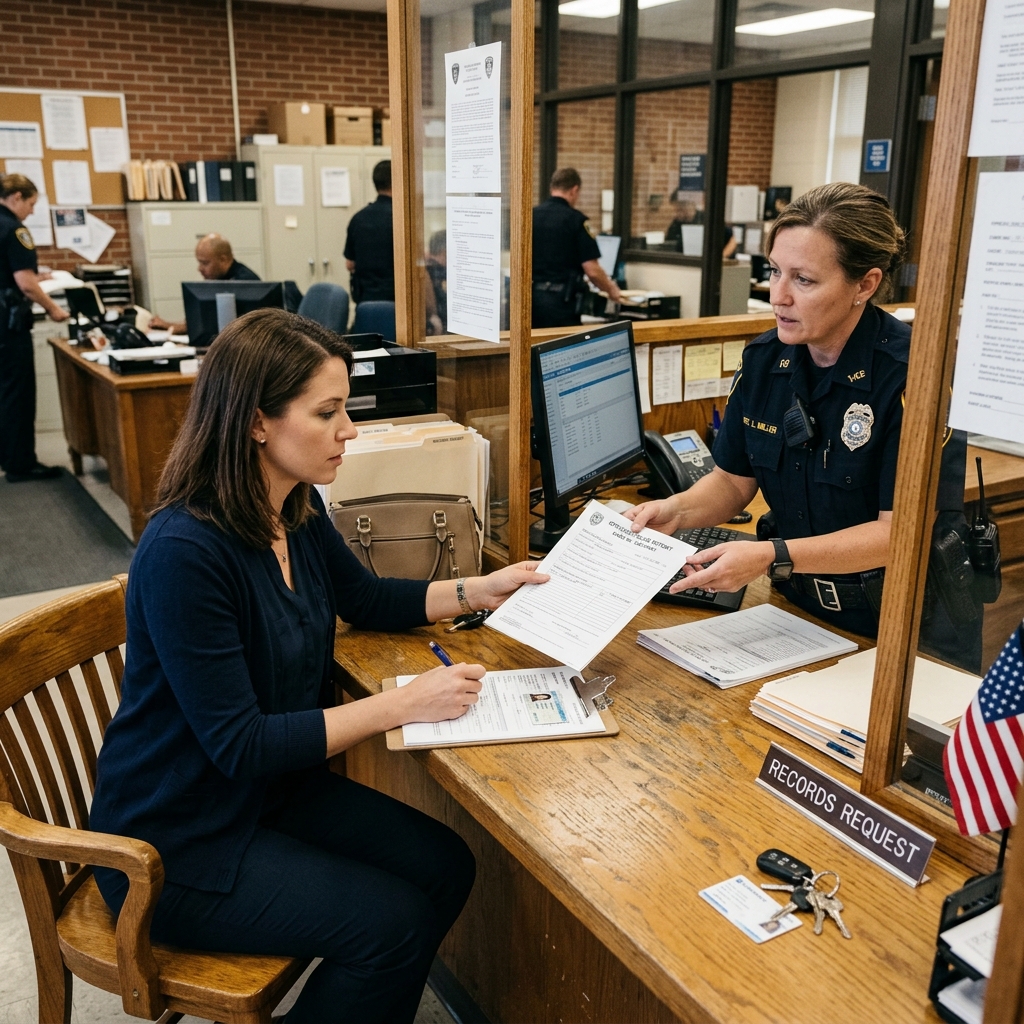
After a traffic crash or other serious incident, a police report often becomes one of the key documents shaping insurance decisions and legal outcomes. Understanding how these reports are created, how to obtain them, and how they are used can help you protect your rights and avoid costly mistakes.
What Is an Accident Police Report and Why It Matters
An accident police report is an official document prepared by law enforcement that records important details about a crash or incident, typically including the date, time, location, parties involved, vehicles, injuries, property damage, witness information, and the officer’s observations.
Although the format varies by jurisdiction, most reports serve several important functions:
- Documentation of the event – It creates a contemporaneous record of what happened and who was involved.
- Support for insurance claims – Insurers routinely review police reports when evaluating liability and coverage.[10]
- Evidence in legal cases – Lawyers frequently use reports to identify witnesses, reconstruct events, and support or challenge claims of fault.
- Public safety data – Agencies use aggregated crash reports for statistical analysis and policy decisions.
How Police Reports Are Created After a Crash
While each agency has its own procedures, the basic process of creating a traffic crash report is similar across many jurisdictions.
Response at the Scene
When officers respond to an accident, they typically perform several steps:
- Secure the scene to prevent additional collisions or hazards.
- Check for injuries and coordinate emergency medical assistance if needed.
- Gather information from drivers, passengers, and witnesses, including identification and contact details.
- Observe and document visible damage, skid marks, traffic signals, weather, and road conditions.
- Take photographs or note diagrams of the vehicles’ positions and the scene layout, where policy permits.
After these steps, the officer completes an official crash report back at the station or electronically in the field, assigning a report or case number that will later be used to retrieve the document.
Self-Reported Crashes
Not every accident results in a full police investigation at the scene. In some jurisdictions, drivers may file a self-report for minor crashes where officers do not respond, or where only property damage is involved.
Drivers in these situations may be asked to submit a standardized form—often available through a state highway safety or motor vehicle agency—detailing the circumstances of the collision, vehicles involved, and any resulting damage.
Key Information Typically Found in a Police Report
While the exact layout depends on the jurisdiction, most accident police reports contain similar categories of information.
| Report Section | Common Contents | Why It Matters |
|---|---|---|
| Basic crash details | Date, time, location, road type, weather, lighting. | Helps reconstruct conditions and timeline of the accident. |
| Parties involved | Names, contact details, driver’s license numbers, vehicle information, insurance details. | Identifies all participants and their insurers for claims and legal notices. |
| Injuries and damages | Apparent injuries, emergency transport, visible property damage. | Supports claims for medical bills and repairs; may influence fault allocation. |
| Witness information | Names, contact details, brief summary of statements. | Provides independent accounts that can corroborate or dispute driver narratives. |
| Officer narrative | Description of what the officer observed and conclusions drawn. | Often consulted by insurers and attorneys when evaluating liability. |
| Citations or charges | Traffic violations or criminal charges issued at the scene. | May strongly influence fault assessments, though they are not conclusive in civil cases. |
How and When You Can Obtain a Police Report
Obtaining a copy of an accident report usually requires contacting the agency that created it or the relevant state crash-report system. Many jurisdictions also have rules limiting who can access reports and when.
Typical Waiting Periods and Confidentiality Rules
In some states, accident reports are considered confidential for a period after the crash—often around 60 days—during which access is restricted to parties directly involved, their representatives, and certain agencies.
For example, in Florida, traffic crash reports are available to authorized parties during an initial confidentiality period and can be purchased through the state crash portal for a statutory fee per report. After the confidentiality period expires, the reports may become public records, available to anyone upon request.
Common Ways to Request a Report
Across jurisdictions, the following methods are widely used to request accident reports:
- Online portals – Many states or counties provide web-based systems to purchase or download crash reports after identity verification and payment of any required fees.
- In-person requests – You can visit a records unit or police station, provide identifying information (such as the report number or date and location of the crash), show ID, and pay copy fees.[10]
- Mail or email requests – Records divisions often accept written requests with enough details to locate the report, payment, and sometimes a self-addressed stamped envelope.
- Through your attorney or insurer – Lawyers and insurance companies routinely obtain police reports as part of claim handling and may provide copies to you.
When requesting a report, you generally need to supply at least some of the following:
- Report or case number, if you received it at the scene.
- Date and approximate time of the crash.
- Exact or approximate location of the incident.
- Your name and, in some cases, proof that you were involved in the accident.
Fees and Costs Associated With Police Reports
Police reports are often subject to statutory fees and copy charges. For example, one state’s highway safety department charges a fixed fee per report, plus any convenience fees for online transactions.
Local agencies may also charge per page for certified or non-certified copies when reports are requested in person or by mail. These fees are typically modest, but they can add up if multiple reports or certified copies are needed.
In many accident claims, your insurer or attorney may already have obtained the report and can provide a copy at no additional cost to you, which may be quicker than navigating the request process yourself.
How Insurers and Courts Use Police Reports
Police reports play a significant role in how accidents are evaluated, but it is important to understand their limits.
Use by Insurance Companies
Insurance adjusters frequently review police reports as part of their investigation into a claim. They may rely on the report to:
- Verify the basic facts of the crash: time, location, parties, and vehicles involved.
- Identify witnesses and obtain more detailed statements.
- Assess apparent fault based on officer observations and any citations issued.
- Confirm whether injuries and property damage were documented at the scene.
The report may influence how quickly and favorably a claim is processed, but insurers can and do conduct their own investigations, especially when the facts are disputed or the damages are substantial.
Use in Legal Proceedings
In civil litigation, police reports can serve several purposes:
- Starting point for investigation – Lawyers use reports to identify potential witnesses, involved vehicles, and the timeline of events.
- Evidence of observations – The officer’s descriptions of the scene may support arguments about speed, visibility, or roadway hazards.
- Reference for expert analysis – Accident reconstruction experts often rely on report data such as measurements, diagrams, and photographs.
However, police reports are not automatically admitted as evidence in every case. Rules of evidence vary, and portions of a report—such as the officer’s conclusions about fault—may be excluded or heavily scrutinized. The report is only one piece of the broader evidentiary picture.
Limitations and Possible Errors in Police Reports
Although police reports are important, they are not infallible. Several factors can lead to incomplete or inaccurate information:
- Witnesses may be unavailable or reluctant to speak at the scene.
- Injured parties may be unable to give detailed statements immediately.
- Weather, traffic, and safety concerns can limit how long officers spend investigating.
- Complex multi-vehicle crashes may be difficult to fully reconstruct on the spot.
Mistakes can occur in transcribed names, insurance details, vehicle information, or the description of events. Because these errors can affect how insurers and others view the accident, it is important to review the report carefully once you obtain a copy.
How to Review and Correct a Police Report
Once you receive your report, set aside time to read it line by line. Compare the document to your own records, photographs, and recollection of events.
Steps to Review the Report
- Confirm personal details – Check spelling of names, addresses, phone numbers, and insurance information.
- Verify vehicle data – Ensure license plate numbers, VINs, and make/model details are correct.
- Check the timeline – Confirm the reported date, time, and location of the crash.
- Compare narrative to your recollection – Note any significant discrepancies in the officer’s description of events.
- Identify missing information – Look for omitted witnesses, overlooked damages, or lack of injury notation.
Requesting Clarifications or Amendments
If you discover factual errors—such as a mis-typed license plate or wrong insurance policy number—you may be able to request a correction or supplemental report from the agency that created the document. Procedures vary, but often involve:
- Contacting the records unit or the officer who prepared the report.
- Providing documentation supporting the correction (e.g., registration, insurance cards).
- Submitting a written request for an amended report or clarification.
For disputes about how the crash occurred or who was at fault, formal amendment may be harder to obtain. In those situations, your attorney can help present additional evidence and arguments to insurers and courts, emphasizing that the report is only one perspective.
Practical Tips for Protecting Your Rights
Actions taken immediately after an accident can make a significant difference in how accurate and useful the eventual police report will be.
- Call law enforcement when appropriate – If there are injuries, significant property damage, or uncertainty about what to do, contacting the police helps ensure an official record is created.
- Collect your own evidence – Take photographs of vehicles, the roadway, traffic signals, and any visible injuries. Obtain contact details from witnesses in case they leave before speaking to officers.
- Provide accurate information – Be truthful and precise when describing what happened, but avoid speculating about facts you do not know.
- Ask for the report or case number – Before leaving the scene, request the identifying number you will need to obtain the report later.
- Follow up promptly – Make note of when the report will likely be available and request a copy as soon as practical, especially if you are pursuing an insurance claim or legal action.
Frequently Asked Questions About Accident Police Reports
Do I really need a police report for a minor accident?
For minor fender-benders with no injuries and minimal damage, some jurisdictions do not require officers to respond or a formal report to be filed. Still, having a report can help resolve disputes later, especially if the other party changes their story or denies involvement. When in doubt, you can contact local law enforcement or a non-emergency number for guidance.
How long does it take for a report to become available?
Timing varies widely. In many places, reports are available within several days, while some agencies advise that it may take up to 10 days for traffic crash reports to be processed and ready for release.[10] Checking with the specific agency that handled your accident will provide the most accurate timeframe.
Who is allowed to access a crash report?
Access rules depend on state law. Authorized parties commonly include drivers and passengers involved in the crash, their legal representatives, insurers, and certain government agencies during any confidentiality period. After that period ends, reports may become public records open to broader requests, though sensitive information can be redacted.
Can I get the report online?
In many jurisdictions, yes. State highway safety or motor vehicle departments often host crash-report purchasing portals, and some local agencies use third-party platforms to deliver reports electronically. You will typically need the report number, crash details, and a payment method.
What if the officer’s version of events doesn’t match mine?
If you disagree with the narrative or conclusions in the report, document your account in writing and share it with your attorney or insurer. While factual errors can sometimes be corrected by the agency, disagreements over fault are usually addressed through the claims process, negotiations, or court proceedings rather than report amendments. The police report is influential, but it is not the final word.
Can a police report be used against me in court?
Portions of a police report may be referenced or used in court, subject to the rules of evidence applicable in your jurisdiction. Statements you made at the scene, documented observations, and citations can all be relevant. Legal counsel can explain how the report may affect your case and what strategies are available to address any unfavorable aspects.
References
- Traffic Crash Reports — Florida Department of Highway Safety and Motor Vehicles. 2024-01-01. https://www.flhsmv.gov/traffic-crash-reports/
- Buy Florida Crash Reports — Florida Department of Highway Safety and Motor Vehicles Crash Portal. 2024-01-01. https://services.flhsmv.gov/crashreportpurchasing/
- Records — Miami-Dade County. 2023-06-15. https://www.miamidade.gov/global/service.page?Mduid_service=ser1470774597039291
- Frequently Asked Questions — Miami Gardens Police Department. 2023-05-10. https://www.miamigardenspolice.org/faq.aspx?TID=59
- Requesting a Crash Report — City of Miami Springs Police Department. 2023-04-01. https://www.miamisprings-fl.gov/police/page/requesting-crash-report
- How Can I Get a Copy of My Car Accident Report in Miami, Florida? — Miami Car Accident Lawyers. 2022-11-20. https://www.miamicaraccidentlawyers.net/faqs/how-can-i-get-a-copy-of-my-car-accident-report-in-miami-florida/
- How Do I Obtain a Police Report for a Car Accident in Florida? — Bogin, Munns & Munns. 2022-10-10. https://www.boginmunns.com/faqs/how-to-obtain-a-police-report-for-a-car-accident-in-florida/
Similar Articles








Read full bio of medha deb


