
Police Powers in High-Speed Vehicle Pursuits
Exploring legal boundaries, tactics, and risks of police high-speed chases to protect public safety and rights.
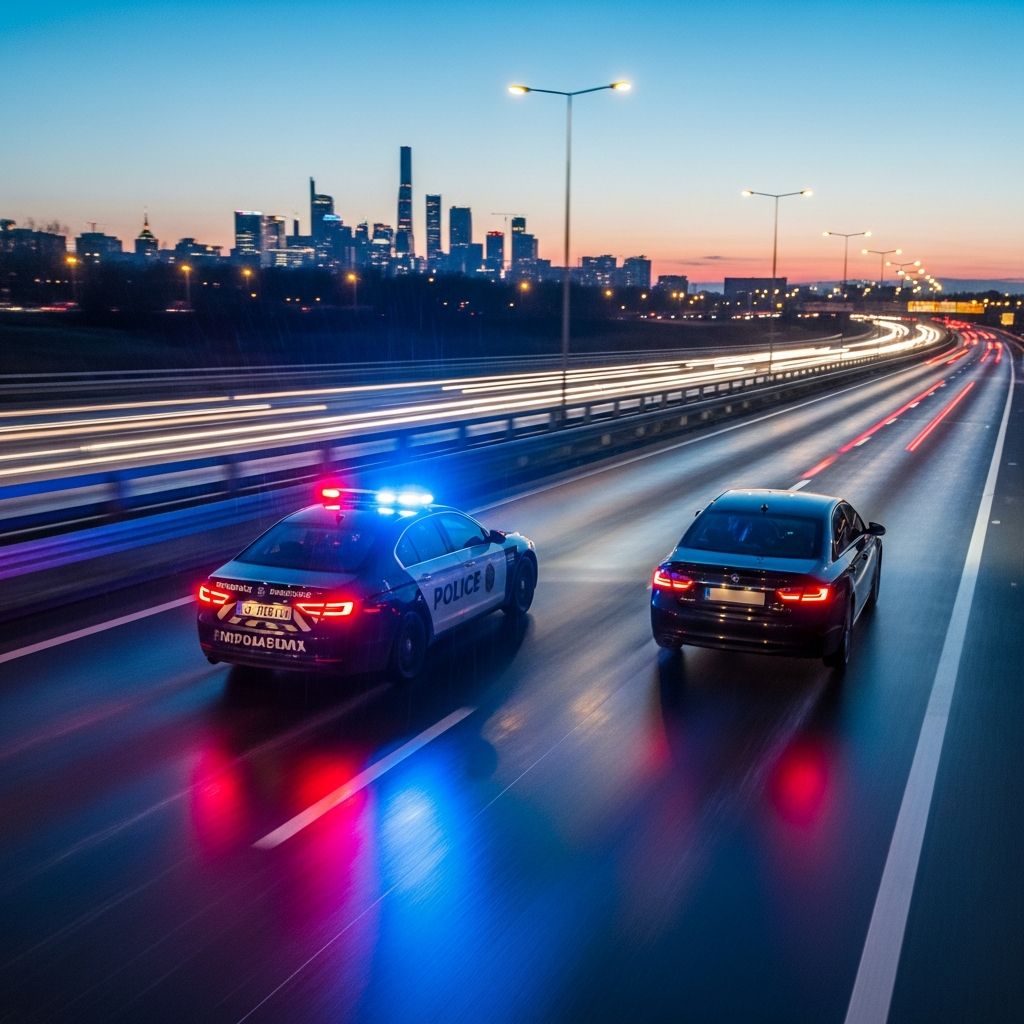
High-speed vehicle pursuits represent one of the most intense and hazardous aspects of modern policing. When suspects flee in vehicles, officers must balance the need to apprehend criminals with the imperative to protect innocent bystanders, fellow motorists, and themselves. These chases often unfold in seconds, involving split-second decisions that can lead to collisions, injuries, or fatalities. Across the United States, policies governing these operations vary widely, shaped by state laws, departmental guidelines, and landmark court rulings. This article delves into the legal frameworks, tactical options, policy variations, and consequences of high-speed pursuits, providing a comprehensive overview for citizens, legal professionals, and policymakers.
Defining High-Speed Pursuits and When They Begin
A high-speed pursuit occurs when law enforcement officers actively chase a fleeing vehicle suspected of involvement in criminal activity, typically exceeding normal traffic speeds and endangering public safety. The initiation of such a chase hinges on specific thresholds. Officers generally require reasonable suspicion or probable cause that a crime has been or is being committed. For instance, pursuits are authorized for suspects in violent felonies, but many jurisdictions restrict them for minor traffic violations to mitigate risks.
Key factors determining whether a pursuit starts include:
- The severity of the suspected offense, prioritizing violent crimes over misdemeanors.
- Immediate threat posed by the suspect to public safety.
- Environmental conditions, such as traffic density, weather, and time of day.
- Availability of alternative apprehension methods, like aerial surveillance.
Recent legislative changes illustrate evolving standards. In Washington state, a 2021 law limited pursuits to serious crimes like violent felonies or DUI, but Initiative 2113, effective June 2024, expanded authority to any law violation with a lowered threshold from ‘serious risk’ to ‘threat to safety’. This shift reflects ongoing debates over balancing enforcement with safety.
Departmental Policies: Balancing Enforcement and Safety
Police departments implement detailed vehicle pursuit policies to standardize responses and reduce liability. These guidelines often classify pursuits by risk level and mandate supervisory oversight. Common elements include continuous risk assessment, where pursuits may be terminated if dangers outweigh benefits.
Policies typically require:
- Activation of emergency lights and sirens throughout the chase.
- Radio notification to dispatch with real-time updates on speed, location, and hazards.
- Supervisor approval or monitoring, with authority to call off the pursuit.
Some agencies adopt restrictive approaches, such as ‘no-chase’ policies for non-violent offenses, prohibiting high-speed pursuits entirely in certain scenarios to prioritize public safety. For example, pursuits might be barred in school zones, densely populated areas, or during peak traffic hours. Conversely, more permissive policies allow chases for a broader range of violations, provided officers maintain control.
| Policy Type | Description | Examples | Pros | Cons |
|---|---|---|---|---|
| Restrictive | Limits pursuits to violent felonies; quick termination if risks escalate. | No-chase for traffic stops; supervisor veto power. | Reduces bystander injuries; lowers liability. | May allow more suspects to escape. |
| Balanced | Authorizes based on crime severity and conditions; ongoing evaluation. | Allowed for felonies if low traffic. | Flexible; captures dangerous offenders. | Subjective decisions increase variability. |
| Permissive | Broad initiation for any violation; minimal restrictions. | Washington post-2024. | High apprehension rates. | Higher crash risks to public. |
Training is crucial, with departments emphasizing simulation exercises to prepare officers for high-stress scenarios. Failure to train adequately can expose municipalities to lawsuits under cases like City of Canton v. Harris, where inadequate preparation leads to constitutional violations.
Tactical Maneuvers Employed During Chases
Officers employ various tactics to safely terminate pursuits without prolonged high-speed driving. Primary pursuit tactics (PPTs) focus on controlled intervention:
- Precision Immobilization Technique (PIT): A trained officer bumps the suspect’s rear quarter panel to spin out the vehicle. Used at lower speeds (<40 mph) and requires certification.
- Roadblocks: Stationary or rolling barriers to halt the suspect, deemed a ‘seizure’ under Brower v. County of Inyo, invoking Fourth Amendment scrutiny.
- Tire deflation devices: Spike strips or grapplers that puncture tires gradually, minimizing immediate loss of control.
- Boxing-in: Multiple units surround the suspect vehicle to force a stop.
High-speed forcible stops are riskier and reserved for imminent threats. Policies often prohibit ramming unless the suspect poses deadly danger, aligning with Tennessee v. Garner standards for deadly force. Aerial support, helicopters, or drones increasingly supplements ground pursuits, allowing termination without endangering road users.
Legal Boundaries and Constitutional Considerations
Pursuits are governed by federal and state laws emphasizing reasonableness. The Supreme Court has clarified that chases constitute seizures if they result in capture or deadly outcomes, requiring policies that constrain excessive risk. Officers enjoy qualified immunity unless they violate clearly established rights.
State variations abound:
- California’s POST guidelines stress ‘intent to harm’ for high-speed actions.
- Illinois mandates lights/sirens and supervisor input for forcible stops.
- Colorado restricts pursuits absent violent felonies.
Liability arises if officers breach policies, such as continuing unsafe chases or negligent driving. Departments face Monell claims for systemic failures like poor training or custom of reckless pursuits.
Risks, Statistics, and Public Safety Impacts
High-speed pursuits claim numerous lives annually. While exact national figures fluctuate, studies highlight disproportionate risks to innocents: bystanders account for up to 40% of fatalities in some analyses. Property damage from crashes can exceed millions per incident.
Post-chase reviews are standard, compiling data on outcomes to refine policies. Departments track metrics like termination reasons, injury rates, and apprehension success to ensure effectiveness. Innovations like vehicle telemetry and body cams enhance accountability.
Consequences for Involved Parties
Suspects face felony evading charges, enhanced if injury occurs. Officers breaching policy risk discipline or civil suits. Victims of chase-related crashes may sue for negligence, proving policy violations or inadequate training. Successful claims often hinge on documentation of departmental lapses.
Frequently Asked Questions (FAQs)
Can police chase for any traffic violation?
No, most policies limit pursuits to serious crimes; minor infractions warrant alternatives like license plate recording.
What happens if a chase causes injury to bystanders?
Departments may be liable if policies were violated or training deficient; victims should consult attorneys specializing in police liability.
Are PIT maneuvers always allowed?
Only by trained officers under specific conditions, like low speeds and supervisor approval where required.
Do all states have the same pursuit laws?
No, policies vary; some are highly restrictive, others permissive based on local priorities.
Can pursuits be terminated remotely?
Yes, supervisors can order termination at any time if risks escalate.
This exploration underscores the delicate equilibrium in high-speed pursuits: empowering law enforcement while safeguarding the public. Evolving policies and technology continue to refine these high-stakes operations.
References
- Wash. law giving police broader pursuit powers goes into effect after controversy over restrictions — Police1. 2024-06-06. https://www.police1.com/pursuit/wash-law-giving-police-broader-pursuit-powers-goes-into-effect-after-controversy-over-restrictions
- Restrictive Policies for High-Speed Police Pursuits — Office of Justice Programs (OJP). 1990. https://www.ojp.gov/pdffiles1/Digitization/122025NCJRS.pdf
- What Is a No-Chase Policy? — Jenner Law Firm. Accessed 2026. https://www.jennerlawfirm.com/faqs/what-is-a-no-chase-policy/
- Vehicle Pursuits Policy 315 — Illinois State University Police Department. Accessed 2026. https://police.illinoisstate.edu/downloads/transparency/Policy%20315%20Vehicle%20Pursuits.pdf
- Vehicle Pursuits Policy 306 — Colorado State University Police Department. 2020-03. https://police.colostate.edu/wp-content/uploads/sites/85/2020/03/306-Vehicle-Pursuits.pdf
- Police Chase: Legal Definitions and the Rules Governing Pursuits — USLegalForms Legal Resources. Accessed 2026. https://legal-resources.uslegalforms.com/p/police-chase
- Vehicle Pursuit Guidelines 2022 — California POST. 2022. https://post.ca.gov/portals/0/post_docs/publications/Vehicle_Pursuit.pdf
Similar Articles








Read full bio of medha deb




