Sharing Police Misconduct Videos: Legal Risks and Strategic Considerations
Navigate the legal complexities of publishing police misconduct recordings online.
Understanding Your Legal Rights When Recording and Distributing Police Footage
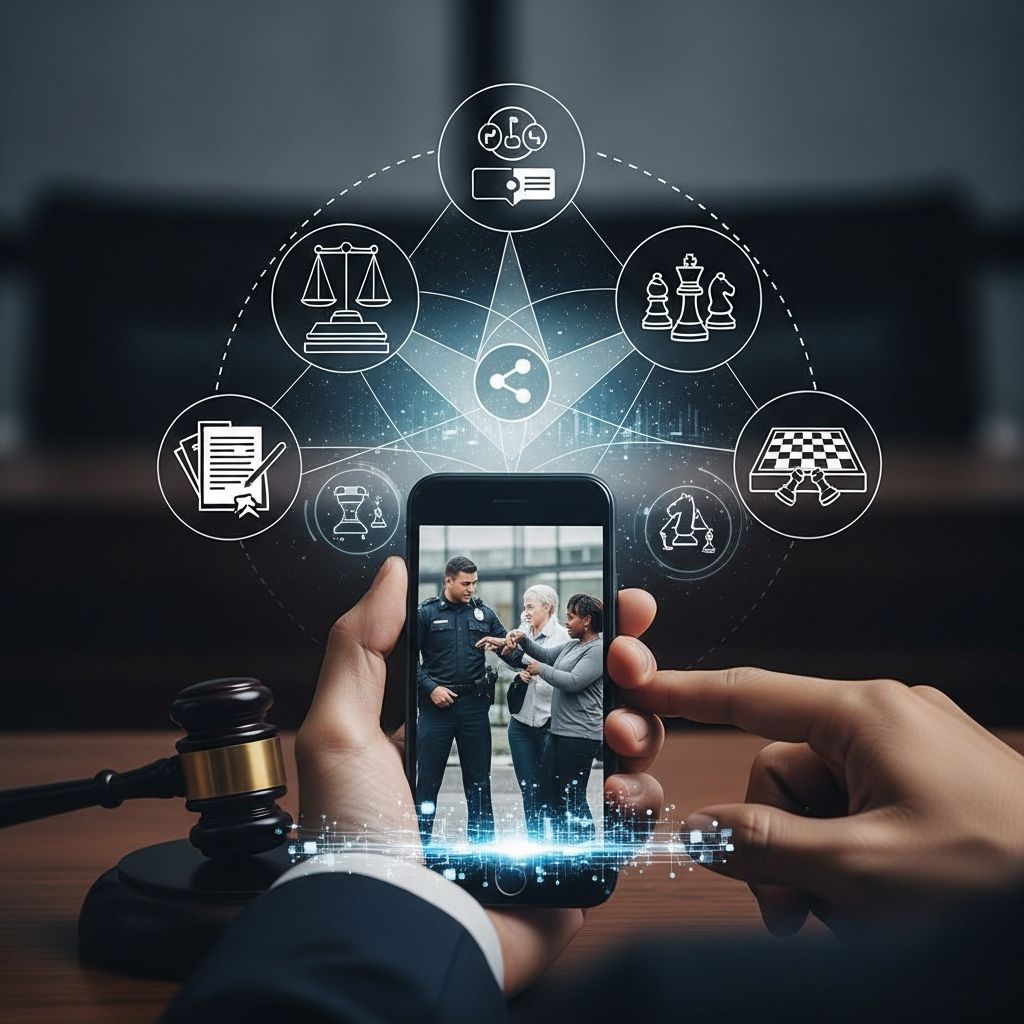
Recording police officers during public interactions has become increasingly common as citizens seek to document potential misconduct and abuse of authority. However, the decision to record is only the first step. Many people face a more complex dilemma after capturing footage: should they share it online, and what legal consequences might result from doing so? While the First Amendment protects your right to record law enforcement officers in public spaces, the decision to publish that footage involves additional legal considerations that extend beyond your initial recording.
The Foundation: Your Right to Record Police in Public
Before considering whether to share recordings, it is important to understand your baseline legal protection. Every federal appeals court that has addressed this issue has recognized a First Amendment right to record government officials, including police officers, while they are engaged in their duties in public spaces. This right extends to video recording, photography, and audio recording, provided you are lawfully present in a public location and the recording does not interfere with law enforcement operations.
The underlying principle supporting this right rests on the democratic concept that citizens have the right to discuss political matters and monitor the performance of government officials. Citizens also possess the right to access and gather information about public officials’ conduct on public property. This protection applies equally to ordinary citizens and professional journalists, making the First Amendment’s shield available to anyone with a smartphone or recording device.
When Recording Might Cross Legal Lines
Despite the broad protections afforded by the First Amendment, certain circumstances can render recording problematic or illegal:
- Interference with police duties: Recording that physically obstructs an officer’s ability to perform their job, such as standing directly in the path of an arrest or positioning yourself to actively impede an investigation, can constitute obstruction of justice. However, simply pointing a device and pressing record from a lawful distance does not qualify as interference.
- Two-party consent laws: Some states have enacted statutes requiring consent from all parties before recording private conversations. These laws vary significantly by jurisdiction, with some applying only to private citizens while others extend to police officers. Understanding your state’s specific requirements is essential before recording any conversation.
- Expectation of privacy: Courts may recognize that officers have a reasonable expectation of privacy in certain conversations, such as discussions with confidential informants or sensitive tactical communications. In these limited circumstances, your First Amendment right to record may yield to privacy considerations.
- Safety and legitimate law enforcement needs: Officers can restrict recording when it creates genuine safety hazards or implicates legitimate investigative needs, such as protecting an ongoing undercover operation.
Publishing Online: A Separate Legal Analysis
The legal analysis for sharing recordings online differs meaningfully from the act of recording itself. Publishing footage on social media platforms, news websites, or other online venues introduces additional legal considerations that may not apply to private recordings:
Identifying Individuals in Your Recording
When you publish footage identifying specific officers by name, badge number, or patrol car identifier, you create potential liability. If the published material contains false or misleading information about the officer’s conduct, defamation claims become possible. Even truthful statements can create liability in certain contexts if they expose officers to harassment or threaten their personal safety. Consider whether identifying specific individuals is necessary for your purpose or whether describing the incident more generally would serve your goals while reducing legal exposure.
Context and Accuracy Concerns
Online videos often circulate without the broader context that may have preceded or followed the recorded interaction. A video segment showing an officer’s actions might appear misconduct without showing the full sequence of events that justified the officer’s response. When you publish such footage, you risk legal claims if viewers develop an inaccurate impression that damages the officer’s reputation. Providing comprehensive context, disclaimers about what the footage does and does not show, and acknowledgment of what occurred before and after the recorded moment can help protect against defamation liability.
Platform-Specific Considerations
Different online platforms have varying policies regarding content involving police and potential misconduct. Some platforms may remove content that violates community standards, flag it with warnings, or limit its distribution. Understanding these policies before posting can help you anticipate how your content will be treated and whether the platform’s distribution mechanisms align with your goals. Additionally, platform terms of service may affect your rights to the footage and how it can be used.
Evidence Preservation and Strategic Timing
Publishing footage immediately online offers certain advantages but also risks. Consider these strategic factors:
| Factor | Advantages of Immediate Online Publication | Disadvantages of Immediate Online Publication |
|---|---|---|
| Public Awareness | Rapid dissemination can generate public attention and pressure for accountability | Public pressure may complicate legal proceedings or investigations |
| Evidence Preservation | Public distribution creates multiple copies, reducing risk of deletion | Online versions may be compressed, edited, or altered, affecting evidentiary value |
| Legal Proceedings | Public record may assist in civil rights claims | Published statements may be used against you in legal defense |
| Personal Safety | Public attention may deter retaliation against you | Identifying yourself publicly may increase targeting or harassment |
Protecting Yourself from Retaliation
If you record police activity and subsequently experience negative treatment from law enforcement—such as threats, confiscation of your device, or arrest without lawful cause—this may constitute retaliation in violation of your civil rights. New York State, for example, has reinforced recording protections through Civil Rights Law Section 79-p, which explicitly affirms your ability to record law enforcement and provides legal remedies if you face retaliation.
To document retaliation, continue recording if it is safe to do so, capturing officer names or badge numbers, specific verbal threats or orders, your distance from officers, and witness behavior. Create copies of all materials and submit complaints to the appropriate law enforcement agency or oversight body using documented methods such as email or certified mail. If your complaint is ignored, that inaction may support further legal claims.
Confiscation and Device Security
A critical concern for those recording police is whether officers can seize their devices or delete recordings. The answer is clear: police officers cannot confiscate your recordings or demand to view them without a search warrant, even if they arrest you. Absent a warrant, officers may only hold your smartphone during booking and detention for safekeeping but cannot examine its contents. Even with a warrant to search your phone, officers cannot alter or delete your recordings under any circumstances.
If an officer orders you to surrender recordings or your device, you should calmly but firmly decline and remind them of your First Amendment right to record in public. You cannot lawfully be arrested for refusing this order, though you should assess personal risks before deciding whether to resist.
Navigating State-Specific Protections and Restrictions
Legal protections for recording police and remedies for interference vary significantly by state. Colorado, for example, permits individuals to petition law enforcement agencies for reimbursement of damaged or destroyed recording equipment, plus $500 for loss of the recording itself, with civil lawsuit rights if the petition is denied. New York provides statutory protection allowing civil suits for damages and attorneys’ fees if police interfere with recording rights.
Before publishing recordings, research your jurisdiction’s specific statutes regarding recording, privacy, defamation, and retaliation. Some states provide explicit protections that make publishing footage safer, while others impose restrictions that increase your liability risk.
Procedural and Evidentiary Challenges
Beyond direct legal liability, publishing videos online can create complications in criminal defense cases or civil rights litigation. Video evidence presents evidentiary challenges that courts must navigate carefully. Police and prosecutors may use the same footage to support their case, particularly if context is unclear. Additionally, qualified immunity and other procedural doctrines can limit your ability to pursue civil claims even against officers whose actions appear misconduct on video.
Strategic Alternatives to Online Publication
Publishing footage is not your only option for creating accountability. Consider these alternatives:
- Direct submission to law enforcement oversight: Submit recordings to internal affairs divisions, civilian oversight boards, or police review commissions that can investigate misconduct without public dissemination.
- Consultation with civil rights attorneys: Lawyers can assess your recording’s legal significance and advise whether public release or private use in litigation better serves your interests.
- Confidential news media submissions: Journalists can investigate footage and report responsibly while providing editorial judgment about context, accuracy, and identification of individuals.
- Preservation for potential litigation: Store recordings securely with multiple backups while preserving your option to use them in future civil rights cases without prior public exposure.
Practical Considerations Before Publishing
Before deciding to share police misconduct recordings online, ask yourself these critical questions:
- Do you have the complete context necessary for viewers to understand what occurred?
- Have you verified the accuracy of your interpretation of events?
- Are you prepared for the potential legal consequences if your footage or narrative is disputed?
- Is public awareness your primary goal, or would litigation or regulatory complaint achieve better outcomes?
- Can you publish without identifying specific individuals who might pursue defamation claims?
- Have you consulted an attorney familiar with your jurisdiction’s specific laws?
Frequently Asked Questions
Q: Can police legally force me to delete recordings from my phone?
A: No. Police cannot delete your recordings under any circumstances, even with a warrant. They may hold your phone during booking for safekeeping but cannot access or alter its contents without a warrant specifically authorizing such access, and the warrant does not permit deletion.
Q: Is it legal to livestream a police interaction on social media?
A: Yes, livestreaming police activity in public spaces is protected by the First Amendment, subject to reasonable time, place, and manner restrictions. However, officers can order you to move if you are physically interfering with their duties, even if they cannot stop you from recording itself.
Q: What should I do if an officer tells me to stop recording?
A: Politely but firmly decline and remind the officer of your First Amendment right to record police in public spaces. Do not physically resist or become confrontational. If the officer persists, comply with safety in mind and consult an attorney afterward, as unlawful orders to cease recording may support civil rights claims.
Q: Can I be arrested for recording police?
A: You cannot lawfully be arrested solely for recording police in public. However, you can be arrested if your recording interferes with police duties, violates your state’s consent-to-record laws, or constitutes harassment or stalking. Courts review such arrests carefully to ensure officers are not retaliating for recording itself.
Q: Does publishing a police misconduct video online increase my legal liability?
A: Yes. Publishing footage online introduces potential defamation claims if the video or accompanying narrative contains false or misleading information, or if misrepresentations about the officer’s conduct damage their reputation. Providing full context and accuracy can reduce this risk.
Q: What is the best way to preserve police misconduct evidence?
A: Create multiple secure copies of your recording using cloud storage, external drives, and email. Document the time, date, location, and circumstances of the recording. Avoid editing or altering the footage. If possible, consult an attorney about whether litigation or regulatory complaint would best serve your interests before publishing online.
Q: Can I be sued for defamation if I share accurate footage of police misconduct?
A: Truthful statements are generally protected from defamation claims, but context matters significantly. If your accompanying narrative mischaracterizes accurate footage or creates a false impression about events, liability risk increases. Include disclaimers about what the footage does and does not show.
References
- Video or Audio Recording of Police Officers & Your Legal Rights — Justia. 2024. https://www.justia.com/criminal/procedure/right-to-record-police-officers/
- You Have the Right to Record Police: Here’s What to Do If They Retaliate — Hornwright Law. 2024. https://www.hornwright.com/civil-rights-law/you-have-the-right-to-record-police-heres-what-t/
- Right to Record Government Officials in Public — Reporters Committee for Freedom of the Press. 2024. https://www.rcfp.org/reporters-recording-sections/right-to-record/
- Right to Record the Police in Florida — ACLU of Florida. 2024. https://www.aclufl.org/right-record-police-florida/
- Filming and Photographing the Police — American Civil Liberties Union. 2024. https://www.aclu.org/issues/free-speech/photographers-rights/filming-and-photographing-police
- Recording Police in Public: What You Need to Know — Foundation for Individual Rights and Expression. 2024. https://www.thefire.org/research-learn/recording-police-public-what-you-need-know
Similar Articles







Read full bio of Sneha Tete