
Police Liability When the Wrong Person Is Shot
Understanding when police departments and officers can be held legally responsible for shooting or killing the wrong person, and how victims may seek justice.
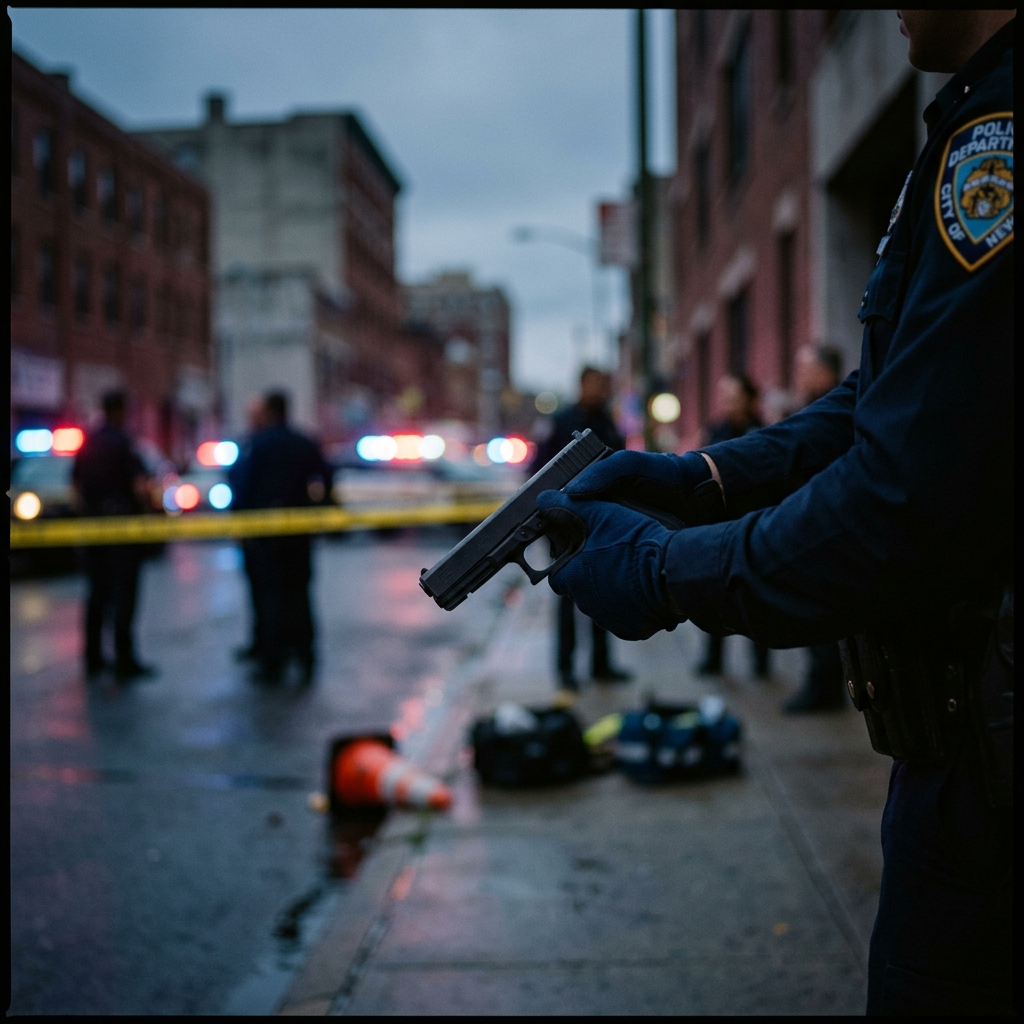
When a police bullet strikes the wrong person, families are left asking whether the officer and the department can be held legally responsible. Courts treat these incidents as serious constitutional questions, especially under the Fourth Amendment and federal civil rights law. This article explains when such shootings can lead to liability, how the law defines a “seizure” and “excessive force,” and what options victims and their families may have.
Wrong Person, Wrongful Shooting: Why the Legal Framing Matters
Not every tragic police shooting is automatically unlawful, but many can lead to civil claims or even criminal charges when officers use more force than the law allows. Understanding how courts analyze these situations is essential for victims, advocates, and police departments striving to prevent future harm.
- Key issue: Was the use of deadly force objectively reasonable under the circumstances?
- Key consequence: If it was not reasonable, the shooting may violate the Fourth Amendment and support a civil rights lawsuit.
- Key complication: The person hit may be an innocent bystander or an unintended target, but still legally “seized” by police.
Deadly Force and the Fourth Amendment: Core Legal Standards
The central constitutional framework for police shootings comes from the Fourth Amendment, which protects individuals against unreasonable seizures by the government. Courts evaluate deadly force under an “objective reasonableness” test: what would a hypothetical reasonable officer have done in the same situation?
Objective Reasonableness Explained
Under federal law, including cases interpreting 42 U.S.C. § 1983, officers are liable for excessive force when their conduct is objectively unreasonable in light of the facts they faced at the time, not based on hindsight.
- Officers may use deadly force only when they have probable cause to believe a person poses an immediate threat of serious physical harm to others or themselves.
- Courts consider the severity of the suspected offense, whether the suspect is actively resisting or fleeing, and whether there are safer alternatives.
- The officer’s subjective intent or personal fear is less important than what a reasonable officer would perceive in the same position.
In practice, this standard means fact-intensive analysis: courts scrutinize body camera footage, witness testimony, and physical evidence to reconstruct the moment of the shooting.
What Counts as a “Seizure” When the Wrong Person Is Shot?
The concept of a “seizure” is crucial because the Fourth Amendment only applies when government agents restrain a person’s freedom of movement. The U.S. Supreme Court has held that when an officer intentionally applies physical force with the intent to restrain, that is a seizure—even if the person does not submit or the officer aims at someone else.
Federal appellate courts have extended this reasoning to situations where officers fire at one person but hit another:
- If an officer deliberately squeezes the trigger intending to stop a perceived threat, anyone struck by that bullet is considered seized for Fourth Amendment purposes, whether or not they were the intended target.
- That means innocent bystanders or misidentified suspects may still raise claims that the use of force against them was unreasonable.
This legal treatment helps ensure that people harmed by police bullets are not left without constitutional protection simply because the officer meant to hit someone else.
Mistaken Identity vs. Mistake of Fact
Cases where police shoot the wrong person generally fall into two broad categories:
- Mistaken identity: Officers believe they are confronting a wanted suspect but have the wrong individual.
- Mistake of fact: Officers misperceive a threat (for example, mistaking a phone for a gun) and shoot a person, who may be a suspect, another officer, or a bystander.
Liability in Mistaken Identity Arrests and Shootings
When officers arrest or shoot the wrong person due to mistaken identity, courts examine whether the underlying decision was reasonable under the circumstances.
- For wrongful arrests, plaintiffs may bring false arrest or malicious prosecution claims, arguing there was no probable cause to seize them.
- In some cases, even if officers used the wrong name or made errors in a warrant affidavit, qualified immunity may protect them if probable cause still existed for the arrest.
- When deadly force is involved, the reasonableness inquiry shifts to whether an officer could reasonably believe the person posed an immediate threat.
Wrongful Shootings and Mistake of Fact
In “mistake of fact” cases, officers misinterpret what they see, often under intense pressure and rapidly changing circumstances.
Courts typically ask:
- Would a reasonable officer, faced with the same facts, have recognized that the person was unarmed or not a threat?
- Were there opportunities to de-escalate or use less-lethal methods before resorting to a firearm?
- Did the officer follow training and department policy regarding use of force?
If the mistake is found to be “objectively unreasonable,” liability can attach, even when the officer did not subjectively intend to harm an innocent person.
Individual Officer Liability vs. Police Department Liability
Responsibility for a wrongful shooting rarely ends with the officer who pulled the trigger. Civil suits often examine the roles of supervisors, trainers, and the broader department culture.
Individual Officer Liability
Officers may face personal liability under federal civil rights law and, in some circumstances, state tort law.
- Excessive force: A claim that the officer used more force than was constitutionally permissible under the Fourth Amendment.
- Negligent use of a weapon: In some jurisdictions, officers can be sued for carelessness in handling or firing their weapons, especially when bystanders are injured.
- Warning shots and ricochets: An officer may be liable where a warning shot or a shot aimed at tires unintentionally injures someone, if the decision to fire was unreasonable.
Department and Supervisory Liability
Police departments and municipalities can also be held accountable when systemic problems contribute to wrongful shootings.
Common theories of department liability include:
- Failure to train: Inadequate or improper training on use of force, de-escalation, or weapon handling.
- Policies or customs: Official policies or longstanding practices that encourage or tolerate excessive force.
- Supervisory indifference: Supervisors ignoring prior warnings or complaints about an officer’s dangerous conduct.
Under Section 1983, municipalities cannot be held liable just because an officer committed a constitutional violation; there must be a link between the wrongful act and a policy, custom, or failure to train.
Qualified Immunity: A Major Hurdle for Victims
Qualified immunity often shapes whether victims of wrongful police shootings can succeed in court. It shields officers from liability unless they violate a clearly established constitutional right that a reasonable officer would have known.
To overcome qualified immunity, plaintiffs typically must show:
- A constitutional violation actually occurred (for example, excessive force in violation of the Fourth Amendment).
- The law was clearly established at the time so that another reasonable officer would understand their conduct was unlawful.
This doctrine can mean that even when a court recognizes a seizure and questions the officer’s actions, the officer may still avoid liability if prior cases did not make the unlawfulness sufficiently clear.
Building a Case After a Wrongful Police Shooting
Victims and families considering legal action after a wrongful police shooting need to gather substantial evidence and work within strict deadlines. Civil rights and personal injury lawyers typically focus on both the moment of the shooting and the systemic context around it.
Critical Evidence in Wrongful Shooting Claims
- Video footage: Body camera, dash camera, and nearby security footage can show the officer’s vantage point and timing.
- Witness statements: Accounts from bystanders, other officers, and experts help reconstruct events and clarify whether the victim posed a threat.
- Police reports and policies: Use-of-force policies, training manuals, and incident reports may reveal deviations from required procedures.
- Medical and forensic records: Autopsy results, ballistics analysis, and emergency treatment records document the nature and cause of injuries.
Common Legal Claims
Depending on the facts and jurisdiction, plaintiffs might assert:
- Federal civil rights claims for excessive force and unlawful seizure under 42 U.S.C. § 1983.
- State law wrongful death or personal injury claims for negligent or intentional misuse of a weapon.
- Claims for wrongful seizure, excessive Tasering, denial of medical care, or restraint-related asphyxia where those factors contributed to the harm.
Comparing Key Situations: Suspect vs. Bystander
| Scenario | Legal Focus | Potential Claims |
|---|---|---|
| Suspect shot, but later found unarmed | Was deadly force objectively reasonable based on perceived threat? | Excessive force, wrongful death, failure to train, civil rights violation |
| Wrong person shot due to mistaken identity | Did officers have probable cause to believe they had the right person and that a threat existed? | False arrest, excessive force, malicious prosecution, civil rights claim |
| Innocent bystander struck by stray bullet | Was it reasonable to fire given surroundings, backdrop, and available alternatives? | Negligent weapon use, excessive force, civil rights violation if the shot constituted a seizure |
| Warning shot or shot at vehicle tires injures bystander | Did firing any shot in that context meet professional and constitutional standards? | Negligence, wrongful injury, failure to follow policy, civil rights claim |
Practical Steps for Victims and Families
When someone is injured or killed because an officer shot the wrong person, families face both emotional trauma and complex legal questions. While every case is unique, certain practical steps are commonly recommended.
- Seek medical and psychological help immediately: Health and safety remain the first priority.
- Preserve evidence early: Keep photos, recordings, witness contact information, and any communications with law enforcement.
- Request incident records: Where permitted, obtain police reports, body camera footage, and departmental policies.
- Consult an experienced civil rights or wrongful shooting lawyer: These cases often involve complex constitutional doctrines and strict filing deadlines.
- Document ongoing impacts: Maintain records of medical costs, lost wages, and emotional harm to support damage claims.
Frequently Asked Questions (FAQs)
1. Can police be held liable if they shoot an innocent bystander?
Yes. Courts recognize that an officer’s bullet can “seize” any person it strikes when the officer intentionally fires to restrain a perceived threat, even if the person hit was not the intended target. If firing the shot was not objectively reasonable under the circumstances or violated department policy, the officer and possibly the department may face liability.
2. What if the officer genuinely believed the victim was armed or dangerous?
An officer’s genuine belief is relevant but not decisive. The law asks whether a reasonable officer in the same situation, with the same information, would have perceived an immediate threat requiring deadly force. If that belief was objectively unreasonable, the shooting may still be unlawful and support a civil rights claim.
3. Does qualified immunity mean victims can never win?
No. Qualified immunity is a significant hurdle, but it does not bar all lawsuits. Victims can succeed when they show both a constitutional violation and that prior case law clearly established the unlawfulness of the officer’s conduct at the time. Many excessive force cases have overcome qualified immunity, especially where officers used plainly disproportionate force.
4. Are police departments responsible only for their own policies?
Departments can be liable for official policies, longstanding customs, and failures to train that cause or contribute to constitutional violations. They are not automatically liable for every officer’s mistake, but they may be responsible when systemic issues—such as poor training or tolerance of excessive force—help produce wrongful shootings.
5. What types of damages can victims seek after a wrongful shooting?
Depending on the jurisdiction, victims and families may seek compensation for medical bills, lost income, pain and suffering, emotional distress, and, in wrongful death cases, loss of companionship and support. In some civil rights cases, courts can also award attorney’s fees and, in rare situations, punitive damages to deter similar conduct.
References
- Understanding Police Officer Liability for the Use of Deadly Force — O’Connor, Parsons, Lane & Noble. 2023-05-01. https://www.omtrial.com/understanding-police-officer-liability-for-the-use-of-deadly-force/
- OFFICERS SUED FOR ARRESTING WRONG PERSON FOR A CRIME — LLRMI Legal Updates. 2024-02-15. https://www.llrmi.com/articles/legal_updates/2024_griffin_v_ventriere/
- Police Department Liability in Wrongful Shooting Cases — Horn Wright, LLP. 2022-11-10. https://www.hornwright.com/civil-rights-law/wrongful-shootings/police-department-liability-in-wrongful-shooting/
- When an officer’s bullet hits the wrong person — Police1. 2021-09-20. https://www.police1.com/legal/when-an-officers-bullet-hits-the-wrong-person
- Wrongful Shooting Lawyer — Faraj Law Firm. 2023-08-01. https://farajlaw.com/civil-rights-litigation/wrongful-shooting
- Liability of Police Officers for Misuse of Their Weapons — Cleveland State Law Review. 1973-01-01. https://engagedscholarship.csuohio.edu/cgi/viewcontent.cgi?article=2981&context=clevstlrev
- Constitutional Law – Freedom from Accidental Shootings by Police Is Not a Clearly Established Right, 2005 — Suffolk Journal of Trial & Appellate Advocacy. 2005-01-01. https://dc.suffolk.edu/cgi/viewcontent.cgi?article=1515&context=jtaa-suffolk
Similar Articles








Read full bio of Sneha Tete




