
When Police Use GPS: Why Warrants Matter
How modern GPS surveillance collides with the Fourth Amendment and why courts increasingly demand judicial warrants.
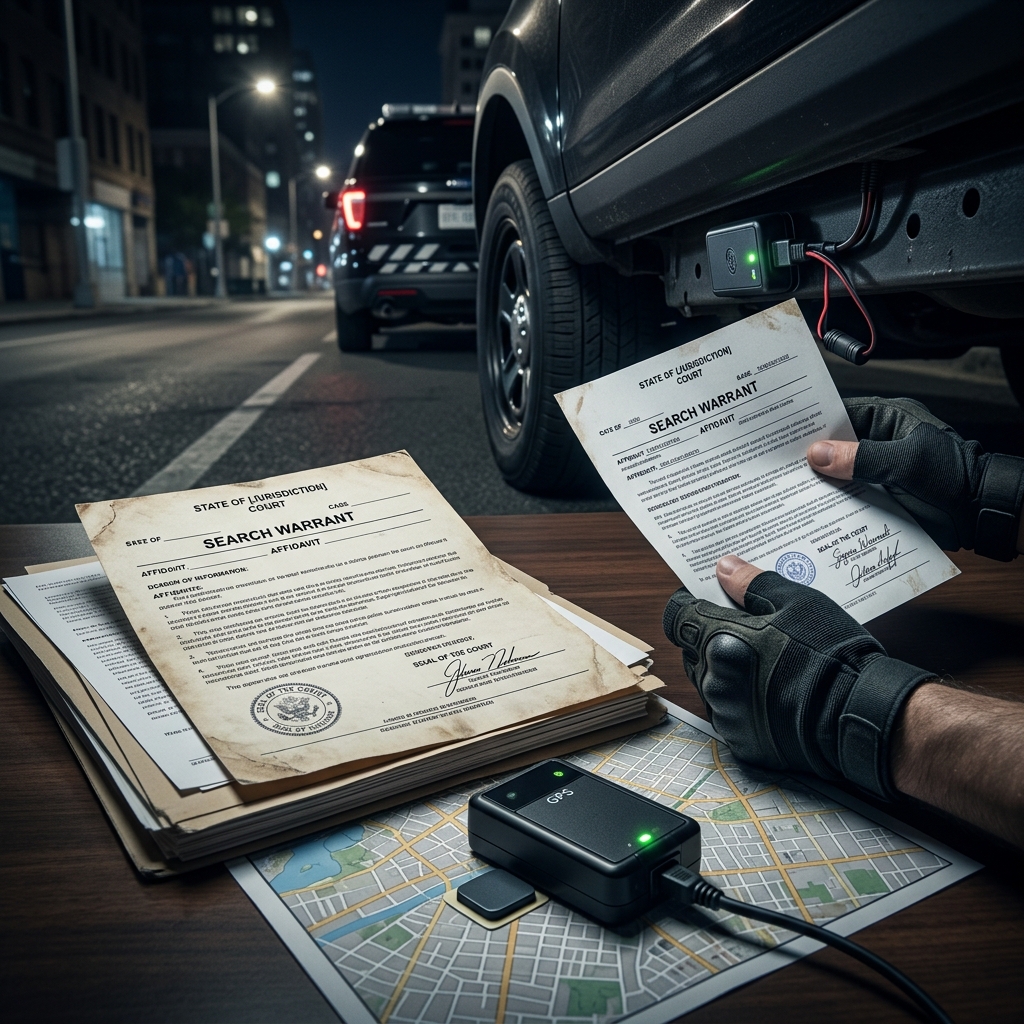
Global Positioning System (GPS) technology has given law enforcement powerful new tools to locate and follow suspects, vehicles, and assets in real time. At the same time, it has forced courts to confront a fundamental question: how much digital tracking can the government do before it must get a warrant? This article explains why GPS tracking raises serious privacy concerns, when police typically must obtain a warrant, and how different laws and court decisions shape what officers can and cannot do.
GPS Tracking Meets the Fourth Amendment
In the United States, government searches and seizures are governed by the Fourth Amendment, which generally requires police to obtain a warrant supported by probable cause before intruding on a reasonable expectation of privacy. GPS tracking forces courts to ask whether attaching and monitoring a tracker counts as a “search”—and if so, what protections apply.
Two main privacy concerns come up repeatedly:
- Physical intrusion – attaching a device to a person’s car or property can itself be a physical trespass.
- Long-term monitoring – continuous location tracking over days or weeks reveals detailed patterns of life that traditional surveillance rarely captures.
Courts increasingly recognize that GPS monitoring is more intrusive than a single traffic stop or short tailing of a vehicle. When the government can build a comprehensive map of a person’s movements, the stakes for privacy grow dramatically.
Why Many Courts Require Warrants for GPS Devices
A growing line of decisions holds that police must obtain a warrant based on probable cause before attaching a GPS device to a vehicle and tracking its movements. These rulings rest on several core ideas.
Continuous Tracking Creates a Detailed Portrait
Traditional officers on the street might watch a suspect’s car for a few hours. A GPS tracker, by contrast, can record every trip—every stop at a doctor’s office, place of worship, political meeting, or friend’s home—for weeks at a time. This comprehensive log goes far beyond what brief surveillance would normally reveal.
- Patterns of behavior – GPS logs can reveal routines, habits, and associations.
- Sensitive locations – visits to medical clinics, counseling centers, or advocacy groups can expose deeply personal information.
- Historical records – stored data can be analyzed later, long after the tracking happened.
Because of this depth of information, courts have concluded that GPS surveillance can implicate privacy interests even when the car is traveling on public roads.
Trespass and the Act of Installation
Attaching a GPS device usually requires an officer to physically touch and sometimes enter the area around a vehicle. Legal analysis often distinguishes between:
- External attachment – placing a device on the outside of a car (for example, under the bumper).
- Intrusive installation – accessing the inside of a vehicle or a closed structure, such as a garage, to install the tracker.
When officers enter private property or enclosed spaces to install tracking equipment, courts are much more likely to treat the installation as a search that requires a warrant. Even external attachment can be viewed as a physical trespass tied to information gathering, which strengthens the argument for judicial oversight.
Probable Cause Over Reasonable Suspicion
Some law enforcement agencies argued that GPS tracking should be allowed on the basis of reasonable suspicion rather than full probable cause. Courts rejecting that position emphasize that the scale and intrusiveness of GPS monitoring justify the higher, traditional warrant standard: probable cause supported by an affidavit and approved by a judge.
Key points in these decisions include:
- Probable cause requirement – before tracking, officers should show a fair probability that GPS data will reveal evidence of a crime.
- Judicial review – a neutral magistrate reviews the facts, rather than allowing officers to decide on their own to begin long-term surveillance.
- Limits on duration – many orders specify how long the device may be used, often with a maximum number of days.
How Warrant Procedures for GPS Typically Work
When a jurisdiction requires a warrant for GPS tracking, state law often spells out detailed steps officers must follow. These procedures resemble those for traditional search warrants but are tailored to tracking technology.
Information Officers Must Provide
Statutes governing tracking warrants commonly require the officer to submit a written application and sworn affidavit with specific information. Typical elements include:
- Identity of the applicant and the law-enforcement agency.
- Description of the object to be tracked—such as a particular vehicle or container—and, if known, its owner.
- Material facts supporting probable cause that use of the device will produce evidence of a particular offense.
- Jurisdiction where the device will be installed or where the crime is believed to have occurred.
Some laws also allow electronic submission of affidavits via fax or secure electronic record, reflecting the need to act promptly while preserving judicial review.
Duration and Scope Limits
To prevent open-ended surveillance, tracking warrants usually set time limits and operational boundaries. For example, a statute might provide that:
- The device may be used for a reasonable period, not exceeding a specific number of days (often 30).
- The warrant must state the authorized time period or number of days the device may be installed and monitored.
- Installation must occur within a short window after the warrant is issued, such as within 10 days.
These constraints are designed to ensure that tracking is focused on a defined investigation, not used as a general-purpose monitoring tool.
Exigent Circumstances and Short-Term Tracking
Many legal frameworks recognize that emergencies can justify brief tracking without a warrant. For instance, some laws allow officers to install and monitor tracking equipment for up to 48 hours when exigent circumstances exist, such as an immediate threat to life or risk of evidence destruction.
| Element | Common Requirement |
|---|---|
| Probable cause | Officer must show probable cause that GPS use will uncover evidence of a crime. |
| Written application | Affidavit or sworn statement submitted to a judge or magistrate. |
| Installation window | Device must be installed within a set number of days after issuance (e.g., 10 days). |
| Monitoring period | Use limited to a specified period, often up to 30 days. |
| Exigent use | Short-term warrantless tracking allowed when immediate danger or urgent need exists. |
Differences Among States and Jurisdictions
The United States does not have a single federal statute that comprehensively regulates all law enforcement GPS tracking. Instead, protections arise from a mix of constitutional decisions and state laws.
States Requiring Warrants for Police GPS Tracking
Many states explicitly require law enforcement to obtain a warrant or court order before using GPS devices to track a person or vehicle for investigative purposes. In these jurisdictions:
- Officers must apply to a state court—often a circuit or district court—before connecting GPS devices to vehicles.
- Courts review probable cause and may set time and scope limits on monitoring.
- Unauthorized tracking can risk suppression of evidence or civil liability.
Consent and Private Tracking
Some states also regulate how private individuals and companies may use GPS trackers. Typical rules include:
- Owner consent – installing a mobile tracking device usually requires the vehicle owner’s permission.
- Employment tracking – certain states allow employers to monitor company vehicles or assets, sometimes without individual consent, while restricting tracking of non-employees.
- Criminal penalties – non-consensual tracking of another person’s car can be a misdemeanor or more serious offense.
These rules aim to balance legitimate uses—such as fleet management or stolen vehicle recovery—against the risk of covert, invasive monitoring.
Public Roads vs. Private Spaces
One enduring issue is whether location information collected on public streets is entitled to privacy protection. Earlier cases sometimes reasoned that because anyone could see a car drive on a road, tracking its movements with technology did not change the analysis. More recent commentary and case law highlight the difference between isolated observation and continuous digital logging.
Monitoring Inside Private Areas
Courts have been especially protective when GPS or similar devices reveal information about movements inside private locations, such as homes or private garages.
- Tracking that shows a vehicle’s presence in a residence or other private area is frequently treated as a search requiring a warrant.
- Even if monitoring on public roads might be considered less intrusive, crossing the threshold into private spaces changes the legal analysis.
Legal commentary advises that any GPS use likely to capture information about movements in private areas should only be conducted with prior judicial authorization, to avoid constitutional risk.
Risks When Police Skip the Warrant
When officers deploy GPS devices without a warrant in situations where one is legally required, several consequences can follow for both the investigation and the individuals being tracked.
- Suppression of evidence – courts may exclude GPS-derived evidence from trial if it was obtained in violation of the Fourth Amendment.
- Loss of good-faith protection – if officers cannot show that they reasonably relied on existing law or judicial guidance, they may lose the benefit of exceptions designed to preserve evidence despite errors.
- Civil suits – improperly monitored individuals may seek damages for constitutional violations.
Because of these risks, many legal experts advise law enforcement agencies to treat GPS tracking as a technique that ordinarily requires a warrant, especially when monitoring is long-term or intrusive.
What This Means for Drivers and Everyday Citizens
For most drivers, GPS tracking by police is not a daily concern, but understanding the rules helps clarify the boundaries of government surveillance.
- Your movements on public roads may be observed by officers, cameras, or other drivers, but long-term GPS monitoring generally requires stronger legal justification.
- If you own a vehicle, others usually cannot legally install a tracker on it without your consent, except under lawful police authority in jurisdictions that permit it.
- Employers may be able to track company vehicles or equipment using GPS, subject to state law, but this typically differs from criminal investigative tracking.
Individuals concerned about GPS tracking should consult local statutes and, if needed, seek legal advice, because requirements and remedies vary by jurisdiction.
FAQs About Police GPS Tracking
Do police always need a warrant to use GPS on a car?
Not always, but in many jurisdictions courts or statutes require a warrant backed by probable cause before officers attach and monitor a GPS device for investigative purposes. Limited warrantless use may be allowed under exigent circumstances or other narrow exceptions.
What counts as exigent circumstances for GPS tracking?
Exigent circumstances generally involve urgent situations where waiting to obtain a warrant would risk harm, escape of a suspect, or destruction of evidence. Some laws permit brief warrantless tracking—often up to 48 hours—when such conditions exist, after which continued monitoring typically requires a warrant.
Can my employer track my movements with GPS?
Many states allow employers to track company-owned vehicles or assets, sometimes without individual consent, but they restrict tracking of personal vehicles or non-employees. The exact rules depend on state law and whether the employer owns the equipment being monitored.
Is it legal for a private person to put a tracker on someone else’s car?
In numerous states, installing a GPS device on a vehicle without the owner’s consent is prohibited and may carry criminal penalties. Even where laws are less explicit, such conduct can raise serious privacy and harassment concerns.
How long can police track a car with GPS?
Tracking duration typically depends on the terms of the warrant or court order. Many statutes limit monitoring to a set period, often up to around 30 days, subject to possible extensions granted by the court upon a renewed showing of need.
References
- Victory! Federal Appeals Court Rules Warrant Required for GPS Tracking — American Civil Liberties Union. 2013-10-22. https://www.aclu.org/news/national-security/victory-federal-appeals-court-rules-warrant-required
- Installing GPS Devices Requires Search Warrant for Police — Godwin & Ainsworth, P.C. (legal analysis referencing U.S. v. Katzin). 2013-11-04. https://www.gawlawyers.com/installing-gps-devices-requires-search-warrant-for-police/
- Virginia Code § 19.2-56.2 – Application for and issuance of search warrant for a tracking device — Commonwealth of Virginia. Accessed 2026. https://law.lis.virginia.gov/vacode/title19.2/chapter5/section19.2-56.2/
- Bill Report: An act relating to authorization of electronic tracking devices — Washington State Legislature, House Bill Analysis (6136-S). 2004-02-06. https://lawfilesext.leg.wa.gov/biennium/2003-04/Htm/Bill%20Reports/House/6136-S.HBA.htm
- GPS Tracking Devices and the Fourth Amendment — School of Government, University of North Carolina at Chapel Hill. 2009-03-01. https://www.sog.unc.edu/sites/default/files/reports/GPS%20Tracking%20Devices%20and%20the%20Fourth%20Amendment.pdf
- GPS Tracking Laws by State — LandAirSea Systems (summary of state statutes and case law). Updated 2023. https://landairsea.com/blogs/consumers/gps-tracking-laws-by-state
Similar Articles








Read full bio of Sneha Tete




