
Police Drones and Civil Liberties: Navigating the New Aerial Frontier
Law enforcement drones promise efficiency and safety, but raise complex privacy and constitutional questions that demand clear rules.
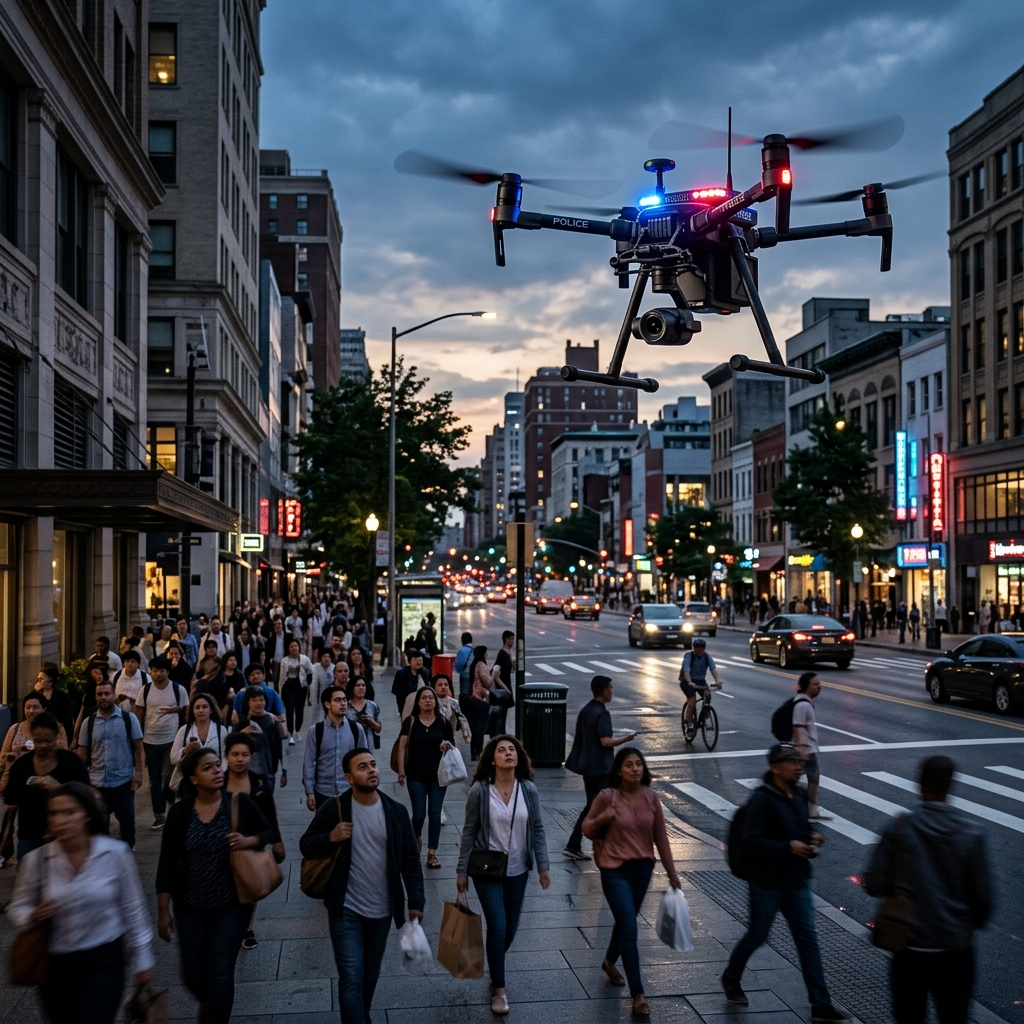
Aerial drones have moved rapidly from military battlefields and hobbyist clubs into routine police work. Law enforcement agencies now use small, camera-equipped aircraft to monitor crowds, document crime scenes, and respond to emergencies. At the same time, civil liberties advocates warn that persistent eyes in the sky can quietly normalize mass surveillance and erode constitutional protections.
This article examines how police use drones today, the legal boundaries that restrict aerial surveillance, the privacy and ethical concerns involved, and the safeguards lawmakers and communities are developing to keep this powerful technology in check.
From Niche Tool to Common Practice: How Police Use Drones
Over the past decade, police drones have shifted from experimental tools to widely deployed equipment across the United States. They are typically small, remotely piloted aircraft equipped with high-resolution cameras and, in some cases, thermal imaging or other sensors. Their core appeal is straightforward: drones give officers a bird’s-eye view of unfolding events without exposing personnel to the same level of risk.
Common Operational Uses
Law enforcement agencies employ drones for a range of missions that largely align with traditional policing goals.
- Search and rescue – Locating missing persons in remote, dark, or hazardous environments where helicopters or ground searches would be slower or more dangerous.
- Crime scene documentation – Capturing detailed aerial imagery of crash sites or crime scenes to preserve evidence and aid reconstruction.
- Crowd monitoring – Observing large public events, protests, or festivals to identify safety hazards, track crowd flow, and coordinate emergency response.
- Traffic and incident management – Assessing road conditions, major accidents, or natural disaster damage to inform closure decisions and routing.
- Surveillance and reconnaissance – Tracking suspects, watching known crime hotspots, or gathering intelligence on potential threats with minimal visibility from the ground.
In many departments, drones are also integrated into “drone as first responder” programs, where an aircraft is dispatched immediately when a 911 call comes in. Live video is streamed to command centers before officers arrive on scene, allowing more informed decisions about how to respond.
Potential Expansion into Weaponized Platforms
While most police drones today are unarmed, the possibility of arming them with less-lethal or even lethal weapons has generated intense ethical debate. Scholars examining remote-controlled use of force argue that any deployment of weaponized drones must be evaluated against human rights standards, emphasizing that technology alone cannot reduce the obligation to use force proportionately and responsibly. Many civil liberties groups call for bright-line prohibitions on weaponized domestic drones.
The Legal Landscape: Drones, the Fourth Amendment, and Statutory Limits
Police drone use sits at the intersection of aviation rules, constitutional law, and emerging state legislation. Unlike purely recreational drone flights, law enforcement operations must comply with both Federal Aviation Administration (FAA) regulations and constitutional constraints on government searches.
FAA Rules and Operational Requirements
In the United States, drones used for non-recreational purposes require compliance with FAA rules, including pilot certification, registration of the aircraft, and adherence to safety guidelines such as altitude limits and restrictions near airports. These aviation regulations focus primarily on safety and airspace management rather than privacy, but they shape how and where police can operate drones.
Fourth Amendment Foundations for Aerial Surveillance
Constitutionally, police drone use implicates the Fourth Amendment, which protects individuals against unreasonable searches and seizures. For decades, courts have grappled with aerial surveillance conducted by airplanes and helicopters. In earlier cases, the U.S. Supreme Court held that observations from public airspace at lawful altitudes may not require warrants when officers simply view what is visible to the naked eye.
However, drones differ from traditional aircraft in critical ways. They can hover, fly at lower altitudes, employ powerful zoom lenses and thermal imaging, and operate for extended periods without attracting much attention. Legal scholars argue that these capabilities could transform otherwise permissible aerial observation into highly intrusive surveillance that demands greater constitutional scrutiny.
| Feature | Helicopter/Plane | Police Drone |
|---|---|---|
| Noise and visibility | Highly noticeable | Quiet and often inconspicuous |
| Typical altitude | Hundreds to thousands of feet | Low altitude hovering possible |
| Duration of surveillance | Limited by cost and logistics | Long, repeated flights more feasible |
| Sensors | Human eye, standard cameras | High-resolution, thermal, night vision |
| Public expectation of presence | Relatively rare | Increasingly common and routine |
These differences underpin growing calls for updated legal standards that address drones specifically, rather than simply extending older aerial surveillance precedents.
State Laws and Warrants for Drone Surveillance
In response to privacy concerns, many states have adopted laws regulating law enforcement use of drones. A common approach is to require police to obtain a warrant based on probable cause before using drones for investigative surveillance, with narrow exceptions for emergencies, disaster response, or search-and-rescue operations.
Some state statutes impose explicit limits on:
- Warrantless surveillance – Restricting the use of drones to track individuals or monitor property without judicial authorization, except where permitted by clearly defined exceptions.
- Data retention – Requiring that images and other data collected by drones be destroyed after short timelines unless they are relevant to a specific investigation or court proceeding.
- Sharing and sale of data – Prohibiting agencies from selling, broadly disclosing, or repurposing drone-collected information beyond authorized law enforcement uses.
- Protection of First Amendment activity – Forbidding drone surveillance directed solely at gatherings or events protected by free speech and assembly rights, such as peaceful protests, regardless of permit status or location.
- Weaponization – Explicitly barring law enforcement from equipping drones with lethal or less-lethal weapons.
These provisions seek to balance legitimate police uses of drones with robust safeguards for privacy and civil liberties.
Privacy and Civil Liberties: Why Drones Raise Unique Concerns
Even when police drone flights are lawful and tightly regulated, they raise difficult questions about how much surveillance a free society should tolerate. Civil liberties organizations emphasize that drones can facilitate low-cost, continuous monitoring of public spaces and private property, potentially chilling political participation and everyday behavior.
Persistent, Low-Visibility Surveillance
Drones enable what some scholars call “mass aerial surveillance” — the ability to watch entire neighborhoods or cities in detail over time. Unlike visible cameras on street corners, drones can move silently, making it easier for the government to collect information without people realizing they are being observed.
Key privacy risks include:
- Location tracking – Following individuals over extended periods, creating detailed records of movements and associations.
- Observation of home surroundings – Repeatedly capturing imagery of backyards, windows, and intimate spaces that residents reasonably expect to be shielded from public view.
- Profiling and pattern analysis – Combining drone footage with other data sources to infer political views, religious practices, relationships, or health conditions.
These concerns intensify when drone footage is stored long-term, mined with artificial intelligence, or shared widely among agencies or private contractors.
Chilling Effects on Free Expression and Assembly
Monitoring public demonstrations or political gatherings with drones may deter participation, even if the surveillance is technically lawful. Recognizing this risk, some state statutes explicitly prohibit using drones solely to observe events protected by the First Amendment. Civil liberties advocates argue that such protections are essential to ensure people can speak, organize, and protest without feeling constantly watched from the sky.
Use of Force and Ethical Policing
Debates over armed drones reflect broader concerns about how technology reshapes police use of force. Research on remote weapon platforms suggests that distancing officers physically from confrontations can change risk perception and decision-making, with uncertain effects on public safety. International human rights guidance has stressed that remote-controlled weapons must be governed by strict rules to ensure proportionality, accountability, and respect for life.
Policy Safeguards: Frameworks for Responsible Drone Use
To address these concerns, civil liberties groups and policymakers have proposed comprehensive frameworks for regulating law enforcement drones. The goal is to harness the benefits of aerial technology while preventing its misuse for dragnet surveillance or unjustified intrusions into private life.
Core Safeguards Recommended by Advocates
Organizations such as the American Civil Liberties Union (ACLU) have outlined key principles for responsible domestic drone use. Among the recurring safeguards are:
- Strict usage limits – Restrict deployment to situations where there is a warrant, a genuine emergency, or specific, articulated grounds for believing a drone will collect evidence related to a particular criminal act.
- Targeted operations, not mass surveillance – Prohibit broad, suspicionless monitoring of communities, protests, or public spaces.
- Short data retention periods – Automatically delete footage that does not contain evidence of crime or is not relevant to ongoing investigations or trials, with clear retention schedules.
- Transparent, public policies – Require written, publicly accessible drone policies adopted by elected representatives, rather than ad hoc rules created solely within police departments.
- Independent oversight and audit – Subject drone programs to regular reviews by external bodies or inspectors general, including public reporting of usage statistics, purposes, and outcomes.
- Explicit ban on weapons – Forbid equipping drones with lethal or less-lethal weapons, reflecting the heightened ethical risks of remote-controlled force.
Model Legislative Approaches
Several legislative proposals incorporate these safeguards by:
- Defining “drone” and “aerial surveillance” in statute.
- Setting warrant requirements and narrowly tailored exceptions.
- Mandating detailed usage logs, including purpose, location, and duration of each flight.
- Requiring destruction of non-evidentiary data within set timelines.
- Providing civil remedies or exclusionary rules when drone surveillance violates statutory or constitutional limits.
Such laws push agencies to treat drones as exceptional tools requiring special care, rather than routine extensions of existing cameras.
Community Engagement and Transparency
Beyond formal law, public trust plays a vital role in determining whether police drone programs are seen as legitimate. Agencies that adopt drones without meaningful community engagement risk deepening mistrust, especially in neighborhoods historically subject to heavy surveillance.
Best Practices for Public Involvement
Effective community-focused drone policies typically include:
- Public hearings before deployment – Allow residents to ask questions, express concerns, and suggest limitations before programs begin.
- Accessible information portals – Provide clear online descriptions of drone capabilities, use cases, and governing policies.
- Feedback and complaint mechanisms – Maintain channels for citizens to report perceived misuse or demand reviews of specific flights.
- Periodic reporting – Share statistics on drone deployments, including how often they led to arrests, evidence collection, or exoneration.
These practices help ensure that drone technology is introduced as part of a collaborative dialogue rather than a unilateral expansion of surveillance.
Frequently Asked Questions
Do police always need a warrant to use a drone?
No. In many jurisdictions, police need a warrant for investigative drone surveillance, but there are exceptions for emergencies, search-and-rescue missions, disaster response, or certain public safety operations. Specific rules depend on state law and local policy, and constitutional limits still apply even in emergency situations.
Can police drones record my backyard or home?
Legal answers vary, but this is one of the most contested issues in drone surveillance. Some courts have allowed aerial observation of private property from public airspace without a warrant, while scholars and advocates argue that persistent, low-altitude drone monitoring of homes should require stronger protections. Many state laws attempt to limit such surveillance or require warrants.
How long can police keep drone footage?
Data retention rules differ by jurisdiction. Some laws require agencies to destroy drone-collected information after a short period unless it is relevant to a specific investigation or court case. Civil liberties advocates recommend strict retention limits to prevent accumulation of vast archives of routine activities.
Are police drones allowed to carry weapons?
In most places, police drones are not armed, and several state laws and policy recommendations explicitly prohibit weaponizing domestic drones. Ethical and human rights concerns about remote use of force have led many experts to insist that weaponized policing drones should be banned or subject to extremely narrow and transparent controls.
How can communities influence local drone policies?
Residents can attend public meetings, review proposed surveillance ordinances, work with civil liberties organizations, and press elected officials to adopt clear rules for drone use. Demanding transparency, oversight, and specific safeguards — such as warrant requirements and limits on data retention — can significantly shape how local departments deploy aerial technology.
References
- Drones and aerial surveillance: Considerations for legislatures — Brookings Institution. 2013-09-20. https://www.brookings.edu/articles/drones-and-aerial-surveillance-considerations-for-legislatures/
- Domestic Drones — American Civil Liberties Union (ACLU). 2023-05-01 (updated). https://www.aclu.org/issues/privacy-technology/surveillance-technologies/domestic-drones
- Guidance for Drone Usage by Law Enforcement — Office of the Illinois Attorney General. 2018-03-01. https://illinoisattorneygeneral.gov/Page-Attachments/DroneGuidanceforLEA.pdf
- Police Drones: An In-Depth Guide — UAV Coach. 2024-01-10. https://uavcoach.com/police-drones/
- Police drones: The complete guide — Axon. 2023-09-15. https://www.axon.com/resources/police-drones
- Armed Drones and Ethical Policing: Risk, Perception, and the Tele-robotic Use of Force — Journal of Police and Criminal Psychology / Springer. 2021-08-10. https://pmc.ncbi.nlm.nih.gov/articles/PMC8367046/
Similar Articles








Read full bio of Sneha Tete




