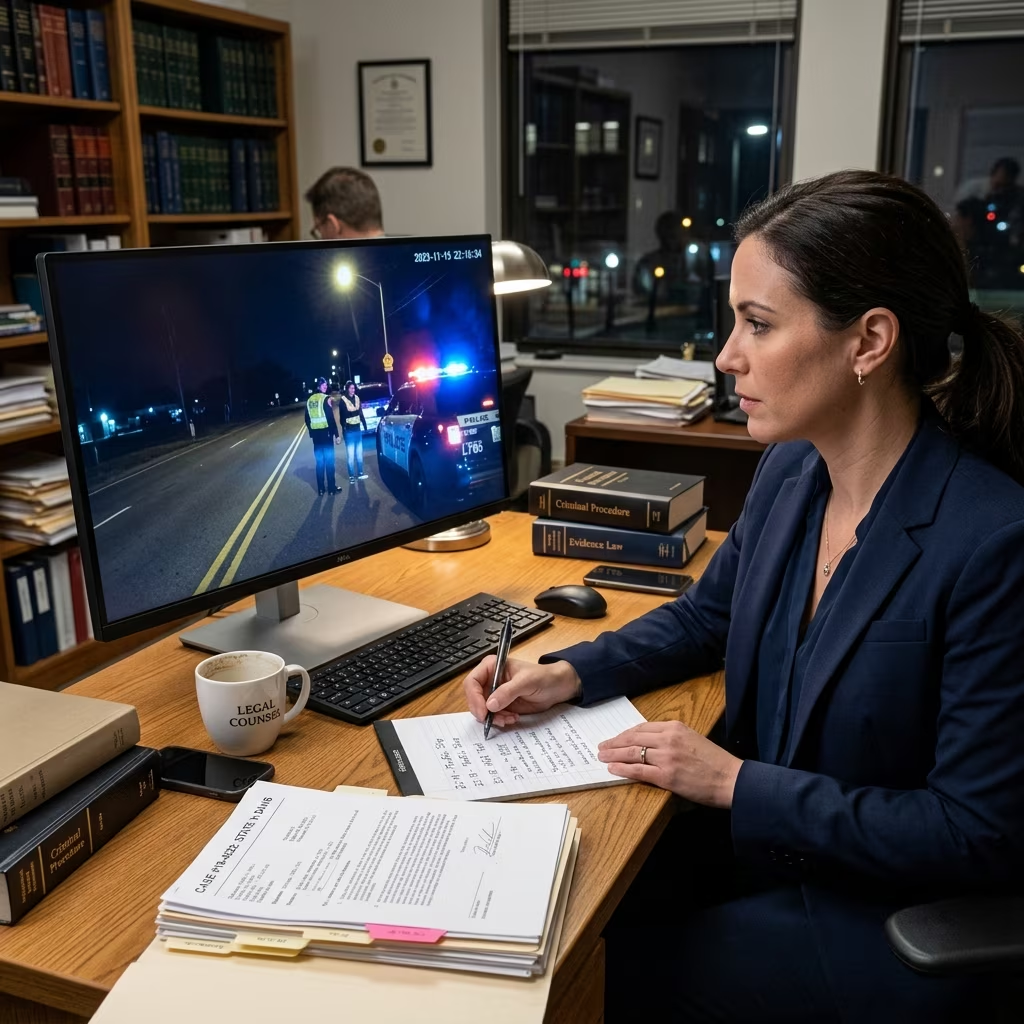
Police dashcam systems have changed the way criminal cases are investigated, negotiated, and tried in court. The footage recorded during traffic stops, roadside investigations, and arrests can either strengthen the prosecution’s case or provide a powerful foundation for the defense. Understanding what this video is, how it is obtained, and how lawyers use it can make a significant difference in the outcome of a criminal case.
This guide explains how police dashcam video fits into criminal investigations, what rights defendants have to request and review it, how courts decide whether it can be used as evidence, and the ways defense attorneys strategically rely on – or challenge – these recordings.
What Is Police Dashcam Footage and Why It Matters
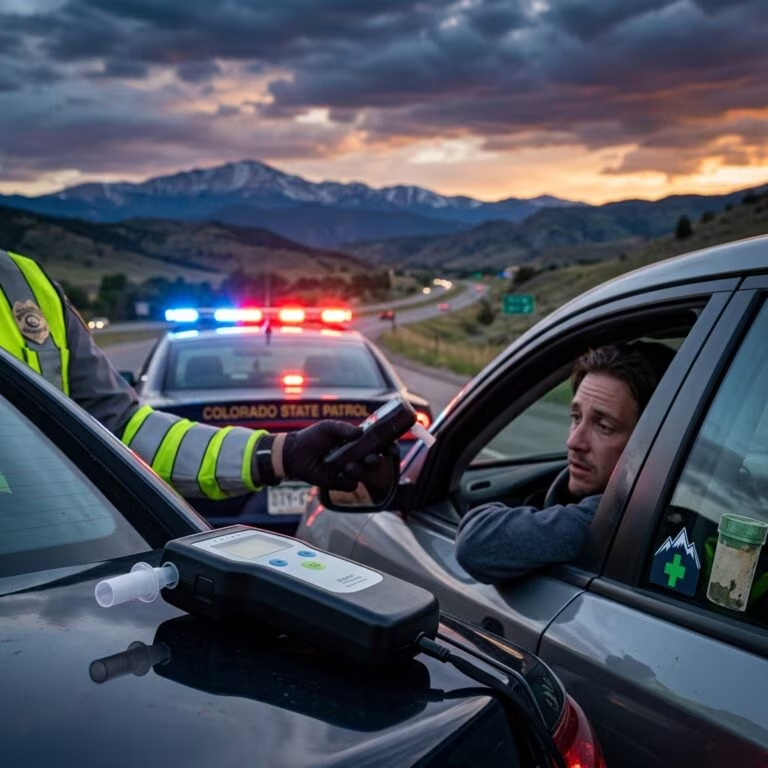
Police dashcam footage is video (often with audio) recorded from a camera mounted in a patrol vehicle, typically pointing toward the front of the car. The camera may record:
- Traffic stops and initial officer–driver interactions
- Field sobriety tests in DUI or DWI investigations
- Searches of vehicles following traffic stops
- Vehicle pursuits and roadside detentions
- Arrests and transport of suspects
In many jurisdictions, dashcam systems work alongside police body-worn cameras, creating multiple angles on the same encounter. These recordings are often treated as “law enforcement agency recordings” subject to specific statutes and rules.
How Dashcam Video Can Influence a Criminal Case
Dashcam footage can play a role at nearly every stage of a criminal case, from the decision to file charges to plea negotiations and trial.
Key ways dashcam video can affect the outcome
- Confirming or contradicting police reports – Video may support an officer’s account or expose inconsistencies about how a stop or arrest unfolded.
- Testing whether a stop was legal – Footage of driving behavior can show whether the officer had reasonable suspicion or probable cause to pull a driver over.
- Evaluating field sobriety tests – In DUI cases, recordings can reveal how instructions were given, whether the surface was level, or whether the driver appeared impaired or confused.
- Showing the defendant’s demeanor – Video can demonstrate that a suspect was calm and cooperative – or, conversely, aggressive or unresponsive.
- Capturing incriminating statements – Audio may include admissions, statements about drug or alcohol use, or comments that the prosecution uses to prove guilt.
- Documenting officer conduct – Footage can show whether officers used excessive force, failed to read Miranda rights at the proper time, or conducted an unlawful search.
How Defense Lawyers Obtain Police Dashcam Video
Access to police dashcam recordings is not always automatic, and procedures differ by state. In many cases, defense lawyers use a combination of discovery rules, court orders, and specialized statutes to gain access.
Common routes to obtain dashcam footage
- Criminal discovery rules – In most states, prosecutors must turn over relevant evidence to the defense, including dashcam and bodycam video that relates to the charge.
- Special public records statutes – Some states classify law enforcement video as a special category of public record, with unique procedures for release. For example, the North Carolina Supreme Court has held that defendants must use a petition under N.C. Gen. Stat. §132-1.4A rather than standard subpoenas to obtain law enforcement recordings.
- Court orders and motions – When agencies resist disclosure, defense lawyers may file motions asking a judge to order production and set any restrictions on use.
- Informal requests or negotiations – In some cases, prosecutors voluntarily provide video early to facilitate plea discussions or comply with their constitutional duties.
Freedom of Information or public records acts can be helpful in some contexts, but many states exclude or limit access to law enforcement video through those general laws and instead require use of specialized rules.
When Dashcam Footage Becomes Admissible Evidence
Not every recording automatically becomes evidence in court. For dashcam footage to be shown to a jury, it must meet legal standards of relevance and admissibility.
Core requirements for admissibility
| Requirement | What the court looks for |
|---|---|
| Relevance | The video must help prove or disprove a fact that matters to the case, such as how a defendant was driving or whether a search was consensual. |
| Authentication | Someone with knowledge (often an officer or technician) must testify that the video comes from the dashcam, accurately reflects what happened, and has not been altered. |
| Chain of custody | The prosecution or defense must show how the recording was stored, who had access to it, and that it is the same file that was originally captured. |
| Technical integrity | The court may consider timestamps, GPS data, and any signs of editing, missing segments, or malfunctions. |
| Compliance with rules of evidence | The video must not violate other rules (for example, improperly obtained evidence may be suppressed, or highly prejudicial footage may be excluded). |
As long as these requirements are met, courts in many jurisdictions generally allow dashcam video to be used as evidence, especially when recorded in public and clearly connected to the events at issue.
How Dashcam Evidence Can Help the Defense
When used strategically, dashcam footage can become a key part of a defense strategy. In some cases, it leads to reduced charges or even dismissal.
1. Challenging the legality of the stop
A criminal case involving a traffic stop often begins with the question: did the officer have a lawful basis to pull the driver over? Dashcam footage can show whether there was:
- Actual lane weaving, speeding, or other traffic violations
- Equipment violations like broken lights that officers cite as reasons for the stop
- Clear weather and visibility conditions undermining the officer’s explanation
If the video undercuts the officer’s stated reasons, the defense may file a motion to suppress all evidence obtained after the stop, arguing that it violated the Fourth Amendment.
2. Testing field sobriety and DUI evidence
In DUI or DWI cases, videos of roadside sobriety tests can be especially important. The defense may analyze:
- Whether instructions were clear or confusing
- Conditions such as poor lighting, uneven pavement, or traffic noise
- Signs of medical issues, fatigue, or anxiety that may mimic intoxication
- Whether the officer correctly administered standardized tests
When a video shows a defendant standing, walking, and speaking normally, it can weaken claims of impairment, support a reduction in charges, or even lead to a not-guilty verdict.
3. Exposing inconsistencies in police reports
Police reports are written after events occur and often summarize what happened from the officer’s perspective. Dashcam recordings create a more objective record. By comparing the video with written reports and testimony, defense lawyers may show that:
- The officer overstated the driver’s behavior (for example, exaggerating weaving or slurred speech)
- Events occurred in a different sequence than described
- Key facts claimed in the report do not appear on video at all
These discrepancies can undermine the credibility of the prosecution’s witnesses and create reasonable doubt.
4. Documenting coercion, force, or rights violations
Dashcam audio and video can capture:
- Whether Miranda warnings were given at the correct time
- Threats or promises made to obtain consent to search
- Excessive or unnecessary use of force during an arrest
Evidence of constitutional violations may lead to suppression of statements or physical evidence, or support civil claims against the agency or officers involved.
When Dashcam Evidence Can Hurt the Defense
Dashcam footage is not inherently “good” for one side. It is neutral, and sometimes it creates problems for a defendant’s case.
Ways dashcam video can undermine a defense
- Showing incriminating driving behavior – Footage may clearly capture speeding, weaving, running lights, or other violations that justify the stop and support the charges.
- Revealing incriminating statements – A defendant may admit to drinking, drug use, or other wrongdoing on camera.
- Documenting non-cooperation – Refusal to follow instructions, aggressive language, or attempts to flee can appear damaging to a jury.
- Helping prosecutors link other offenses – The video may lead investigators to additional evidence, such as contraband visible in the vehicle.
Dashcam footage can even be used against a driver whose own personal dashcam recorded the events, particularly if police lawfully seize the device during an arrest or obtain a search warrant to access its contents.
Personal Dashcams vs. Police Dashcams
Many drivers now use their own dashboard cameras. These devices can capture accidents, interactions with police, and other road events. While personal dashcams serve a different purpose from police equipment, the footage is often treated similarly in court.
| Aspect | Police Dashcam | Personal Dashcam |
|---|---|---|
| Owner | Law enforcement agency | Individual driver |
| Typical purpose | Document traffic stops, enforcement activity, and officer conduct | Record accidents, provide evidence for insurance, or document interactions |
| Access rules | Governed by criminal discovery and special statutes covering law enforcement video | Subject to general rules of evidence; police may need consent, a warrant, or lawful seizure to obtain footage |
| Use in court | Frequently used by both prosecution and defense; must be authenticated and relevant | Can help prove fault or support defenses, but may also be used against the owner if it shows unlawful conduct |
If law enforcement suspects that a personal dashcam contains evidence of a crime, they may seize the device during an arrest or obtain a search warrant to access its memory. Once the footage is recognized as potential evidence, both sides must avoid destroying or altering it, to prevent obstruction-of-justice issues.
Legal and Practical Limits on Dashcam Evidence
Even when a video exists, legal and practical issues sometimes limit how useful it will be in a case.
Common limitations
- Camera angle and coverage – A forward-facing dashcam may not capture events at the driver’s window or inside the vehicle.
- Audio problems – Wind, traffic noise, or malfunctioning microphones may render audio incomplete or unintelligible.
- Missing or incomplete footage – Recordings can be lost because of technical failures, storage limits, or human error, not necessarily intentional misconduct.
- Retention policies – Agencies often have specific retention periods. Routine recordings may be overwritten after a set number of days unless preserved for an investigation.
When important video is missing, defense lawyers may ask courts to investigate why, whether any rules or preservation obligations were violated, and what remedies are appropriate.
Best Practices for Defendants and Drivers
If you are involved in an encounter with the police, whether as a defendant or simply a motorist stopped on the road, there are practical steps that may help protect your rights around dashcam evidence.
- Consult a lawyer before sharing personal dashcam video – Footage that seems helpful might also reveal incriminating details. Many legal guides advise drivers to speak with an attorney before turning over personal dashcam footage to police or insurers.
- Do not destroy or alter recordings – Once you know that video could relate to a possible case, deleting or changing it may create serious legal problems, including potential obstruction accusations.
- Request preservation early – Defense attorneys often send preservation letters to police departments or prosecutors asking that dashcam and bodycam footage be retained.
- Ask your attorney to review the full file – Sometimes only short clips are initially provided. Lawyers may insist on complete, unedited recordings to understand the full context.
Frequently Asked Questions About Police Dashcam Video
Is police dashcam video always available in a criminal case?
No. Some patrol cars do not have dashcams, some cameras malfunction, and some recordings are lawfully overwritten under agency retention policies if no one requests preservation in time. Even when a camera was present, footage may be incomplete.
Can dashcam footage be used against me?
Yes. As long as it was lawfully obtained and properly authenticated, dashcam video can be used by the prosecution to show driving behavior, field sobriety tests, statements, or other evidence of guilt. It can also be used to impeach your testimony if your description of events conflicts with the recording.
Can dashcam footage help get my charges reduced or dismissed?
It can. When video undermines the stated reasons for a traffic stop, shows improper testing procedures, or contradicts key parts of an officer’s report, defense lawyers may use it to seek dismissal, suppression of evidence, or more favorable plea offers.
Do I have the right to see police dashcam footage in my own case?
In many jurisdictions, yes, through criminal discovery rules that require the prosecution to share relevant evidence with the defense. However, some states require defendants to follow special procedures or petitions to access law enforcement video, especially before charges are fully resolved.
What if I think police destroyed or hid dashcam footage?
If there are reasons to believe that critical video once existed but is now missing, your attorney can raise the issue with the court and request information about retention policies, storage systems, and any explanations for the loss. Remedies depend on whether the loss was intentional, negligent, or unavoidable.
Should I install my own dashcam?
That is a personal decision. A properly positioned dashcam can help establish what happened in an accident or police encounter, but any recorded misconduct by the driver could also become evidence in a criminal or civil case. Many lawyers recommend seeking legal advice about retaining and sharing personal dashcam footage after any serious incident.
References
- How Dashcam Footage Can Affect an Oklahoma Criminal Case — Taylor, Taylor & Stafford, PLLC. 2026-06-12. https://www.ttsblaw.com/blog/2026/06/how-dashcam-footage-can-affect-an-oklahoma-criminal-case/
- State v. Chemuti: Obtaining Video Evidence in North Carolina — Law Office of Jesse G. Craycraft, PLLC. 2024-05-01. https://www.carolinaattorneys.com/blog/north-carolina-video-evidence-chemuti/
- Can Dash Cam Footage Be Used in Court? — Cobra Electronics. 2023-10-18. https://www.cobra.com/blogs/news/can-dash-cam-footage-be-used-in-court
- Body Cam and Dash Cam Evidence in Drug Cases — Eppes & Plumblee, P.A. 2023-11-07. https://www.eppesandplumblee.com/blog/body-cam-and-dash-cam-evidence-in-drug-cases/
- Can Dashcam or Bodycam Footage Help Your DUI Defense in IL? — Hartsfield Law. 2026-01-15. https://www.hartsfield-law.com/blog/can-dashcam-or-bodycam-footage-help-your-dui-defense
- Can a Personal Dash Cam Be Used Against Me in My Criminal Case? — Rittgers Rittgers & Nakajima. 2024-12-02. https://www.rittgers.com/blog/2024/12/can-a-personal-dash-cam-be-used-against-me-in-my-criminal-case/