
When Police Arrest People for Filming: Rights, Risks, and a $200K Lesson
How a photojournalist’s $200,000 settlement highlights your constitutional right to record police and what to do when that right is violated.
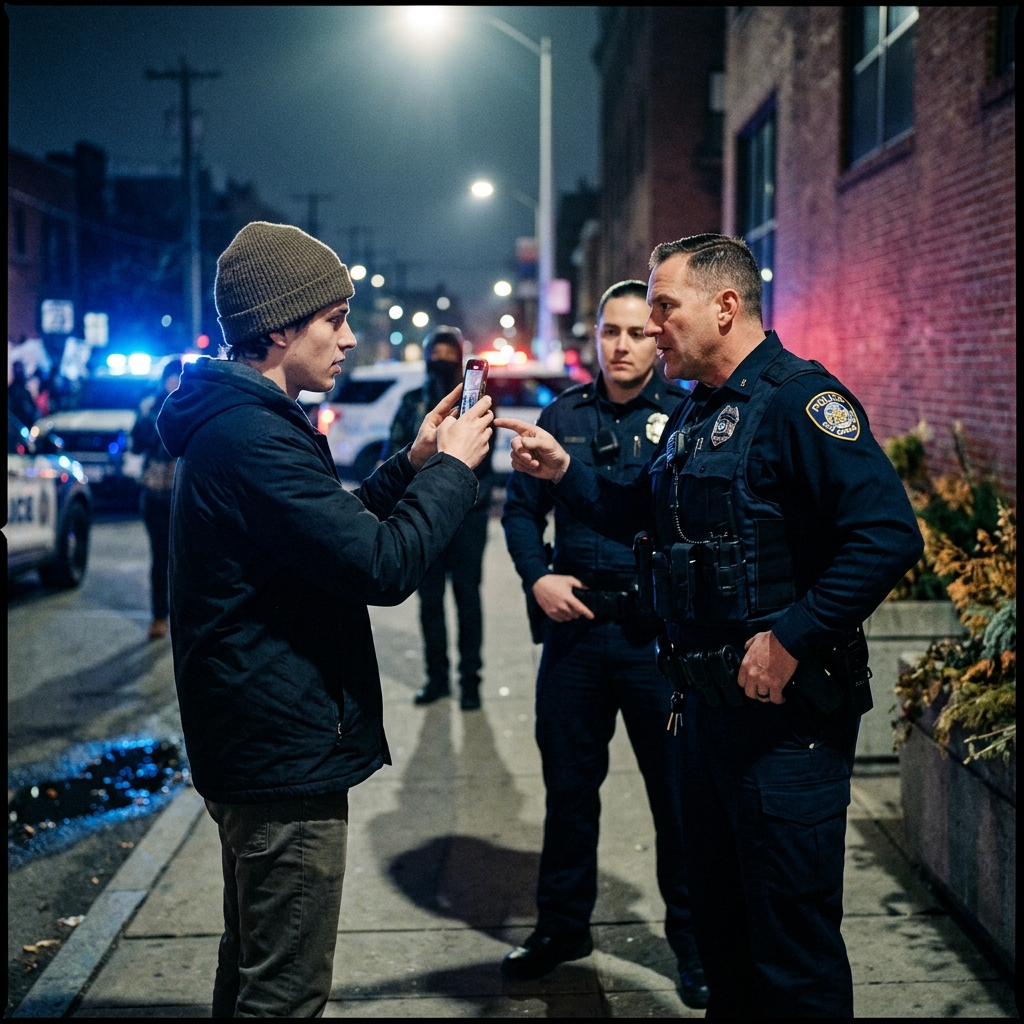
In recent years, videos of police encounters have shaped public debate, triggered investigations, and even changed laws. At the center of many of these moments is a simple act: someone holding up a phone or camera and pressing record. In one notable incident on Long Island, a freelance photojournalist was arrested while documenting the aftermath of a police chase, later securing a $200,000 settlement and commitments that officers would receive training on First Amendment rights. That case offers a powerful lens for understanding what the law says about filming police, how arrests can turn into civil rights lawsuits, and what you can do if your rights are violated.
Why Recording Police Matters
Recording police officers is not just about curiosity or viral content. It plays a crucial role in transparency, accountability, and public safety. Courts and policymakers have increasingly recognized that cameras, whether held by journalists or ordinary bystanders, can reveal misconduct, vindicate innocent people, and improve community trust in law enforcement.
- Documentation of events – Video provides an objective record that can be used in court, internal investigations, and news reporting.
- Deterrence of abuse – Knowing they are being recorded can encourage officers to follow policies and constitutional limits.
- Empowerment of the public – Ordinary people can participate in oversight by sharing footage with lawyers, journalists, or oversight bodies.
- Protection for officers – Recordings can also disprove false complaints against police and clarify chaotic situations.
These benefits are part of why multiple federal appellate courts have affirmed that the First Amendment protects the right to record officers performing their duties in public, subject to reasonable restrictions on time, place, and manner.
The Long Island Journalist’s Arrest and Settlement
The Long Island case involved Philip Datz, a freelance journalist who went to the scene of a police chase with his camera. He was positioned in a public area and attempting to document official activity. According to reports, officers told him to leave and ultimately arrested him when he continued filming. The charge was based on alleged interference, a claim that is familiar from other incidents around the country where officers argue that recording obstructs official business.
Datz challenged the arrest in court, alleging that officers violated his constitutional rights and engaged in wrongful conduct. The case ended with a civil settlement in which:
- The city agreed to pay $200,000 to resolve his claims.
- The police department committed to training its officers on citizens’ and journalists’ rights to record.
While settlements typically include no formal admission of wrongdoing, the combination of compensation and required training sends a clear message: arresting someone simply for recording police in public can create significant legal exposure for a department.
Legal Foundations: The Right to Record Police
The journalist’s case is part of a broader legal trend recognizing that recording police is protected by the First Amendment. Federal courts have repeatedly held that the act of documenting public officials performing their duties is a form of information gathering and expression subject to constitutional protection.
First Amendment Protection
The First Amendment safeguards freedom of speech, press, and the right to receive information. This has been interpreted to cover the use of phones or cameras to record public officials in public spaces, especially when there is no interference with lawful tasks.
- Public location – Filming in streets, sidewalks, parks, and similar areas is generally protected.
- On-duty officers – Law enforcement officers performing official duties have limited expectations of privacy in public.
- News gathering – Courts recognize gathering news as a core press function, but protections also extend to non-journalists.
In Denver, for example, editor Susan Greene was handcuffed after photographing an officer’s interaction with a detained man on a sidewalk. That incident led to a settlement and a requirement that officers receive First Amendment training, reflecting similar principles.
Privacy and Consent Considerations
Some states have laws that require consent before recording private conversations, often called “two-party consent” laws. However, these statutes typically focus on private communications, not on recording visible interactions in public. Courts have generally held that on-duty officers in public cannot claim privacy rights to shield themselves from being recorded.
- Private vs. public – Recording a phone call may require consent in some states, but filming a traffic stop on a public road usually does not.
- Medical or sensitive scenes – Officers may cite medical privacy laws, but these do not automatically override First Amendment protections when filming from a lawful vantage point.
- Reasonable distance – You can generally record as long as you are not physically interfering or entering restricted areas.
Common Police Justifications for Arrests When Filmed
When officers arrest or order people to stop recording, they often rely on a few recurring justifications. Understanding these helps you evaluate whether an encounter is likely lawful or potentially abusive.
| Officer Justification | Typical Legal Issue | Risk of Abuse |
|---|---|---|
| “You are interfering with official business.” | Interference statutes require actual obstruction, not mere recording from a distance. | High, if the person is behind tape or staying clear of the scene. |
| “You must leave this area.” | Officers can control crime scenes but cannot selectively exclude people based on viewpoint. | Moderate to high, if others are allowed to remain in similar positions. |
| “Privacy laws prohibit filming.” | Public recording of officials usually remains protected despite privacy claims. | High, if privacy laws are misapplied to suppress coverage. |
| “You are creating a safety hazard.” | Reasonable limits on distance and positioning are allowed. | Low to moderate, depending on actual proximity and crowd conditions. |
In both the Long Island and Denver cases, journalists reported staying outside official perimeters and yet were arrested or detained, raising serious questions about whether “interference” or “privacy” concerns were legitimately applied.
When an Arrest Becomes a Civil Rights Case
An arrest stemming from recording can cross the line into a civil rights violation, especially if it was made without probable cause or in retaliation for protected expression. In such cases, the person arrested may pursue legal remedies.
Potential Claims
Common claims raised in lawsuits include:
- False arrest – Alleging that the officer lacked a lawful basis to take someone into custody.
- Malicious prosecution – Claiming officers or agencies pursued charges without probable cause, often to punish protected conduct.
- First Amendment retaliation – Asserting that the arrest was motivated by disapproval of recording or speech.
- Excessive force – Where handcuffing, physical restraint, or other actions go beyond what is reasonable.
In Cincinnati, for instance, journalist Calvin Andrus sued the city and an officer after being handcuffed and detained for refusing to stop filming a crime scene, alleging false arrest and malicious prosecution, and seeking damages for emotional distress and medical costs. The Long Island settlement likewise reflects how such claims can lead to substantial monetary compensation and policy changes.
Types of Damages
Civil rights and personal injury suits may seek several kinds of relief:
- Compensatory damages – For medical expenses, lost wages, emotional distress, and reputational harm.
- Punitive damages – In some cases, to punish egregious misconduct and deter future violations.
- Injunctive relief – Court orders requiring policy changes, training, or new supervisory procedures.
- Attorney’s fees – Recovery of legal costs under certain civil rights statutes.
Even when a case ends in a settlement, rather than a verdict, the combination of monetary payment and institutional reform can be significant. The Long Island journalist’s $200,000 settlement and training commitments echo Denver’s $50,000 settlement and required First Amendment training for officers.
Practical Guidance: How to Record Safely and Assert Your Rights
Knowing you have a right to record is one thing; exercising it safely in a tense situation is another. The following practical steps can help reduce your risk while preserving important footage.
Best Practices While Recording
- Keep a safe distance – Stay outside any crime scene tape or designated perimeter and avoid physically entering areas officers have lawfully restricted.
- Do not obstruct – Do not block officers’ movement, vehicles, or access to evidence or injured people; you can record from the side or from a distance.
- Remain calm and respectful – Speak calmly, avoid sudden movements, and clearly state that you are exercising your right to record.
- Secure your footage – Use cloud backup, livestreaming, or automatic uploads in case your device is seized or damaged.
- Film the whole encounter – If an officer confronts you, continue recording interactions, including badge numbers and verbal commands.
Responding to Officer Demands
If an officer orders you to stop recording, leave, or hand over your device, consider the following:
- Ask politely: “Am I being detained or am I free to go?”
- Request clarification: “Can you explain what law you believe I am violating?”
- Do not physically resist: Even if you believe an order is unlawful, physical resistance can increase risk.
- Mentally note details: Time, location, officers’ names, badge numbers, and any witnesses.
- Preserve evidence: If possible, upload footage and write down your recollection soon after the incident.
Remember that even if you comply in the moment to avoid escalation, you can later challenge unlawful acts through complaints or legal action.
What to Do After an Arrest or Confrontation
If you are arrested, detained, or have your device seized while recording police, the steps you take afterwards can shape both your personal recovery and the outcome of any legal claims.
- Seek medical attention – If you experience injury, anxiety, chest pains, or other symptoms, get evaluated and keep records, as seen in cases where detained journalists reported panic attacks and required hospitalization.
- Consult an attorney – A lawyer experienced in civil rights or personal injury can assess whether you have actionable claims and advise on deadlines.
- Collect documentation – Arrest reports, charging documents, medical records, and corroborating videos or photos are critical.
- Consider filing a complaint – Many departments have internal affairs or civilian review boards to investigate allegations of misconduct.
- Evaluate broader impact – Some cases support policy reforms, training programs, or public education about rights, as the Long Island and Denver settlements demonstrate.
Frequently Asked Questions (FAQs)
Can I record police officers in public if I am not a journalist?
Yes. The right to record police in public generally applies to everyone, not only professional journalists. Courts and settlements often refer to both “journalists and the general public” when discussing this protection.
Can police order me to stop recording?
Officers may impose reasonable limits related to safety and scene control, such as requiring you to stand behind tape or stay out of a particular area. However, they typically cannot forbid recording altogether simply because they dislike being filmed or claim broad privacy interests.
What if my state has a consent-based recording law?
Consent-based recording statutes usually address private conversations, not filming visible interactions in public. On-duty officers generally have no reasonable expectation of privacy in their public actions, and numerous decisions recognize that filming law enforcement is constitutionally protected.
Is it worth suing over an arrest that ended quickly?
It can be. Even short detentions can cause emotional distress, physical symptoms, and reputational harm. As seen in cases where journalists were briefly arrested or handcuffed but later obtained settlements and policy changes, litigation may both compensate individuals and encourage systemic reform.
What kinds of reforms can come from these cases?
Settlements and court orders often require departments to conduct First Amendment trainings, review policies on recording, and sometimes update guidelines for officer interactions with the press and public. These reforms can reduce future conflicts and clarify expectations for both officers and community members.
References
- A journalist arrested while filming a crime scene sues Cincinnati and a police officer — Associated Press. 2023-10-11. https://apnews.com/article/cincinnati-journalist-arrest-filming-crime-scene-3de2d31ef7108fbc362cb991c076e0f0
- Denver police officers arrest journalist for taking photos — U.S. Press Freedom Tracker. 2019-10-01. https://pressfreedomtracker.us/all-incidents/denver-police-officers-arrest-journalist-taking-photos/
- ‘Act Like a Lady’: Police Video Shows Detention of Denver Journalist — NBC. 2019-09-18. https://www.nbcphiladelphia.com/news/national-international/police-video-shows-detention-of-denver-journalist/2096843/
- Journalist Arrested for Recording Police Gets $200K Settlement — FindLaw Legal Blogs. 2015-08-31. https://www.findlaw.com/legalblogs/personal-injury/journalist-arrested-for-recording-police-gets-200k-settlement/
Similar Articles








Read full bio of Sneha Tete




