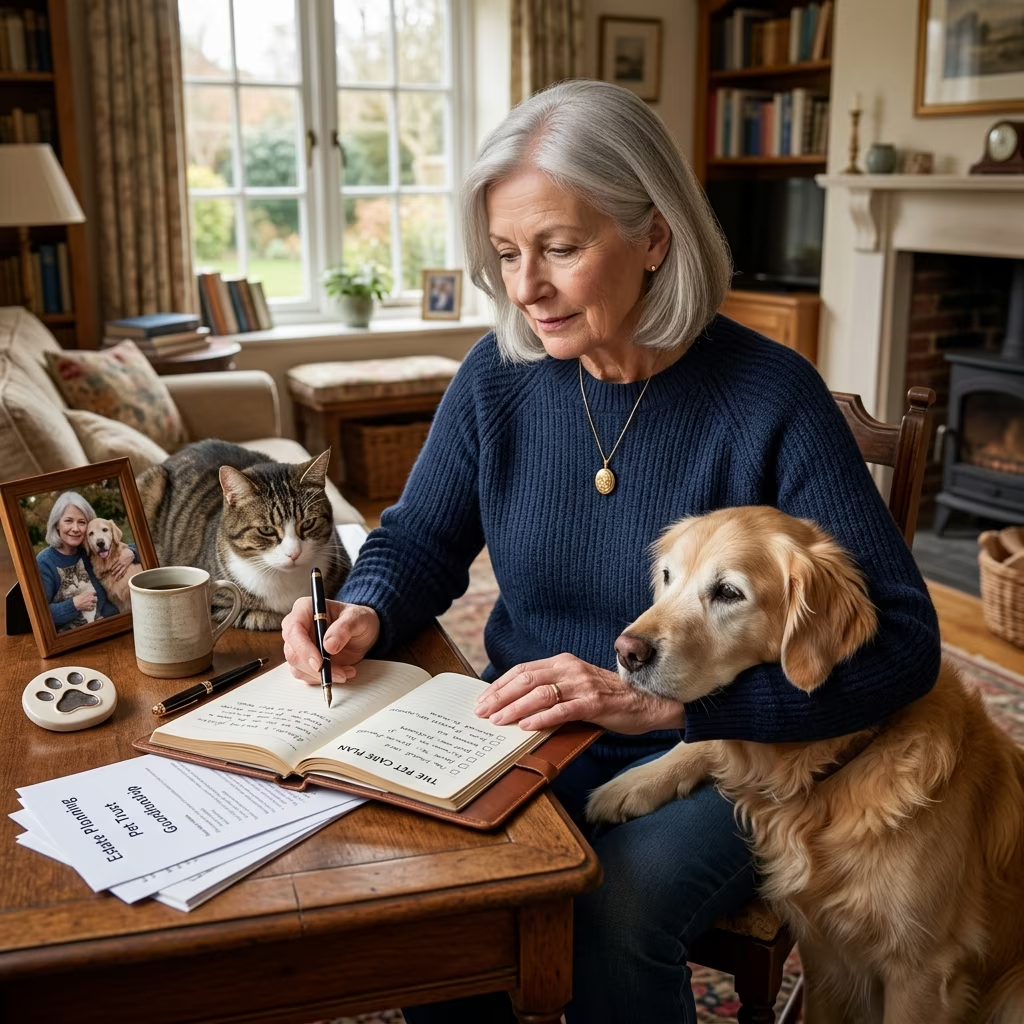
Pets depend on people for food, housing, medical care, and routine. When an owner dies, those needs do not disappear, which is why pet planning belongs in a serious estate plan. A clear plan can reduce uncertainty, prevent disputes, and make sure an animal’s daily life is protected by someone who understands the owner’s wishes.[10]
In most places, pets are treated as property under the law, which means they cannot inherit money directly. That makes it important to use legal tools such as a will, a pet clause, or a pet trust to name a caregiver and set aside resources for ongoing care.[10]
Why pet planning matters
Many owners assume that a family member will naturally step in, but informal promises are not always enough. A written plan helps make the transition smoother and gives the caregiver authority and financial support. Without one, a pet may end up with a person who is unprepared, unwilling, or unable to provide the right level of care.
Pet planning is especially important for animals with special diets, medical needs, long lifespans, or behavioral requirements. The more individualized the pet’s routine, the more valuable it is to document that routine in advance.[10]
Start by choosing the right caregiver
The first decision is not about money; it is about people. The ideal caregiver is someone who understands the animal, lives in a suitable environment, and has the time and willingness to take on the responsibility. It is best to speak with the person directly before naming them in legal documents.
That conversation should cover practical issues such as the pet’s temperament, diet, exercise habits, grooming needs, and veterinary history. A caregiver who agrees in principle may still need written guidance to carry out those duties correctly.[10]
- Name at least one primary caregiver.
- Identify one or more backup caregivers in case the first choice cannot serve.
- Confirm the person’s willingness to accept the role in writing when possible.
- Share veterinary records, feeding instructions, and any behavior notes with the future caregiver.
Explain the pet’s standard of care in detail
A good plan does more than name a person. It also describes the animal’s normal way of life. This is important because pet care can be highly specific. Some animals need daily medication, special food, or regular bathing. Others need social interaction, room to roam, or limits on contact with other animals.[10]
Written instructions can help preserve continuity after the owner dies. They also reduce the chance that a trustee or caregiver will guess at what “good care” means. Clear instructions can include the pet’s favorite foods, exercise schedule, sleeping arrangements, veterinary provider, and end-of-life preferences.[10]
| Planning topic | What to document | Why it matters |
|---|---|---|
| Health care | Medications, diagnoses, vaccinations, vet contact | Supports safe and consistent treatment |
| Daily routine | Feeding times, walks, grooming, sleep habits | Reduces stress during transition |
| Housing | Indoor/outdoor preferences, crate use, bedding | Helps maintain familiar living conditions |
| Behavior | Triggers, training cues, social needs | Improves safety and stability |
Decide whether a will is enough
For some owners, a simple will provision may be sufficient. A will can name the person who should receive the pet and can also direct that money be used for care. This approach may work when the owner trusts the caregiver and the pet’s needs are straightforward.
However, a will alone can be limited. It does not always provide the level of supervision or enforceability that a more detailed trust can offer. It may also be less useful if there is a concern that family members could disagree about who should keep the pet.[10]
Another issue is timing. A will generally takes effect only after probate begins, so it may not solve immediate care needs if the owner becomes incapacitated or dies unexpectedly. That is one reason some owners add a separate plan for temporary care.[10]
Understand how a pet trust works
A pet trust is a more structured legal arrangement. It can be designed to provide for a companion animal if the owner becomes incapacitated or dies, and it can include instructions for the use of funds, the appointment of a trustee, and oversight provisions.[10]
Pet trusts are valuable because they separate duties. One person can manage the money while another provides day-to-day care. That division can create accountability and make it easier to follow the owner’s instructions precisely.[10]
Pet trusts can also be built to include monitoring, successor appointments, and a plan for leftover money after the pet dies. Because state law varies, owners should review local rules before creating one.[10]
How much money should be set aside?
Funding is one of the most important parts of the plan. A caregiver may be willing to help, but the arrangement works best when the money matches the animal’s expected needs. A practical way to estimate the amount is to calculate annual care costs and then multiply by the animal’s likely remaining lifespan.
Owners should think broadly about costs. Food, medicine, grooming, boarding, transportation, and emergency veterinary care can all add up. Some owners also choose to cover the costs of inspections, administrative fees, or special arrangements such as moving a pet to a new home.[10]
- Estimate yearly food and veterinary expenses.
- Add recurring costs such as grooming, training, or medication.
- Include a buffer for emergencies or unexpected treatment.
- Consider whether the caregiver needs reimbursement for travel or boarding.
Ways to fund future pet care
There are several ways to provide money for an animal’s future care. Some owners prefer a lump sum in trust. Others use life insurance proceeds, monthly distributions, or another steady funding method. The right approach depends on the owner’s assets, the pet’s needs, and the amount of oversight desired.
A lump sum may be simple to administer, but regular payments can make budgeting easier for the caregiver. A life insurance policy may also be useful when the owner wants to create a larger reserve without transferring all assets immediately.
| Funding method | Best for | Main advantage |
|---|---|---|
| Lump sum | Clear, one-time funding | Easy to establish and track |
| Monthly distributions | Ongoing routine care | Helps control spending over time |
| Life insurance | Long-term or high-cost care | Can create a larger pool of funds |
Plan for backup people and backup outcomes
Good planning assumes that the first choice may not be available. A caregiver could move, become ill, or decide not to serve. A trustee could also become unable to manage funds. Naming backups makes the plan more durable.[10]
It is also wise to decide what should happen if the animal dies earlier than expected and money remains in the trust. Many owners direct leftover funds to family members, a charity, or an animal welfare organization. That instruction prevents disputes and helps ensure the remainder is distributed according to the owner’s wishes.[10]
Keep the plan aligned with state law
Estate rules for pets are not identical everywhere. Some states provide specific authority for pet trusts, while others rely on broader trust or property law. If the caregiver lives in another state, the owner should consider whether that state’s rules could affect administration or transfer of care.[10]
Because of those differences, the safest approach is to work with an estate-planning lawyer who understands the local rules. That is especially important for owners with multiple animals, valuable estates, or pets with expensive medical needs.[10]
Common mistakes to avoid
One common mistake is relying on an informal conversation instead of a written plan. Another is naming a caregiver without asking for consent. A third is funding the arrangement too lightly, which can leave the caregiver responsible for more than the plan actually covers.[10]
Owners also sometimes forget to update their documents after major life changes. A relocation, divorce, new pet, new diagnosis, or change in finances can all affect the plan’s effectiveness. Reviewing the plan regularly helps keep it current.
Frequently asked questions
Can I leave money directly to my pet? No. Because pets are generally treated as property, the law does not allow them to inherit money directly. Instead, owners typically use a trust or similar arrangement that directs funds to a human caregiver or trustee.[10]
Is a pet trust better than a will? It depends on the situation. A will may work for a simple plan, but a pet trust usually gives more control, oversight, and funding flexibility. It is often the stronger choice when the animal has long-term or complex needs.[10]
Do I need to name more than one caregiver? It is strongly advisable. Backup caregivers reduce the risk that a pet will be left without a suitable home if the first choice cannot serve.[10]
How detailed should my instructions be? Very detailed. The more specific the plan is about food, medicine, schedule, behavior, and housing, the easier it will be for the caregiver to follow it faithfully.[10]
What happens to leftover funds after my pet dies? The owner should name a remainder beneficiary in advance. That can be a family member, charity, or another organization chosen in the estate documents.[10]
Putting the plan into action
The best pet plan is one that is both legally valid and practically usable. That means choosing the right caregiver, documenting daily needs, setting aside enough money, and creating backup instructions that reflect the realities of the animal’s life. A thoughtful plan can give owners peace of mind and give pets a far better chance of receiving steady care after a difficult transition.[10]
For many owners, the process begins with a conversation and ends with a carefully drafted document. Between those two steps, the goal is the same: to make sure the animal’s future is not left to chance.
References
- Estate Planning for Pets in California — Garmo Law. n.d. https://garmolaw.com/areas-of-practice/estate-planning/estate-planning-for-pets/
- Estate Planning for Pets: Secure Their Future — LegalShield. n.d. https://www.legalshield.com/blog/estate-planning-for-pets
- Estate Planning for Pets | Making Arrangements for Your Pets — Nolo. n.d. https://www.nolo.com/legal-encyclopedia/estate-planning-pets.html
- Estate Planning for Pets: Preparing a Will or Trust — Best Friends Animal Society. n.d. https://bestfriends.org/pet-care-resources/estate-planning-pets-preparing-will-or-trust
- 6 Estate Planning Tips for Pet Owners — Wealthspire. n.d. https://www.wealthspire.com/blog/estate-planning-tips-pet-owners/
- Pet Trust Primer — ASPCA. n.d. https://www.aspca.org/pet-care/pet-planning/pet-trust-primer