
Plain View Doctrine and Car Searches Explained
Understand when police can search or seize items in your vehicle without a warrant under the plain view doctrine and related Fourth Amendment rules.
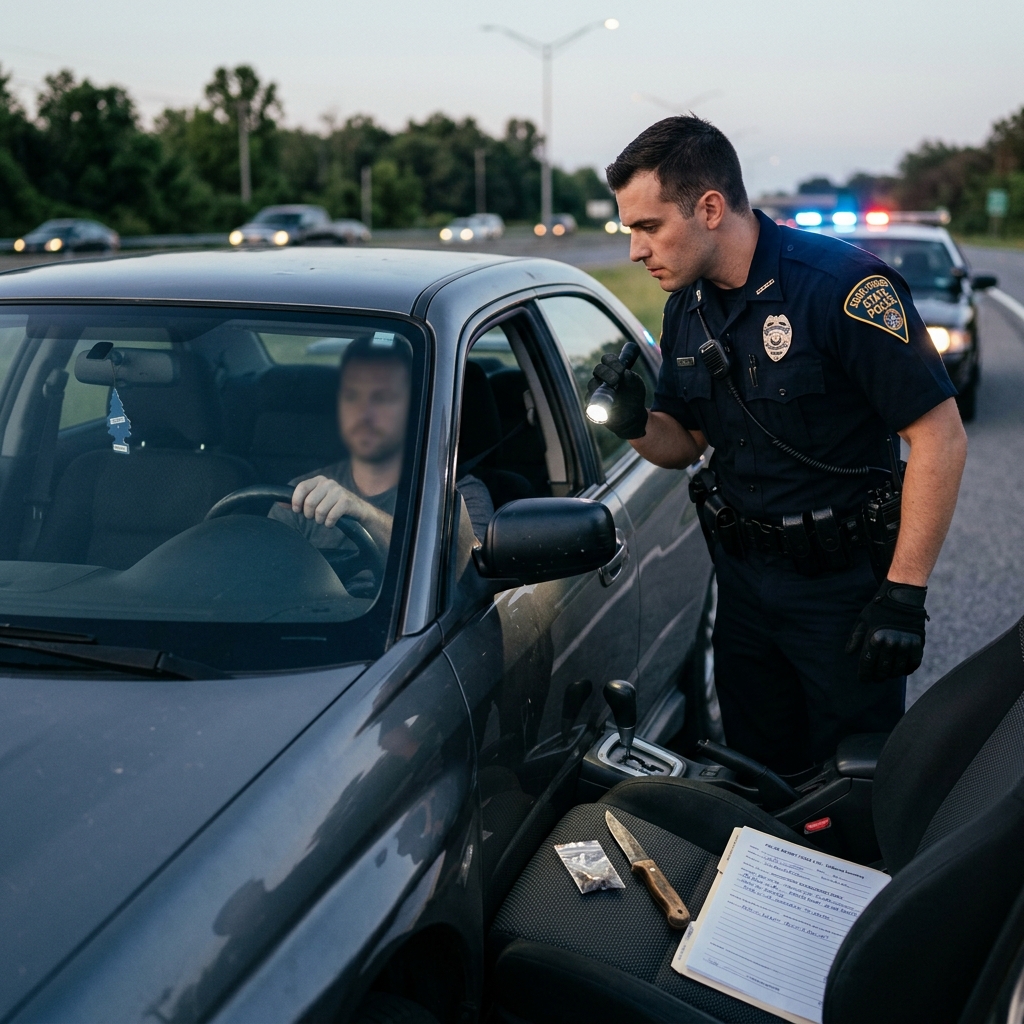
The plain view doctrine is a key exception to the general rule that police need a warrant to search and seize property. During a traffic stop, it often determines whether officers can legally take items from your vehicle and sometimes expand their search without first going to a judge.
This article explains how the doctrine works in the context of car searches, the three core requirements that must be met, how it interacts with the broader automobile exception under the Fourth Amendment, and practical steps drivers can take to protect their rights.
Why the Plain View Doctrine Matters for Drivers
The United States Constitution protects people from unreasonable searches and seizures by the government through the Fourth Amendment. As a general rule, officers need a warrant, backed by probable cause, before they may search a private area or seize property. However, courts have recognized several exceptions to this rule, including:
- Consent searches
- Search incident to a lawful arrest
- Exigent circumstances
- The automobile (vehicle) exception
- The plain view doctrine
For drivers, the plain view doctrine is especially important because it often comes into play during ordinary traffic stops when an officer can see inside the vehicle from a lawful vantage point. A single item visible on the seat or floorboard can create probable cause for arrest or further search.
Core Requirements of the Plain View Doctrine
Courts do not allow officers to rely on the plain view doctrine in every situation where something is visible. Instead, they apply a three-part test to ensure that the seizure does not violate the Fourth Amendment.
1. Lawful Presence
First, the officer must be in a place they are legally allowed to be when they notice the item. Common lawful positions include:
- Standing beside a vehicle during a valid traffic stop
- Approaching a legally parked car on a public street
- Walking along a public sidewalk next to a vehicle
If the officer enters an area where they have no legal right to be—such as entering private property without justification—their vantage point is unlawful, and objects they see there may be excluded from evidence as “fruit of the poisonous tree.”
2. Lawful Access to the Item
Second, the officer must have a legal basis to physically reach the item and seize it. Simply being able to see something does not automatically authorize a more intrusive search.
For example:
- An officer lawfully standing outside an open car door may be able to reach in and pick up a gun lying openly on the seat.
- That same officer is not automatically allowed to open a closed glove box or sealed container without separate probable cause or another exception.
This distinction ensures that the plain view doctrine does not become a broad license to search all areas of a vehicle once anything suspicious is observed.
3. Incriminating Nature Immediately Apparent
Third, the item must clearly appear to be evidence of a crime or contraband to a reasonable officer at the moment it is observed. Courts generally require that the sight (or other sense) of the item itself generates probable cause.
Probable cause is a higher standard than mere suspicion. It is a reasonable belief, based on objective facts, that evidence of a crime is present.
Examples of items that may satisfy this requirement include:
- Distinctive pills in packaging associated with prescription drugs without a clear lawful explanation
- A firearm lying on the seat when the driver is known to be prohibited from possessing one
- Large quantities of cash bundled with drug paraphernalia
By contrast, ambiguous objects that could have innocent explanations—such as ordinary baked goods that might or might not contain marijuana—are less likely to meet the “immediately apparent” standard.
Plain View vs. the Automobile (Vehicle) Exception
The plain view doctrine often overlaps with the separate automobile exception, which allows officers to search a vehicle without a warrant when they have probable cause to believe it contains contraband or evidence of a crime.
| Feature | Plain View Doctrine | Automobile Exception |
|---|---|---|
| Primary Purpose | Allows seizure of items clearly visible from a lawful vantage point. | Allows broader search of vehicle based on probable cause. |
| Warrant Requirement | No warrant needed if requirements are met. | No warrant needed when car is readily mobile and probable cause exists. |
| Scope of Intrusion | Limited to accessing and seizing the item in plain view. | Can include searching compartments and containers that could hold the evidence. |
| Trigger | Observation of incriminating item from lawful vantage point. | Probable cause based on totality of circumstances, which may include plain view observations. |
In practice, an officer may initially rely on the plain view doctrine to seize an item plainly visible in a vehicle. That seizure, combined with other facts, can then provide probable cause to search additional areas of the car under the automobile exception.
How Plain View Arises During Traffic Stops
Plain view issues most often arise in the context of routine traffic encounters. For a plain view seizure to be valid, the underlying stop must itself be lawful.
Lawful Basis for the Stop
Officers typically need at least reasonable suspicion of a traffic violation or other legal basis to stop a vehicle. Once the stop is valid, they may visually inspect the interior from outside the vehicle without a warrant.
Observation from Outside the Vehicle
While speaking with the driver or asking for documents, an officer may look through windows and open doors. Any contraband or incriminating materials that are clearly visible from this lawful vantage point may be seized under the plain view doctrine.
Plain Smell and Other Senses
Although the doctrine is often described in terms of vision, courts have recognized that officers may also rely on other senses, such as smell or sound, when they are lawfully present. For example:
- Strong odor of marijuana coming from the vehicle
- Distinct chemical smell associated with narcotics
- Sounds indicating hidden contraband or weapons
These sensory observations can contribute to probable cause for seizure or further search, though they still must meet constitutional standards.
Limits on Warrantless Car Searches
Even when the plain view doctrine applies, there are important limits on how far officers can go without a warrant.
No Free License to “Tear the Car Apart”
Seeing one suspicious item does not automatically allow officers to dismantle the vehicle or search every container. Search scope remains tied to probable cause and applicable exceptions.
- If probable cause is limited to a specific area (e.g., an open compartment), the search must stay within that area unless new evidence expands the cause.
- If probable cause suggests contraband could be anywhere in the vehicle, officers may search areas and containers that could reasonably hold the item, consistent with the automobile exception.
Suppression of Illegally Seized Evidence
When officers exceed these limits or rely on an unlawful vantage point, defendants may seek to suppress the evidence. Courts can exclude items obtained in violation of the Fourth Amendment, preventing them from being used at trial.
Common Scenarios Involving Plain View in Cars
Real-world encounters vary, but many cases follow similar patterns. The following scenarios illustrate how the doctrine may apply to vehicle stops.
- Contraband on the seat: During a lawful stop for speeding, an officer sees a bag of recognized illegal drugs on the passenger seat. The officer can likely seize the drugs under the plain view doctrine and may have probable cause to search other areas for additional contraband.
- Ambiguous container: An officer notices a closed food container that might contain illegal substances but looks ordinary. Without additional facts, the incriminating nature is not immediately apparent, so opening the container may require consent or independent probable cause.
- Weapon in plain view: A handgun is visible on the floorboard. Depending on local law and the driver’s legal status, this may or may not be incriminating. If possession is unlawful, the officer may seize the gun and investigate further.
- Odor of drugs: The officer smells marijuana while standing next to the open window. Courts have treated strong odor as contributing to probable cause, and combined with other observations it may justify further search under the automobile exception.
Protecting Your Rights During a Vehicle Stop
Drivers cannot control what is already visible inside their cars at the time of a stop, but they can take steps to avoid unnecessary exposure and assert their rights calmly.
Practical Tips for Drivers
- Avoid leaving contraband or suspicious items in open view. Anything illegal or potentially incriminating should never be inside the vehicle, let alone visible from outside.
- Keep routine belongings organized. Disorganized cars can draw attention and make it easier for items to be visible accidentally.
- Know that you can refuse consent. If officers ask for permission to search the vehicle, you generally have the right to decline. Refusal does not, by itself, create probable cause.
- Stay calm and respectful. Polite communication can reduce tension and help keep the interaction focused.
- Contact an attorney promptly after any seizure. A lawyer can evaluate whether the stop and any plain view seizure complied with constitutional requirements.
Frequently Asked Questions (FAQs)
Can police always seize items they see inside my car?
No. Officers may only rely on the plain view doctrine when they are lawfully present, have lawful access to the item, and its incriminating nature is immediately apparent. If any of these elements are missing, the seizure may violate the Fourth Amendment.
Does the plain view doctrine allow officers to search closed containers?
Not automatically. Seeing something in plain view may create probable cause, but opening closed containers usually requires a separate basis, such as the automobile exception combined with probable cause that the container holds contraband.
Is smell treated the same as sight under the plain view doctrine?
Courts have allowed officers to rely on sensory information such as smell when they are lawfully present. Strong odors associated with illegal drugs, for example, may contribute to probable cause and support warrantless searches of vehicles.
What happens if evidence is seized from an unlawful vantage point?
If an officer enters a location or position without legal justification and then discovers evidence, courts may suppress that evidence as “fruit of the poisonous tree,” meaning it cannot be used at trial.
Do I have to consent to a search if the officer says they see something suspicious?
No. You generally have the right to refuse consent. If officers already have lawful grounds to search or seize under the plain view doctrine or the automobile exception, they can proceed without consent. If they do not, your refusal should not create probable cause by itself.
References
- Plain View Doctrine — EBSCO Research Starters. 2023-01-01. https://www.ebsco.com/research-starters/law/plain-view-doctrine
- Plain View Searches — Legal Information Institute, Cornell Law School. 2022-01-01. https://www.law.cornell.edu/constitution-conan/amendment-4/plain-view-searches
- Vehicular Searches, Fourth Amendment — Justia US Constitution Annotated. 2022-06-01. https://law.justia.com/constitution/us/amendment-04/16-vehicular-searches.html
- Searching a Vehicle Without a Warrant (Carroll Doctrine) — Federal Law Enforcement Training Centers (FLETC). 2012-01-01. https://www.fletc.gov/sites/default/files/imported_files/training/programs/legal-division/downloads-articles-and-faqs/research-by-subject/4th-amendment/searchingavehicle-carroll.pdf
- Getting Evidence from Cars — Texas District & County Attorneys Association Journal. 2018-01-01. https://www.tdcaa.com/journal/getting-evidence-from-cars/
- What Constitutes as Probable Cause to Search Your Car? — Leier Law Office. 2021-05-01. https://www.leierlawoffice.com/blog/what-constitutes-as-probable-cause-to-search-your-car/
Similar Articles








Read full bio of Sneha Tete




