
Pizza Hut Robbery Shooting: Self-Defense, Law, and Employer Policies
Examining a Pizza Hut robbery shooting through the lens of self-defense law, liability, and workplace firearm policies.
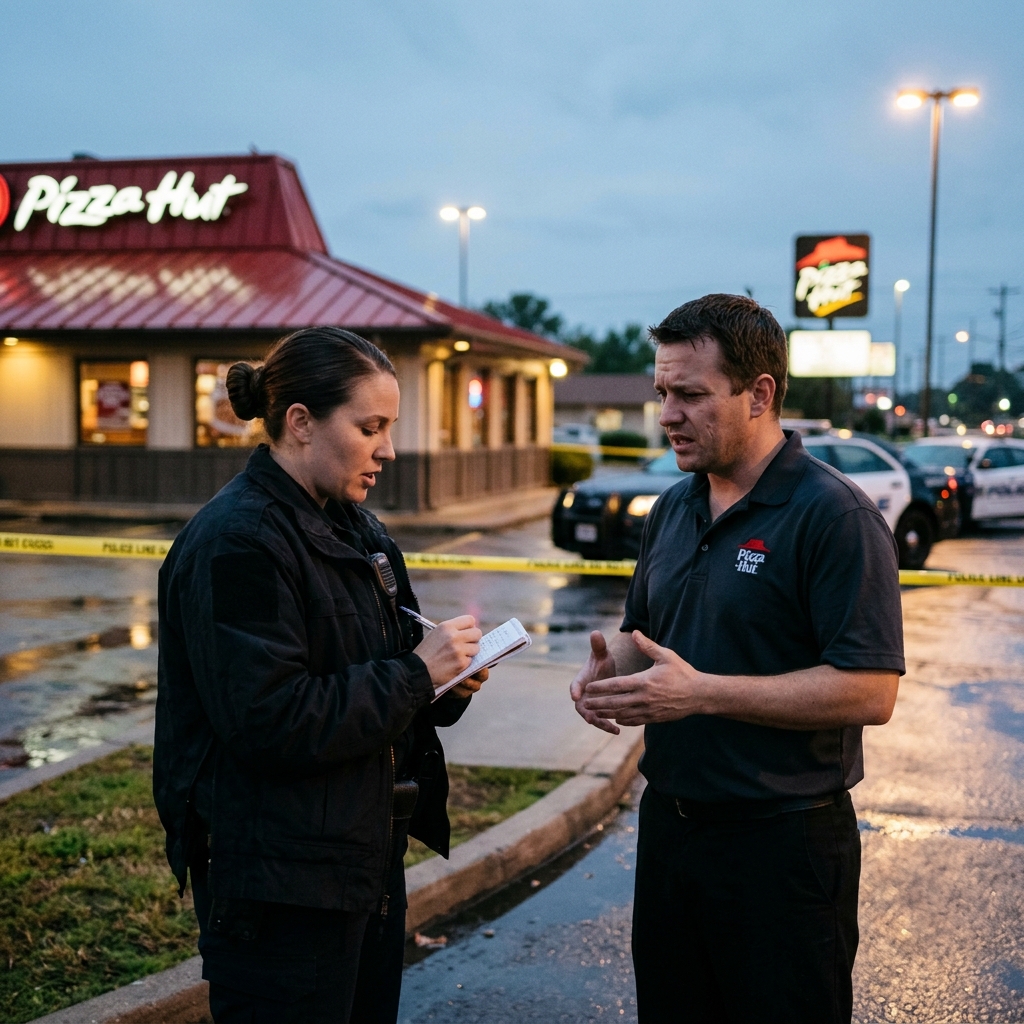
When an armed robbery unfolds inside a restaurant, the law, company policies, and public opinion collide in complicated ways. A widely discussed case involved a Pizza Hut employee who used his own handgun to shoot and kill one of several armed robbers during a late-night holdup at a closed store, raising sharp questions about self-defense rights at work and employer rules on weapons.
This article uses that incident as a starting point to explore how U.S. law treats defensive shootings, how corporate firearm policies affect workers, and what legal and ethical issues emerge when employees confront violent crime on the job.
Background: A Late-Night Robbery Turns Deadly
According to police reports, three individuals entered a closed Pizza Hut restaurant in the early morning hours, armed and in the process of robbing the store. One employee, who was inside but not serving customers, drew his personal handgun and fired at one of the robbers, fatally wounding him. Authorities later confirmed the robber had been carrying a firearm, which was recovered at the scene.
- The restaurant was reportedly closed to the public, with only employees present.
- Three suspects entered and began the robbery, one of whom was armed.
- An employee used his own handgun, not company-issued, to shoot one robber.
- The deceased suspect was identified by police and confirmed to have been armed.
- The remaining suspects fled and were initially not apprehended.
After the shooting, the employee was placed on leave while the incident was investigated, a common step in cases involving lethal force, even when self-defense is claimed.
Understanding Self-Defense Law in the Workplace
Self-defense law in the United States is largely governed by state statutes and case law, but certain core principles appear across jurisdictions. Generally, a person may use force, including deadly force, when they reasonably believe it is necessary to protect themselves or others from imminent death or serious bodily harm.
Key Elements of Lawful Self-Defense
While details vary by state, many criminal codes recognize similar elements for justifying deadly force:
- Imminent threat: The defender must face an immediate danger of death or serious injury.
- Reasonable belief: The defender’s perception of the threat must be that of a reasonable person in the same situation.
- Proportionality: Deadly force is only justified if the threat itself involves deadly force or severe harm.
- Lawful presence: In many states, a person lawfully present at a location may stand their ground, particularly under castle doctrine or similar statutes.
In the Pizza Hut case, investigators looked at whether the employee’s use of his personal firearm satisfied these criteria. Police acknowledged the robber was armed, which is a critical fact in evaluating imminent threat and proportionality.
Duty to Retreat vs. Stand Your Ground
States follow different approaches regarding whether people must try to escape before using deadly force:
| Approach | Typical Rule | Impact on Workplace Incidents |
|---|---|---|
| Duty to Retreat | Requires retreat if safely possible before using deadly force. | Investigators may ask whether escape routes were available for employees. |
| Stand Your Ground | No duty to retreat if lawfully present and facing serious threat. | Employees can defend themselves on premises without first trying to flee. |
| Castle Doctrine | Enhanced self-defense rights in homes; sometimes extends to workplaces. | In some jurisdictions, businesses may qualify as protected premises for lawful occupants. |
Stand-your-ground and castle doctrine laws have significantly changed how prosecutors and police evaluate defensive shootings, including those in commercial locations such as restaurants and retail stores.
Employer Firearm Policies and Their Legal Effects
National chains like Pizza Hut often have strict policies banning employees from carrying personal firearms while on duty, even in states that broadly allow concealed carry. In one widely reported 2004 incident, a Pizza Hut delivery driver who shot and killed a robber with a personal firearm was terminated for violating company policy, despite the shooting being described as self-defense.
Why Companies Restrict Weapons at Work
Corporate firearm bans are typically motivated by a mix of legal risk management and safety concerns:
- Liability exposure: Companies fear lawsuits if an employee’s gun injures a customer, co-worker, or bystander.
- Insurance requirements: Commercial insurers may require strict weapon policies to limit risk.
- Public relations: High-profile shootings can damage brand reputation, especially if the shooter is on payroll.
- Workplace safety: Employers argue that fewer guns on premises reduce accidental shootings and escalation.
Employees often face a difficult choice: comply with a firearms ban and rely on police response during a violent crime, or carry a weapon and risk disciplinary action if they use it, even in legitimate self-defense.
Can Violating Policy Affect Self-Defense Rights?
Importantly, violating an employer’s weapons policy does not automatically eliminate a worker’s legal right to claim self-defense in criminal court. Self-defense standards are set by statute and case law, not by corporate handbooks. However, policy violations can have other serious consequences:
- Employment consequences: Termination, suspension, or other discipline, as seen in the 2004 delivery driver case.
- Civil liability: Policy violations may be cited in civil suits against the employee or company.
- Indemnification issues: Employers might refuse to cover legal costs for employees who disregard safety rules.
Thus, an employee can be legally justified under criminal law yet still lose their job or face lawsuits because they carried a gun against company rules.
Police and Prosecutor Responses to Defensive Workplace Shootings
When a defensive shooting occurs, law enforcement and prosecutors evaluate the facts to determine whether criminal charges are warranted. In the Pizza Hut incident, police statements emphasized the ongoing robbery, the presence of an armed suspect, and the employee’s use of a personally owned firearm.
Typical Investigative Questions
Authorities generally consider the following factors:
- Was the employee legally allowed to possess the firearm (proper licensing, no disqualifying convictions)?
- Was the robber clearly armed or making threats that suggested deadly force?
- How many shots were fired, and under what circumstances (e.g., in the struggle, while suspect was fleeing)?
- Were there surveillance videos, eyewitness accounts, or forensic evidence supporting the employee’s account?
- Did the employee continue firing after the threat had ended?
Even in states with robust self-defense protections, prosecutors retain discretion. Some high-profile workplace shootings result in no charges; others lead to manslaughter or murder indictments, depending on the evidence and local legal norms.
Civil Liability and Wrongful Death Claims
Lethal incidents at businesses often trigger civil litigation, including wrongful death claims filed by relatives of deceased suspects or victims. Families may argue that the employee used excessive force or that the company failed to implement adequate security or training.
Potential Civil Claims Against Employees and Employers
- Wrongful death: Alleging negligence or intentional wrongful conduct leading to the suspect’s death.
- Negligent security: Claiming the business failed to protect workers or the public adequately.
- Vicarious liability: Arguing the employer is responsible for employees’ actions carried out within the scope of employment.
- Policy negligence: Asserting that unclear or unsafe weapons policies contributed to harm.
Even if a shooting is ruled legally justified, civil cases operate under different standards of proof and may focus on reasonableness and foreseeability rather than criminal culpability.
Balancing Employee Safety and Corporate Risk
Events like the Pizza Hut robbery shooting illuminate a tension that many companies must navigate: how to protect employees from violent crime while controlling legal and financial risk.
Common Corporate Approaches to Workplace Violence
Employers adopt varying strategies, including:
- No-weapons policies with clear disciplinary consequences.
- Security investments, such as cameras, alarms, and secure cash-handling procedures.
- De-escalation training that instructs employees to comply with robbers and prioritize survival.
- Emergency protocols for rapidly contacting law enforcement.
Some businesses in higher-crime areas also hire security personnel or off-duty law enforcement officers, shifting the responsibility for armed defense away from frontline employees.
Public Opinion and Media Narratives
Public reaction to defensive shootings often splits along ideological and experiential lines. In many online discussions, commentators praised the Pizza Hut employee for potentially saving co-workers’ lives, while others questioned whether shooting the robber in the head, as some reports described, was necessary or proportional.
- Supporters emphasized the armed nature of the robbery and the immediate danger to workers.
- Critics focused on questions of proportionality, alternative options, and company policies.
- Families of deceased suspects frequently highlight the human cost and seek accountability.
Media coverage tends to frame these stories around broader debates on gun rights, crime, and corporate responsibility, which can influence how prosecutors, companies, and the public perceive events.
Risk Management Lessons for Businesses
From a risk management perspective, the Pizza Hut case provides several lessons for employers that face potential armed robberies or workplace violence incidents.
Practical Measures for Employers
- Clarify weapon policies: Make firearm rules explicit, consistently enforced, and legally reviewed.
- Train employees: Provide regular training on how to respond during robberies—compliance, observation, and safe escape.
- Coordinate with law enforcement: Work with local police to understand crime trends and best practices for restaurant or retail security.
- Support employees post-incident: Offer counseling and legal guidance where appropriate, recognizing the trauma of violent encounters.
- Review incidents thoroughly: Use each event to improve policies and infrastructure, not only to assign blame.
Practical Considerations for Employees
Workers in late-night or cash-heavy businesses often think about what they would do if confronted by armed robbers. While each situation is unique, several considerations commonly arise:
- Know the law: Understand your state’s self-defense statutes, including any duty to retreat or stand-your-ground provisions.
- Understand company rules: Be aware of firearm and security policies and the consequences of violating them.
- Plan for emergencies: Think through escape routes, communication strategies, and who calls 911 in various scenarios.
- Prioritize survival: Many safety programs advise employees to focus on staying alive rather than protecting property.
Employees facing sudden violence must make rapid decisions under severe stress, and legal analysis later often looks very different from the split-second judgments made during an armed robbery.
Frequently Asked Questions (FAQs)
1. Does carrying a gun at work automatically violate the law?
No. Whether carrying a gun at work is legal depends on state firearm laws and the specific location. Many states allow licensed individuals to carry concealed firearms, but private employers may still prohibit weapons on their property through internal policy. Violating company policy can result in discipline or termination, even if the employee’s firearm possession is lawful under state law.
2. Can an employee claim self-defense if they broke company rules?
Yes. Self-defense is governed by criminal law, not internal workplace rules. An employee who uses force to repel an imminent threat of serious harm may still assert self-defense in criminal proceedings, even if they violated employer policies. However, policy violations can influence employment decisions and civil liability, and may be considered by prosecutors as part of the overall circumstances.
3. Are businesses legally required to allow employees to carry firearms?
Generally, no. Most private employers may set their own policies regarding weapons, subject to limited exceptions under some state laws (for example, rules about keeping firearms locked in vehicles on company parking lots). Commonly, national chains ban weapons for non-security staff to minimize liability and insurance risk.
4. What legal factors determine whether a workplace shooting is justified?
Investigators look at whether the shooter reasonably believed they faced an imminent threat of death or serious injury, whether deadly force was proportional to the threat, and whether the shooter was lawfully present and legally allowed to possess the weapon. Surveillance footage, witness testimony, and forensic evidence all shape this analysis.
5. Can families of suspects sue businesses after defensive shootings?
Yes. Families may file wrongful death or related civil claims against both the employee and the business, arguing negligence or excessive force. Success in such suits depends on state law and factual findings, and can occur even when no criminal charges are brought or when a shooting is deemed legally justified.
References
- Pizza Hut employee shot, killed armed robber with own handgun — CBS News. 2016-10-30. https://www.cbsnews.com/news/cops-pizza-hut-employee-shot-killed-armed-robber-with-own-handgun/
- North Carolina General Statutes, Chapter 14: Criminal Law — North Carolina General Assembly. (various sections on self-defense and use of force). https://www.ncleg.gov/Laws/GeneralStatuteSections/Chapter14
- TIL In 2004, Pizza Hut fired a delivery driver who shot and killed a robber — Reddit (summary of news reports). 2013-02-19. https://www.reddit.com/r/todayilearned/comments/17e2wx/til_in_2004_pizza_hut_fired_a_delivery_driver_who/
- Parents Of Dead Pizza Hut Robber Are Mad That Their Son’s Victims… — Reddit r/news (discussion of case and family reaction). 2016-10-31. https://www.reddit.com/r/news/comments/5bh4bb/parents_of_dead_pizza_hut_robber_are_mad_that/
Similar Articles








Read full bio of Sneha Tete




