
Service Dogs In Court: 4 Rules, Rights, And How To Bring One
Navigate the rules for bringing dogs and service animals into court: from ADA protections to special witness accommodations.
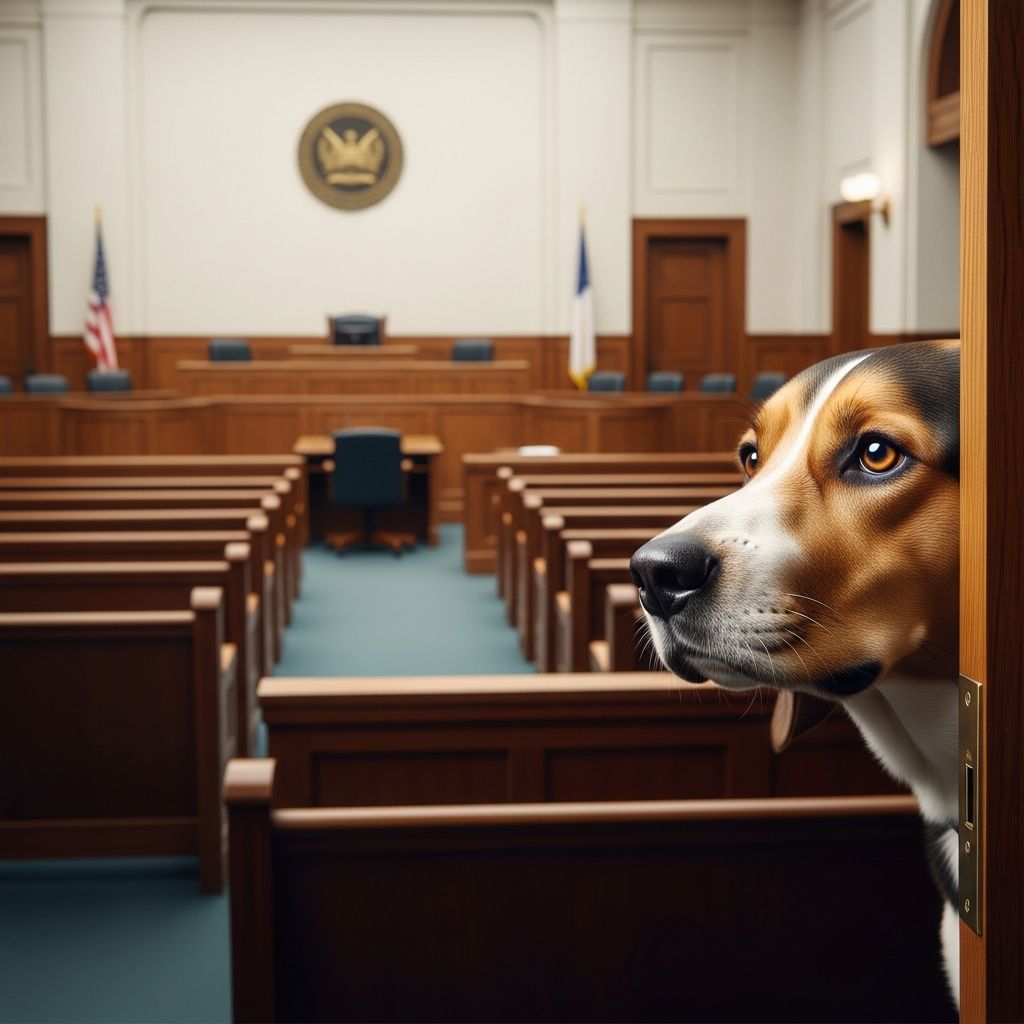
Bringing a beloved pet to a courtroom raises important questions about legal rights, accommodations, and courtroom decorum. While general pets face strict restrictions, service animals enjoy federal protections, and certain therapy or facility dogs may assist vulnerable witnesses under judicial discretion. This article examines the distinctions, applicable laws, real-world applications, and procedural steps for pet owners navigating court environments.
Understanding Service Animals and Federal Protections
Service animals, primarily dogs trained to perform specific tasks for individuals with disabilities, hold a privileged status in public spaces, including courthouses. The Americans with Disabilities Act (ADA) mandates that state and local governments, encompassing courts, permit service animals in all areas accessible to the public. This ensures that individuals relying on these companions for mobility, medical alerts, or psychiatric support can participate fully in legal proceedings without separation from their aid.
Courts must implement reasonable modifications to facilitate access. For instance, a service dog must remain under control via leash or harness, barring interference with its duties. If the animal becomes disruptive or unclean, removal is permissible, safeguarding the proceeding’s integrity. Staff inquiries are limited to two questions: confirmation of the dog’s service role tied to a disability and details of its trained tasks. No documentation, certification, or performance demonstrations are required, preventing undue burdens on disabled individuals.
Differences Between Service Dogs, Emotional Support, and Therapy Animals
Not all canine companions qualify equally. Service dogs undergo rigorous training for disability-specific tasks, granting ADA coverage. Emotional support animals (ESAs) provide comfort but lack task-training, forfeiting public access rights. Therapy or facility dogs, trained for professional settings like hospitals or courts, assist broadly without tying to an individual’s disability.
| Animal Type | Training Requirement | Court Access | Legal Basis |
|---|---|---|---|
| Service Dog | Task-specific for disability | Guaranteed under ADA | Title II ADA |
| Emotional Support Animal | Comfort provision | Generally no; rare discretion | None federally |
| Facility/Therapy Dog | Professional calming | Judicial discretion for witnesses | State laws/court rules |
| Pet | None | Prohibited | Court security policies |
This table highlights critical distinctions, emphasizing why only service dogs enter routinely, while others depend on exceptional circumstances.
Judicial Discretion for Vulnerable Witnesses
Courts increasingly recognize animals’ role in mitigating testimony trauma, particularly for children or those with disabilities. Judges wield discretion to permit facility dogs—neutral, handler-accompanied professionals—to accompany witnesses. Proposed New York legislation (2025-S3089) would formalize this, mandating availability for minors or developmentally disabled witnesses, with optional extension to others.
Pretrial motions prove effective for approval. Advocates request the dog’s presence during hearings, allowing observation of its calm demeanor. Briefs detail the dog’s training, witness bond (via affidavits or expert testimony), and non-prejudicial nature. Jurors receive instructions to ignore the dog, treating it as a neutral tool akin to an interpreter, ensuring no sympathy bias influences verdicts.
Sample jury instruction: “The presence of the facility dog is in no way to be interpreted as reflecting on the truthfulness of the testimony offered by the witness. Each witness’s testimony must be evaluated upon the instructions I give you.” Variations from cases like State of Connecticut v. Devon D. underscore judicial innovation in fostering accurate testimony.
Landmark Cases Shaping Animal Access
Precedents affirm accommodations’ viability. In People v. Tohom (N.Y. App. Div. 2013), a therapy dog aided a 15-year-old victim, reducing anxiety without ADA invocation. The appellate court upheld this under child witness protections (Executive Law § 642-a), deeming the dog’s unobtrusive presence non-prejudicial when paired with curative instructions. No necessity proof was required, broadening discretion.
Other rulings echo this. Judges have likened facility dogs to aids promoting clear testimony, explicitly disconnecting their role from defendant-related fears. These cases demonstrate evolving acceptance, balancing fairness with witness support.
Practical Steps for Bringing an Animal to Court
- Verify Animal Status: Confirm if it’s a service dog (task-trained) or facility dog (professionally handled). Pets rarely qualify.
- File Pretrial Motion: For non-service animals, submit a detailed request outlining benefits, training, and safeguards against disruption or bias.
- Prepare for Entry: Enter/exit witness areas jury-free. Position the dog discreetly if possible.
- Anticipate Questions: Answer only ADA-permitted queries calmly; carry no extra paperwork unless requested.
- Follow Protocols: Maintain control; comply with hygiene and behavior rules to avoid exclusion.
Consulting counsel maximizes success, tailoring arguments to jurisdiction-specific rules.
Pet Disputes in Court: Ownership and Custody
Beyond access, courts adjudicate pets as property in disputes like small claims or divorces. No “custody hearings” exist; ownership hinges on evidence such as receipts, registrations, or veterinary records. Recent New York developments challenge this: A Brooklyn ruling elevated dogs to “immediate family,” potentially influencing equitable divisions amid rising pet valuations.
In divorce, petitioners gather proof of primary caregiving—exercise routines, medical care—to argue superior welfare provision. Courts weigh these factors, signaling a shift toward best-interest standards over pure property law.
State Variations and Emerging Legislation
Policies differ by jurisdiction. New York’s bill expands facility dog use universally, prioritizing vulnerable groups. The Unified Court System affirms service animal access universally. Nationally, ADA uniformity prevails, but local rules govern therapy accommodations. Pet owners should research county courthouse policies, often prohibiting non-qualified animals at entrances.
Potential Challenges and Resolutions
Security may initially resist; assert ADA rights politely, escalating to supervisors if needed. Disruptive behavior risks removal, underscoring training’s importance. For ESAs, rare approvals target extreme vulnerability, as in child testimony.
Benefits abound: calmer witnesses yield clearer accounts, expediting proceedings and enhancing justice. Judges observe dogs’ professionalism firsthand, bolstering approvals.
Frequently Asked Questions
Can I bring my emotional support dog to court?
Generally no, as ESAs lack ADA public access. Exceptions may apply via judicial discretion for testifying witnesses, but service dogs hold stronger rights.
What if my service dog causes a distraction?
Courts can require removal if uncontrollable or unhygienic, prioritizing proceeding order.
Do I need certification papers for my service dog?
No. ADA limits inquiries to verbal confirmations of disability task-training.
Can facility dogs help adult witnesses?
Yes, under discretion; proposed laws like NY S3089 encourage broader use.
How do courts handle pet custody battles?
Pets are property; evidence like ownership docs decides. Evolving views treat them familially.
References
- Can You Bring a Service Dog to Court? — Enjuris. 2023 (approx.). https://www.enjuris.com/blog/questions/service-dogs-in-court/
- NY State Senate Bill 2025-S3089 — New York State Senate. 2025. https://www.nysenate.gov/legislation/bills/2025/S3089
- Pretrial Motion – Courthouse Dogs® Foundation — Courthouse Dogs Foundation. Accessed 2026. https://courthousedogs.org/legal/pretrial-motion/
- What do I need to bring to court for a custody hearing regarding a dog? — Justia Answers. 2017-05-25. https://answers.justia.com/question/2017/05/25/what-do-i-need-to-bring-to-court-for-a-c-274974
- Your dog is now legally a member of the family, says a New York judge — Time Out New York. 2025-06-23. https://www.timeout.com/newyork/news/your-dog-is-now-legally-a-member-of-the-family-says-a-new-york-judge-062325
- How Can I Legally Get My Pet Back in a Divorce in New York? — Mandel Law Firm. Accessed 2026. https://www.mandellawfirm.com/how-can-i-legally-get-my-pet-back-in-a-divorce-in-new-york/
- Frequently Asked Questions – Unified Court System — New York State Unified Court System. Accessed 2026. https://www.nycourts.gov/courts/townandvillage/ada-faq.shtml
Similar Articles








Read full bio of medha deb




