
The Perils of Lethal Machinery in Law Enforcement
Why weaponizing robots in domestic policing threatens fundamental civil rights.
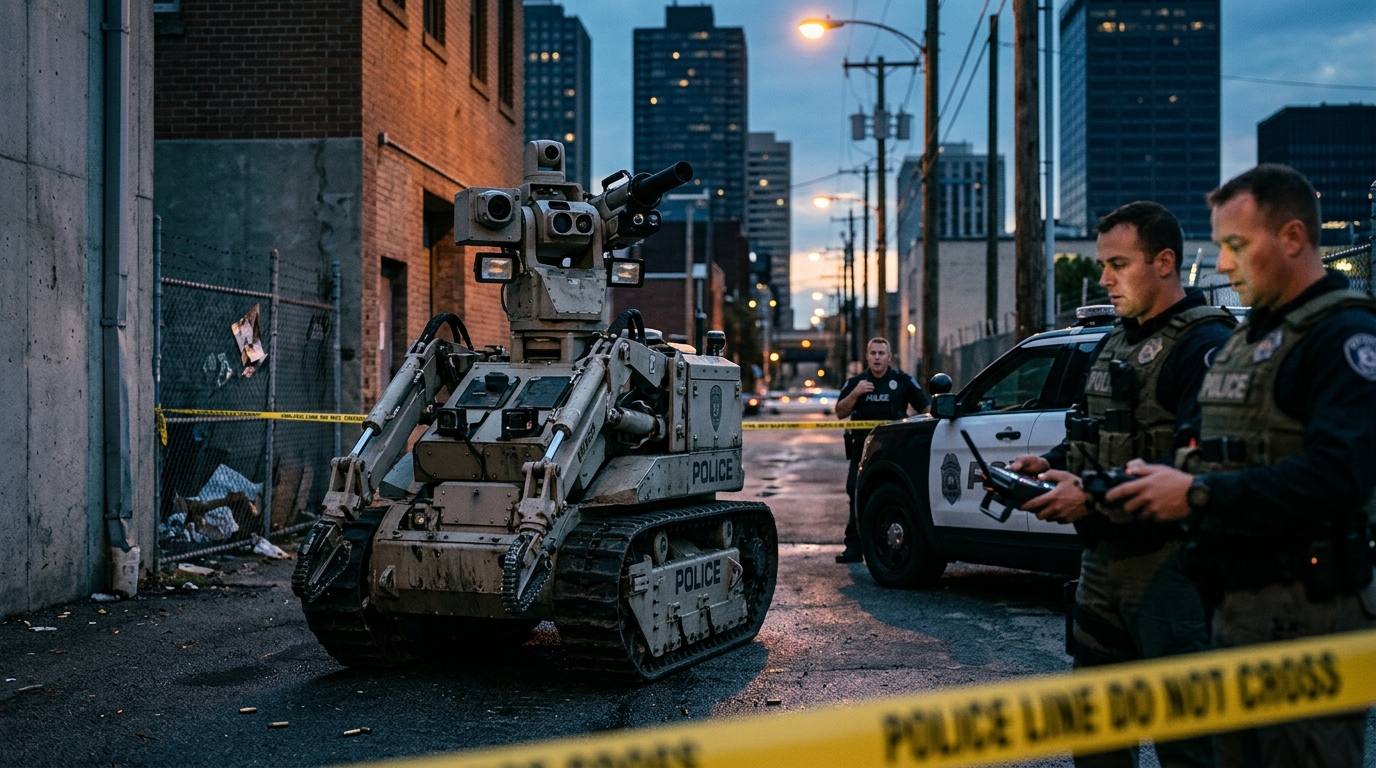
The intersection of advanced robotics and domestic law enforcement has ushered in an era of unprecedented technological capability, but it also introduces profound ethical and safety dilemmas. For decades, police departments have integrated new technologies into their daily operations, ranging from computerized dispatch systems to surveillance drones. However, a dangerous new frontier has recently emerged in the discourse surrounding public safety: the deployment of robots equipped with lethal force capabilities. As technological barriers fall and the acquisition of military-grade hardware becomes easier for local agencies, communities must confront the grave realities of remote-controlled violence. Weaponizing machines to enforce the law fundamentally alters the relationship between the state and its citizens, threatening to erode long-standing civil liberties and human rights principles.
At the core of this debate is the fundamental nature of policing itself. Law enforcement officers are entrusted with the authority to use force, including lethal force, under strict constitutional guidelines that prioritize the preservation of life and demand split-second, contextual human judgment. Introducing an armed, mechanical intermediary into this dynamic disrupts the delicate balance of accountability, proportionality, and de-escalation. The push to arm ground drones—originally designed for bomb disposal and hazardous material inspection—represents a paradigm shift that could transform chaotic urban environments into experimental battlegrounds. Recognizing the dangers of this trajectory requires a comprehensive examination of how lethal machinery degrades tactical judgment, introduces severe technical vulnerabilities, and disproportionately harms marginalized communities.
The Escalation of Police Militarization
To understand how the concept of armed domestic robots gained traction, one must look at the broader historical context of police militarization. The transition of law enforcement agencies from traditional community guardians to heavily armored tactical units has been fueled by the steady influx of surplus military equipment. Federal programs, such as the Department of Defense’s 1033 program, have facilitated the transfer of mine-resistant ambush-protected (MRAP) vehicles, assault rifles, and reconnaissance drones to local police departments at little to no cost.
This militarized posture inevitably leads to mission creep. Equipment acquired for extraordinary, worst-case scenarios—such as active terror attacks or hostage barricades—frequently finds its way into routine police work, including the execution of standard search warrants. Tactical ground robots followed this exact trajectory. Initially deployed exclusively by bomb squads to remotely detonate explosive devices or inspect suspicious packages without risking human life, these machines proved their utility in extremely hazardous, highly specific environments.
However, the leap from using a robot as a defensive shield to employing it as an offensive weapon is a profound escalation. The precedent for lethal application was controversially set during a highly publicized 2016 standoff in Dallas, where law enforcement utilized an explosive-laden disposal robot to neutralize an active shooter. While that incident was framed as an improvised response to an unprecedented crisis, it shattered the taboo of utilizing ground drones for lethal purposes. Today, the conversation has shifted from ad-hoc emergency improvisation to formalized policy proposals aiming to systematically equip remote-controlled platforms with firearms and explosive charges, forever altering the landscape of domestic policing.
The Psychological Disconnect of Remote Force
One of the most alarming aspects of deploying armed robots is the psychological detachment it creates between the operator and the target. When an officer is physically present in a high-stakes scenario, their decision-to-use-force calculus is influenced by a myriad of sensory inputs, immediate physical danger, and the visceral reality of taking a human life. This proximity, while dangerous, is an essential component of the human element in policing. It is the environment in which de-escalation tactics, crisis intervention, and empathetic communication are most effective.
Removing the officer from the physical environment and placing them behind a command screen fundamentally changes this dynamic. Operating a lethal machine via a joystick and a video feed introduces a well-documented phenomenon known as the “video game effect.” The psychological distance diminishes the emotional weight of deploying lethal force. When the operator’s own life is entirely shielded from risk, the threshold for deciding to use ultimate force may inadvertently lower, leading to preemptive or unnecessary strikes.
Furthermore, remote operation virtually eliminates the possibility of spontaneous de-escalation. Human communication in crisis relies heavily on micro-expressions, body language, tone of voice, and immediate spatial awareness. A mechanical avatar, regardless of how advanced its two-way audio systems might be, is inherently intimidating and dehumanizing. It cannot project empathy, nor can it dynamically respond to subtle signs of surrender or mental distress. By relying on a lethal robot, law enforcement agencies risk short-circuiting the negotiation process, defaulting to mechanical violence in situations that a physically present, well-trained officer might have resolved peacefully.
Technical Vulnerabilities in High-Stakes Environments
Proponents of armed robots often argue that these machines can perform with pinpoint precision, mitigating the risks of human error. This argument, however, severely overestimates the reliability of current robotic systems and ignores the chaotic nature of urban policing. Operating a mobile robot in a dynamic, unpredictable environment is fraught with technical challenges that can result in catastrophic outcomes.
- Sensory Limitations: A robot’s situational awareness is strictly limited to its onboard cameras and microphones. These sensors suffer from narrow fields of view, blind spots, and poor performance in low-light or smoke-filled environments. An operator lacks peripheral vision and the intuitive spatial awareness a human naturally possesses, increasing the risk of misidentifying a suspect or failing to notice bystanders in the line of fire.
- Latency and Connectivity: Remote-controlled systems rely on wireless communication networks, which are highly susceptible to interference, latency, and sudden disconnection. A delay of merely half a second in receiving a video feed or transmitting a command can mean the difference between life and death. If a robot loses connection at a critical moment, the operator is rendered entirely blind and powerless to stop an unintended action.
- Mechanical Failure: Complex machinery is prone to malfunction, particularly when navigating debris, stairs, or hostile terrain. A weaponized platform that tips over, misfires, or experiences a software crash poses an uncontrollable threat to both civilians and officers.
- Cybersecurity Threats: Any system connected to a network can be compromised. The prospect of a hostile actor, whether a sophisticated hacker or an opportunistic criminal, hijacking the command signal of a heavily armed police robot is a nightmare scenario that current cybersecurity protocols cannot completely eliminate.
The Slippery Slope to Autonomous Killing
While current proposals generally stipulate that armed robots will remain under the direct control of a human operator—a “human-in-the-loop” system—the rapid advancement of artificial intelligence threatens to erode this safeguard over time. History demonstrates that technological capabilities rarely remain static. As agencies seek faster response times and more efficient operations, the temptation to integrate automated targeting and decision-making software becomes immense.
This progression represents the slippery slope toward Lethal Autonomous Weapons Systems (LAWS). Delegating the decision to take a human life to an algorithm is considered by many ethicists, technologists, and human rights advocates to be morally repugnant. Algorithms are notorious for reflecting the biases of their creators and training data. In the context of policing, where facial recognition software has already demonstrated severe accuracy disparities across different racial and demographic groups, the integration of AI into lethal platforms is unconscionable.
International bodies are already sounding the alarm. The United Nations and numerous non-governmental organizations have repeatedly called for global bans on autonomous killing machines. Even military organizations have recognized the need for strict limitations; the U.S. Department of Defense’s Directive 3000.09 mandates rigorous human oversight over the use of force in autonomous systems. If the military is exercising extreme caution regarding autonomous lethal force on international battlefields, local police departments must certainly be prohibited from experimenting with these concepts on civilian streets.
Disproportionate Impact on Marginalized Communities
The deployment of novel, aggressive policing technologies does not occur in a vacuum; it takes place within a deeply flawed historical context. Time and time again, invasive surveillance tools, militarized tactics, and experimental enforcement strategies have been disproportionately targeted at low-income neighborhoods and communities of color. The introduction of armed robots into domestic policing would almost certainly follow this well-worn path of systemic bias.
Deploying heavily armed, impersonal machines into marginalized communities exacerbates existing tensions and reinforces a sense of occupation rather than protection. The presence of lethal robots sends a clear message that the state views these neighborhoods as hostile combat zones rather than communities deserving of constitutional protections. Moreover, the chilling effect on First Amendment rights cannot be overstated. The mere possibility that a police department might deploy a weaponized drone during a protest or civil uprising is enough to deter citizens from exercising their right to peacefully assemble and petition their government, striking a heavy blow against democratic expression.
Legislative Actions and Community Resistance
The alarming prospect of armed police robots has sparked fierce community resistance and vital legislative debates across the nation. In late 2022, the San Francisco Board of Supervisors briefly approved a policy that would have permitted the police department to use robots as a lethal force option in extraordinary circumstances. The resulting public outcry was swift, unified, and decisive. Civil liberties organizations, community advocates, and concerned citizens mobilized, arguing that arming machines was a dangerous crossing of a moral Rubicon. Within weeks, the city reversed its decision, placing a strict halt on the lethal use of robots.
This incident underscores the critical need for proactive legislation at both the state and municipal levels. Technology inevitably outpaces regulation, and if communities wait until armed robots are standardized across thousands of precincts, rolling back their use will be nearly impossible. State and municipal governments must pass unequivocal, preemptive bans prohibiting law enforcement agencies from equipping any robotic platform, aerial or ground-based, with firearms, explosives, or other lethal payloads. Safeguarding the future of civil liberties requires establishing firm boundaries today, ensuring that the power over life and death remains squarely within the realm of human accountability.
The trajectory of modern policing requires profound community oversight to ensure technology serves the public rather than subduing it. As the capabilities of robotics and artificial intelligence continue to evolve at an exponential rate, society must draw a hard line against innovations that jeopardize fundamental human rights. A police force tasked with protecting and serving the community must not rely on tools engineered for warfare. By rejecting the weaponization of domestic robots, we reaffirm the value of human life, the necessity of empathetic crisis resolution, and the preservation of constitutional liberties in an increasingly automated world.
Frequently Asked Questions (FAQ)
What exactly is an armed police robot?
An armed police robot is typically a remote-controlled, tracked, or wheeled unmanned ground vehicle (UGV) that has been modified or purpose-built to carry and deploy lethal weapons, such as firearms or explosive charges. These machines are operated by law enforcement personnel from a distance using live video feeds and specialized control interfaces.
Why do some police departments want to use lethal robots?
Proponents argue that armed robots could be used to neutralize violent suspects in situations where deploying human officers would result in a high probability of death or injury, such as active shooter scenarios, heavily fortified barricades, or terrorist incidents. They view the technology as a necessary tool to protect the lives of tactical officers.
Are fully autonomous lethal weapons currently legal in domestic policing?
Currently, there are no fully autonomous lethal weapons (systems that select and engage targets entirely without human intervention) deployed in U.S. domestic policing. International and federal guidelines emphasize the necessity of strict human oversight. However, civil rights advocates fear that allowing remote-controlled lethal robots is a dangerous stepping stone toward eventually authorizing autonomous decision-making systems.
How can communities oppose the militarization of police robots?
Communities can exercise oversight by demanding transparency regarding the equipment local police departments acquire. Citizens can participate in city council or board of supervisor meetings, advocate for strict local ordinances preemptively banning the weaponization of robots, and support civil liberties organizations that litigate and lobby against excessive police militarization.
References
- Department of Defense Directive 3000.09: Autonomy in Weapon Systems — U.S. Department of Defense. 2023-01-25. https://www.esd.whs.mil/Portals/54/Documents/DD/issuances/dodd/300009p.PDF
- Lethal autonomous weapons systems: resolution / adopted by the General Assembly (A/RES/78/241) — United Nations Digital Library. 2023-12-28. https://digitallibrary.un.org/record/4032731
- San Francisco will allow police to deploy robots that kill — The Associated Press (AP News). 2022-11-29. https://apnews.com/article/san-francisco-killer-robots-police-87588a8d0f1c1a2f646c0e5a870d0458
- Amid outcry, San Francisco pauses on ‘killer police robots’ — The Associated Press (AP News). 2022-12-06. https://apnews.com/article/killer-police-robots-san-francisco-pause-2022-b9cfbdab34de5bc1cb1e976fb753d0fc
Similar Articles








Read full bio of Sneha Tete




