
Pennsylvania Computer Crime Laws: A Practical Guide
Understand how Pennsylvania defines computer crimes, what conduct is illegal online, and the penalties that may follow even for seemingly minor digital actions.
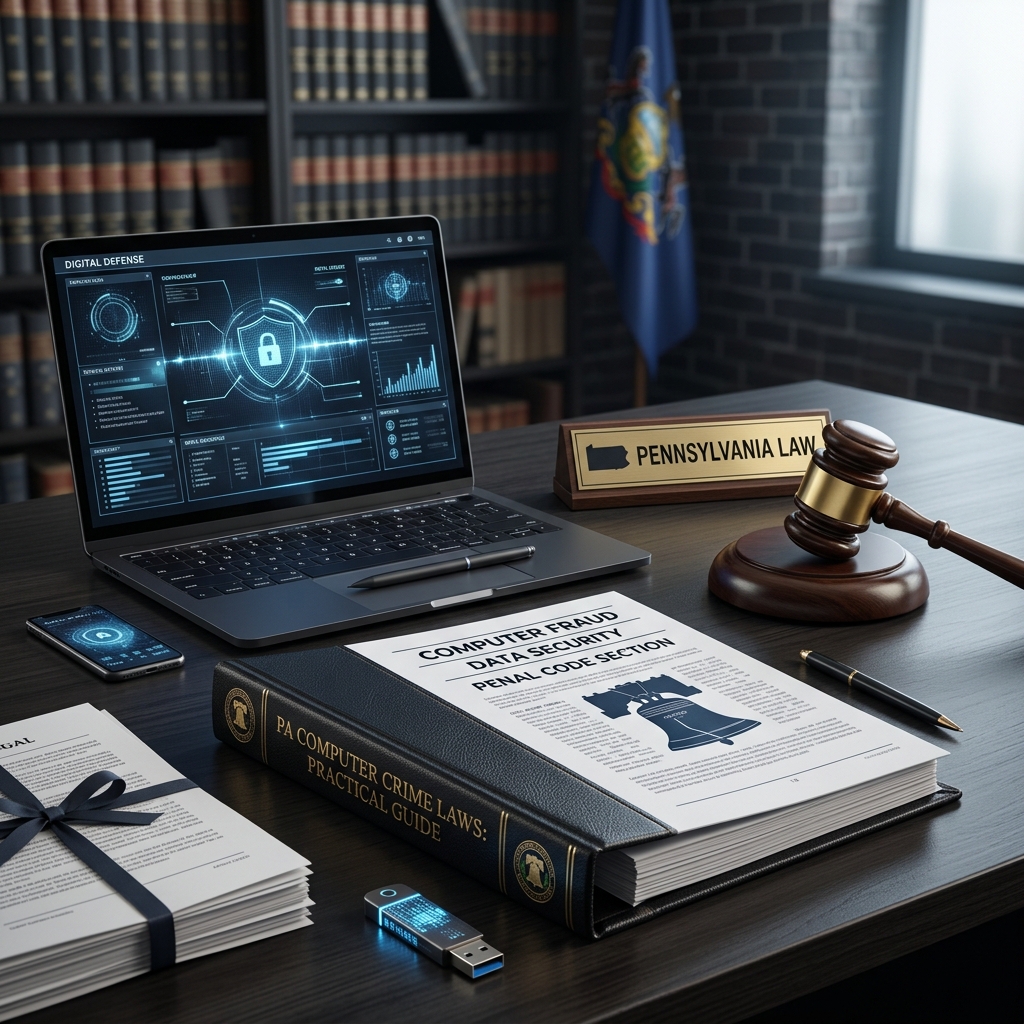
Pennsylvania treats computer-related misconduct as a serious criminal matter. Under Chapter 76 of Title 18 of the Pennsylvania Consolidated Statutes, a broad range of behavior involving computers, networks, and data can lead to criminal charges, sometimes even when no money changes hands and no physical property is touched. Understanding what the law prohibits is essential for individuals, employees, and businesses that rely on digital tools every day.
1. How Pennsylvania Legally Defines Computer Crimes
Pennsylvania does not have a single, catch‑all “computer crime” statute. Instead, state law creates several specific offenses targeting different kinds of harmful or unauthorized activity involving computers and electronic communication.[10] These laws cover:
- Unlawful use of a computer and other computer crimes
- Disruption of computer or network service
- Computer theft and unlawful duplication of data or software
- Computer trespass and unauthorized access
- Unlawful transmission of electronic mail and related forgery
In practice, these provisions allow prosecutors to charge a wide spectrum of conduct—from classic hacking to more subtle forms of access without permission, data misuse, or deceptive online communication.
1.1 Key Concepts in Pennsylvania Computer Crime Law
Several recurring concepts appear across Pennsylvania’s computer offenses:
- Access and authorization: Many crimes are based on accessing a computer, network, or data without authorization or exceeding the level of access a person has been granted.
- Alteration or damage: Laws focus on altering, interfering with, damaging, or destroying computers, systems, or data—even if this happens without physical contact, such as through remote connections.
- Fraud and deception: Using computers to carry out schemes to defraud, deceive, or obtain property or services through false representations is specifically prohibited.
- Confidential information: Publishing or giving out passwords or other confidential access information without authorization is itself a criminal offense.
These elements reflect a policy choice: Pennsylvania law is designed to protect not only the machines themselves, but also the integrity of data, online communications, and access credentials that are critical to modern life.
2. Unlawful Use of Computer and Other Computer Crimes (18 Pa.C.S. § 7611)
The core Pennsylvania computer crime statute is 18 Pa.C.S. § 7611, titled “Unlawful use of computer and other computer crimes”. It criminalizes three main types of conduct, each with distinct focus but overlapping in practice.
2.1 Accessing or Damaging Computers in Connection with Fraud
One branch of § 7611 covers situations where a person accesses or exceeds authorized access to a computer or related system and then alters, damages, or destroys it or its data with a specific intent:
- To interrupt the regular functioning of a person (for example, disrupting a business’s operations); or
- To execute a scheme to defraud or deceive; or
- To obtain control of property or services through false or fraudulent pretenses or representations.
Examples can include launching malware that shuts down an organization’s systems, hacking into a database to manipulate financial records, or using unauthorized access to steal paid services by tricking the system into granting access without payment.
2.2 Unauthorized Access or Interference Without Fraud
A second branch of § 7611 targets unauthorized access even when there is no clear fraud component. It applies when someone intentionally, and without authorization:
- Accesses or exceeds authorization to access a computer, network, or database; and
- Alters, interferes with operations, damages, or destroys any part of that system or its data.
This covers many common forms of hacking and tampering: for example, accessing another person’s computer account without permission and deleting files, or remotely disabling a network device a person has no right to control.
2.3 Sharing Passwords and Confidential Access Information
The third piece of § 7611 focuses on the spread of confidential computer access information. A person commits a crime if they intentionally or knowingly, and without authorization:
- Give or publish a password, identifying code, personal identification number (PIN), or other confidential access information for a computer, system, network, database, website, or telecommunications device.
This is significant because it criminalizes not just the act of breaking into a system, but also the act of providing the key that allows someone else to do so. For example, posting a company’s internal network passwords online or selling access codes to a private system could fall under this provision.
2.4 How § 7611 Is Graded and Penalized
| Offense | Statutory Reference | Grading | Maximum Penalties |
|---|---|---|---|
| Unlawful use of computer and other computer crimes | 18 Pa.C.S. § 7611 | Felony of the third degree | Up to 7 years imprisonment; fines commonly up to $15,000 for third‑degree felonies. |
Section 7611 explicitly states that an offense under this section is a third‑degree felony. Under Pennsylvania sentencing law, a felony of the third degree carries a maximum of seven years in prison and substantial fines, often used by courts and practitioners as a reference point when discussing potential exposure.
The statute also clarifies that prosecution under § 7611 does not prevent prosecution under other criminal sections, such as theft, fraud, or identity‑related offenses. In many cases, computer crime charges are filed together with separate counts for related misconduct.
3. Related Computer Offenses in Pennsylvania
Beyond § 7611, Pennsylvania’s computer crime framework includes additional statutes addressing more specific digital behaviors. While the exact wording appears in Chapter 76, they are commonly summarized by practitioners and resources discussing state computer crime law.[10]
3.1 Disruption of Service
Disruption of service typically involves intentionally interfering with the normal operation of a computer, system, or network. This can include actions such as:
- Launching attacks that overwhelm servers and prevent legitimate users from accessing services (similar to denial‑of‑service attacks)
- Tampering with network infrastructure to cut off access to critical systems
- Altering configuration files to systematically disrupt operations
Like unlawful use of computer, disruption of service may be graded as a serious offense, and it may be charged alongside other crimes if the interference is part of a broader scheme.[10]
3.2 Computer Theft and Unlawful Duplication
Computer theft and unlawful duplication statutes address misuse of digital information itself.[10] These offenses commonly involve:
- Computer theft: Accessing a program, database, website, or network to take or copy data with the intent to deprive the rightful owner of possession or economic value.
- Unlawful duplication: Intentionally copying computer programs, software, or digital data without authorization, often implicating intellectual property or commercial information.
These laws recognize that information can be “stolen” even when the original remains in place. The focus is often on unauthorized copying combined with an intent to deprive or exploit value.
3.3 Computer Trespass and Unauthorized Access
Computer trespass is closely related to unauthorized access but may emphasize the intrusiveness and potential harm of that access. Typical elements include:
- Accessing a computer, system, or network without permission
- Removing data or programs
- Causing malfunction or damage
- Altering financial instruments or records
- Electronically transferring funds without authorization
Because computer trespass can overlap with federal computer crime statutes, serious cases may be prosecuted in federal court, where penalties can be significantly higher.
3.4 Unlawful Transmission and Forgery of Electronic Mail
Pennsylvania’s computer crime framework also addresses unlawfully transmitting electronic mail and related conduct involving forged or deceptive electronic communications. Examples include:
- Accessing a network or account without consent to send emails that falsely appear to come from another individual or business
- Forging headers or identifying information in email or fax transmissions
- Using deceptive electronic messages to carry out fraud or harassment
This area of law focuses on protecting the reliability of electronic communication and preventing misuse of another person’s identity or systems for deceptive purposes.
4. Penalties, Grading, and Repeat Offenses
While § 7611 itself specifies that unlawful use of a computer is a third‑degree felony, other computer‑related provisions adopt a grading scheme that distinguishes first offenses from repeat violations. For certain computer offenses, Pennsylvania law provides:
- Third‑degree misdemeanor for a first offense, often with fines around $5,000.
- Second‑degree misdemeanor for a second offense, with higher fines up to $20,000.
- Third‑degree felony for a third or subsequent offense, with fines up to $30,000 and a potential imprisonment term of up to seven years.
This escalation structure reflects the legislature’s view that repeated computer crime behavior is more serious and warrants harsher punishment. In addition, some online harassment and stalking offenses, though not located in Chapter 76, carry their own penalties and can reach up to five years of imprisonment for first‑degree crimes.
5. Practical Risk Scenarios Under Pennsylvania Law
Modern digital behavior frequently touches on these statutes, sometimes in ways that individuals and small businesses do not anticipate. The following scenarios illustrate common risk areas:
- Sharing workplace passwords: Distributing internal login credentials or publishing them online without authorization may violate the provision on giving or publishing confidential computer access information.
- “Curiosity” hacking: Accessing a coworker’s email or files “just to look,” even without any destructive intent, can amount to unauthorized access or computer trespass, especially if data is modified or deleted.
- Unapproved system testing: Running penetration tests or stress‑testing a network without clear authorization from the owner could be construed as interference with operation or disruption of service.
- Copying proprietary software or data: Downloading internal tools, customer lists, or databases for personal use or to benefit a competitor may fall under computer theft or unlawful duplication.
- Forged emails and spoofing: Using another person’s account or falsifying sender information can trigger unlawful transmission or fraud‑related computer crime charges, especially when used to obtain property or money.
Because the statutory language is broad, borderline situations may still carry significant risk if a system owner or victim reports unusual activity and law enforcement investigates.
6. Enforcement and Jurisdiction Considerations
Pennsylvania’s computer crime laws are enforced through a combination of county prosecutors and statewide authorities. For certain offenses under Chapter 76, the Attorney General has concurrent prosecutorial jurisdiction, meaning state‑level prosecutors can bring charges alongside or instead of the local district attorney.
In more complex or far‑reaching cases—such as multi‑state hacking rings, large‑scale data breaches, or conduct that implicates federal systems—federal law may apply as well. Federal computer crime statutes carry different elements and typically more severe penalties, especially when national security, critical infrastructure, or large financial losses are involved.
7. Compliance Tips for Individuals and Organizations
While legal advice must come from a licensed attorney, there are practical steps that individuals and businesses can take to reduce exposure to computer crime allegations under Pennsylvania law:
- Use access only as authorized: Do not try to bypass access controls or use another person’s credentials, even if technically possible.
- Document permission: For security testing, troubleshooting, or remote maintenance, obtain explicit written authorization from the system owner.
- Protect passwords and confidential codes: Treat system credentials as sensitive information and avoid sharing them unless you are clearly authorized to do so.
- Establish clear policies: Businesses should maintain and enforce policies on acceptable use, data handling, and remote access to demonstrate responsible governance.
- Train staff regularly: Employees should receive training on recognizing unauthorized access, phishing, and data misuse, as well as the potential legal consequences.
Given the complexity and potential severity of computer crime charges, early consultation with a qualified criminal defense or cybersecurity attorney is important whenever questionable conduct or a possible investigation arises.
8. Frequently Asked Questions (FAQs)
8.1 Is simply guessing someone’s password a crime in Pennsylvania?
If guessing or obtaining a password leads to accessing a computer or account without authorization, it may fall under unlawful use of a computer or computer trespass, especially if data is altered, damaged, or confidential information is exposed. The legal risk increases significantly if the access is used to cause harm, commit fraud, or publish the password.
8.2 Does there have to be financial loss for a computer crime to be charged?
No. While some offenses focus on schemes to defraud or obtain property or services, others criminalize unauthorized access, interference with operations, or publication of confidential access information even without a clear monetary loss. Disruption of service and data alteration, for example, can be prosecuted based on the conduct itself.
8.3 Are computer crimes always state offenses, or can they be federal?
Computer crimes can be prosecuted under Pennsylvania law, federal law, or both. State statutes such as § 7611 cover a wide range of conduct, but serious or multi‑state incidents, cyber terrorism, and major fraud or data breaches may trigger federal charges under separate statutes, often with harsher penalties.
8.4 What should a business do if it suspects internal computer misuse?
Businesses typically should preserve evidence (such as logs), secure affected systems, and consult legal counsel familiar with Pennsylvania computer crime law. Counsel can advise whether to involve law enforcement and how to respond while protecting both the organization and employee rights.
8.5 Are repeated computer crime offenses treated more severely?
Yes. For certain computer offenses in Chapter 76, Pennsylvania uses a grading system that escalates from misdemeanor level for a first offense to felony level for repeated violations, with increased fines and possible imprisonment up to seven years for third or subsequent offenses.
References
- 18 Pennsylvania Consolidated Statutes § 7611 — Pennsylvania General Assembly / Justia. 2024-01-01. https://law.justia.com/codes/pennsylvania/title-18/chapter-76/section-7611/
- Pennsylvania Statutes Title 18 Pa.C.S.A. Crimes and Offenses § 7611 — FindLaw. 2023-09-01. https://codes.findlaw.com/pa/title-18-pacsa-crimes-and-offenses/pa-csa-sect-18-7611/
- Chapter 76 – Computer Offenses — Pennsylvania General Assembly. 2023-05-15. https://legis.state.pa.us/WU01/LI/LI/CT/HTM/18/00.076..HTM
- Pennsylvania Criminal Code, Title 18, Chapter 76: Computer Offenses — West Chester University of Pennsylvania. 2022-06-01. https://www.wcupa.edu/infoservices/documents/PAStatutesTitle18Chapter76-ComputerOffenses.pdf
- 7611. Unlawful use of computer and other computer crimes — WomensLaw.org / National Network to End Domestic Violence. 2021-11-10. https://www.womenslaw.org/laws/pa/statutes/7611-unlawful-use-computer-and-other-computer-crimes
- Computer Crimes in Pennsylvania — The Fishman Firm. 2023-02-20. https://www.thefishmanfirm.com/computer-crimes/
- Pennsylvania Computer Trespass — Fienman Defense. 2022-03-05. https://www.philadelphiacriminalattorney.com/philadelphia-federal-criminal-defense/computer-crimes/computer-trespass/
Similar Articles








Read full bio of Sneha Tete


