
Pennsylvania Adoption Home Study Explained
A clear guide to the home study, what reviewers look for, and how families can prepare.
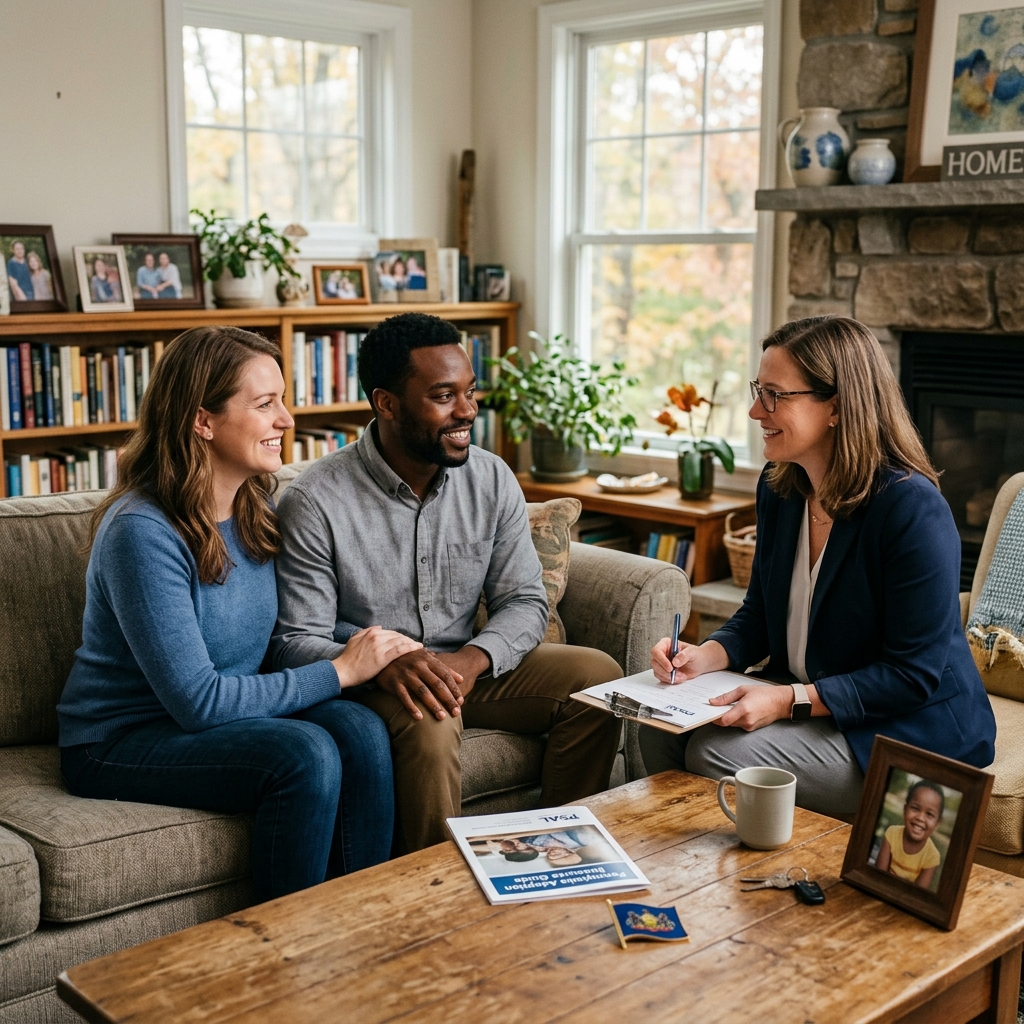
Adoption in Pennsylvania begins with a careful review of the prospective family’s ability to provide a stable, safe, and nurturing home. The home study is the central screening step in that process, and it is designed to protect the child while also helping families prepare for the realities of adoption. In practice, it combines paperwork, interviews, background checks, and a home visit so that an agency can evaluate whether the household is ready for placement.1
For many families, the home study can feel formal and even intimidating at first. In reality, it is best understood as a structured assessment that looks at the whole picture: the adults in the home, the physical environment, finances, health, and the family’s understanding of adoption. Pennsylvania requires the process to be handled by an authorized public child care agency, adoption agency, home study service, or a licensed social worker designated by the court.2
What the Home Study Is Designed to Do
The home study is not just a checklist. It serves three connected purposes: it evaluates safety, gathers information about the family, and prepares prospective parents for the responsibilities of adoption. A reviewer is trying to answer a basic question: can this household provide a secure and supportive environment for a child now and over time?3
Because adoption decisions involve permanent legal and emotional consequences, the process also helps match children with families who are equipped for their needs. That can include age, health, background, and special circumstances that may affect placement. The result is a written report or family profile that becomes part of the larger adoption record.15
Who Is Included in the Review
The review does not focus only on the prospective adoptive parents. Pennsylvania guidance makes clear that all adults living in the home are part of the assessment, especially anyone age 18 or older. That means a spouse, adult relative, or other adult household member may be subject to interviews and background checks even if that person is not adopting the child directly.25
This broader approach reflects the reality that a child will live in the full household, not only with the legal adoptive parent. Agencies therefore want a complete understanding of everyone who could affect the child’s daily safety, routines, and emotional well-being.2
Common Steps in the Pennsylvania Process
Although each agency may organize the work differently, the process generally follows a familiar pattern. Families apply, gather records, complete interviews, and allow a social worker to see the home. The assessment then becomes a formal written recommendation about approval or disapproval.136
| Step | What Happens | Why It Matters |
|---|---|---|
| Application and screening | Family submits initial forms and basic information | Identifies whether the household can move forward |
| Documentation review | Health, income, and background records are collected | Shows stability, safety, and legal eligibility |
| Interviews | Social worker speaks with adults in the home | Assesses motivation, parenting readiness, and understanding of adoption |
| Home visit | Worker inspects living space and family routines | Confirms the home is safe and suitable for a child |
| Report and recommendation | Agency prepares written evaluation | Forms the basis for placement and later court filings |
Documents Families Are Usually Asked to Provide
Paperwork is one of the most important parts of the home study. Pennsylvania’s adoption guidance indicates that prospective parents typically need to provide medical information, financial records, criminal background checks, child abuse clearances, and personal references.15
- Medical statements showing that the adults in the home are in generally good health.
- Income and financial records that help demonstrate the ability to support a child.
- Criminal history checks for adults in the household.
- Child abuse clearances to help protect the child’s safety.
- Personal references that can speak to character and stability.
In addition, some agencies request more detailed supporting materials, such as tax forms, proof of insurance, or written autobiographical statements. These extra documents help the social worker build a more complete narrative of the household and the adults involved.4
Background Checks and Disqualifying Issues
Background screening is one of the most serious parts of the process. Pennsylvania notes that if a household member has certain disqualifying histories, the application may not be considered. These include being named as a perpetrator in a founded child abuse report, a recent drug- or alcohol-related felony, or certain sexual or violent crimes.1
This does not mean every concern automatically ends the process, but it does mean agencies must apply the law carefully. Families who believe a past issue may create a problem should address it early with the caseworker rather than waiting until the report is being finalized. Early disclosure can prevent wasted time and reduce confusion later in the process.45
What Happens During Interviews
Interviews allow the agency to understand more than what appears on forms. A social worker may ask about the couple’s relationship, family history, parenting experience, reasons for adopting, and plans for caring for a child with different needs or background. The conversation often also covers discipline, support systems, and how the family will adjust to the child’s arrival.34
These conversations are important because adoption is not only about readiness in the present. It is also about preparing for change, including the emotional adjustment that comes with welcoming a child who may have experienced trauma, separation, or other disruptions before placement.
The Home Visit and Safety Review
The home visit lets the worker observe the physical environment where the child will live. Pennsylvania guidance indicates that at least one meeting during the study period is usually held in the home.1 The goal is not to judge décor or style. Instead, the reviewer looks for safety, cleanliness, and general suitability for a child.
Families should expect the worker to look at practical issues such as sleeping arrangements, smoke alarms, access to dangerous items, and whether the house is orderly enough for a child’s needs. The worker may also ask how the family handles routines, supervision, and emergency planning. The home should communicate that a child can live there safely and comfortably.46
How Long the Process Takes
The length of a home study can vary depending on how quickly the family completes requirements and how complex the household situation is. Some families move through the process in a few months, while others need more time because records take longer to gather or additional follow-up is required.36
For placement purposes, Pennsylvania law requires that a favorable home study be completed within a certain time frame and updated before a child is placed. Federal child welfare guidance notes that the study must be completed within three years and supplemented within one year before placement in domestic adoption cases governed by Pennsylvania requirements.5
After Approval: Placement and Supervision
Approval does not end the process. Once a child is placed, the family and child usually enter a period of supervision and support before finalization. Pennsylvania law and state guidance indicate that a child must be in the home for a required period before adoption can be finalized, and the post-placement stage typically lasts several months.15
During this time, the agency continues to check how the placement is going. The purpose is not simply administrative. It ensures the child is adjusting safely and that the new family has support as it moves toward final adoption. A lawyer may also need to file a report of intention to adopt and later complete additional court-related steps.15
How Families Can Prepare Effectively
Preparation often makes the process less stressful. Families can improve their experience by organizing records early, being honest in interviews, and treating the process as a chance to learn rather than as a test to pass. A thoughtful response is more useful than trying to produce the “perfect” answer.34
- Collect medical, tax, and employment records before the first meeting.
- Check household safety items such as locks, alarms, and storage for medication or firearms.
- Ask references in advance so they are prepared to respond promptly.
- Talk openly about adoption expectations, parenting roles, and support networks.
- Be prepared to explain how the family will meet a child’s emotional and practical needs.
It also helps to remember that the social worker is evaluating fit, not perfection. A home study often goes better when families are candid about their strengths and realistic about the areas where they may need support.
Special Situations and Exceptions
Not every adoption follows the same path. Pennsylvania law includes exceptions for some relative placements, and certain filings may not be required when the child is already closely related to the person receiving custody. That said, exceptions should be reviewed carefully, because the rules can change depending on the type of adoption and who is seeking custody.5
Stepparent, kinship, private, and agency adoptions may all involve different paperwork or levels of scrutiny. Families should confirm the exact requirements before assuming the process is complete or before filing documents with court.
Why the Home Study Matters for Children
The home study is often described from the parent’s perspective, but its deeper purpose is child-centered. It exists to reduce risk, support permanency, and help children move into homes where they can be protected and supported. By reviewing safety, finances, health, and parenting capacity, the process helps agencies and courts make better decisions.135
For children who have already experienced loss or instability, a careful placement process can make a meaningful difference. When done well, the home study does more than screen applicants. It also helps build a better match between the child and the family.
Frequently Asked Questions
Is a home study always required for adoption in Pennsylvania?
In most cases, yes. Pennsylvania requires a home study for adoption-related placement decisions, although some relative or stepparent situations may have different rules.25
Who conducts the home study?
The study must be conducted by an authorized public child care agency, adoption agency, or a licensed social worker designated by the court.25
Does everyone in the home get reviewed?
Yes. Adults living in the home, especially those age 18 and older, are generally included in the investigation and may need to provide documentation and undergo screening.25
What if a family member has a criminal record?
That issue must be evaluated carefully under Pennsylvania law. Some convictions or child abuse findings may prevent approval, while other situations may require closer review before a decision is made.15
How can a family make the process smoother?
Being organized, responsive, and honest is the best approach. Families that prepare documents early and answer questions directly often move through the process more efficiently.34
References
- Become an Adoptive Parent — Pennsylvania Department of Human Services. 2026-07-10. https://www.pa.gov/agencies/dhs/resources/adopt-pa-kids/adoptive-parent
- The Pennsylvania Adoption Home Study Process — Super Lawyers. 2026-07-10. https://www.superlawyers.com/resources/adoption/pennsylvania/the-pennsylvania-adoption-home-study-process/
- What to Expect in the Home Study Process — Common Sense Adoption. 2026-07-10. https://commonsenseadoption.org/what-to-expect-in-the-home-study-process/
- Home Study for Adoption in Pennsylvania — Haven Adoptions. 2026-07-10. https://haven-adoptions.com/home-study/
- Home Study Requirements for Prospective Parents in Domestic Adoption in Pennsylvania — Child Welfare Information Gateway. 2026-07-10. https://www.childwelfare.gov/resources/home-study-requirements-prospective-parents-domestic-adoption-pennsylvania/
- Adoption Home Studies: 6 Insider Tips From Our Social Workers — American Adoptions / AFTH. 2026-07-10. https://afth.org/preparing-for-your-home-study-suggestions-from-adoption-social-workers/
Similar Articles








Read full bio of Sneha Tete


