
Penalties for Vaping on Airplanes: Laws, Fines, and Your Rights
Understand the real legal risks, airline rules, and possible penalties for using an e-cigarette or vape device on a commercial flight.
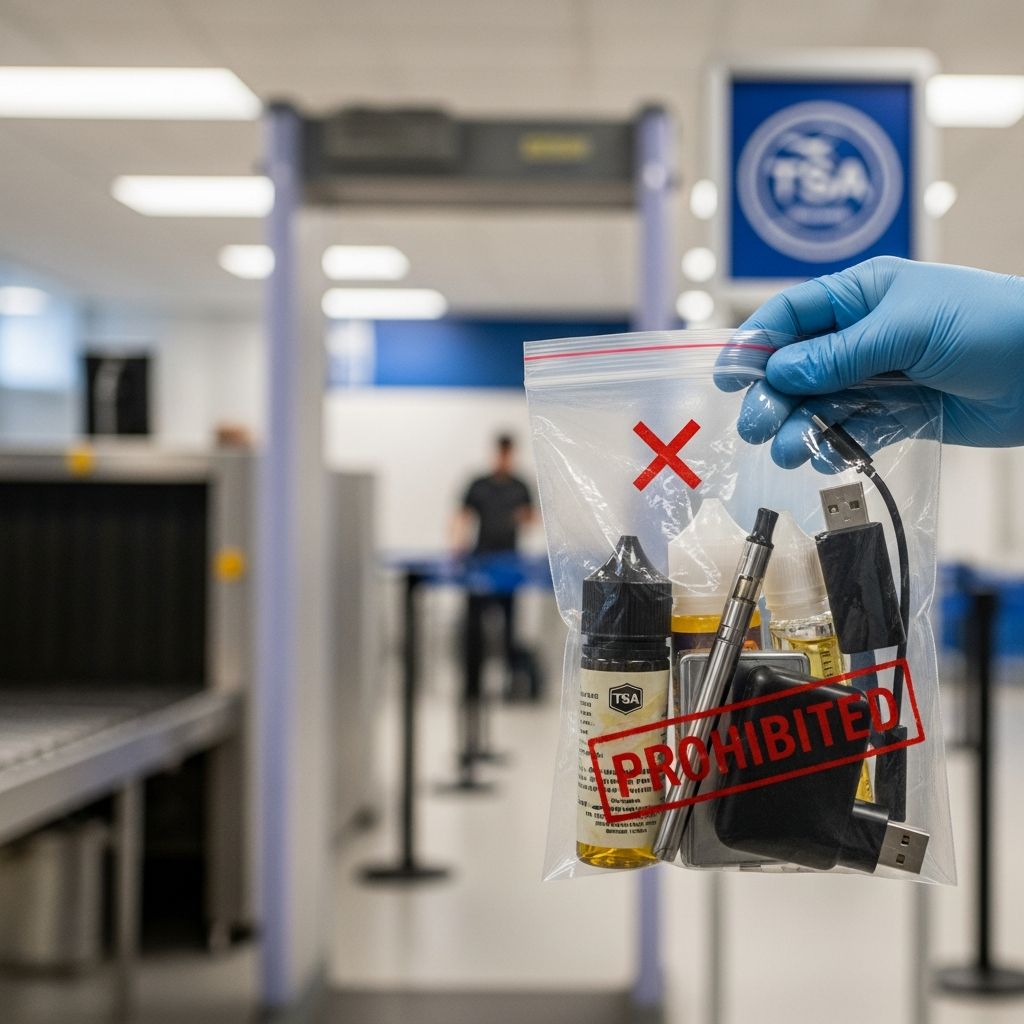
Electronic cigarettes and other vaping devices are now common, but airplanes remain one of the most strictly regulated spaces for smoking and vaping. Federal law, aviation safety rules, and airline policies all combine to make using an e-cigarette on a commercial flight a serious offense, with penalties that can go far beyond a warning.
This guide explains how U.S. law treats vaping on planes, the role of the Federal Aviation Administration (FAA) and Transportation Security Administration (TSA), what penalties you might face, and what to do if you are accused of violating these rules.
1. Why Vaping on a Plane Is Not Just a “Minor” Rule Violation
Vaping on an airplane is treated as a safety issue, not just a matter of etiquette. Federal regulators consider e-cigarettes to be a type of electronic smoking device subject to the same in-flight smoking bans that apply to traditional cigarettes.
There are three key reasons enforcement is so strict:
- Fire risk from lithium batteries in vaping devices, which can overheat or short-circuit in confined spaces.
- Smoke and vapor can trigger detectors in the lavatory and cabin, disrupting flight operations and potentially forcing emergency responses.
- Uniform safety policies help crews maintain order and manage risks consistently across flights.
Because of these concerns, vaping is banned on almost all commercial flights operating to, from, or within the United States, regardless of whether the airline is U.S.-based.
2. The Legal Framework: Who Regulates Vaping on Planes?
Several federal agencies and entities interact to regulate vaping on aircraft:
| Authority | Main Role | How It Relates to Vaping |
|---|---|---|
| FAA (Federal Aviation Administration) | Ensures aviation safety and issues regulations for aircraft operations. | Classifies vaping as a form of smoking for in-flight bans and sets rules for electronic smoking devices and batteries. |
| TSA (Transportation Security Administration) | Oversees security screening at airports. | Controls how and where e-cigarettes and batteries can be transported in baggage. |
| Airlines | Adopt policies and contract terms for passengers. | Include no-smoking/no-vaping clauses in conditions of carriage and may impose additional penalties or bans. |
| State & local authorities | Enforce criminal laws when applicable. | May become involved if conduct escalates to disorderly behavior, interference with crew, or possession of prohibited substances. |
3. TSA and FAA Rules on Vapes and E-Cigarettes
3.1 Where Your Vape Is Allowed (and Not Allowed)
Federal guidance distinguishes sharply between transporting a vaping device and using it.
- Carry-on only: Electronic smoking devices must be carried on your person or in carry-on baggage, not in checked luggage.
- Protected from accidental activation: Devices must be packed or disabled so that the heating element cannot turn on unintentionally.
- No charging on board: Airlines typically prohibit charging vapes or e-cigarettes in flight.
The FAA’s safety guidance explicitly covers “electronic cigarettes and vaping devices,” requiring that they be kept where crew can respond quickly in case of battery failure.
3.2 The In-Flight Smoking and Vaping Ban
Federal law and Department of Transportation rules extend the long-standing smoking ban in aircraft cabins to all electronic smoking devices, not just traditional cigarettes. This includes:
- E-cigarettes
- Vapes and vape pens
- E-cigars and e-pipes
- Electronic hookahs and similar devices
In practical terms, that means you may be allowed to carry your device but you are absolutely not allowed to use it on the plane.
4. What Happens If You Vape on a Plane?
Consequences for vaping on a plane can range from a verbal warning to substantial fines and long-term travel complications. The outcome depends on factors such as whether the device was used in the cabin or lavatory, whether a smoke detector was triggered, your response to crew instructions, and whether any additional misconduct occurred.
4.1 Typical Immediate Response by Flight Crew
If crew members suspect or discover in-flight vaping, they may:
- Instruct you to stop and confiscate the device for the duration of the flight.
- Identify and document the incident for a report to the airline and federal authorities.
- Involve the captain, who may be required to log the event as a safety issue.
- Request law enforcement to meet the aircraft upon landing.
If a smoke detector activates—especially in the lavatory—airlines may need to inspect systems and could delay or ground the aircraft while checks are performed.
4.2 Possible Civil Penalties and Fines
Civil penalties are administrative fines imposed by federal agencies, such as the FAA. While specific fine amounts depend on current regulations and enforcement policies, in-flight smoking and tampering with smoke detectors are recognized grounds for significant civil penalties under federal law. In addition, airlines may assess their own monetary penalties or recover costs if your conduct causes a diversion or measurable loss.
You may be exposed to fines if you:
- Use an e-cigarette or vape anywhere on board.
- Attempt to disable, cover, or tamper with a smoke detector in the lavatory.
- Ignore crew warnings or instructions related to smoking and vaping.
4.3 Criminal Exposure
While not every vaping incident leads to criminal charges, conduct on board that compromises safety or disobeys crew authority can trigger federal or state criminal statutes. In more serious cases, authorities may consider charges such as:
- Interference with flight crew or attendants, if you refuse to comply with instructions related to safety.
- Disorderly conduct, especially if the incident escalates into confrontation or disruption.
- Possession of contraband, if the device contains illegal substances such as THC or other controlled drugs; airports and aircraft remain off-limits to cannabis products even in states where they are otherwise legal.
Legal consequences may include probation, community service, or even jail time in extreme cases, particularly where a flight diversion or safety incident results.
5. Airline-Specific Policies and Contract Terms
Beyond federal law, each airline maintains detailed rules on electronic smoking devices. Major carriers uniformly prohibit in-flight use:
- Delta Air Lines explicitly states that e-cigarettes and similar devices are carry-on only and that “using or recharging the device while on board the aircraft is not permitted.”
- Other large airlines—including American Airlines, British Airways, and various international carriers—adopt similar wording, barring both use and charging, and requiring precautions against accidental activation.
These restrictions are typically embedded in your contract of carriage, the legally binding terms you accept when you purchase a ticket. Violating these terms can lead to:
- Removal from the flight (when feasible and safe).
- Refusal of future transport or placement on an internal no-fly list.
- Liability for costs if your conduct forces a diversion or unscheduled landing.
6. Vaping in Airport Terminals vs. On the Aircraft
Passengers sometimes assume that because they can vape just before boarding, they may be able to continue during the flight. That is incorrect—and even at airports, rules are tightening.
6.1 Airport Vaping Rules
Most U.S. airports allow vaping only where smoking is already permitted, such as designated outdoor areas. Many large terminals have removed indoor smoking areas altogether, meaning:
- If you cannot find a smoking area, assume vaping is also prohibited.
- Using your device in restrooms, gate areas, or jet bridges can lead to security or law enforcement involvement.
When traveling internationally, you should verify both airport and country-specific regulations on e-cigarettes, as some nations heavily restrict or ban them.
6.2 Strict Separation Between Airport and Aircraft Rules
The fact that you may be able to vape in a designated outdoor zone before boarding does not soften the absolute ban on vaping aboard the aircraft itself. Once the boarding door closes, federal aviation and airline-specific rules fully control what is allowed.
7. Practical Tips to Avoid Legal Trouble
If you are a regular vaper or smoker, planning ahead for a flight is essential. Consider these practical steps:
- Pack devices correctly: Keep vapes in your carry-on or on your person, remove tanks if needed, and ensure they cannot turn on accidentally.
- Prepare for cravings: For long flights, consider nicotine replacement products (gum, lozenges, or pouches) that are allowed on board and do not produce vapor.
- Respect no-vaping zones: Treat any no-smoking sign as a no-vaping sign, including in airport restrooms and jetways.
- Check local and international laws: Some destinations limit or ban e-cigarettes entirely, and confiscation or fines may apply at arrival.
Deliberately trying to hide vaping in a lavatory or under a jacket is risky. Smoke detectors are sensitive, and airlines have become increasingly aggressive in reporting incidents.
8. If You Are Accused of Vaping on a Plane
Being confronted or detained over alleged vaping can be stressful. Your choices in the moment and immediately afterward can affect the outcome.
8.1 During the Flight
- Stay calm and cooperative: Comply immediately with all crew instructions, even if you disagree with their interpretation of events.
- Avoid arguments or raised voices: Escalation can transform a minor infraction into a potential interference-with-crew situation, increasing your legal risk.
- Do not tamper with detectors: Any attempt to disable or cover smoke detectors can be treated as a serious safety violation.
8.2 After Landing
Law enforcement or airline security may question you at the gate:
- You may be asked for identification and a statement about what occurred.
- You might receive notice of a possible civil penalty, citation, or airline disciplinary action.
- In serious cases, you could be detained for further questioning.
Where there is a risk of significant fines, criminal charges, or a record that could affect future travel or employment, consulting an attorney experienced in aviation or criminal defense law is advisable.
9. Special Issues: THC Vapes and International Travel
Vapes containing THC or cannabis products present additional risks. Even in states that have legalized marijuana, federal law and most airline policies still prohibit transporting or using THC products in airports and on commercial aircraft.
Potential consequences include:
- Confiscation of the device and contents by security or law enforcement.
- Arrest and prosecution under federal or state controlled-substance laws, depending on the circumstances.
- Denial of entry or immigration issues when traveling internationally.
Similarly, many countries have strict rules—or outright bans—on importing or possessing e-cigarettes and nicotine vaping products. Travelers should always verify destination laws before flying.
10. Key Takeaways in Plain Language
- You can usually bring a vape on a plane, but only in carry-on or on your person.
- You cannot legally use or charge a vape on a commercial flight.
- Vaping on a plane can lead to substantial fines, airline penalties, and even criminal charges in serious cases.
- THC or cannabis vapes are especially risky because they raise controlled-substance issues in addition to flight safety concerns.
Passengers who understand the rules in advance and plan for nicotine needs before boarding will significantly reduce the risk of legal trouble and ensure a safer, smoother flight for everyone.
Frequently Asked Questions (FAQs)
Q1: Is it ever legal to vape on a plane if the airline allows it?
No. In the United States, federal rules extend the in-flight smoking ban to electronic cigarettes and other vaping devices, so airlines cannot create exceptions for use during flight.
Q2: Can I put my vape in checked baggage if it is turned off?
No. FAA and TSA safety guidance requires that electronic smoking devices be carried in your hand luggage or on your person because of the fire risk posed by lithium batteries in the cargo hold.
Q3: What if I only use my vape in airplane mode without the battery?
You may be able to transport a device body without a battery in checked luggage, but the moment a functional, battery-powered device is assembled and used on board, you would be violating no-vaping rules. Always follow the latest FAA and airline guidance about battery handling.
Q4: How likely is it that I will get caught if I vape in the lavatory?
Lavatory smoke detectors can respond to vapor as well as smoke, and crews are trained to investigate alarms. Industry reports identify in-cabin and lavatory vaping as a leading non-compliance issue for airlines, and many passengers who attempt to vape discreetly are detected and reported.
Q5: What should I do if I receive notice of a civil penalty for vaping on a flight?
Read the notice carefully, observe any deadlines for response, and consider speaking with an attorney who has experience with aviation or federal administrative proceedings to understand your options for contesting, negotiating, or resolving the matter.
References
- The 2025 TSA Vape Travel Guide: What You Can & Can’t Bring on a Plane — West Coast Vape Supply (summary of TSA/FAA guidance). 2025-01-10. https://westcoastvapesupply.com/blogs/updates/the-tsa-vape-travel-guide
- TSA once again cracks down on item many people bring — TheStreet. 2023-11-15. https://www.thestreet.com/travel/can-i-bring-ecigarettes-through-security
- Can You Bring a Vape on a Plane? (2025 Update) — Innokin. 2024-12-01. https://www.innokin.com/blog/can-you-bring-a-vape-on-a-plane
- Tobacco, E-Cigarettes or Marijuana — Delta Air Lines. 2024-08-05. https://www.delta.com/us/en/baggage/prohibited-or-restricted-items/tobacco-ecig-marijuana
- PackSafe – Electronic Cigarettes, Vaping Devices — Federal Aviation Administration. 2023-06-30. https://www.faa.gov/hazmat/packsafe/e-cigarettes-vaping
- U.S. E-Cigarette Regulations – 50 State Review — Public Health Law Center. 2024-07-01. https://www.publichealthlawcenter.org/resources/us-e-cigarette-regulations-50-state-review
Similar Articles








Read full bio of Sneha Tete


