Penalties for Criminal Mischief Explained
Uncover the severe consequences of criminal mischief charges across U.S. jurisdictions and learn vital defense strategies.
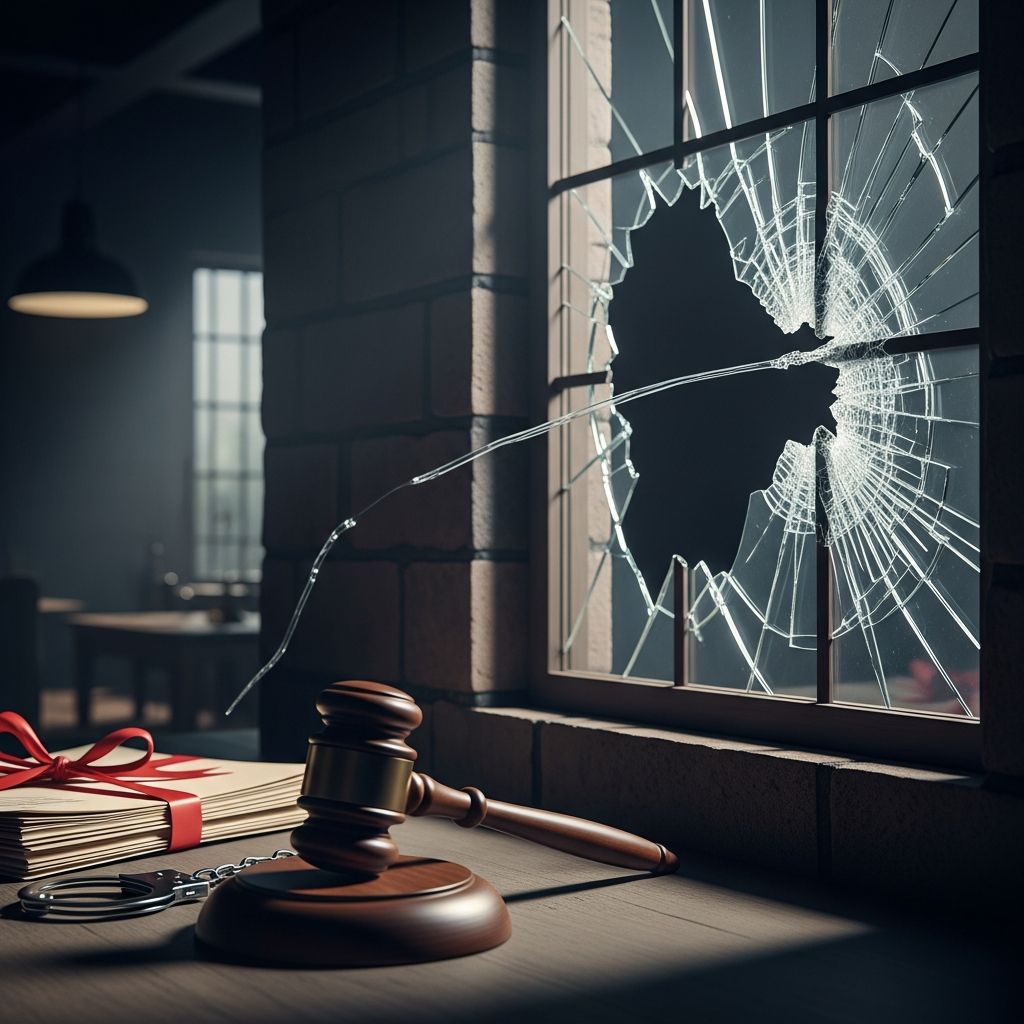
Criminal mischief, commonly known as vandalism or property damage, involves intentionally harming or tampering with someone else’s property without permission. Penalties escalate dramatically based on the financial loss caused, ranging from simple fines to decades in prison. This article breaks down the offense’s definition, state variations, sentencing factors, and defense approaches.
Defining Criminal Mischief Across Jurisdictions
The core of criminal mischief lies in purposeful damage to tangible property, recklessness with dangerous tools like fire, or deception leading to financial harm. Federal regulations, such as those in Indian Country under 25 CFR § 11.410, classify it as a misdemeanor if pecuniary loss exceeds $100, or a petty misdemeanor above $25. States mirror this but adjust thresholds for severity.
- Intent Requirement: Prosecutors must prove purposeful, knowing, or reckless action without owner consent.
- Property Scope: Covers vehicles, buildings, public infrastructure, and personal items.
- Tampering Risks: Even without visible damage, endangering safety through interference qualifies.
Common acts include spray-painting walls, slashing tires, shattering windows, or sabotaging utilities, transforming youthful pranks into felonies when costs mount.
Penalty Tiers: How Damage Value Determines Severity
Most states use a graduated scale tied to repair or replacement costs, called ‘pecuniary loss.’ Low-value incidents stay misdemeanors; high-value ones become felonies with prison time. Restitution—repaying victims—is nearly always mandated alongside fines or jail.
| Damage Range | Typical Classification | Possible Penalties |
|---|---|---|
| Under $100 | Class C Misdemeanor | Fine up to $500 |
| $100–$750 | Class B Misdemeanor | Up to 180 days jail, $2,000 fine |
| $750–$2,500 | Class A Misdemeanor | Up to 1 year jail, $4,000 fine |
| $2,500–$30,000 | State Jail Felony | 180 days–2 years, $10,000 fine |
| $30,000–$150,000 | 3rd-Degree Felony | 2–10 years prison, $10,000 fine |
| $150,000–$300,000 | 2nd-Degree Felony | 2–20 years prison |
| Over $300,000 | 1st-Degree Felony | 5–99 years or life |
This table reflects common frameworks, like Texas Penal Code structures where damage thresholds dictate charges from minor citations to life sentences.
Texas: A Model for Escalating Punishments
Texas exemplifies strict enforcement. Damage under $100 merits only a fine, but surpassing $2,500 triggers felony status with state jail time. Over $300,000? Life imprisonment looms. Protected sites like places of worship elevate even minor acts to felonies. Convictions stain records permanently, impacting jobs and housing.
Prosecutors emphasize ‘pecuniary loss,’ including repair, towing, and lost use costs. First offenses might see diversion programs, but repeats face maximums.
Iowa’s Graded Approach to Property Crimes
Iowa divides criminal mischief into five degrees. Fifth-degree (under $300) is a simple misdemeanor: max 30 days jail, $855 fine plus surcharges. First-degree exceeds $10,000 or disrupts public services like utilities—a Class C felony with 10 years prison and $13,660 fines. Second-degree ($1,500–$10,000) offers up to 5 years as a Class D felony.
- Fourth-degree ($300–$750): Serious misdemeanor, 1 year jail, $2,560 fine.
- Third-degree ($750–$1,500): Aggravated misdemeanor, similar penalties.
Utility sabotage, regardless of cost, jumps to higher degrees due to public risk.
California’s Wobbler: Flexibility in Charging
California treats criminal mischief (or ‘malicious mischief’) as a ‘wobbler,’ prosecutable as misdemeanor or felony. Under $400 damage? Up to 1 year jail, $1,000 fine. At $400+, fines soar to $50,000 with 1-year imprisonment possible. Graffiti on public property adds community service cleaning mandates.
Prior convictions or gang ties aggravate charges, pushing toward felony tracks with strikes under Three Strikes Law.
New Jersey and Other States: Variable Thresholds
New Jersey labels under $500 damage a disorderly persons offense with fines and potential jail. $500–$2,000 becomes fourth-degree (18 months prison); over $2,000 is third-degree (3–5 years). Juveniles face family court but can transfer to adult proceedings for severity.
Other states align similarly: low damage yields citations; critical infrastructure hits trigger felonies. Federal involvement arises for interstate commerce or tribal lands.
Aggravating Factors That Worsen Outcomes
Beyond value, courts consider:
- Hate Motivation: Bias against race, religion, or orientation boosts charges.
- Public Safety: Tampering with water, power, or transport endangers communities.
- Repeat Offenses: Criminal history mandates harsher sentences.
- Weapons/Fire: Using explosives or flames elevates to arson hybrids.
Restitution often exceeds fines, calculated via expert appraisals. Probation may include anger management or anti-vandalism classes.
Building a Strong Defense Strategy
Challenging criminal mischief requires proving lack of intent, consent, or causation. Common defenses:
- Accident or Necessity: Damage during emergency (e.g., breaking a window to save a pet).
- Ownership Dispute: Claimant had permission or partial rights.
- Intoxication: Voluntary rarely excuses, but involuntary might negate intent.
- Alibi/False Accusation: Video, witnesses disprove presence.
Expert witnesses assess ‘true’ damage costs downward. Plea bargains reduce felonies to misdemeanors, especially for juveniles or clean records. Early lawyer involvement uncovers prosecutorial weaknesses.
Real-World Consequences Beyond Prison
Convictions linger: felonies bar firearm ownership, professional licenses, and voting (temporarily). Employment screens flag them; insurance rates spike. Juveniles risk sealed records unsealed for college apps.
Restitution plans stretch budgets, with defaults risking further jail. Community service—scrubbing graffiti—humiliates publicly.
Juvenile vs. Adult Proceedings
Minors under 18 typically enter juvenile systems focused on rehabilitation: counseling over incarceration. But egregious cases (e.g., school arsons) waive to adult court, exposing teens to adult penalties. Parents may owe fines/restitution.
Preventing Charges: Awareness and Alternatives
Communities combat mischief via surveillance, rapid reporting, and youth programs. If accused, avoid statements without counsel—invoke Miranda rights immediately.
Frequently Asked Questions About Criminal Mischief
What counts as criminal mischief?
Intentionally damaging or tampering with another’s property without consent, including graffiti, tire slashing, or utility interference.
Can a first offense be dismissed?
Yes, via diversion, pleas, or deferred adjudication for misdemeanors, especially with restitution paid promptly.
Does accidental damage qualify?
No—prosecutors must prove intent, recklessness, or negligence with dangerous means.
How is damage value calculated?
Repair/replacement costs, lost use, towing, and professional fees; experts testify in disputes.
What if it’s my own property?
No crime unless self-damage deceptively claims insurance, potentially fraud.
Are there federal penalties?
Yes, on federal lands or tribal areas, with misdemeanors for losses over $100.
References
- 25 CFR § 11.410 – Criminal mischief — U.S. Government Publishing Office. Accessed 2026. https://www.law.cornell.edu/cfr/text/25/11.410
- Criminal Mischief 101: Avoid Serious Charges — Universal Law Group. Accessed 2026. https://ulg.law/criminal-mischief/
- Criminal Mischief Defense Attorney in Des Moines — Feld Law Firm. Accessed 2026. https://www.iowacrimelawyer.com/criminal-defense/crimes-of-violence/criminal-mischief/
- What is Criminal Mischief? — The Rodriguez Law Group. Accessed 2026. https://www.aerlawgroup.com/blog/what-is-criminal-mischief/
- California Criminal Mischief Defense — Weber Law. Accessed 2026. https://www.law.ninja/california-criminal-mischief/
Similar Articles








Read full bio of Sneha Tete