Legal Recourse for Fatal Pedestrian Collisions
Understanding wrongful death claims when pedestrians are fatally struck by vehicles.
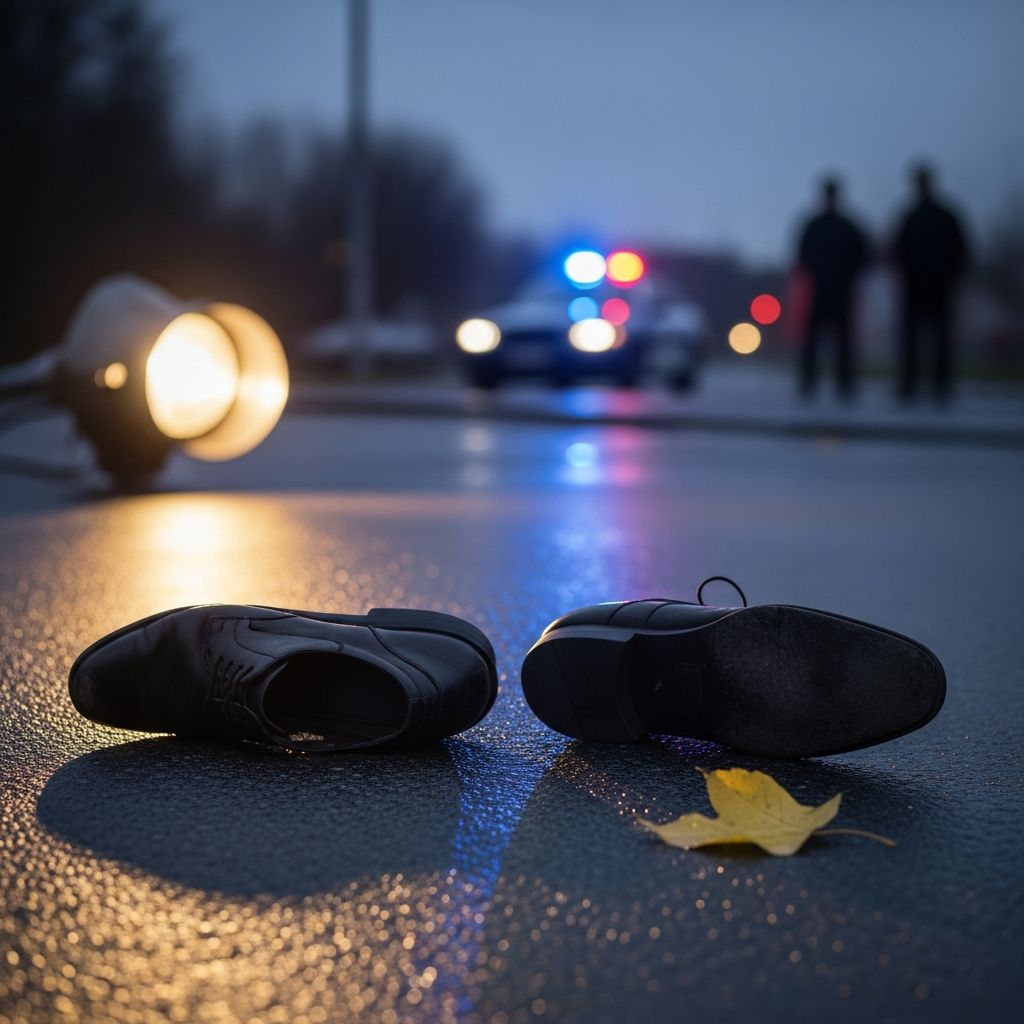
Understanding Wrongful Death Actions in Traffic Fatalities
When a pedestrian loses their life in a motor vehicle collision, the surviving family members face an unexpected tragedy compounded by financial hardship and emotional devastation. In such circumstances, the legal system provides a mechanism through which families can seek financial recovery and hold accountable the party responsible for the death. A wrongful death action is a civil lawsuit that allows designated family members or an estate representative to pursue monetary compensation from the individual or entity whose negligence or intentional misconduct caused the pedestrian’s fatal injuries.
Unlike criminal proceedings that focus on punishment and incarceration, wrongful death civil cases concentrate on compensating survivors for their losses. These lawsuits serve a dual purpose: they provide families with resources to cope with their loss while also establishing accountability for negligent or reckless behavior that resulted in death. The fundamental premise is that the responsible party should bear the financial consequences of their actions that deprived others of a loved one.
Identifying Who May File and Who May Be Sued
Not every family member can pursue a wrongful death claim. Most jurisdictions limit filing rights to specific relatives who can demonstrate they suffered direct harm from the death. Typically, this includes spouses, domestic partners, children, and sometimes parents or financially dependent family members. If the deceased had no qualifying family members, a personal representative appointed by the court to manage the estate may file the lawsuit on behalf of the deceased’s estate.
The defendant in a wrongful death case is usually the driver whose negligent operation of the vehicle caused the fatal collision. However, liability may extend beyond the driver in certain situations. Other potentially responsible parties include vehicle owners (if they knowingly allowed an incompetent driver to operate the vehicle), manufacturers (if a vehicle defect contributed to the death), government agencies (if poor road design or maintenance was a factor), or commercial entities (such as trucking companies that failed to properly maintain vehicles or enforce safety protocols).
Establishing Negligence and Proving Causation
To succeed in a wrongful death lawsuit, plaintiffs must establish four essential legal elements. First, they must demonstrate that the defendant owed a legal duty of care to the pedestrian. Drivers have a fundamental responsibility to operate their vehicles safely and obey traffic laws, which creates this duty toward all pedestrians lawfully using roadways and crosswalks.
Second, plaintiffs must prove the defendant breached that duty through careless, reckless, or negligent conduct. This might involve traffic violations, distracted driving, speeding, driving under the influence, or failing to maintain proper vehicle control. Evidence supporting a breach includes police accident reports, traffic camera footage, eyewitness testimony, and in some cases, expert accident reconstruction analysis.
Third, causation must be established—demonstrating that the defendant’s breach directly caused the pedestrian’s death. This requires showing not merely that the defendant’s conduct was negligent, but specifically that this negligence was a substantial factor in producing the fatal outcome. Insurance companies sometimes dispute causation by arguing the pedestrian contributed to the accident or that other factors were responsible.
Finally, damages must exist. The deceased’s death itself creates quantifiable losses to surviving family members and the estate, which forms the basis for the compensation claim.
Distinguishing Between Wrongful Death and Survival Claims
In many jurisdictions, two distinct legal claims emerge from a fatal pedestrian accident. The wrongful death action compensates surviving family members for losses they personally suffered due to the death. This includes the loss of financial support, companionship, guidance, and emotional solace the deceased would have provided.
A survival action, by contrast, allows the estate to recover damages the deceased would have been entitled to had they lived. This includes the victim’s pain and suffering from the time of injury until death, medical expenses incurred after the collision, and funeral costs. Many wrongful death cases combine both actions into a single lawsuit, with separate damage calculations for each claim component.
Recoverable Damages and Compensation Categories
Wrongful death settlements and judgments typically encompass several categories of compensable losses:
- Economic losses: Medical expenses from treatment immediately preceding death, funeral and burial costs, and lost wages the deceased would have earned had they survived. Courts also calculate lost future earnings based on the victim’s life expectancy and earning capacity.
- Loss of household services: The value of services the deceased would have provided, such as homemaking, child care, property maintenance, or elder care assistance.
- Loss of companionship and guidance: Compensation recognizing the emotional relationship and support system destroyed by the death, particularly significant for children who lost a parent or spouses who lost partners.
- Pain and suffering prior to death: Addressed through survival actions, this compensates for the victim’s physical pain and emotional anguish between the collision and death.
- Loss of inheritance or financial support: Money the victim would have accumulated and passed to beneficiaries or provided to dependents.
Insurance Coverage and Third-Party Claims
In most cases, the at-fault driver’s liability car insurance provides the primary source of compensation. Nearly all states require drivers to carry liability coverage specifically designed to protect against claims arising from injuries or deaths caused by the driver’s negligence. The injured family can typically file a third-party claim directly with the at-fault driver’s insurance company, seeking coverage within the policy limits.
When the at-fault driver lacks adequate insurance or carries no insurance at all, other coverage options may apply. An uninsured motorist policy on the victim’s own vehicle can provide protection. Some states maintain no-fault car insurance systems where each party’s own insurance covers their losses regardless of who caused the accident, though these systems have varying applicability to wrongful death claims.
The at-fault driver’s policy limits establish a ceiling on insurance compensation. If damages exceed these limits, a personal injury lawsuit may be necessary to pursue the defendant’s personal assets or seek a judgment that can be partially satisfied through alternative means.
The Settlement Process and Litigation Pathway
Most wrongful death cases never reach trial. Instead, they resolve through negotiated settlements before formal litigation concludes. Early in the process, the family’s attorney will gather evidence, document damages, and typically send a detailed demand letter to the responsible party’s insurance company. Negotiations follow, with settlement discussions often occurring over weeks or months.
If negotiations stall, the case proceeds to litigation. A wrongful death lawsuit is filed in civil court, with the family members serving as plaintiffs and the at-fault driver as defendant. The case then progresses through discovery, where both sides exchange evidence, and eventually may proceed to trial if no settlement agreement is reached.
Should the case go to trial and the plaintiffs prevail, a court or jury issues a damages award specifying the monetary compensation the defendant must pay. This judgment can then be enforced through collection mechanisms if the defendant or their insurance company does not voluntarily satisfy it.
Criminal Prosecution and Civil Liability Distinction
A critical point of confusion involves the relationship between criminal charges and civil wrongful death lawsuits. These are entirely separate legal proceedings. A driver involved in a fatal pedestrian collision may simultaneously face criminal charges such as vehicular manslaughter, vehicular homicide, or reckless driving, while also being sued civilly for wrongful death.
Criminal charges are brought by government prosecutors and focus on punishing the defendant through fines and imprisonment if convicted. The standard of proof in criminal cases is “beyond a reasonable doubt,” a much higher threshold than the civil standard of “preponderance of the evidence” used in wrongful death cases. Consequently, a defendant might be acquitted of criminal charges but still found liable in the wrongful death civil case, or vice versa.
The existence of criminal charges does not prevent a wrongful death lawsuit from proceeding. In fact, criminal proceedings may provide helpful evidence such as the defendant’s toxicology results or statements made during arrest.
Comparative Negligence and Pedestrian Responsibility
Although pedestrians generally have protection under traffic laws in most jurisdictions, comparative negligence principles may limit damages if the pedestrian contributed to the accident. A pedestrian who darted into traffic against the signal, walked distracted and failed to observe approaching vehicles, or trespassed on non-public roadways might be found partially at fault.
When comparative negligence applies, the damage award is reduced proportionally to the pedestrian’s degree of fault. For example, if a jury determines the pedestrian was 20% responsible and the driver 80% responsible, the awarded damages are reduced by 20%. Insurance defense attorneys routinely investigate pedestrian conduct to establish any contributory factors that might reduce the driver’s liability.
Investigation and Evidence Gathering
Successful wrongful death claims rely on thorough investigation and compelling evidence. Critical evidence sources include:
- Police accident reports documenting the scene, officer observations, and preliminary determinations of fault
- Photographs and video footage from the accident scene and traffic cameras capturing the collision
- Eyewitness statements describing how the accident occurred and the vehicles involved
- Medical records and autopsy reports establishing the cause of death and damages to the victim
- Vehicle maintenance records and inspection reports revealing any mechanical failures
- Cell phone records and infotainment system data showing whether the driver was distracted
- Toxicology reports confirming whether impairment was a factor
- Expert accident reconstruction analysis explaining vehicle speeds, sight lines, and stopping distances
Attorneys typically retain accident reconstruction experts to provide professional analysis when liability is contested. These experts can determine vehicle speeds from skid marks and damage patterns, calculate reaction times, and assess whether the pedestrian was visible to the driver under the circumstances.
Calculating Economic and Non-Economic Loss
Quantifying damages in wrongful death cases involves both straightforward calculations and complex valuations. Economic damages are calculated by totaling medical expenses, funeral costs, and lost earnings. Lost earnings calculations use the victim’s age, health status, work history, and earning trajectory to project lifetime income the victim would have earned.
Non-economic damages such as loss of companionship and emotional suffering require different approaches. Many jurisdictions permit jury instructions guiding jurors to consider factors such as the victim’s relationship to survivors, the duration of that relationship, and the nature of the care and guidance the victim provided. Some jurisdictions use per-diem arguments where attorneys suggest a daily value for loss of companionship, multiplied across years of lost life expectancy.
Statute of Limitations and Procedural Requirements
Wrongful death lawsuits must be filed within specified timeframes established by state law. These statutes of limitations typically range from two to four years from the date of death, though some jurisdictions calculate the period from the date of discovery of the death. Filing within the statutory period is mandatory; failure to file before the deadline bars the claim entirely.
Additionally, most states require that wrongful death actions identify the proper representative to serve as plaintiff. If no estate has been established, the court may appoint an administrator or personal representative specifically to pursue the wrongful death claim on behalf of surviving family members.
Frequently Asked Questions
Q: Can a wrongful death lawsuit be filed if the driver was never criminally charged?
A: Yes. Civil wrongful death lawsuits operate independently of criminal prosecutions. Negligence sufficient for civil liability does not require criminal guilt or charges. A family may pursue civil damages even if prosecutors declined to file criminal charges.
Q: How long does a wrongful death case typically take to resolve?
A: Most cases settle within 12-24 months through negotiation. Cases that proceed to trial may take 2-4 years or longer depending on court dockets and case complexity. Settlement timelines depend on the clarity of liability and sufficiency of evidence.
Q: What if the at-fault driver’s insurance policy limits are far below the actual damages?
A: Plaintiffs can pursue the defendant’s personal assets through a judgment, though collecting from individuals often proves difficult. Some defendants have sufficient assets or income to satisfy larger judgments; others do not. This risk is why uninsured and underinsured motorist coverage is important.
Q: Can a wrongful death claim be brought against a vehicle manufacturer?
A: Yes, if a defective vehicle condition contributed to the death. Claims against manufacturers are typically based on product liability or negligence in design, manufacturing, or failure to warn of hazards.
Q: Who has the right to inherit settlement or judgment proceeds in a wrongful death case?
A: Distribution of proceeds depends on state law and the relationships of claimants. Generally, surviving spouses, children, and parents divide awards, though specific percentages vary by jurisdiction.
References
- Wrongful Death Lawsuits When a Pedestrian Is Killed in a Car Accident — Nolo Legal Encyclopedia. Accessed January 2026. https://www.nolo.com/legal-encyclopedia/wrongful-death-lawsuits-when-a-pedestrian-is-killed-in-a-car-accident.html
- Wrongful Death Lawsuits After a Fatal Pedestrian Accident in California — Helbock Law. Accessed January 2026. https://www.helbocklaw.com/wrongful-death-lawsuits-after-a-fatal-pedestrian-accident-in-california/
- Filing a Lawsuit Following a California Pedestrian Accident — Bostwick Firm. July 2024. https://www.bostwickfirm.com/personal-injury-blog/2024/july/filing-a-lawsuit-following-a-california-pedestri/
- Wrongful Death Lawsuits for Fatal Pedestrian Accidents — Jones Law SC. Accessed January 2026. https://joneslawsc.com/wrongful-death-lawsuits-for-fatal-pedestrian-accidents/
- California Attorney for Fatal Pedestrian Accidents — Case Barnett Law. Accessed January 2026. https://www.casebarnettlaw.com/blog/california-attorney-for-fatal-pedestrian-accidents.cfm
Similar Articles








Read full bio of Sneha Tete