
The Pay-to-Play Airport Security Illusion
Bypassing airport security lines for a fee creates severe privacy risks.
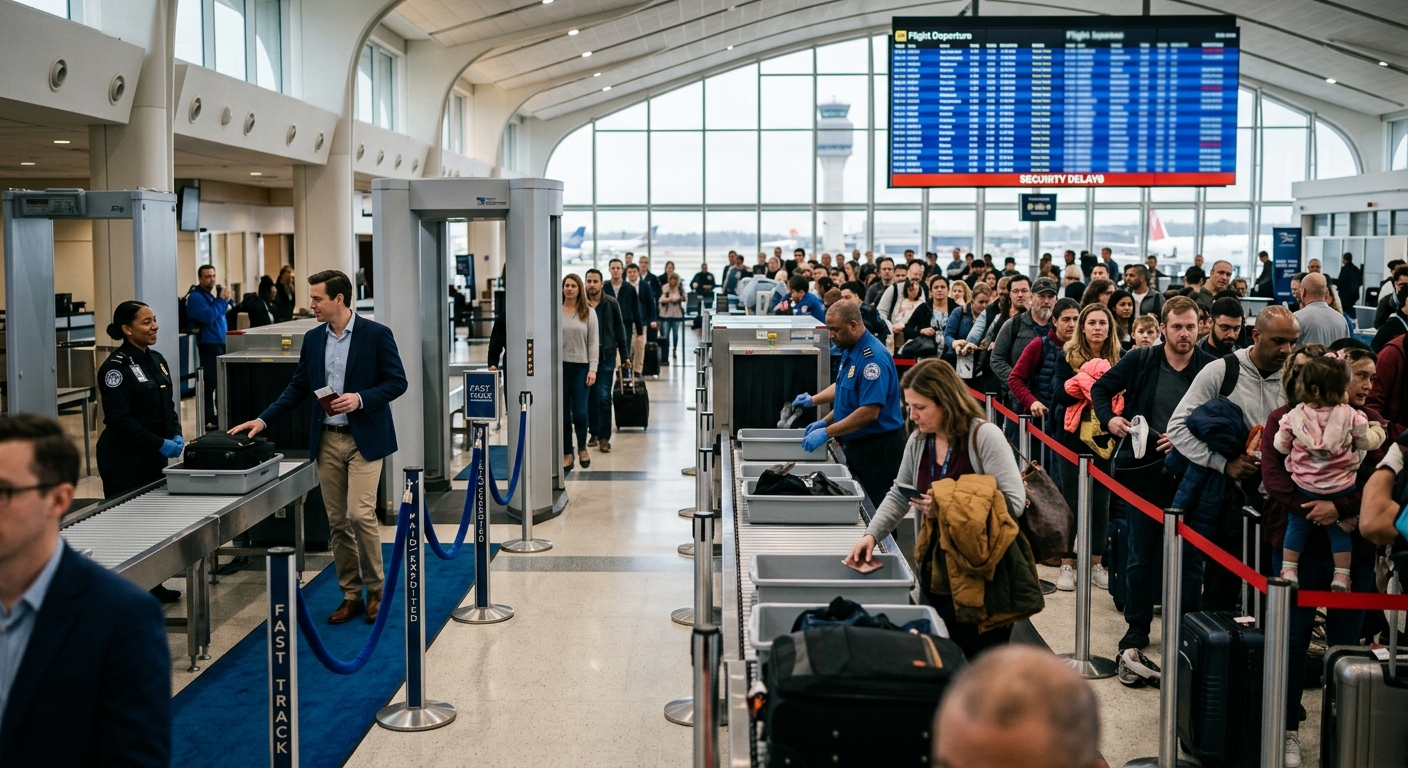
Navigating airport security is universally acknowledged as one of the most stressful, exhausting aspects of modern travel. The endless queues, the unlacing of shoes, the invasive unpacking of personal belongings, and the looming anxiety of missing a flight have collectively engineered a desperate consumer base. Out of this frustration, a highly profitable industry has emerged: expedited airport security. For a hefty annual fee, weary travelers can enroll in private or public-private biometric screening programs that allow them to bypass the traditional identity verification lines, jumping straight to the physical screening—or in some cases, experiencing reduced physical screening altogether. This VIP treatment is marketed as a seamless, futuristic convenience. However, beneath the polished veneer of retina scans and fingerprint kiosks lies a deeply troubling paradigm.
By allowing individuals to essentially purchase their way out of standard security protocols, we have inadvertently created a two-tiered system that commodifies basic travel convenience while introducing severe national security loopholes. In the process, private corporations and government agencies are accumulating unprecedented troves of highly sensitive biometric data. This intersection of “pay-to-play” access, mass data collection, and reliance on inherently flawed government watchlists constitutes what security experts often refer to as “security theater.” It is a system that excels at providing the illusion of absolute safety for the masses, while quietly opening backdoors for those with disposable income.
The Monetization of Convenience: Security as a Luxury Good
To understand how we arrived at this juncture, we must examine the evolution of aviation security over the past two decades. In the aftermath of major global terrorist attacks, governments worldwide implemented sweeping, highly visible security mandates. Passengers were suddenly required to discard liquids, remove their laptops, and submit to full-body scanners. While some of these measures were rooted in genuine threat mitigation, many fell into the category of what renowned security technologist Bruce Schneier famously dubbed “security theater”. This term describes protocols designed primarily to make the public feel safer, rather than objectively reducing risk. Security theater is psychologically effective but operationally cumbersome, creating massive bottlenecks at major transit hubs.
Recognizing the economic opportunity born from this widespread frustration, private companies and government partnerships stepped into the fray. These entities pitched a tantalizing solution: hand over your deepest biological identifiers—your fingerprints and iris patterns—pay a recurring annual fee, and you can reclaim your time. The pitch worked flawlessly. Millions of travelers have willingly surrendered their biometric data to private entities to save twenty minutes at the airport.
But this commodification of convenience transforms security from a standardized public good into a luxury commodity. When a nation’s defense mechanisms can be bypassed or accelerated through financial transactions, it raises profound ethical and practical questions. Should safety protocols apply equally to all, or should the wealthy be permitted to opt out of the friction? More importantly, does this tiered system actually keep the skies safe, or does it merely redistribute the burden of scrutiny onto the general public while giving affluent travelers a free pass?
The “Unknown Threat” Vulnerability
The core operational premise of expedited security programs relies heavily on background checks against established government watchlists. When an applicant pays their fee and submits their information, the company or agency verifies their identity and cross-references their name against databases such as the Terrorist Screening Dataset (TSDS). If the applicant’s record is clean, they are granted VIP status.
The fatal flaw in this logic is as simple as it is terrifying: watchlists only track known threats. A watchlist, no matter how expansive, is inherently retrospective. It is populated by individuals who have already been identified by intelligence agencies due to past behaviors, affiliations, or intercepts. Therefore, an intelligent, well-resourced organization aiming to bypass airport security would not send a known operative whose name is already flagged. They would send an “unknown” actor—a recruit with a pristine background, no criminal record, and no previous ties to extremism.
This unknown individual could easily pass the initial background check, pay the necessary subscription fee, and enroll in an expedited security program. Once approved, this operative would be granted fast-track access, bypassing the stringent identity verification processes and behavioral analysis conducted by standard security agents. By designing a system that equates a lack of a criminal record with absolute safety, we have institutionalized a massive blind spot. The assumption that those who can afford the fee and pass a basic background check are inherently trustworthy is a dangerous fallacy that seasoned attackers can easily exploit. Recognizing these vulnerabilities, the Transportation Security Administration (TSA) has occasionally had to backtrack, requiring even fast-tracked users of private biometric services to show physical IDs after alarming security breaches.
A Biometric Goldmine in the Hands of Corporations
Beyond the physical security loopholes, the rapid expansion of biometric fast-tracks introduces a staggering privacy crisis. To participate in these programs, users must consent to the collection of highly immutable personal data. Unlike a passport, a driver’s license, or a Social Security number—which can be reissued if compromised—your biometrics are permanent. You cannot change your retinal pattern, your facial geometry, or your fingerprints.
Private companies operating within the security space are amassing databases containing millions of these biometric profiles, alongside corresponding names, addresses, credit card numbers, and travel habits. While these corporations tout robust encryption and military-grade data protection, history has repeatedly demonstrated that no database is entirely impervious to breaches. The consolidation of such sensitive information creates an incredibly lucrative target for state-sponsored hackers, identity thieves, and cybercriminals.
Government agencies themselves are also expanding biometric collection at an unprecedented rate. For instance, the Department of Homeland Security recently pushed forward regulations to collect facial biometrics from virtually all noncitizens upon entry and exit at U.S. borders, moving away from limited pilot programs to a comprehensive biometric mandate. This widespread normalization of biometric surveillance extends far beyond the airport terminal. We are already seeing biometric kiosks deployed at sports stadiums, concert venues, and even concession stands to verify age for alcohol purchases. When we condition the public to trade their biological data for minor conveniences, we pave the way for a surveillance infrastructure that can track individuals’ movements, purchases, and associations with terrifying precision.
The Efficacy and Inequity of the Watchlist Complex
While the wealthy breeze past the kiosks, the general public remains subjected to the full weight of the national security apparatus. At the heart of this apparatus is the aforementioned Terrorist Screening Dataset. According to a December 2023 investigation, this watchlist has exploded in size, ballooning to over 2 million individuals—nearly doubling over a six-year period.
The sheer volume of the watchlist undermines its efficacy. When a database contains millions of names, the number of false positives skyrockets. Innocent travelers who happen to share a name or a demographic profile with a watchlisted individual frequently find themselves subjected to grueling secondary screenings, interrogations, and missed flights. Civil liberties organizations have long documented the devastating impact of these false positives, which disproportionately affect minority communities, immigrants, and activists.
This creates a glaring juxtaposition. On one hand, we have an overgrown, opaque watchlisting system that ensnares countless innocent people, treating them as guilty until proven innocent based on algorithmic matching. On the other hand, we have VIP programs that allow individuals to bypass this very friction simply by paying a fee and submitting to biometric harvesting. The system does not objectively measure threat; it measures resources. It is a paradigm where profiling invites suspicion, while wealth and corporate subscriptions purchase the presumption of innocence.
The Illusion of Absolute Safety vs. The Reality of Risk
It is crucial to ask whether the trade-offs we are making actually result in safer skies. When security procedures are automated and handed over to private entities that prioritize throughput and customer satisfaction, the human element of security is diminished. Trained security personnel observing passenger behavior, asking questions, and exercising judgment are replaced by glowing green lights on biometric scanners.
| Feature | Standard Airport Screening | Expedited Private Screening (e.g., VIP Kiosks) |
|---|---|---|
| Financial Cost | Included in standard airline ticket taxes. | High annual subscription fees (often $180+). |
| Data Requirement | Standard ID (Driver’s License, Passport). | Immutable biometrics (Iris, Facial recognition, Fingerprints). |
| Time Investment | Variable, often lengthy wait times. | Minimal wait time; front-of-the-line access. |
| Vulnerability | Bottlenecks create crowded “soft targets” outside security. | “Unknown actors” with clean records can buy reduced scrutiny. |
This table highlights the stark contrast between the two experiences. While expedited screening solves the problem of long, crowded lines, it introduces the “unknown actor” vulnerability. Furthermore, the reliance on biometric identity verification only proves who a person is; it does absolutely nothing to verify what their intentions are. Knowing with absolute certainty that a specific individual is boarding the plane does not preclude them from carrying out an attack if they have never previously pinged a federal radar.
Moreover, the implementation of these technologies often outpaces the legislative and regulatory frameworks required to govern them. When a private corporation is tasked with managing the gates to commercial aviation, the line between federal security enforcement and corporate profit margins becomes dangerously blurred. If an individual is falsely flagged by an algorithm at a private biometric kiosk, their recourse is often buried in the terms of service they hastily agreed to upon signing up, rather than the constitutional protections they would theoretically enjoy against unreasonable search and seizure by a government entity. This privatization of security enforcement shields the process from public accountability, freedom of information requests, and direct democratic oversight.
Conclusion: Rethinking Security Theater
The current trajectory of aviation security represents a dangerous convergence of corporate profit motives, government surveillance overreach, and systemic inequality. The “pay-to-play” model of airport fast-tracks is the ultimate manifestation of security theater. It pacifies the wealthy with the illusion of VIP treatment while simultaneously gathering vast amounts of irreversible biometric data and ignoring the glaring loophole of the unknown threat.
If we are truly committed to national security, our policies must reflect objective risk assessment rather than financial stratification. We need universal, efficient screening technologies that do not require passengers to surrender their irises to private contractors. We must demand greater transparency and reform regarding the ballooning, two-million-person watchlist that continually harasses innocent citizens. Security should not be a luxury good, and our fundamental right to privacy should not be the toll we pay to catch a flight on time.
Frequently Asked Questions (FAQs)
What is biometric airport screening?
Biometric screening involves using unique biological characteristics—such as facial geometry, iris patterns, or fingerprints—to verify a traveler’s identity. Instead of handing a physical driver’s license or passport to an agent, a scanner reads your biometrics and cross-references them with a database to confirm who you are.
What is meant by “security theater”?
Coined by security expert Bruce Schneier, “security theater” refers to security measures that are highly visible and designed to make the public feel safe, but do little to actually mitigate genuine threats. Things like removing shoes or randomly swabbing hands are often cited as examples, as they are reactive measures rather than proactive defense strategies.
How large is the U.S. terrorist watchlist?
As of recent intelligence reviews, the U.S. government’s consolidated Terrorist Screening Dataset (TSDS) has grown to include over 2 million people. Critics argue that a list of this magnitude is unmanageable and leads to countless false positives, unnecessarily delaying innocent travelers.
Why do privacy advocates criticize pay-to-play security programs?
Advocates are deeply concerned that private companies are building massive databases of permanent, unchangeable biometric data. If a password is stolen, it can be changed; if your fingerprint or iris scan is hacked, it is compromised for life. Furthermore, they argue it creates an inequitable system where security is based on wealth rather than equal protection.
Does having a clear background check guarantee a passenger is safe?
No. A background check only reveals past criminal or suspicious activity. An individual who has never been caught or is newly recruited by a malicious organization will have a perfectly clean record. Expedited programs that rely solely on these checks can inadvertently give these “unknown threats” faster access to critical infrastructure.
References
- U.S. terrorist watchlist grows to 2 million people — nearly doubling in 6 years — CBS News. 2023-12-14. https://www.cbsnews.com/news/terrorist-watchlist-grows-2-million-people-nearly-doubling-6-years/
- TSA PreCheck® Touchless ID — Transportation Security Administration. 2024. https://www.tsa.gov/travel/frequently-asked-questions/what-tsa-precheckr-touchless-id
- Beyond Security Theater — Bruce Schneier. 2009-11-15. https://www.schneier.com/blog/archives/2009/11/beyond_security.html
- TSA is making plans to require CLEAR users to show IDs amid crackdown on security breaches — CBS News. 2023-08-18. https://www.cbsnews.com/news/tsa-clear-users-show-ids-crackdown-security-breaches/
- Collection of Biometric Data From Aliens Upon Entry to and Departure From the United States — Federal Register. 2025-04-16. https://www.regulations.gov/document/USCBP-2020-0062-0001
Similar Articles








Read full bio of Sneha Tete


