Understanding Patent Protection: Functionality vs. Aesthetics
Explore the fundamental distinctions between patent types and choose the right protection strategy.
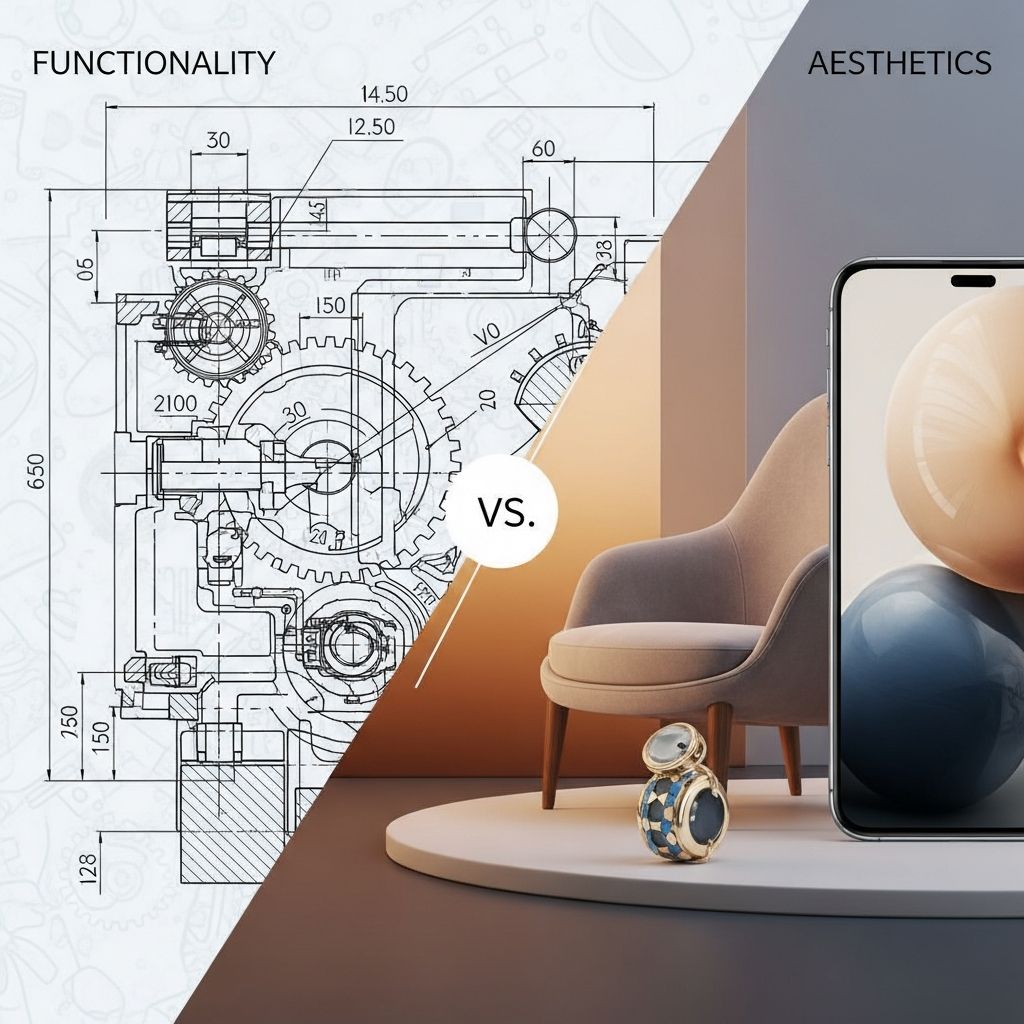
Distinguishing Between Protection Categories in Patent Law
When inventors and entrepreneurs develop new products, they face a critical decision about intellectual property protection. The patent system provides multiple avenues for safeguarding innovations, each tailored to protect different aspects of what makes a product valuable. Two primary categories dominate this landscape: one focuses on how something works or is constructed, while the other emphasizes its visual presentation and aesthetic qualities. Understanding these distinctions is essential for developing an effective intellectual property strategy that fully protects your competitive advantages.
The separation between functional protection and aesthetic protection reflects a fundamental principle in intellectual property law: not all innovation is the same, and therefore, not all innovation requires the same type of protection. Some inventions derive their value from novel mechanisms or manufacturing processes, while others succeed primarily because of their distinctive appearance or user interface design. Recognizing which category your invention falls into—or whether it spans both—determines which protective tools you should employ.
Functional Innovation Protection Through Utility Patents
A utility patent serves as the primary mechanism for protecting the operational and structural aspects of an invention. This patent category covers what a device accomplishes and the manner in which it accomplishes those objectives. Whether your invention operates as a physical apparatus, describes a step-by-step manufacturing process, or represents a novel chemical or biological composition, a utility patent can shield these functional elements from unauthorized use by competitors.
The scope of utility patent protection extends broadly across multiple invention categories:
- Mechanical devices and their operational mechanisms
- Manufacturing methods and production techniques
- Chemical compounds and formulations
- Software algorithms and computational methods
- Biological innovations and genetic sequences
The durability of utility patent protection reflects its importance in encouraging innovation. A utility patent remains valid for twenty years from the filing date, providing long-term competitive advantage. This extended protection period recognizes the substantial investment typically required to develop and commercialize functional innovations.
However, maintaining this protection requires ongoing commitment. Patent holders must pay maintenance fees at strategic intervals—specifically at 3.5, 7.5, and 11.5 years after issuance—to keep their protection active. These periodic payments ensure that only inventors genuinely invested in their innovations retain exclusive rights.
Visual Design Protection Through Design Patents
While utility patents protect what something does, design patents focus exclusively on how something appears. This protection category covers the ornamental and non-functional aesthetic elements of a product, including its shape, configuration, surface ornamentation, and color when these elements distinguish the product from competitors’ offerings.
Design patents address a specific market reality: consumers often make purchasing decisions based on visual appeal and aesthetic preferences. A product’s distinctive appearance can become a valuable asset, worthy of legal protection equivalent to that afforded to functional innovations. Design patent protection prevents competitors from copying or creating substantially similar designs without permission.
The protection duration for design patents differs from utility patents, reflecting different policy considerations. Design patents filed before May 13, 2015, receive fourteen years of protection from the issue date. Those filed on or after this threshold date receive fifteen years of protection, also measured from the issue date rather than the filing date. This shorter timeframe acknowledges that design trends and aesthetic preferences evolve more rapidly than functional innovations.
One significant advantage of design patent protection emerges in the maintenance requirements. Unlike utility patents, design patents require no periodic maintenance fees after issuance. Once granted, design patent protection persists without additional financial obligations, reducing the long-term cost of maintaining this form of intellectual property protection.
Timeline and Acquisition Differences
The paths to obtaining these two patent types diverge significantly in both duration and complexity. The acquisition timeline represents a crucial practical consideration for inventors planning their intellectual property strategy.
Utility patent prosecution typically requires substantial time investment. From initial filing through examination and potential rejections, the process commonly spans three to five years before receiving formal allowance. Patent examiners scrutinize utility patents rigorously, evaluating whether the claimed invention truly represents a novel, non-obvious, and useful advance over existing technology. Initial rejection during utility patent examination is so common that inventors should anticipate responding to at least one official action before receiving allowance.
Design patent prosecution follows an accelerated timeline. The examination and approval process typically completes within one to two years from filing. This expedited progression reflects the lower complexity inherent in evaluating design patents. Examiners review fewer design applications overall, and the evaluation focuses on visual distinctiveness rather than complex functional analysis.
These timeline differences translate directly into cost variations. Utility patents generally represent a more expensive intellectual property investment, reflecting their complexity and the extended prosecution period. Design patents offer a more cost-effective alternative, making them attractive for inventors with limited intellectual property budgets or those seeking rapid protection for distinctive aesthetics.
Scope and Enforceability Considerations
The breadth of protection available through each patent category varies considerably, creating different strategic implications for enforcement and market protection.
Utility patents offer potentially broad protection, particularly when claims are drafted expansively. A competitor cannot circumvent utility patent protection simply by altering a product’s appearance. If the functional elements or structural components remain substantially similar to the patented invention, infringement has likely occurred regardless of how different the product looks superficially. This breadth makes utility patents particularly valuable for innovations where the competitive advantage depends on how the product works rather than how it looks.
Design patents provide narrower protection focused exclusively on visual similarity. A competitor can relatively easily design around a design patent by creating a product with a distinctly different appearance. If competitors modify the shape, configuration, or surface ornamentation enough to appear visually different to an ordinary observer, they may successfully avoid design patent infringement. This narrower scope reflects the nature of design patents: they protect a specific visual expression of a product concept, not the underlying functional idea.
The evaluation standards for design patents incorporate this visual focus. Novelty assessments use an “ordinary observer” test, asking whether an ordinary consumer would perceive the design as new and distinctive compared to prior art. Obviousness determinations apply the perspective of an ordinarily skilled designer rather than someone skilled in the functional technology.
Application Requirements and Documentation
Preparing patent applications requires different documentation approaches depending on which protection type you pursue.
Utility patent applications demand comprehensive written specifications describing the invention, explaining how it works, and detailing what distinguishes it from existing alternatives. Drawings may supplement the written description where visual clarity enhances understanding. Crucially, utility patent claims must delineate the specific functional and structural boundaries of protection, determining both the breadth and enforceability of the patent.
Design patent applications follow a markedly different format. These applications comprise primarily visual illustrations depicting the ornamental design from multiple angles and perspectives. While applicants must provide brief written descriptions of the drawings and the article’s intended use, no detailed functional specification is necessary. In fact, design patents typically contain only a single claim—a stark contrast to utility patents, which commonly include multiple claims of varying breadth.
This fundamental difference in documentation reflects each patent’s purpose: utility patents must precisely define functional boundaries, while design patents need only visually communicate the design’s appearance.
Strategic Considerations for Dual Protection
The distinction between functional and aesthetic protection does not necessarily require choosing one approach over the other. Many successful products benefit from dual protection: a utility patent safeguards the innovative functionality, while a design patent protects the distinctive appearance. These protections operate independently, covering different aspects of the same product.
Consider a medical device innovation that improves functionality through a novel mechanism while simultaneously presenting distinctive ergonomic design. Competitors might attempt to circumvent protection by copying either the functional approach or the appearance. Dual patent protection prevents both strategies: the utility patent blocks functional copying, while the design patent prevents aesthetic replication.
The decision to pursue both protections depends on your product’s value proposition. If competitive advantage depends primarily on functional superiority, a utility patent alone may suffice. If visual distinctiveness and brand recognition constitute significant value, design patent protection becomes essential. When both elements contribute meaningfully to market success, pursuing both protections strengthens your overall intellectual property position.
Financial Investment and Long-Term Costs
Understanding the financial dimensions of patent protection proves critical for budgeting and strategic planning.
| Characteristic | Utility Patent | Design Patent |
|---|---|---|
| Initial Acquisition Cost | Higher | Lower |
| Prosecution Timeline | 3-5 years | 1-2 years |
| Protection Duration | 20 years from filing | 15 years from issuance |
| Maintenance Fees | Required (3 intervals) | None |
| Enforcement Complexity | Broader scope, easier to enforce | Narrower scope, easier to design around |
Initial filing and prosecution costs for utility patents substantially exceed those for design patents, potentially by several thousand dollars depending on complexity and prosecution challenges. The extended examination period and typically contentious prosecution amplify legal costs. Maintenance fees further increase lifetime expenses, though these periodic payments remain considerably less than the initial acquisition investment.
Design patents present a more economical option for many inventors. Lower initial costs combined with zero maintenance fees create predictable, contained expenses. This cost advantage makes design patent protection particularly attractive for smaller enterprises or individual inventors with limited intellectual property budgets.
Determining Your Intellectual Property Strategy
Selecting appropriate patent protection requires honest assessment of your invention’s competitive advantages and market positioning. Ask yourself fundamental questions about what genuinely differentiates your product and why customers choose it over alternatives.
If your competitive advantage primarily stems from how the product functions—a novel mechanism, improved efficiency, or unique manufacturing process—utility patent protection should anchor your intellectual property strategy. The functional innovation represents your core value proposition, and utility patents provide the breadth of protection necessary to defend against competitors attempting technological workarounds.
Conversely, if distinctive appearance, aesthetic appeal, or visual brand recognition drive customer preference, design patent protection becomes paramount. This is particularly true for consumer products where appearance influences purchasing decisions or where the product’s design has become synonymous with your brand identity.
Many successful companies pursue both forms of protection, recognizing that modern products often succeed through a combination of functional innovation and aesthetic distinction. This comprehensive approach eliminates gaps in protection and maximizes your ability to prevent competitive imitation.
Common Questions About Patent Protection Types
Q: Can I obtain both a utility patent and a design patent for the same product?
A: Yes. These patents protect different aspects of your invention—functionality versus appearance—and operate independently. Many products benefit from dual protection, each patent addressing distinct competitive advantages and deterring different infringement strategies.
Q: How does a design patent differ from a trademark?
A: Design patents protect the ornamental appearance of a specific product article for a limited time (15 years). Trademarks protect brand identifiers—logos, names, symbols—that distinguish your goods from competitors and can potentially last indefinitely through renewal. They serve different protective functions in your intellectual property portfolio.
Q: What happens if my design patent expires?
A: Once a design patent expires after its 15-year protection period, the design enters the public domain. Competitors may legally copy the design without restriction. This makes the initial protection period critical for establishing brand recognition and market position that may persist beyond patent expiration.
Q: Why do utility patents require maintenance fees while design patents don’t?
A: This difference reflects policy considerations about innovation types. Utility patents typically protect more valuable functional innovations justifying longer protection and periodic fee payments demonstrating continued interest. Design patents, being narrower and shorter-term, do not include maintenance requirements.
Q: How does the “ordinary observer” test affect design patent protection?
A: The ordinary observer standard determines whether a design qualifies as novel under design patent law. If an ordinary consumer would perceive your design as visually distinct from prior designs, it meets the novelty requirement. This consumer-perspective test differs from the technical expertise applied in utility patent evaluation.
Q: Can I file a design patent application before completing functional development?
A: Yes. Since design patents focus solely on appearance, you can pursue design patent protection for a product’s aesthetic elements independently of functional development status. This allows rapid protection of distinctive designs while utility patent prosecution for functional elements proceeds separately.
References
- Design Patent vs Utility Patent: Differences Explained — Greenlight Guru. https://www.greenlight.guru/blog/design-vs-utility-patents-device
- What is the Difference Between a Utility Patent and a Design Patent? — Oppenhuizen Law PLC. https://www.oppenhuizen.com/what-is-the-difference/
- The Difference between Utility, Design, and Plant Patents — TraskBritt. https://www.traskbritt.com/the-difference-between-utility-design-and-plant-patents/
- Utility Patent vs Design Patent: Key Differences to Know — Red Points. https://www.redpoints.com/blog/utility-patent-vs-design-patent/
- Design Patent vs Utility Patent: Shield Your Product Design — Arapacke Law. https://arapackelaw.com/patents/design-patent-vs-utility-patent/
Similar Articles








Read full bio of medha deb