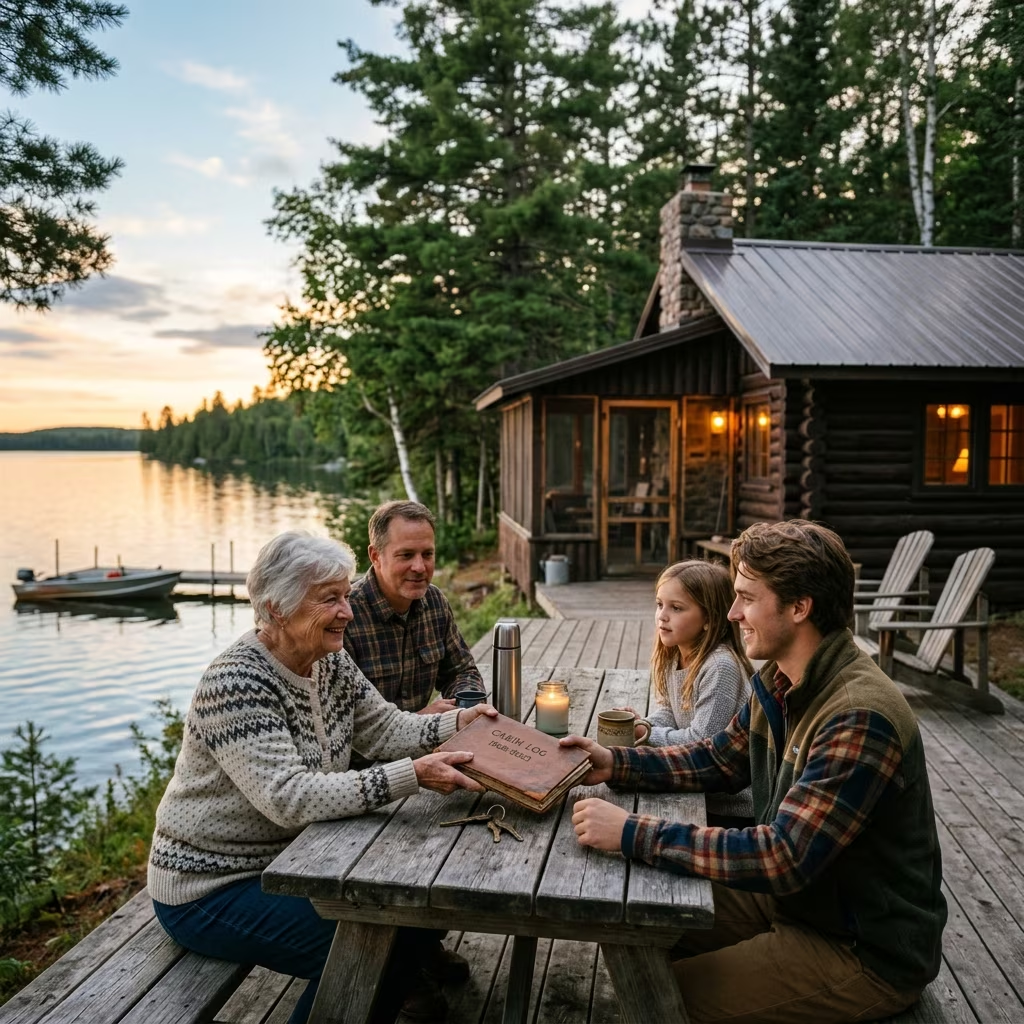
A family cabin is often more than real estate. It can hold memories, traditions, and a shared sense of place that spans generations. In Minnesota, where lake properties are deeply tied to family life, the question is not only who inherits the cabin, but also how it will be managed, paid for, and enjoyed after the original owners are gone.
Without a plan, even a beloved cabin can become a source of conflict. Estate planning can help families preserve the property, set expectations early, and reduce the risk that heirs will fight over use, money, or ownership. The right approach depends on the family, the property, and whether the goal is to keep the cabin in the family long term or transition it in another way.
Why cabin succession deserves special attention
Cabins are different from many other inherited assets because they are usually shared, emotional, and expensive to maintain. A home in town may be sold easily and divided among heirs, but a cabin often carries a sentimental value that makes simple division impractical. One sibling may want to keep it, another may want cash, and a third may want occasional access without responsibility for repairs or taxes.
That mix of emotions and finances can create problems quickly. Families often underestimate the cost of insurance, upkeep, dock replacement, property taxes, improvements, and travel. If the cabin is inherited by multiple people with no structure, routine decisions can become difficult. Planning ahead gives the family a clear framework for ownership and reduces the chance that an asset meant to bring people together will tear them apart.
Start with a family conversation
Before drafting legal documents, families should talk openly about the cabin’s future. That discussion should include who wants to keep the property, who can afford to help maintain it, and whether anyone has different ideas about future use or sale. A candid conversation now can prevent disappointment later.
Important topics to raise include:
- Who is emotionally attached to the cabin and wants continued access
- Who has the financial ability to contribute to annual costs
- Whether the property should stay in the family or eventually be sold
- How scheduling, repairs, and decision-making should work
- What happens if one heir no longer wants to participate
These conversations do not need to solve every issue immediately. Their value is in identifying differences early, while there is still time to design a plan that reflects the family’s priorities.
Common ways to structure cabin ownership
There is no single right legal arrangement for every family cabin. The best structure depends on tax considerations, family size, the level of cooperation among heirs, and how much flexibility the owners want to preserve. In many cases, families choose between direct inheritance, a trust, or a business entity such as a limited liability company.
| Planning option | Best for | Main advantage | Potential drawback |
|---|---|---|---|
| Direct inheritance | Families with simple goals and strong agreement | Easy to understand and inexpensive to set up | Can create joint ownership disputes |
| Trust ownership | Families wanting long-term control | Provides management rules and continuity | Requires careful drafting and administration |
| LLC ownership | Families wanting business-like management | Separates ownership interests from day-to-day use | Needs operating rules and ongoing discipline |
How a trust can help preserve the cabin
One of the most useful tools for cabin succession is a trust. A trust can hold title to the property and set the rules for how the cabin will be used, maintained, and passed on. This can help keep the property intact while also providing a clear decision-making structure for the next generation.
A well-drafted trust can address questions such as who may use the cabin, how expenses will be paid, who serves as trustee, and whether beneficiaries may buy out one another’s interests. It can also establish procedures for handling conflicts, financing repairs, or selling the property if the family can no longer maintain it.
Trust planning is especially helpful when parents want to protect the cabin from confusion after death. Instead of leaving multiple heirs to sort out ownership informally, the trust can provide a built-in rulebook. That structure can reduce delays and create more predictability for everyone involved.
Using an LLC for shared ownership
Another common planning tool is a limited liability company. An LLC can hold the cabin and issue ownership interests to family members. The operating agreement can then spell out how the property is managed, how costs are shared, and how decisions are made.
This approach works well when families want a more formal structure. It can make it easier to define voting rights, transfer restrictions, and exit options. It may also help separate the emotional question of “who loves the cabin most” from the practical question of “who follows the rules and pays the bills.”
Still, an LLC is only as effective as its governing documents. If the operating agreement is vague, disputes can still arise. Families that choose this route should make sure the agreement addresses use rights, capital contributions, buyouts, and what happens if an owner dies, divorces, or wants out.
Rules for use and maintenance should be written down
Many cabin conflicts are not about ownership on paper. They are about everyday life. Who gets the Fourth of July week? Can guests be invited? How are cleaning chores assigned? Who pays if the furnace fails in January?
Written use and maintenance rules can answer those questions before they become disputes. A family agreement can set schedules, explain how reservations work, establish noise or guest policies, and define the standard of upkeep expected from everyone who uses the cabin. If the cabin is in a trust or LLC, these rules can be built into the governing document or attached as a separate operating policy.
Helpful provisions often include:
- A rotating calendar for prime holiday and summer dates
- Housekeeping expectations after each stay
- How routine repairs are approved
- How emergency expenses are handled
- Whether guests, renters, or pets are allowed
Clear rules do not remove every disagreement, but they make disputes easier to resolve because everyone knows the expectations in advance.
Plan for the money before the bill arrives
Even the most cherished cabin becomes burdensome if no one has planned for costs. Annual expenses may include property taxes, insurance, utilities, landscaping, docks, septic work, cleaning, and repairs. In a poor year, one roof leak or storm-related damage can create a large financial demand.
Families should decide in advance how those costs will be paid. Some families create a reserve fund or maintenance account. Others assign annual contributions to each owner. Some may choose a use-based system where those who use the property more often contribute more. The key is to avoid leaving the next generation with no financial structure at all.
It is also wise to consider liquidity. If the estate’s cash is tied up elsewhere, heirs may be forced to sell the cabin simply to pay taxes or expenses. A thoughtful plan can reduce that risk by identifying sources of cash or building enough flexibility into the estate plan to cover short-term needs.
Make room for a buyout or exit strategy
Not every heir will want the same level of involvement forever. One sibling may love the cabin for decades, while another may move away, face financial pressure, or lose interest. A good succession plan should account for change.
Buyout provisions can help. These rules give a family member the option to sell an interest to another owner or to the trust or LLC under a predetermined process. Some families set a valuation method in advance so there is less room for argument later. Others require a right of first refusal, which allows the remaining family members to purchase an interest before it is sold outside the family.
A workable exit strategy can prevent forced sales and reduce resentment. It also gives family members a dignified way to step away if the cabin no longer fits their life.
Think about fairness, not just equal shares
Equal ownership does not always mean equal satisfaction. A child who lives nearby and uses the cabin regularly may feel differently from a sibling who visits once a year. One heir may contribute more time, more money, or more labor than another. Families often need to decide what fairness looks like in practical terms.
That may mean giving one child management authority while still preserving shared benefits for everyone. It may mean compensating a sibling who pays for repairs, or recognizing that some heirs want the cabin while others would rather receive assets with more liquidity. The goal is not identical treatment in every circumstance, but a structure that the family sees as reasonable and sustainable.
Protect the plan from avoidable mistakes
Several common mistakes can undermine cabin succession planning. Families sometimes put off the conversation until later, only to discover that parents’ wishes are unclear when it matters most. Others transfer title informally without creating any decision-making rules. Some fail to update their estate plan after marriage, divorce, births, deaths, or a change in finances.
Avoid these pitfalls by reviewing the plan regularly and aligning all documents with the same overall strategy. Deeds, trust terms, LLC agreements, wills, and beneficiary designations should work together instead of pulling in different directions. It is also important to confirm that the person or people expected to manage the property are willing and able to do so.
When professional guidance matters most
Cabin planning can be emotional, but it is also technical. The legal documents need to fit Minnesota property law, family goals, and tax realities. Professional guidance can help families choose between ownership structures, draft clear rules, and anticipate problems before they arise.
An attorney can also help families think through issues that are easy to miss, such as how to title the property, how to coordinate the cabin plan with a broader estate plan, and how to create enforceable rules for future generations. For many families, that guidance is the difference between a lasting legacy and a future dispute.
FAQ
What is the best way to keep a Minnesota cabin in the family?
There is no single best method. Many families use a trust or LLC because these tools provide structure, rules, and continuity across generations.
Can a cabin be left to multiple children?
Yes, but shared inheritance works best when the plan includes clear rules for use, expenses, and decision-making. Otherwise, joint ownership can become difficult to manage.
What if one heir wants to sell and the others do not?
A buyout provision, right of first refusal, or other exit mechanism can help resolve that conflict without forcing an immediate sale to outsiders.
Should families write a separate cabin agreement?
Often, yes. A separate agreement can spell out practical details such as scheduling, maintenance, and guest rules, making the plan easier to follow.
Do cabin plans need to be revisited?
Yes. Family circumstances, financial conditions, and property needs change over time, so the plan should be reviewed periodically and updated when needed.
References
- Estate Planning for Minnesota Family Cabins — Yanowitz Law Firm. 2026. https://www.yanowitzlaw.com/family-cabins/
- Preserving Your Family Legacy: Cabin Trusts in Minnesota — DMSHB. 2026. https://www.dmshb.com/mn-legal-blog/preserving-your-family-legacy-cabin-trusts-in-minnesota
- Estate Planning for a Family Cabin in Minnesota — Sandahl & Damhof. 2026. https://www.sandahldamhof.com/blog/should-an-estate-plan-include-a-cabin-on-the-lak/
- Things to Know When Considering a Cabin Trust in Minnesota — Super Lawyers. 2026. https://www.superlawyers.com/resources/trusts/minnesota/things-to-know-when-considering-a-cabin-trust-in-minnesota/
- Family Cabin Trust Minnesota — Mullen Law. 2026. https://www.jpmullenlaw.com/practice-areas/family-cabin-trusts/