
Passenger Rights During New York Traffic Stops
Understand your legal protections, limits, and practical options as a passenger when police stop a vehicle in New York.
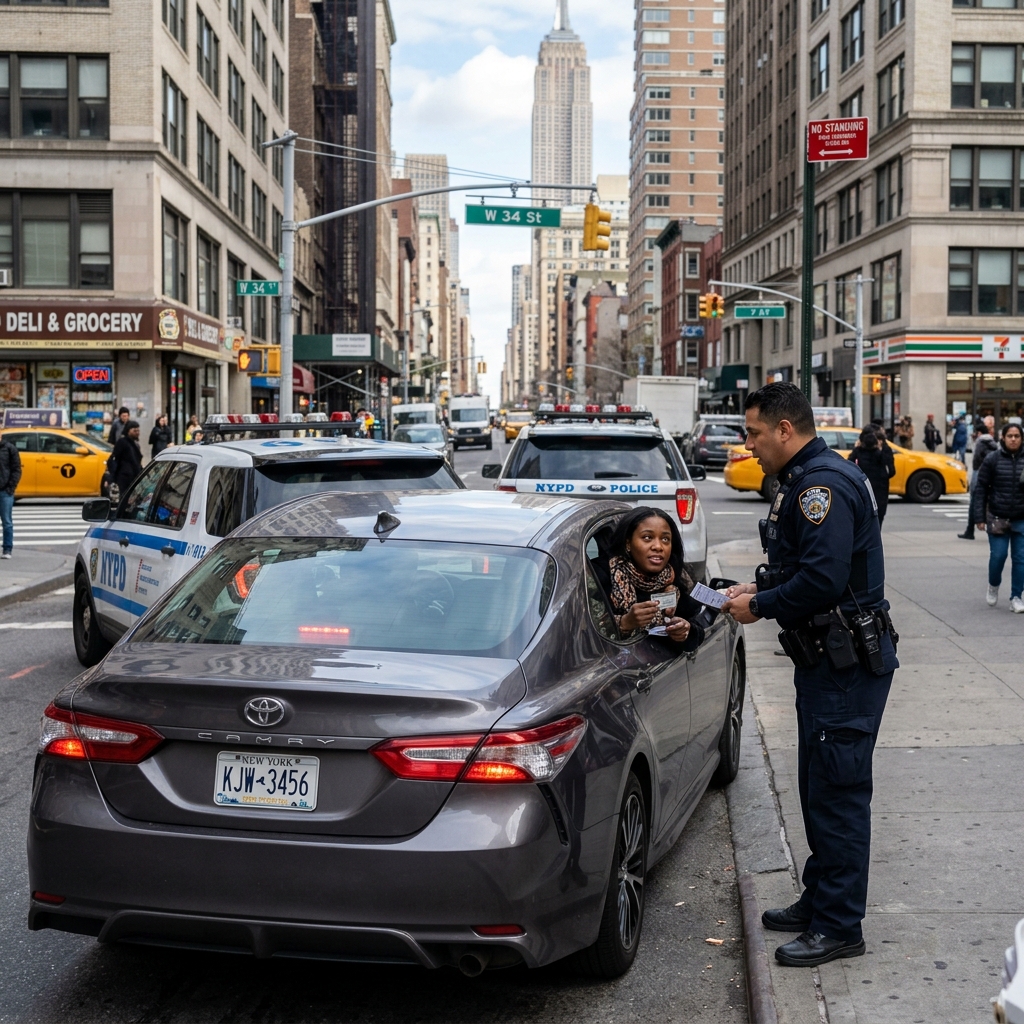
When police stop a vehicle in New York, the driver is the obvious focus. But passengers are also affected: they may be questioned, temporarily detained, or even searched. Knowing your rights as a passenger helps you stay safe, avoid unnecessary legal problems, and recognize when police conduct may be unlawful.
This guide explains the legal framework behind passenger rights in New York traffic stops, breaks down what police may lawfully do, and outlines what you can and cannot do as a passenger when the vehicle you are riding in is pulled over.
1. Legal Foundations of Passenger Rights in New York
Passenger rights during a traffic stop are grounded mainly in the Fourth Amendment (protection against unreasonable searches and seizures) and the Fifth Amendment (privilege against self-incrimination), applied through federal case law and New York-specific rules.
1.1 Traffic Stops as Fourth Amendment Seizures
The United States Supreme Court has held that when police lawfully stop a vehicle, everyone inside is considered “seized” for Fourth Amendment purposes, not just the driver. This means both driver and passengers can challenge the legality of the stop, such as arguing there was no reasonable suspicion or probable cause for pulling the car over.
- Driver and passengers are seized: Their freedom of movement is restricted for the duration of the stop.
- Right to challenge the stop: Passengers can raise Fourth Amendment arguments later in court if evidence was obtained during an unlawful stop.
1.2 Interaction with New York Law and Local Practices
New York follows federal constitutional standards but adds state-specific guidance and practices. State and local law enforcement agencies publish advice on how to behave during stops (for drivers and passengers) to keep encounters safe and orderly. These recommendations are not rights in themselves but reflect how officers typically expect the public to behave.
- New York State University Police and city departments stress staying calm, minimizing sudden movements, and following instructions to reduce risk.
- Civil rights groups in New York outline how to assert your rights (such as remaining silent or refusing consent to a search) while avoiding conduct that could be interpreted as interference.
2. Core Rights of Passengers in New York Traffic Stops
Although the driver has specific obligations (such as showing license and registration), passengers have a distinct set of rights. Some rights are shared with the driver; others apply only to passengers.
2.1 Right to Be Free from Unreasonable Searches
Both drivers and passengers have a constitutional right to be free from unreasonable searches of their bodies, personal belongings, and in some circumstances, the areas around them inside the vehicle.
- Police generally need probable cause, a valid warrant, or a recognized exception (such as a lawful arrest, consent, or certain safety-related frisks) to search a passenger’s person or personal bags.
- Passengers may later challenge the legality of an officer’s decision to search if the stop or search lacked proper legal justification.
2.2 Right to Remain Silent
Passengers have a strong right to remain silent under the Fifth Amendment, which protects against self-incrimination. While officers may ask questions, you are typically not required to answer.
- You may refuse to answer questions about where you are going, what you have been doing, or who you are with.
- You can refuse to answer questions about your immigration status, citizenship, or country of origin.
- To exercise this right, civil liberties advocates suggest clearly stating, “I would like to remain silent” or similar language.
2.3 Right to Decline Consent to a Search
Passengers generally have the right to refuse consent when an officer asks to search their body, clothing, or personal belongings such as backpacks and purses.
- Refusing consent to a search is lawful; officers may not arrest or ticket you solely because you exercised this right.
- If officers say they have a warrant, you may request to see it before complying.
- Legal organizations recommend stating clearly, “I do not consent to this search” if you wish to refuse.
2.4 Right to Legal Counsel if Charged
If a traffic stop leads to criminal charges against a passenger, they have the right to an attorney and to remain silent until they have spoken with counsel.
- You can ask for a lawyer immediately after arrest or when it becomes clear you are being charged.
- After requesting an attorney, you should avoid answering questions or making statements about the incident.
2.5 Right to Challenge the Length of the Stop
Police may detain a vehicle only for a reasonable period necessary to handle the purpose of the stop (for example, checking license and registration or issuing a ticket).
- Overly long delays unrelated to the reason for the stop may raise constitutional concerns.
- Passengers may politely question prolonged detention and later use excessive delay as part of a legal challenge.
3. Identification Requirements for Passengers in New York
One of the most common questions passengers have is whether they must show identification to police during a traffic stop in New York.
3.1 General ID Rules
Civil liberties guidance specific to New York indicates that people in the state are not required to carry ID and do not have to show identification to a police officer in many encounters. This stands in contrast to some “stop and identify” states where refusing to identify yourself may itself be an offense.
However, the situation can become more complex in a traffic stop when officers develop reasonable suspicion that a passenger is involved in separate criminal conduct.
3.2 Driver vs. Passenger Obligations
| Role | Required to Show ID? | Legal Basis / Notes |
|---|---|---|
| Driver | Yes | New York law requires drivers to show a valid license, registration, and insurance upon request by an officer. |
| Passenger | Generally no | Passengers are not automatically required to present ID. Officers may ask, but you can typically decline unless there is independent legal basis (such as reasonable suspicion of a separate offense). |
3.3 Practical Considerations When Asked for ID
Although you may have a legal right to refuse identification in some circumstances, the decision should be made carefully.
- Refusing to show ID may increase tension in the interaction even if it is lawful.
- If the officer has developed reasonable suspicion that you committed a criminal offense, refusal could escalate the situation.
- Legal advice sources emphasize exercising rights calmly and without confrontation to avoid being accused of interference or obstruction.
4. Are Passengers Allowed to Leave the Stop?
Because the Supreme Court views all occupants as seized during a traffic stop, passengers often cannot simply walk away immediately. Officers may need passengers to remain at the scene for safety or investigative reasons.
4.1 Basic Rule on Detention
During a lawful traffic stop, passengers are typically required to stay at the scene while the officer completes the stop. Courts have treated passengers as subject to temporary detention similar to drivers.
- Leaving without permission could be interpreted as fleeing, potentially leading to additional suspicion or charges in some circumstances.
- Some legal training materials emphasize that officers may tell passengers they are not free to leave while the stop is in progress.
4.2 Asking If You Are Free to Go
Even though you are initially seized, passengers have the right to ask whether they are free to leave.
- You may calmly ask, “Am I free to go, or am I being detained?”
- If the officer indicates you are no longer detained and are free to leave, you may depart on foot or by other means.
- If the officer says “no” or makes it clear you are not free to go, you should remain and avoid physical resistance.
4.3 Running or Physically Resisting
Civil rights guidance strongly advises not to run or physically resist officers, even if you believe the stop is unlawful.
- Running can be interpreted as suspicious or dangerous behavior and may provoke pursuit or use of force.
- Any resistance, even if you feel mistreated, can lead to separate charges such as obstruction or resisting arrest.
5. Searches of Passengers and Their Belongings
Officers have different levels of authority when it comes to searching a vehicle’s interior, the driver, and passengers. Understanding the difference between a pat-down and a more intrusive search is important.
5.1 Pat-Downs for Weapons
In some circumstances, officers may conduct a limited pat-down of a passenger’s outer clothing to check for weapons if they reasonably believe the person may be armed and dangerous. This is often referred to as a “frisk.”
- The purpose of a pat-down is officer safety, not evidence-gathering.
- It is limited to outer garments and areas where weapons could be concealed.
- Reasonable suspicion of being armed and dangerous is required; passengers are not automatically subject to a pat-down just because they are present.
5.2 Consent-Based Searches
Officers may ask passengers for permission to search their bags, pockets, or other belongings.
- You may lawfully say “no” and refuse consent.
- If you do consent, officers may be able to use items they find as evidence in court.
- Legal guides advise making your refusal clear and verbal, so there is no misunderstanding about whether consent was given.
5.3 Challenging Searches Later
If you believe a search during a traffic stop was unlawful, you typically challenge it after the fact in court rather than during the encounter.
- Courts may suppress evidence obtained from unconstitutional searches.
- Civil liberties organizations recommend documenting the incident soon afterward—names, badge numbers, witness contact information, and any injuries.
6. Practical Safety Tips for Passengers
Beyond formal legal rights, safety-focused guidance from New York law enforcement offers practical steps passengers can take to keep traffic stops calm and reduce the risk of misunderstandings.
6.1 Recommended Conduct During the Stop
- Stay seated unless an officer instructs you to exit the vehicle.
- Keep movement to a minimum and avoid reaching suddenly toward the floorboard, glove compartment, or rear seat.
- Keep your hands visible, such as resting them on your lap or where the officer can easily see them.
- Remain calm and quiet; avoid arguing with the officer at the roadside.
- If the stop occurs at night, the driver may turn on the interior lights to improve visibility inside the car.
6.2 Communicating with the Officer
How you communicate can affect the outcome of a stop, even when you choose to assert your rights.
- Use a polite tone, even if you disagree or feel mistreated.
- Ask questions calmly, such as “Am I free to leave?” or “Am I under arrest?”
- Do not bad-mouth officers or raise your voice; everything you say can be used against you later.
7. After the Traffic Stop: Complaints and Legal Remedies
If you believe your rights were violated during a traffic stop—whether through unlawful detention, excessive force, or discriminatory treatment—New York provides avenues for complaints and legal challenges.
7.1 Filing a Complaint
In New York City, you can file misconduct complaints with oversight bodies such as the Civilian Complaint Review Board (CCRB).
- Complaints can be submitted online, by phone, by mail, or in person at the CCRB office.
- You may also file complaints at police stations or through local government hotlines.
7.2 Documenting the Incident
Civil liberties groups recommend thorough documentation following a problematic stop.
- Write down everything you remember as soon as possible, including time, location, officer names and badge numbers, and what was said.
- Gather contact information for any witnesses.
- If you were injured, seek medical attention and request copies of your medical records. Take photos of injuries when safe to do so.
7.3 Seeking Legal Assistance
If you are charged with a crime or believe you have a civil rights claim, consult a lawyer experienced in criminal defense or civil rights litigation.
- An attorney can evaluate whether the stop, detention, or search was unlawful and whether evidence should be suppressed.
- Lawyers can also advise on potential civil remedies, such as suits alleging wrongful arrest or excessive force.
8. Common Passenger Questions (FAQs)
FAQ 1: Do I have to answer the officer’s questions as a passenger?
No. In most situations, you have the right to remain silent and are not required to answer questions about your activities, destination, or companions. You may also refuse to answer questions about your immigration status.
FAQ 2: Can an officer make me get out of the car?
Yes. Courts have given officers broad authority to ask both drivers and passengers to exit the vehicle during a lawful traffic stop for safety reasons. While being ordered out does not automatically mean you are under arrest, you should comply to avoid escalating the encounter.
FAQ 3: If I’m just a passenger, why am I being detained?
Because the entire vehicle is considered seized during a lawful traffic stop, passengers are usually detained along with the driver until the stop is completed. This allows officers to manage the scene safely and conduct necessary checks.
FAQ 4: What should I do if I feel the stop is taking too long?
You may politely ask why the stop is continuing and whether you are free to leave. If you believe the delay was unreasonable, speak with an attorney later about challenging the length of the detention.
FAQ 5: Can I record the traffic stop from inside the car?
In general, individuals may record police in public so long as they do not interfere with officers’ duties or violate other laws. However, because traffic stops can be tense and confined, you should ensure that filming does not involve sudden movements or arguments that could be perceived as interference. When in doubt, focus on safety and consult legal counsel afterward about your options.
References
- FOURTH AMENDMENT: PASSENGERS AND POLICE STOPS — U.S. Courts Educational Resources. 2013-08-01. https://www.uscourts.gov/sites/default/files/rights-police-stops.pdf
- What Rights Do Passengers Have During a Traffic Stop? — Kuck Baxter Immigration. 2017-03-24. https://immigration.net/2017/03/24/what-rights-do-passengers-have-during-a-traffic-stop/
- What Rights Do I Have as a Passenger During a Traffic Stop? — Banks & Brower, LLC. 2025-06-27. https://banksbrower.com/2025/06/27/what-rights-do-i-have-as-a-passenger-during-a-traffic-stop/
- Traffic Stops — New York State University Police, Purchase College. 2022-05-01. https://www.purchase.edu/offices/nysup/safety-tips/traffic-stops/
- What to Do When Stopped by the Police — Buffalo Police Department, NY. 2021-04-10. https://www.bpdny.org/163/What-to-Do-When-Stopped-by-the-Police
- Know Your Rights — NYPD Federal Monitor. 2020-09-15. https://www.nypdmonitor.org/know-your-rights/
- What to Do if You’re Stopped by the Police — New York Civil Liberties Union. 2017-02-01. https://www.nyclu.org/uploads/2017/02/kyroverhaul-nyclu-stoppedbypolice-onepager-v01.pdf
Similar Articles








Read full bio of medha deb


