
Party Drugs and the Law: What Can Get You Arrested
Understand how common party drugs are regulated, the risks they pose, and the legal consequences that can turn a night out into a serious criminal issue.
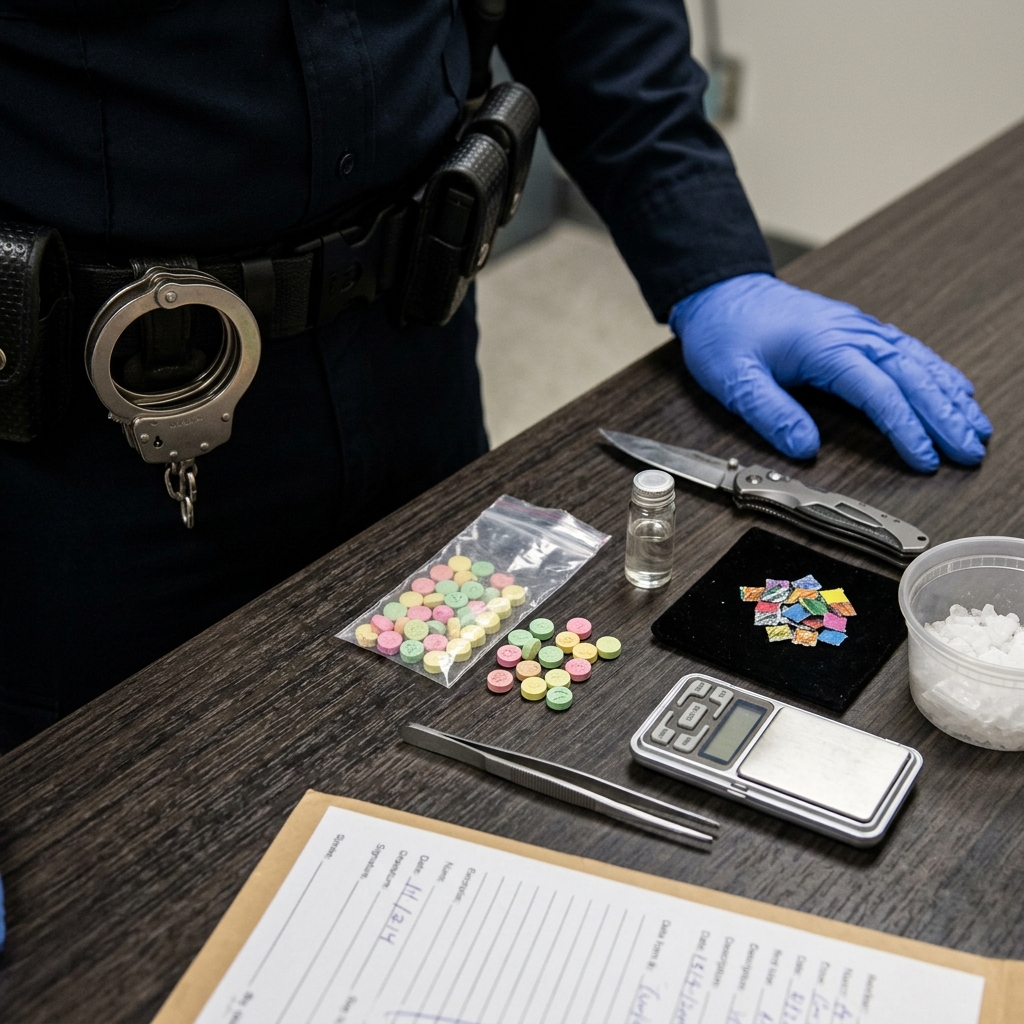
Substances often called party drugs or club drugs are marketed as ways to enhance music, social connection, and confidence in nightlife settings. Yet many of these drugs are illegal, highly risky to your health, and closely linked to criminal charges ranging from possession to trafficking. This article explains which drugs are commonly used at parties, how laws typically treat them, and what conduct can turn a night out into an encounter with the criminal justice system.
What Are Party Drugs?
Party drugs are psychoactive substances used to intensify enjoyment of social events such as clubs, raves, festivals, and private gatherings. They may increase energy, distort perception, reduce inhibitions, or create feelings of euphoria and connection. While some people view them as a normal part of nightlife, the combination of health risks and legal controls means their use carries significant consequences.
- Stimulants that increase energy and alertness (for example, cocaine, amphetamines).
- Psychedelics that alter perception and mood (for example, MDMA, LSD).
- Depressants or sedatives that slow brain activity (for example, GHB, benzodiazepines).
Most commonly discussed party drugs include MDMA (often called ecstasy), cocaine, ketamine, GHB, LSD, cannabis, and certain prescription medications misused without medical supervision.
Health Risks Behind the Party Image
Many people underestimate the medical dangers of club drugs, assuming they are safer than traditional street drugs. In reality, short-term and long-term harms are well documented by health authorities.
Immediate Effects and Overdose Risks
- Overheating and dehydration with stimulants like MDMA and cocaine, particularly in hot, crowded venues.
- Loss of consciousness or severe sedation with GHB, high-dose alcohol, or sedatives.
- Confusion, agitation, or psychosis with high doses of stimulants or hallucinogens.
- Respiratory depression when depressants (like opioids, GHB, benzodiazepines) are combined.
Health agencies note that mixing multiple drugs, including alcohol, sharply increases overdose risk and may require emergency care. Even a single dose from an unknown source can be much stronger than expected.
Long-Term Consequences
Regular use of party drugs can lead to persistent problems beyond a single event.
- Mood disorders such as depression and anxiety after repeated MDMA or stimulant use.
- Memory and attention problems associated with certain club drugs and heavy alcohol use.
- Dependence and withdrawal with substances like cocaine, methamphetamine, opioids, and benzodiazepines.
- Organ damage, including liver complications and cardiovascular strain from long-term use.
Because many party drugs are purchased from illegal suppliers, there is also risk of contamination with other substances such as synthetic opioids, which may dramatically change the danger profile.
How Laws Classify Party Drugs
Drug laws vary by country and region, but governments generally classify substances based on perceived harm and medical usefulness. Higher classifications usually mean stronger penalties for possession, manufacture, and distribution.
| Substance | Typical Use | Common Legal Status (Example Jurisdictions) |
|---|---|---|
| MDMA (Ecstasy) | Stimulant and psychedelic used at clubs and festivals | Often treated as a high-risk illicit drug (e.g., Class A in some systems). |
| Cocaine | Stimulant used for energy and confidence | Frequently classified in the most serious category of illicit drugs. |
| Heroin and synthetic opioids | Strong depressants, sometimes present at parties | Commonly high-level controlled drugs; possession and supply are illegal. |
| Ketamine | Dissociative anesthetic used for its trance-like effects | Controlled substance; non-medical possession often prohibited. |
| GHB | Depressant associated with club scenes and drink-spiking | Classed as a controlled drug in many areas; unauthorized use is illegal. |
| Cannabis | Psychoactive drug used recreationally | Legal status varies widely (illegal, decriminalized, or regulated). |
Government information portals emphasize that having, using, producing, or selling illicit drugs can all be criminal offences. Even small amounts intended for personal use may lead to arrest, depending on local law.
Conduct That Commonly Leads to Arrest
Law enforcement does not focus only on major traffickers; ordinary party-goers can face charges based on seemingly minor decisions. Understanding typical offences can help you see where legal risk arises.
Possession of Illegal Drugs
Possession means having control over a drug, whether it is on your person, in your bag, or stored somewhere under your control. Many jurisdictions treat possession of substances like MDMA, cocaine, heroin, and certain synthetic drugs as a criminal offence.
- Personal possession of a small quantity may lead to fines, a criminal record, or imprisonment.
- Possession of higher-risk drugs (often top-tier classifications) can carry heavier sentences.
- Constructive possession may apply if drugs are found in shared spaces you control, even if not on your body.
Supply, Sharing, and Trafficking
Many people assume that giving a pill or line to a friend is fundamentally different from dealing. Legally, however, supplying an illicit drug—even for free—often falls under distribution or trafficking offences.
- Selling drugs at parties or festivals is a clear trafficking offence.
- Sharing drugs may be treated as supply if law defines any transfer as distribution.
- Being involved in production, import, or cultivation of controlled substances can lead to serious charges.
Penalties for supply offences are generally much higher than for simple possession, reflecting the perceived role in sustaining illegal markets.
Driving Under the Influence of Party Drugs
Driving after using party drugs is illegal in many jurisdictions and may be prosecuted under impaired driving laws, similar to driving under the influence of alcohol.
- Stimulants may give a false sense of alertness while impairing judgement and reaction time.
- Depressants and sedatives can slow coordination and cause drowsiness or blackouts.
- Psychedelics can distort vision, depth perception, and the ability to judge speed or distance.
Legal consequences can include fines, license suspension, and possible imprisonment, particularly if the impaired driving causes injury or death.
Legal Issues Around Prescription and Semi-Legal Substances
Not all party drugs are obviously illegal powders or pills. Some are medicines or partially regulated products that become unlawful when used without authorization.
Prescription Sedatives and Tranquilizers
Benzodiazepines and other prescription sedatives may be used recreationally at parties for their calming or disinhibiting effects. While medically useful when prescribed, these drugs are often controlled; using them without a prescription or selling them to others can be criminal.
- Possession without prescription may be illegal if the drug is a controlled substance.
- Supplying pills from your prescription can expose you to trafficking or distribution charges.
- Health risks are heightened when these drugs are combined with alcohol or opioids.
Cannabis in Mixed-Legal Environments
Cannabis laws differ widely. In some places it is fully illegal; in others it may be decriminalized, medically regulated, or legal for adult recreational use. Misunderstanding the local rules can still lead to arrest.
- Possessing more than permitted amounts in legalized systems can be an offence.
- Selling cannabis without a license, even where recreational use is legal, is often a crime.
- Driving after heavy consumption may be prosecuted under drug-impaired driving laws.
Risk Awareness and Harm Reduction
While the safest way to avoid both health and legal consequences is not to use illegal drugs, public health agencies have published guidance to reduce harm for those who do choose to use.
Strategies to Reduce Health Risk
- Avoid mixing substances, especially alcohol with sedatives or opioids, to lower overdose risk.
- Use smaller amounts and wait to see effects before taking more, as strength can vary.
- Do not use alone; being with someone who can respond in an emergency improves safety.
- Tell trusted friends what you have taken so they can share accurate information with medical staff if needed.
- Seek immediate help—such as calling emergency services—if someone is unconscious, breathing slowly, or not responding.
Some health services promote drug-checking and safe consumption spaces, where allowed, to reduce the chance of contaminated substances and provide rapid access to help.
Actions That Limit Legal Exposure
Legal risk cannot be completely removed if you choose to use or carry illicit drugs, but certain decisions can lower the likelihood of arrest or serious charges.
- Understand local law before attending festivals or traveling; rules vary by jurisdiction.
- Avoid carrying drugs in public, especially in vehicles or across borders, where enforcement is strong.
- Do not engage in sales or distribution, even on a small scale; penalties are substantially higher for supply.
- Plan transport so you do not drive after using drugs or heavy alcohol.
- Seek legal advice promptly if you are questioned or charged in relation to drug offences.
FAQs About Party Drugs and Arrest
Can I be arrested for having just one pill of MDMA at a party?
In many jurisdictions, possession of even a single pill of MDMA is illegal and can lead to arrest or a formal charge, particularly where MDMA is classified as a high-risk controlled drug. The outcome—fine, conviction, or imprisonment—depends on local law, your record, and the circumstances.
Is sharing drugs with friends considered dealing?
Legal definitions of supply often include giving drugs away for free, not just selling them. Sharing a pill or line with a friend can therefore be treated as a distribution offence in some legal systems, which may carry more severe penalties than simple possession.
Are party drugs ever legal?
Some substances used at parties are legal when obtained and used properly, such as prescription medications or cannabis in regulated markets. However, using them without authorization, in prohibited settings, or outside permitted quantities can still be illegal.
What should I do if someone at a party shows signs of overdose?
Health authorities advise calling emergency services immediately if someone is unresponsive, has trouble breathing, has a seizure, or shows signs of severe overheating or chest pain. Place the person in a recovery position if they are unconscious but breathing, and provide accurate information about what was taken if known.
Where can I get reliable information or help about party drugs?
Government health websites, university health services, and local substance use programs provide evidence-based information and confidential support. Many areas also offer crisis lines and treatment services for people concerned about their own or someone else's drug use.
References
- What Are The Effects of Club Drugs? — Gateway Foundation. 2021-06-15. https://www.gatewayfoundation.org/blog/club-drugs/
- Party Drugs and Substance Use — University of Massachusetts Boston Health Services. 2023-02-10. https://www.umb.edu/health-services/advisory/party-drugs-and-substance-use/
- Party drugs — healthdirect (Australian Government). 2024-03-01. https://www.healthdirect.gov.au/party-drugs
- Drugs and their effects — Government of Jersey. 2022-09-30. https://www.gov.je/Health/AlcoholDrugs/pages/drugseffects.aspx
- Party drugs — Substance Use Philly. 2023-07-12. https://www.substanceusephilly.com/partydrugs
- Party Drugs Exposed: What You Need to Know to Keep the Party Safe — Eisenhower Health (YouTube, Karen Antwiler, MD). 2023-04-03. https://www.youtube.com/watch?v=vG8S7FZEJkw
- Club Drugs — MedlinePlus (U.S. National Library of Medicine). 2022-11-15. https://medlineplus.gov/clubdrugs.html
Similar Articles








Read full bio of medha deb




