
Park Rangers and Park Police: True Law Enforcement?
Unraveling the powers and roles of park rangers and park police: Are they full-fledged cops with arrest authority?
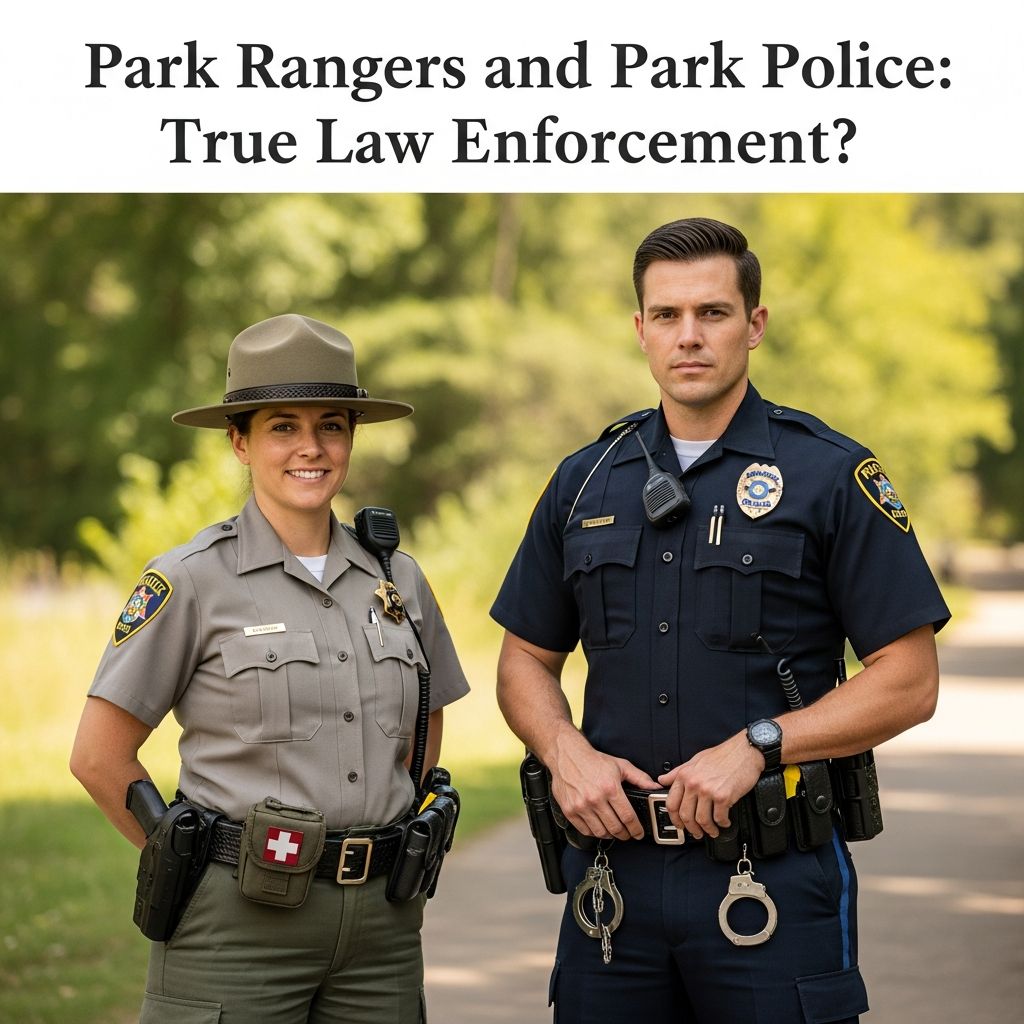
Park rangers and park police play vital roles in safeguarding natural wonders, historical sites, and recreational areas across the United States. But do they possess the same authority as city or state police officers? This question arises frequently among park visitors, hikers, and even legal professionals navigating encounters in protected lands. While both groups enforce rules and maintain safety, their powers, training, and jurisdictions vary significantly, often leading to confusion about their status as “real cops.”
Defining Roles in Protected Public Spaces
Public lands like national parks, state parks, and urban green spaces require dedicated personnel to manage crowds, prevent environmental damage, and respond to emergencies. Park rangers typically focus on conservation, education, and resource protection, while park police emphasize urban-style policing in high-traffic federal areas. Understanding these distinctions is crucial for anyone interacting with them, whether as a tourist or someone facing charges related to park violations.
Rangers often wear distinctive uniforms with wide-brimmed hats and badges symbolizing their multi-faceted duties, from guiding tours to extinguishing wildfires. Park police, by contrast, don attire more akin to standard patrol officers, equipped with marked vehicles and firearms for proactive enforcement.
Authority of United States Park Police
The
United States Park Police (USPP)
stands as one of the nation’s premier federal law enforcement entities, established as the oldest uniformed federal agency with full-service capabilities. Operating under the National Park Service within the Department of the Interior, USPP officers patrol key metropolitan regions including Washington, D.C., New York City, and San Francisco. Their mandate extends beyond park boundaries into surrounding areas, granting them concurrent state and federal jurisdiction.These officers investigate crimes, make arrests, and secure iconic landmarks like the Lincoln Memorial, Statue of Liberty, and Golden Gate Bridge areas. With about 494 officers as of recent counts, they handle everything from petty theft to counter-terrorism, including protection for high-profile figures such as the President and Secretary of the Interior. USPP personnel enforce Title 36 of the Code of Federal Regulations, alongside broader federal statutes like 16 USC and 18 USC, and even select state laws.
In practice, USPP can pursue suspects beyond park limits if an offense originates within their jurisdiction and effect warrantless arrests across the National Park System, D.C., and adjacent environs. State-specific powers further bolster their reach: limited arrests in Maryland, full authority in New York under CPL 2.15, New Jersey via Code 2A:154-6, and California Penal Code Section 830.8. This makes USPP officers indistinguishable from “real cops” in most operational contexts.
National Park Service Rangers: Protectors with Badges
National Park Service (NPS)
law enforcement rangers
represent another layer of protection, stationed nationwide to preserve natural and cultural treasures while ensuring visitor safety. Unlike interpretive rangers who educate without armament, law enforcement rangers carry firearms and undergo rigorous training akin to municipal police academies.These rangers multitask beyond policing: they combat wildfires, provide emergency medical aid, conduct search-and-rescue missions, and investigate resource crimes like poaching or vandalism. NPS special agents complement them by delving into complex investigations. Together, they share jurisdiction with USPP in federal parks, enforcing federal laws with arrest powers comparable to those in urban departments.
However, not all rangers wield such authority. Only those in law enforcement divisions are armed and commissioned as federal officers; others focus on non-enforcement roles like maintenance or visitor services. This division clarifies why some encounters feel more like chats with park guides than stops by patrolling officers.
Training Standards and Certification
To qualify as law enforcement, both USPP officers and NPS rangers must complete intensive programs mirroring those of local police. USPP recruits attend the Federal Law Enforcement Training Center (FLETC), mastering firearms, defensive tactics, and legal protocols. NPS rangers follow the NPS Law Enforcement Ranger Program, which includes FLETC training plus specialized modules in wildland firefighting and backcountry operations.
Certification demands physical fitness tests, background checks, and ongoing recertification. Like sworn police, they adhere to use-of-force policies, restricting lethal measures to imminent threats of death or serious harm. This parity ensures they operate with professional standards, dispelling myths of lesser authority.
Comparing Powers: Park Personnel vs. Municipal Police
| Aspect | US Park Police | NPS Law Enforcement Rangers | Municipal Police |
|---|---|---|---|
| Jurisdiction | Federal parks + metro areas (DC, NYC, SF); state extensions | All NPS lands nationwide | City/county limits |
| Arrest Authority | Warrantless in parks/DC/environs; pursuit powers | Federal offenses in parks; shared with USPP | Full local/state powers |
| Training | FLETC full-service | FLETC + NPS specialties | State academies |
| Additional Duties | Monument security, VIP protection | Fire/rescue/EMS | General patrol |
| Firearms | Standard issue | LE rangers only | Standard issue |
This table highlights overlaps and nuances. Park forces lack broader municipal scope but excel in specialized environments. Contrary to some claims, rangers do not surpass police authority; their powers align closely within federal contexts.
Practical Encounters: What Visitors Need to Know
During a routine hike in Yellowstone or a visit to the National Mall, compliance with directives from badged personnel is essential. They can issue citations for infractions like illegal camping, speeding in park zones, or wildlife feeding, often leading to federal court. Refusal to comply risks escalation, including detention.
In urban parks, USPP might handle traffic stops or crowd control at events, mirroring city police actions. Visitors should note badges and vehicles marked “Police” or “Ranger – Law Enforcement” to identify commissioned officers. Always provide ID upon request, as resistance can compound charges.
Legal Implications of Park Violations
Offenses in federal parks carry unique consequences. Minor infractions result in fines, while felonies like drug trafficking or assault trigger U.S. District Court proceedings. Park police and rangers document evidence meticulously, leveraging federal resources for prosecutions. Defendants benefit from understanding jurisdictional overlaps, as state charges may apply in pursuit scenarios.
Criminal defense strategies often hinge on these nuances: was the officer within authority? Did the encounter spill into state land? Experienced attorneys exploit such details for dismissals or reductions.
Career Paths in Park Law Enforcement
Aspiring officers find rewarding opportunities with NPS or USPP. Requirements include U.S. citizenship, age under 37 (with exceptions), and a clean record. NPS recruitment emphasizes diverse skills like outdoor survival. Salaries start competitively, with federal benefits, appealing to those passionate about nature and justice.
- Steps to Join NPS Rangers: Apply via USAJobs, pass fitness exams, complete FLETC.
- USPP Path: Similar process, focused on urban federal policing.
- Advancement: Specialize in K9 units, aviation, or intelligence.
Frequently Asked Questions (FAQs)
Do all park rangers carry guns?
No, only law enforcement rangers are armed; interpretive or maintenance rangers are not.
Can park police pull you over outside park boundaries?
Yes, if pursuing a violation committed inside their jurisdiction.
Are park rangers federal officers?
Law enforcement rangers are commissioned federal officers with arrest powers.
Who has more authority, park rangers or local police?
Neither; authorities are context-specific, with no general superiority.
What laws do park police enforce?
Federal regulations (Title 36 CFR), statutes (16/18 USC), and select state laws.
Preserving Parks Through Enforcement
Park rangers and police embody a blend of stewardship and security, ensuring millions enjoy America’s treasures safely. Their sworn status affirms they are indeed “real cops” within their domains, backed by federal might and specialized expertise. As public lands face growing pressures from tourism and climate challenges, their roles will only expand, demanding respect from all who tread these grounds.
References
- United States Park Police — Wikipedia. 2022-04-08. https://en.wikipedia.org/wiki/United_States_Park_Police
- National Park Service Law Enforcement Ranger Program — U.S. Department of the Interior. Accessed 2026. https://www.doi.gov/oles/national-park-service-law-enforcement-ranger-program
- Your Questions, Our Answers! — JoshuaTreeNPS (YouTube). Accessed 2026. https://www.youtube.com/watch?v=sURlqRTcSmA
- Do Park Rangers Have More Authority Than Police? — YouTube. Accessed 2026. https://www.youtube.com/watch?v=YMsOn7fiTAM
- Become A Law Enforcement Ranger — U.S. National Park Service. Accessed 2026. https://www.nps.gov/aboutus/become-a-law-enforcement-ranger.htm
Similar Articles








Read full bio of medha deb




