
Overtime Pay and Protective Gear: What Sandifer Means for Employers
Understanding how Supreme Court rulings on donning and doffing protective gear affect overtime obligations under the FLSA and collective bargaining agreements.
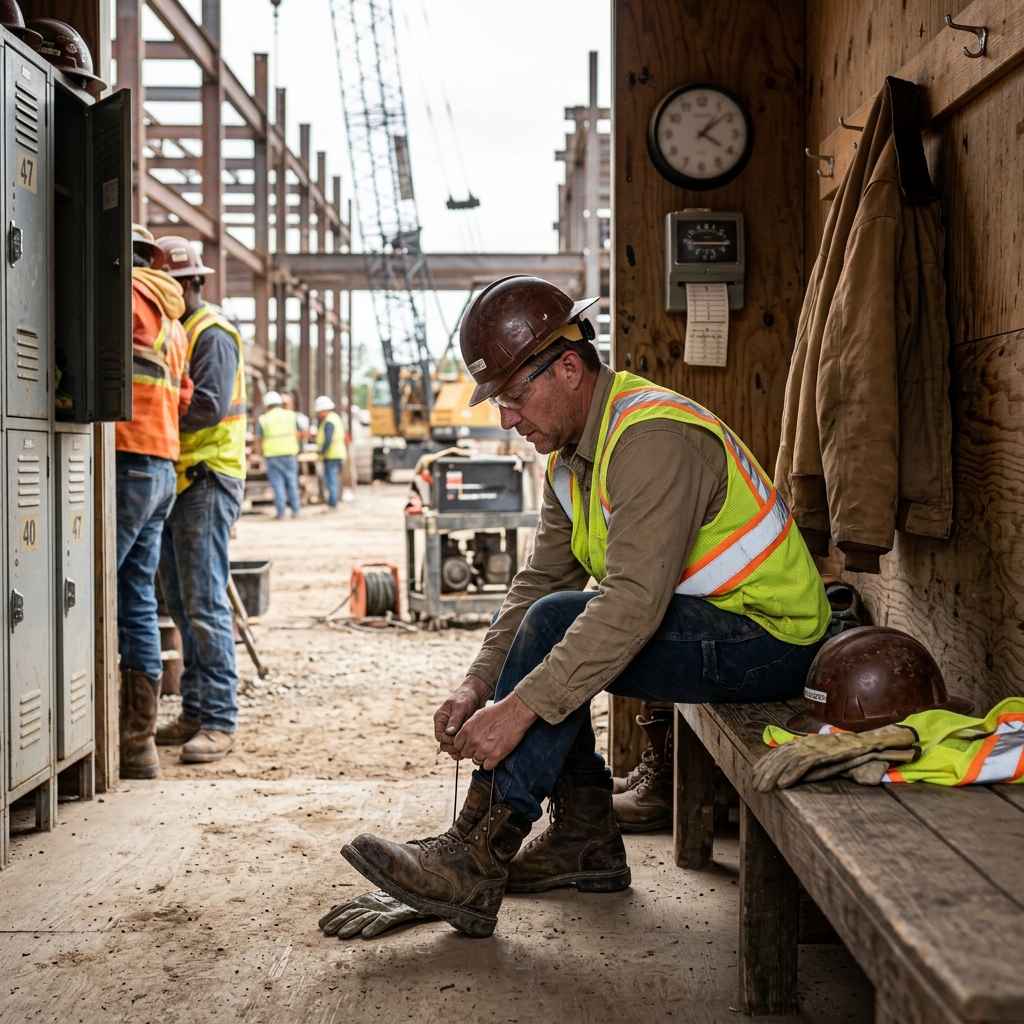
Many industrial and manufacturing employers require workers to wear extensive safety equipment. A key question has been whether time spent putting on and taking off that gear counts as paid working time that can trigger overtime. A unanimous Supreme Court decision in Sandifer v. U.S. Steel Corp. clarified that, in unionized workplaces with a collective bargaining agreement (CBA), certain gear-related time can be treated as non-compensable “changing clothes” under federal law. This article explains what that ruling means in practice and how it fits within the broader framework of wage and hour rules on donning and doffing protective gear.
Background: Why Donning and Doffing Matters for Overtime
Time spent putting on (donning) and taking off (doffing) protective gear matters because it can increase the total hours worked in a week, potentially pushing employees over 40 hours and into overtime under the Fair Labor Standards Act (FLSA). The FLSA generally requires employers to pay at least the minimum wage and 1.5 times the regular rate of pay for all hours worked over 40 in a workweek. When donning and doffing are treated as compensable work activities, the minutes spent on these tasks must be counted toward that weekly total.
However, Congress modified the FLSA in the mid-20th century to allow some limited exclusions from compensable time. One of those provisions, 29 U.S.C. § 203(o), applies specifically to time spent changing clothes or washing at the beginning or end of the workday when a union and employer have agreed to exclude it under a bona fide CBA. The scope of that phrase—especially what counts as “clothes”—became the central issue in Sandifer.
Key Legal Framework: FLSA, Portal-to-Portal Act, and §203(o)
To understand the Supreme Court’s reasoning, it is useful to see how several overlapping statutes operate together:
- FLSA core rule: Employers must pay employees for all hours worked, including certain preparatory and concluding activities that are part of their principal work duties.
- Portal-to-Portal Act: This 1947 statute narrowed compensable time by excluding preliminary and postliminary activities that occur before the first principal work activity or after the last principal activity, such as ordinary commuting and waiting time that is not integral to the job.
- Continuous workday doctrine: The Supreme Court reaffirmed that once an employee performs a principal activity, the workday continues until the last principal activity ends. Walking and waiting time in between can be compensable.
- §203(o) exception: A separate FLSA provision permits a CBA to expressly or by longstanding custom exclude from paid time any minutes spent changing clothes or washing at the beginning or end of the workday.
These rules create a layered system: some gear-related time is always compensable, some can be excluded only by agreement in a union contract, and some is categorically non-compensable because it is preliminary or postliminary under the Portal-to-Portal Act.
Sandifer v. U.S. Steel: What the Supreme Court Decided
In Sandifer v. U.S. Steel Corp., steelworkers argued that time devoted to putting on and removing protective items before and after their shifts should count as hours worked for overtime calculations. The employer responded that a CBA with the union excluded such time under §203(o), and that the workers were therefore not entitled to additional pay.
The Supreme Court unanimously sided with the employer, providing two key clarifications:
- Protective items can be “clothes” under §203(o): The Court interpreted “clothes” to mean items worn to cover the body and usually regarded as articles of dress, even if they are protective in nature. Many pieces of industrial safety gear—such as jackets, pants, hoods, leggings, and steel-toed boots—fall within this category.
- Mixed gear and de minimis time: Some items, like safety glasses, earplugs, and possibly hard hats, were treated as equipment rather than clothes. However, the Court held that the small amount of time spent on these items was de minimis, and thus did not alter the overall conclusion that the donning and doffing period could be excluded.
As a result, the Court concluded that time spent changing into and out of most required gear at the start and end of the workday was non-compensable under §203(o) because the union and employer had agreed to exclude it through their CBA. This did not alter the general FLSA rules for non-union workplaces, but it gave unionized employers greater clarity about what they can negotiate.
How Sandifer Fits with Other Donning and Doffing Decisions
Sandifer is part of a broader line of cases addressing preparation activities and protective gear. In an earlier case involving meat and poultry workers, the Supreme Court held that donning and doffing specialized protective gear were principal activities that started and ended the workday. The Court ruled that:
- Time spent walking between the locker room (where gear is donned and doffed) and the work stations is compensable during the continuous workday.
- Waiting time to remove required gear at the end of the shift is compensable, while waiting to obtain gear at the beginning of the shift is generally non-compensable preliminary activity.
Taken together, these decisions mean that:
- Donning/doffing specialized gear can be a principal activity that starts the workday under the FLSA and Portal-to-Portal Act.
- Walking and waiting time after donning and before doffing may be compensable because it occurs during the continuous workday.
- Yet, under §203(o), unionized employers can negotiate to exclude the time specifically spent “changing clothes” or washing at the beginning or end of the workday.
This creates a distinction: §203(o) affects whether the minutes devoted to changing clothes are counted as hours worked, but it does not rewrite the continuous workday doctrine or allow employers to ignore all walking and waiting time once a principal activity has begun.
Practical Impact on Unionized Employers and CBAs
For unionized employers, Sandifer underscores the importance of carefully drafted CBAs and consistent practices. When a CBA expressly excludes, or by longstanding custom does not treat, changing clothes time as paid, §203(o) allows that exclusion to stand, as long as the gear in question fits within the Court’s interpretation of “clothes.”
Key points for employers with CBAs
- Review contract language: Employers should confirm whether the CBA directly addresses changing time and whether the exclusion is clear and mutually understood. Ambiguous language can lead to disputes.
- Evaluate the types of gear: Standard protective clothing (jackets, pants, hoods, boots) is likely covered as “clothes.” Specialized equipment or tools may not be, and time related to those items may remain compensable.
- Assess actual practices: Under §203(o), established custom or practice under the CBA can be as important as formal wording. Longstanding non-payment for clothes-changing time may support the exclusion.
- Monitor de minimis time: Extremely short periods, such as seconds spent on earplugs or safety glasses, may be treated as de minimis. Still, employers should be cautious in relying solely on this doctrine and should track actual time where possible.
Comparing Different Types of Gear and Time
The table below summarizes how various activities are typically treated under the FLSA, the Portal-to-Portal Act, and §203(o), based on Supreme Court precedent and official guidance.
| Activity | Typical Treatment Under FLSA | Impact of §203(o) with a CBA |
|---|---|---|
| Donning specialized protective clothing (jackets, pants, hoods, boots) | Principal activity that can start the workday; time generally compensable unless excluded by law. | May be excluded as “changing clothes” if the CBA or longstanding custom clearly does so. |
| Doffing specialized protective clothing at end of shift | Principal activity that ends the workday; time generally compensable. | Similarly may be excluded under §203(o) when covered by a CBA provision or practice. |
| Walking between locker room and work station after donning gear | Part of continuous workday; compensable walking time. | §203(o) does not directly exclude this time; it applies only to changing clothes or washing. |
| Waiting to doff gear at end of shift | Compensable as part of the continuous workday. | Not directly affected by §203(o); still generally compensable. |
| Waiting to obtain gear before donning at start of shift | Usually non-compensable preliminary activity under Portal-to-Portal Act. | §203(o) generally unnecessary here because the time is already excluded. |
| Donning minimal items like safety glasses, earplugs, hard hats | May be compensable, but often treated as de minimis if time is negligible. | Not clearly “clothes” in all workplaces; CBA treatment and factual details matter. |
Compliance Tips for Employers
Employers who require protective gear should proactively manage their pay practices to limit the risk of wage and hour claims. Best practices include:
- Conduct a time study: Measure how long workers actually spend donning, doffing, walking, and waiting, particularly in facilities with complex gear requirements.
- Distinguish clothes from equipment: Use the Supreme Court’s definition of “clothes” and evaluate whether particular items are more like tools or machines than clothing.
- Ensure CBA alignment: In union settings, confirm that the contract language and everyday practices consistently reflect any intended exclusion under §203(o).
- Train supervisors: Make sure front-line managers understand when the workday begins and ends, and when employees must be treated as on the clock.
- Document policies: Maintain written policies and timekeeping procedures that are consistent with FLSA, Portal-to-Portal Act, and §203(o) requirements.
Frequently Asked Questions
1. Does Sandifer mean workers never get paid for putting on protective gear?
No. Sandifer applies specifically to unionized workplaces where a CBA and custom exclude time spent changing clothes under §203(o). In non-union workplaces, or where the CBA does not contain such an exclusion, donning and doffing specialized gear can still be compensable principal activities.
2. Are safety glasses and earplugs always treated as non-compensable?
Not always. The Supreme Court in Sandifer treated time spent on such items as de minimis, meaning too small to require separate compensation, but that analysis depends on the amount of time involved and the specific facts. If workers spend substantial time on these items, employers should reassess whether that time must be included in hours worked.
3. How do walking and waiting time relate to donning and doffing?
Under the continuous workday doctrine, once employees begin a principal activity—such as donning specialized protective gear—their workday has started. Walking from the locker room to the production area and waiting to remove gear at the end of the shift are generally compensable under the FLSA. Waiting to obtain gear before the first principal activity, however, is usually excluded as preliminary under the Portal-to-Portal Act.
4. Can a CBA exclude all gear-related time from pay?
Not entirely. Section 203(o) allows exclusion only for time spent changing clothes or washing at the beginning or end of the workday. Time spent walking, waiting, or performing other activities during the continuous workday remains subject to the general FLSA rules and cannot be broadly waived.
5. What should employers do if they are unsure how their practices fit the law?
Employers should consult experienced labor and employment counsel, review relevant Supreme Court cases, and consider guidance from the U.S. Department of Labor. Official advisory memoranda and court decisions provide detailed explanations of how donning, doffing, walking, and waiting time should be treated under federal law.
References
- Sandifer v. U.S. Steel Corp. argument preview — SCOTUSblog. 2013-11-13. https://www.scotusblog.com/2013/11/argument-preview-changing-clothes-and-overtime-pay/
- Supreme Court: CBA May Provide Time Spent Donning & Doffing Protective Gear Is Not Compensable — Wage & Hour Defense Blog (Epstein Becker & Green). 2014-01-29. https://www.wagehourblog.com/supreme-court-cba-may-provide-time-spent-donning-doffing-protective-gear-is-not-compensable
- Legal Alert: Supreme Court Addresses Pay for Time Spent Walking and Waiting Before and After Donning and Doffing Required Specialized Protective Gear — FordHarrison LLP. 2005-11-09. https://www.fordharrison.com/legal-alert-supreme-court-addresses-pay-for-time-spent-walking-and-waiting-before-and-after-donning-and-doffing-required-specialized-protective-gear
- Wage and Hour Advisory Memorandum No. 2006-2 — U.S. Department of Labor, Wage and Hour Division. 2006-05-31. https://www.dol.gov/agencies/whd/field-assistance-bulletins/2006-2
- Supreme Court: Donning and Doffing Protective Gear Is Not Compensable Under Section 203(o) — Practical Law, Thomson Reuters. 2014. https://uk.practicallaw.thomsonreuters.com/5-555-5389
Similar Articles








Read full bio of Sneha Tete




