
Overdue Traffic Ticket Texts: How to Spot the Scam
Learn how fake DMV and toll texts trick drivers into paying bogus “overdue” tickets and how to protect your money and identity.
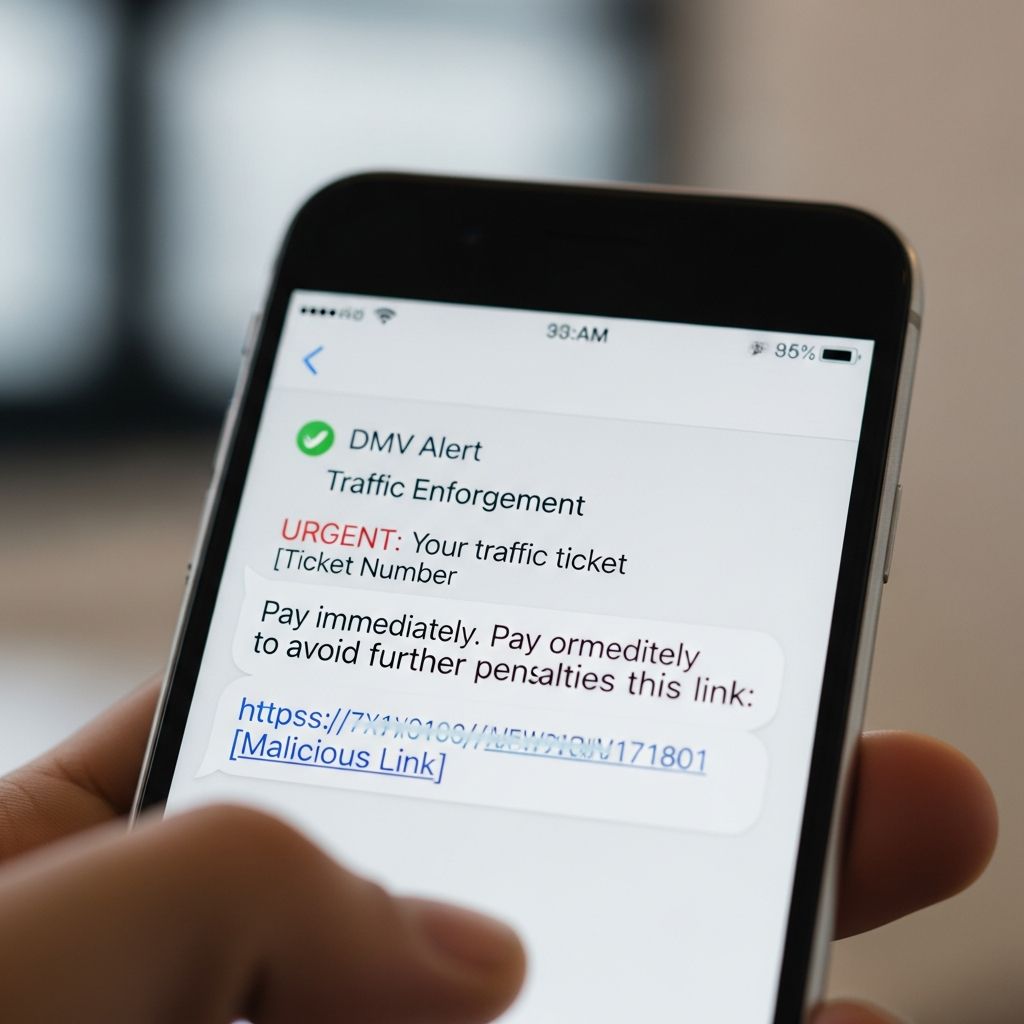
Across the country, drivers are getting alarming text messages claiming they owe money for overdue traffic tickets, unpaid tolls, or registration fees. The texts often pretend to come from your state’s Department of Motor Vehicles (DMV), transportation department, or a tolling agency and try to scare you into paying immediately. In reality, most of these messages are phishing scams – also called smishing when done by SMS – designed to steal your money and personal information.
This guide explains how these scams work, how to recognize warning signs, what to do if you receive a suspicious message, and how to respond if you already clicked or paid.
Why Overdue Ticket Texts Are So Convincing
Scammers carefully design these messages to look urgent and official. They rely on the fact that many people drive regularly, may have received tickets or toll bills before, and could reasonably believe they missed a notice.
- Common logos and names: Messages may use terms like “DMV,” “Motor Vehicle Division,” “Department of Transportation,” or a local toll system name.
- Urgent language: The text warns of immediate consequences like license suspension, registration holds, or additional fees if you do not pay right away.
- Seemingly precise details: Some texts include a small dollar amount, a fake citation number, or a reference to a specific city to feel more believable.
- Realistic-looking links: The link may mimic an official government website but often has small differences in spelling or domain.
Because real toll agencies and some government offices do sometimes use texts or online portals, people can easily be tricked into assuming the message is legitimate.
How the Fake Ticket Text Scam Typically Works
While the details vary, most schemes follow a similar pattern.
1. You Receive an Unexpected Text
The scam starts with a message that appears to come from a government office, tolling authority, or law enforcement related to driving.
- It claims you have an overdue traffic ticket, unpaid tolls, or a past-due registration fee.
- The text may say you only have a short window to pay before penalties apply.
- Some messages mention a “violation database” or “case file” to sound more official.
2. The Message Pressures You to Act Immediately
To get you to click without thinking, the text often includes serious threats:
- Suspending your driver’s license or registration
- Adding a large service fee or late penalty
- Reporting you to a “violations” database or collections
- Hurting your credit score or even possible prosecution
Scammers know that the more worried you feel, the more likely you are to respond quickly and skip basic checks.
3. A Link Leads to a Fake Payment or Login Page
The text almost always includes a link. When you tap it, you may be taken to a site that:
- Uses a logo and colors similar to your state’s DMV or toll agency
- Asks for your name, address, driver’s license number, date of birth, or Social Security number
- Demands a debit or credit card number, bank login, or other payment information
Submitting information on this page gives scammers what they need to steal your money or commit identity theft.
4. Your Data and Money Are Collected
Once you enter details on the fake site:
- Scammers may immediately attempt charges on your payment card.
- Your personal details can be sold or used for other fraud, like opening accounts in your name.
- They may send more phishing attempts, now customized with your real information.
Red Flags That a Ticket Text Is a Scam
Not every text related to driving is fake, but there are strong warning signs you can quickly check.
| Red Flag | What It Looks Like | Why It’s Suspicious |
|---|---|---|
| Out-of-the-blue contact | Text appears with no prior notice, ticket, or toll use | Legitimate agencies typically send mail first, not surprise texts. |
| Threats and extreme urgency | “Pay now or your license will be suspended today.” | Government offices rarely threaten immediate severe action by text. |
| Shortened or strange links | Links with misspelled domains or unrelated URLs | Official sites use recognizable government domains like .gov. |
| Requests for sensitive data | Asks for full SSN, bank login, or full card details | Agencies do not collect confidential financial data over text forms. |
| Generic greeting or errors | “Dear driver” plus poor grammar or odd phrasing | Mass scams often contain typos and vague language. |
What Real DMVs and Transportation Agencies Usually Do
Understanding how legitimate agencies operate makes it easier to spot scams.
- No surprise collection texts: Many DMVs and transportation departments explicitly say they do not send fee collection reminders by unsolicited text.
- Official mail and secure portals: Real tickets, toll invoices, and late notices generally come by postal mail or through secure online accounts that you set up yourself.
- Limited texting purposes: When government agencies use text, it is typically for things like appointment reminders, and you usually had to sign up for text notifications.
- No direct request for banking data via text: Official messages will not ask you to reply with or enter full bank account information or credit card numbers through an unknown link.
If you are unsure what your state’s DMV or transportation agency does, check their official website or call using a verified phone number listed there.
How to Handle a Suspicious Traffic Ticket Text
The safest approach is to assume an unexpected ticket-related text is fake until you can prove otherwise.
Step 1: Do Not Click or Reply
- Ignore any links in the message; do not tap or copy them into a browser.
- Do not reply, even with words like “STOP” or “REMOVE,” as that confirms your number is active.
Step 2: Verify Through Trusted Channels
If you are worried the message might be real:
- Go directly to your state DMV or transportation department’s official website by typing the address yourself, not using the text link.
- Sign in to your existing online account, if you have one, and check for any notices or balances.
- Call the number listed on the agency’s official site (often a .gov domain) and ask them to look up your record.
Step 3: Report and Delete the Message
Reporting scams helps enforcement agencies track patterns and warn others.
- Use your phone’s built-in “report junk” or “report spam” option in your messaging app, if available.
- Forward unwanted texts to 7726 (which spells “SPAM”) if supported by your mobile provider.
- File a report with the Federal Trade Commission (FTC) at its fraud reporting portal.
- Consider reporting to the FBI’s Internet Crime Complaint Center (IC3) for online fraud.
After reporting, delete the text so you do not accidentally tap the link later.
If You Already Clicked or Paid
If you suspect you interacted with a scam text, acting quickly can limit damage.
1. If You Entered Payment Card or Bank Details
- Contact your bank or card issuer immediately and explain the situation.
- Ask them to review recent charges, block the card, and issue a replacement if needed.
- Monitor your accounts closely over the next several months for unfamiliar transactions.
2. If You Shared Personal Identifiers
If you gave your driver’s license number, Social Security number, or date of birth:
- Request your free credit reports at the official national portal and review them for new or unknown accounts.
- Consider placing a fraud alert or credit freeze with the major credit bureaus to make it harder for someone to open accounts in your name.
- Keep an eye on mailed bills and notices for signs of identity misuse.
3. File Official Reports
- Report the scam to the FTC and, if appropriate, to the FBI’s IC3.
- In some cases, you may also wish to file a police report with your local law enforcement, especially if money was stolen.
Practical Habits to Avoid Text-Based Ticket Scams
Developing a few simple habits makes you much harder to target successfully.
- Treat all urgent payment texts with skepticism: Pause and verify through official channels before acting.
- Bookmark real sites: Save official DMV, toll agency, and transportation department websites in your browser so you do not rely on links in messages.
- Use strong, unique passwords and multifactor authentication for online government and financial accounts.
- Update your devices: Keep your phone’s operating system and security software up to date to reduce risks if you accidentally visit malicious sites.
- Educate family members: Share this information with new drivers, older relatives, or anyone who might not be familiar with modern text scams.
Frequently Asked Questions (FAQs)
How can I tell if a text about an overdue traffic ticket is real?
Start by assuming it is a scam. Do not click any links. Instead, independently contact your state’s DMV or court using the phone number or website printed on previous tickets, registration documents, or the agency’s official .gov site. If they have no record of a ticket, the text is almost certainly fraudulent.
Can a government agency legally suspend my license without warning?
License suspensions and serious penalties usually follow a process that includes mailed notices, possible court contact, and clear instructions on how to respond. Legitimate agencies do not typically suspend licenses based solely on an unanswered text message.
What if I really do have unpaid tolls or parking tickets?
If you suspect you might owe money, go directly to the tolling authority or court’s legitimate website, or call them using verified contact details. Many agencies let you search by license plate or citation number on their official portals, without needing to respond to any text links.
Is it safe to reply “STOP” to these texts?
With obvious scam messages, replying can confirm that your phone number is active and make you a bigger target. It is safer to report the text as spam through your messaging app, forward it to 7726 (SPAM) if supported, and then delete it.
Do DMVs ever send legitimate text messages?
Some DMVs and transportation agencies do send texts, for example, to confirm appointments or provide reminders, but typically only if you opted in. Even then, they will direct you back to official websites you already know or to secure accounts, not to random links demanding immediate payment or sensitive financial information.
What is the difference between phishing and smishing?
Phishing is a broad term for attempts to trick you into revealing personal information or money by pretending to be a trusted entity. When this is done via text message, it is often called smishing (SMS phishing). Fake ticket and toll texts are one example of smishing.
References
- That text about an overdue traffic ticket is probably a scam — Federal Trade Commission. 2025-07-xx. https://consumer.ftc.gov/consumer-alerts/2025/07/text-about-overdue-traffic-ticket-probably-scam
- Fraudulent Text Messages Target Recipients With False Claims of Unpaid Tolls or Traffic Violations — Iowa Department of Transportation. 2025-06-03. https://iowadot.gov/news/2025-06-03/fraudulent-text-messages-target-recipients-false-claims-unpaid-tolls-or-traffic-violations
- Don’t click it. It’s not a ticket! TxDMV warns Texans about ongoing text scam — Texas Department of Motor Vehicles. 2025-07-08. https://prod-origin.txdmv.gov/sites/default/files/body-files/2025-08-07_Beware_of_Scam_Text_Messages.pdf
- Got a text about unpaid tolls? It’s probably a scam — Federal Trade Commission. 2025-01-xx. https://consumer.ftc.gov/consumer-alerts/2025/01/got-text-about-unpaid-tolls-its-probably-scam
- Phishing Scams — Federal Trade Commission. 2024-xx-xx. https://consumer.ftc.gov/all-scams/phishing-scams
Similar Articles








Read full bio of medha deb


