
Out-of-State Speeding Tickets: What Drivers Need to Know
Understand how an out-of-state speeding ticket can affect your license, insurance, record, and what to do next.
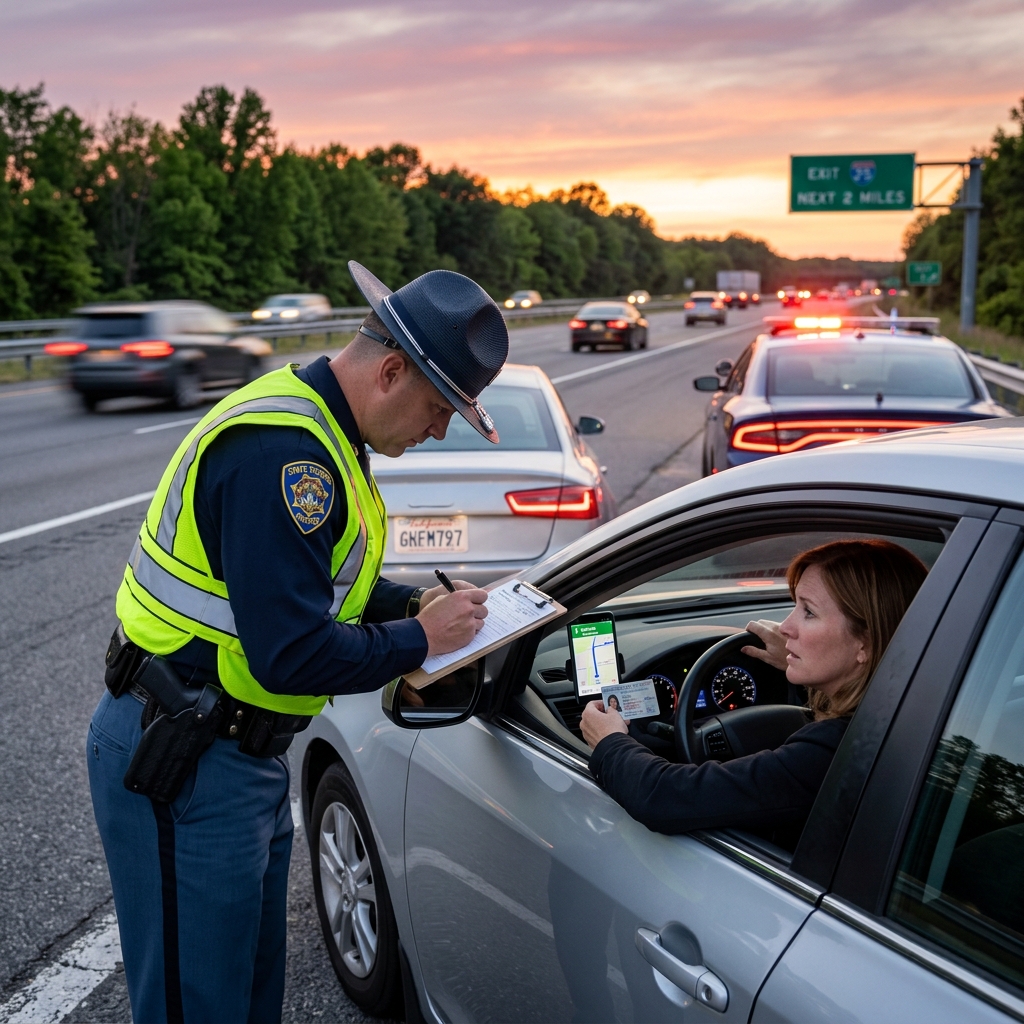
Getting a speeding ticket in another state can be confusing. Many drivers assume that once they cross back into their home state, the ticket somehow becomes less serious or will be ignored. In reality, most states have systems that share traffic violation information, and ignoring an out-of-state ticket can create costly, long-term problems for your license, record, and insurance.
This guide explains how out-of-state speeding tickets work, why they often follow you home, and the practical steps you should take to handle them correctly.
Big Picture: Does an Out-of-State Ticket Really Matter?
For most drivers, an out-of-state speeding ticket is treated similarly to a ticket at home. You’re still responsible for the fine and, in many states, the violation can affect your driving record and insurance premiums.
- You must resolve the ticket in the state where it was issued — paying, contesting, or otherwise closing the case.
- Your home state may add points or record the violation, depending on its laws and participation in interstate compacts.
- Ignoring the ticket can lead to license suspension, extra fees, or even a warrant in the issuing state.
In short, an out-of-state ticket is not “optional.” Treat it as seriously as you would a ticket at home.
Why States Share Information: Key Interstate Compacts
Two major interstate agreements explain why a speeding ticket in another state can affect you after you return home: the Driver License Compact (DLC) and the Nonresident Violator Compact (NVC).
| Compact | Main Purpose | Impact on Drivers |
|---|---|---|
| Driver License Compact (DLC) | Allows states to report traffic convictions of nonresident drivers to the driver’s home state. | Your home state generally treats an out-of-state conviction like an in-state violation, including points on your record. |
| Nonresident Violator Compact (NVC) | Ensures drivers cannot escape responsibility by failing to pay traffic fines in other states. | If you fail to pay, the issuing state can ask your home state to suspend your license until the ticket is resolved. |
Most states participate in these compacts. That means your home DMV will often learn about your ticket and can respond as if the violation occurred locally.
How Out-of-State Speeding Tickets Affect Your Driving Record
States handle out-of-state convictions differently. However, in compact-member states, a speeding conviction elsewhere usually shows up on your record and may be treated like a local offense.
- Point systems: In states that use demerit points, the out-of-state conviction can lead to points just like an in-state ticket.
- Serious vs. minor violations: Some states distinguish between minor infractions and serious offenses when assigning points or suspensions; for example, California may not assign points for minor out-of-state infractions but can do so for serious violations such as excessive speeding or DUI.
- License actions: Multiple points or serious speeding can lead to license suspension or restricted privileges, depending on state law.
Because each state’s rules differ, it is important to check how your home state treats out-of-state tickets rather than assuming they will have no effect.
Consequences of Ignoring an Out-of-State Speeding Ticket
Deciding not to deal with a ticket from another state is usually one of the worst choices a driver can make. Under the NVC and similar arrangements, failing to respond or pay can trigger serious consequences.
- License suspension: Many states suspend your license if you fail to answer or pay a moving violation from another state. New York, for example, suspends licenses of residents who do not respond to tickets in nearly all other states and requests suspensions for drivers from other states who ignore New York tickets.
- Additional fines and fees: Late penalties, court costs, and administrative surcharges can substantially increase the amount you owe.
- Possible arrest warrants: In some jurisdictions, failing to resolve a ticket can lead to a bench warrant, leaving you at risk of arrest if stopped again or appearing in court.
- Long-term record issues: Even after you eventually pay, the delay and related suspensions can create lasting marks on your driving history.
Because of these risks, ignoring an out-of-state speeding ticket is rarely worth the short-term convenience.
Impact on Auto Insurance Premiums
Insurers frequently review your driving record for claims decisions, premium calculations, and policy renewals. When an out-of-state speeding ticket is reported to your home DMV, it often looks just like a local violation to your insurer.
- Higher premiums: Speeding tickets can signal higher risk, and multiple violations or serious speeding may cause substantial premium increases.
- Policy eligibility: A pattern of speeding tickets, including out-of-state ones, may affect your eligibility for preferred or low-rate insurance programs.
- Hidden long-term costs: Even after fines are paid, an out-of-state ticket can raise costs over several years through increased insurance rates.
Not every ticket will dramatically raise your premium, but it is wise to assume that any reported speeding conviction might be considered in your insurer’s risk assessment.
Step-by-Step: What to Do After an Out-of-State Speeding Ticket
Handling the ticket promptly and carefully can reduce both immediate penalties and long-term consequences. Here is a practical sequence most drivers can follow, adapted from common guidance by insurers, courts, and legal practitioners.
1. Review the Ticket Carefully
- Confirm your personal information, vehicle details, and the exact alleged speed and limit.
- Note the court name, location, due dates, and any instructions for payment or contesting.
- Look for information about remote options such as online payment or mail-based response.
2. Research the Issuing State’s Rules
- Visit the issuing state’s court or motor vehicle website to understand procedures and penalties.
- Check whether the state allows you to resolve the ticket by mail, online, or through an attorney without appearing personally in court.
- Verify whether traffic school, deferred adjudication, or similar options are offered that could reduce or remove points.
3. Decide Whether to Pay or Contest
Your options usually include:
- Paying the fine and accepting the conviction, often the simplest route when the violation is clear and the impact manageable.
- Contesting the ticket if you believe there is an error in the charge, equipment, identification, or the officer’s observations.
- Seeking legal representation from an attorney in the issuing state, particularly for serious violations or when you cannot attend court in person.
4. If You Contest, Prepare Evidence
- Gather documents such as GPS records, dashcam footage, or witness statements that support your version of events.
- Ensure your evidence meets the issuing state’s evidentiary rules and can be presented properly in court.
- Consider whether a local attorney can appear on your behalf, reducing travel and helping navigate local procedures.
5. Track Deadlines and Keep Proof
- Pay or file your response by the required due date to avoid additional penalties and possible suspension.
- Retain receipts, confirmation numbers, and copies of any documents you file or send.
- Monitor your driving record and insurance notices afterward to confirm the outcome is recorded correctly.
Special Issues: Serious Violations and State-Specific Rules
Some kinds of speeding, especially at very high speeds, can lead to more serious sanctions than a standard ticket. States sometimes treat these violations similarly to reckless driving or other major offenses.
- Excessive speeding: Very high speeds may carry higher fines, longer suspensions, or even criminal charges in some states.
- Alcohol or drug-related violations: Convictions for impaired driving in another state can trigger mandatory revocations at home. For example, New York revokes a driver’s license for at least 90 days when a driver 21 or older is convicted of an alcohol or drug-related driving offense in another state or in Canada.
- Repeat offenders: Multiple speeding convictions, whether in-state or out-of-state, can result in escalating penalties and longer suspensions.
Drivers facing serious allegations should strongly consider consulting a legal professional in the issuing state, as local laws and court practices can significantly affect the outcome.
Practical Tips to Minimize Long-Term Damage
Even when the ticket is valid and cannot be completely avoided, you may be able to reduce its impact on your record and insurance.
- Ask about traffic school or diversion programs: Some jurisdictions allow drivers to complete an approved course in exchange for reduced points or a lighter outcome.
- Maintain a clean record going forward: Future infractions can compound the damage of an out-of-state ticket, so careful driving after a conviction is important.
- Stay informed about your state’s policies: Knowing how your home state treats out-of-state violations can help you make more informed choices about contesting or negotiating.
- Communicate with your insurer: If your premium rises, ask whether completing a defensive driving course or maintaining a violation-free period can lead to future reductions.
Frequently Asked Questions (FAQs)
Does every out-of-state speeding ticket show up on my home driving record?
In many states that participate in the Driver License Compact, yes: the conviction is reported to your home state and usually treated as if it occurred locally. However, some states may handle minor infractions differently or have exceptions, so you need to check your own state’s rules.
Can I ignore a ticket from another state if I rarely travel there?
No. Ignoring a ticket can lead to license suspension, additional fines, and possible warrants in the issuing state. Under the Nonresident Violator Compact, your home state can be asked to suspend your license until you resolve the ticket.
Will my insurance definitely go up after an out-of-state ticket?
Not always, but it often can. If the violation is reported to your driving record, insurers may treat it like any other speeding conviction when calculating premiums. The impact varies by insurer, your overall record, and the severity of the offense.
Do I have to travel back to the state where I got the ticket to fight it?
Sometimes, but not in every case. Some states allow drivers to contest tickets by mail or online, and others permit an attorney to appear on your behalf. Procedures depend on the issuing state’s rules and the type of violation.
What if I think the ticket is wrong or the speed reading was inaccurate?
In that situation, you may choose to dispute the ticket. You would normally need to follow the issuing state’s process, present evidence, and potentially work with a local attorney to challenge the officer’s observations or equipment accuracy.
Can an old unresolved out-of-state ticket still cause problems?
Yes. An unresolved ticket can lead to long-term issues, including suspended licenses, unpaid fines accumulating with penalties, and complications if you later try to renew your license or travel through the issuing state.
References
- What Happens If You Get an Out-of-State Traffic Ticket? — Progressive Insurance. 2024-01-05. https://www.progressive.com/answers/out-of-state-traffic-ticket/
- What Happens If You Get a Speeding Ticket in Another State? — Nolo Legal Encyclopedia. 2023-07-12. https://www.nolo.com/legal-encyclopedia/what-happens-if-you-get-a-speeding-ticket-in-another-state.html
- Resolving an Out-of-State Traffic Ticket in North Carolina — Browning & Long, PLLC. 2022-10-03. https://www.browninglonglaw.com/library/resolving-an-out-of-state-traffic-ticket-in-north-carolina.cfm
- Out-of-State Traffic Ticket: What to Do Next — Sweeney, Mason, García & Archer, PC. 2023-03-15. https://www.smgapc.com/out-of-state-traffic-ticket-what-to-do-next/
- Tickets Received in Another State — New York State Department of Motor Vehicles. 2023-11-09. https://dmv.ny.gov/tickets/tickets-received-in-another-state
- California Traffic Ticket Fines and Penalties — Wallin & Klarich, Attorneys at Law. 2023-05-22. https://www.wklaw.com/practice-areas/fight-traffic-ticket-california/traffic-ticket-fines-penalties/
- What Happens If You Get an Out-of-State Speeding Ticket? — SelectQuote. 2022-09-01. https://www.selectquote.com/auto-and-home-insurance/articles/out-of-state-speeding-ticket
Similar Articles








Read full bio of Sneha Tete


