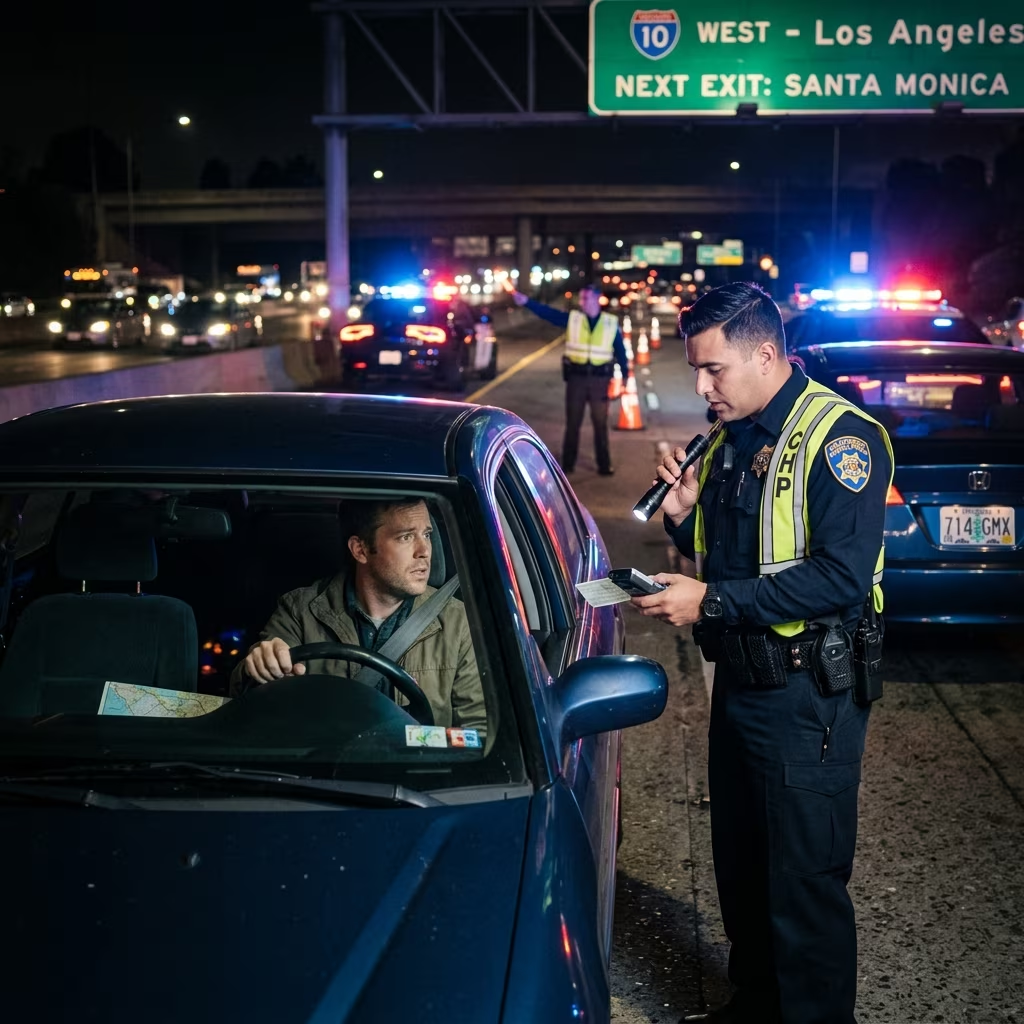
If you are arrested for driving under the influence in a state where you do not live, the case rarely stays limited to that one stop on the road. A DUI arrest can create immediate problems in the state where it happened and then spread to your home state through license reporting and reciprocity rules. That means you may face more than one government agency, more than one deadline, and more than one set of consequences.
The exact outcome depends on the state, your record, and whether the case ends in a conviction, but the basic pattern is similar in many parts of the country. The arresting state may suspend your driving privileges, open a criminal case, and schedule a hearing. Your home state may later learn about the arrest or conviction and add its own administrative penalties. Because of those overlapping systems, a fast and organized response matters.
Why an arrest in another state can follow you home
States do not treat a DUI arrest as a purely local event. Many share driving record information, and an out-of-state conviction can be reported to the licensing authority where you live. In practical terms, this means the state where you were arrested may handle the criminal case, while your home state may separately decide whether to suspend or restrict your license.
This is one reason drivers are often surprised by the scope of the problem. You might leave the arresting state thinking the issue ended with a citation or release, only to receive notice weeks later that your own license is now at risk. Even if the home state does not impose the exact same penalty, the report can still create complications with renewal, reinstatement, or future DUI cases.
Immediate consequences in the state where the arrest happened
The first consequences usually begin where the arrest occurred. The arresting state can start an administrative process through its motor vehicle agency and can also pursue criminal charges in court. Those are separate tracks, which means you may have to defend both your right to drive and the DUI case itself.
Administrative action can move quickly. In many states, a driver must request a hearing soon after the arrest to challenge a suspension. Missing that deadline can make it much harder to contest the loss of driving privileges. At the same time, the criminal court may set a future appearance date, and failing to respond can lead to a warrant or additional penalties.
Possible penalties you may face
Penalties vary widely, but an out-of-state DUI can lead to several common consequences. Depending on the facts and the state involved, those penalties may include:
- temporary or longer-term license suspension
- fines and court costs
- jail time or probation
- alcohol education or treatment programs
- community service requirements
- an ignition interlock device
Some states are harsher than others, especially when there are prior DUI offenses, a high blood alcohol level, or an accident involved. A first offense may be treated differently from a repeat offense, and a refusal to take a chemical test can also change the outcome. The important point is that the arresting state can impose its own sanctions even if you never live there.
How your home state becomes involved
For many drivers, the most confusing part of an out-of-state DUI is what happens after the arresting state notifies the home state. In many cases, the home state’s licensing agency receives the information automatically or through a reporting system. Once that happens, the home state may decide to suspend your license, add points, require additional paperwork, or treat the incident as a prior offense later on.
That second layer matters because it can increase the overall burden. A person may complete the requirements in the arresting state and still discover that the home state wants separate action before full driving privileges return. If your state is strict about out-of-state alcohol-related offenses, even a single arrest can affect your record for years.
What to do right away after an out-of-state DUI arrest
The first 48 hours can shape the rest of the case. Staying organized is more useful than trying to explain the event to multiple agencies without advice. The most practical steps usually include:
- write down exactly where the stop occurred and which agency arrested you
- save all papers the officer or court gave you
- mark every deadline related to hearings or appearances
- avoid assuming the matter will disappear once you return home
- contact a lawyer licensed in the arresting state as soon as possible
These steps matter because DUI cases often turn on procedure. A hearing request filed on time may preserve your chance to challenge a suspension. Missing a mailing deadline or ignoring a court notice can create avoidable damage.
Do you have to go back to the arresting state?
Sometimes yes, and sometimes not immediately. Whether you must return depends on the court’s schedule, the type of hearing, and local rules. Some cases can be handled by counsel for certain appearances, while others require the driver’s personal attendance. If travel would be expensive or disruptive, ask about remote appearances, waivers, or continuances.
Do not assume distance makes the case less serious. Courts can issue bench warrants for missed hearings, and those warrants may create problems if you are later stopped in any state. Even if the case seems minor at first, the wrong response can turn a traffic-related charge into a much larger legal issue.
Why a local attorney can make a difference
An attorney familiar with the state where the arrest happened can often identify deadlines, local procedures, and defense options that a driver would not know on their own. DUI law is highly state-specific. The evidence rules, the role of chemical testing, the structure of hearings, and the available sentencing alternatives can differ significantly from one jurisdiction to another.
A lawyer may also help coordinate the case with your home state consequences. That coordination matters because one mistake in the arresting state can create a chain reaction at home. In some situations, a lawyer may negotiate a reduced charge, challenge the stop or the test, or help you preserve your right to drive while the case is pending.
How repeat offenses can change the stakes
If you have a prior DUI, an out-of-state arrest can be much more serious. Many states treat prior alcohol-related driving offenses as aggravating factors, even when the earlier case happened elsewhere. That can increase potential jail exposure, raise fines, extend suspension periods, or make alcohol treatment mandatory.
It is also possible for the out-of-state matter to affect a future case in your home state. If the new offense is counted as a prior conviction, the next arrest may be charged as a second or third offense rather than a first. That difference can be the gap between a short suspension and a much longer loss of driving privileges.
How to think about license reinstatement
Getting your license back is usually not automatic. You may have to satisfy the arresting state’s requirements first and then deal with your home state’s reinstatement rules. Depending on where you live, that could involve proof of completed classes, payment of fees, a hearing, ignition interlock compliance, or documentation showing the out-of-state matter has been resolved.
It helps to think of reinstatement as a process, not a single event. You may need to clear the suspension in the state of arrest, then clear any related hold or restriction in your home state. A driver who handles only one side of the problem can still be unable to legally drive.
Comparison of common outcomes
| Issue | State of arrest | Home state |
|---|---|---|
| License action | May suspend driving privileges quickly | May add its own suspension or restrictions |
| Criminal case | Handles the DUI charge and court process | Usually does not retry the same charge, but may use the conviction later |
| Deadlines | Hearing and court dates can come fast | May impose separate reinstatement or reporting deadlines |
| Long-term effect | Fine, jail, probation, classes, IID | Record impact, renewal issues, and future enhancement risk |
Frequently asked questions
Will my home state definitely find out?
In many cases, yes. States commonly share DUI-related information, and a conviction in another state is often reported to your licensing agency at home. Even where the process is not automatic, the arrest can still create consequences later.
Can I get in trouble in both states?
Yes. The arresting state can pursue the DUI case and impose its own penalties, while your home state may independently suspend your license or treat the offense as part of your driving history.
What if I live far away from the arresting state?
Distance does not erase the case. You still need to respond to court notices, administrative deadlines, and any required classes or fines. A lawyer may be able to reduce the need for travel in some situations.
Is an out-of-state DUI the same as a local DUI?
The basic offense is similar, but the procedure can be more complicated because two states may become involved. The law of the arresting state controls the case there, while your home state may separately decide what happens to your license.
Can an old out-of-state DUI affect a new charge later?
Often it can. Many states count prior DUI convictions from other jurisdictions when deciding whether a new offense is a repeat violation. That can lead to harsher penalties if you are arrested again.
Practical ways to reduce the damage
There is no guaranteed way to undo an arrest, but careful action can limit the fallout. Keep every document, meet every deadline, and get legal advice from someone who understands the arresting state’s DUI system. If a hearing is available, use it. If a class, fee, or form is required, complete it on time. If your home state needs proof that the matter is resolved, make sure you have official records ready.
Most importantly, do not treat the case as only a travel inconvenience. An out-of-state DUI can affect your ability to work, commute, and maintain insurance long after the original stop. The sooner you respond, the more options you are likely to preserve.
References
- What happens if you get a DUI out of state? — Shouse Law Group. 2026-07-10. https://www.shouselaw.com/ca/blog/what-happens-if-you-get-a-dui-out-of-state/
- What Happens When You Get a DUI in Another State? — FindLaw. 2026-07-10. https://www.findlaw.com/dui/charges/what-happens-when-you-get-a-dui-in-another-state.html
- Out-of-State Offenses and Withdrawals — Texas Department of Public Safety. 2026-07-10. https://www.dps.texas.gov/section/driver-license/out-state-offenses-and-withdrawals
- Interstate Consequences — NCDD. 2026-07-10. https://www.ncdd.com/dui-defenses-that-work/interstate-consequences