
OSHA Basics for New Small Business Owners
A practical compliance roadmap to help new small businesses understand OSHA rules, reduce risk, and protect workers from day one.
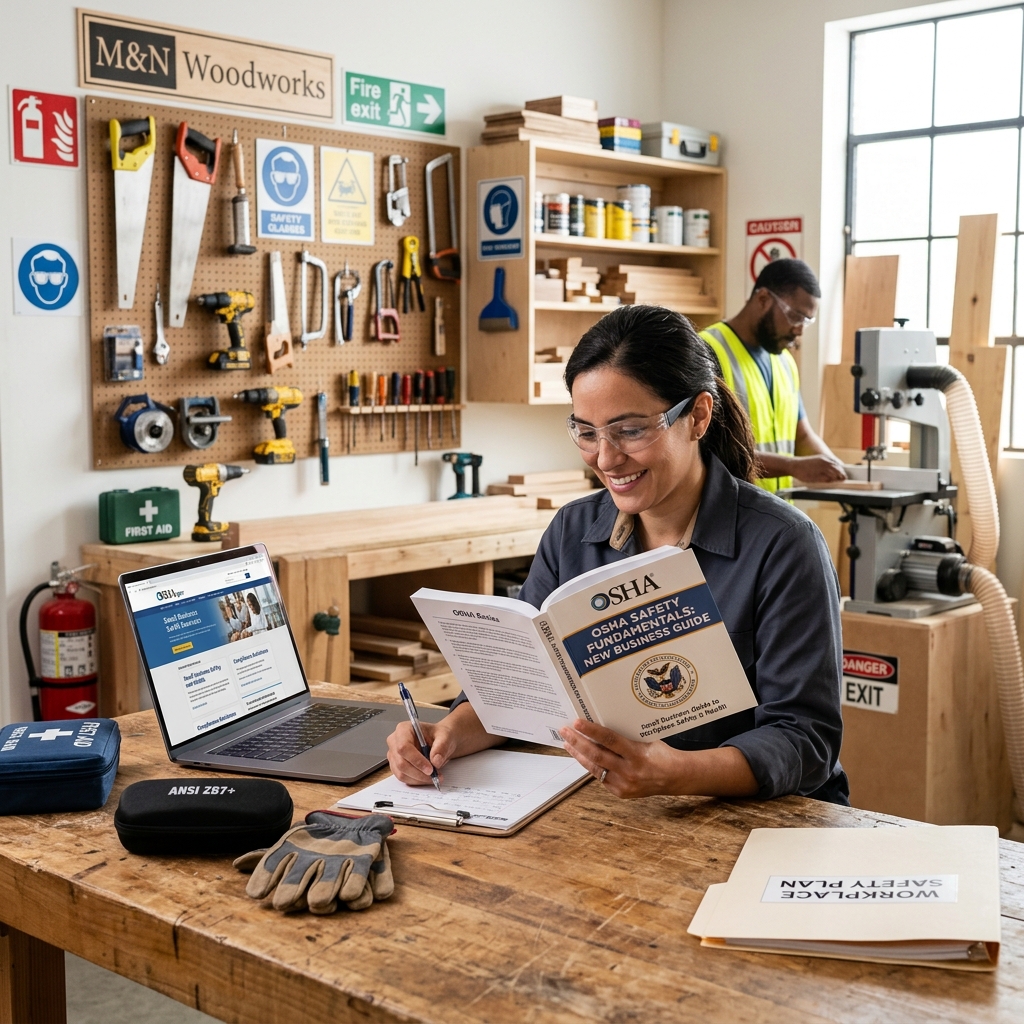
Launching a small business means suddenly becoming responsible not only for sales and payroll, but also for your employees’ safety. In the United States, the Occupational Safety and Health Administration (OSHA) sets federal workplace safety and health rules that apply to most employers, including small and start‑up companies.
This guide explains in clear, practical terms how OSHA affects new small businesses, what minimum steps are required to comply, where limited exemptions exist, and how to use free tools and support to build a safer workplace without overwhelming your budget.
Understanding OSHA Coverage for Small Businesses
Many new owners assume OSHA applies only to large companies or heavy industry. In reality, OSHA’s core law—the Occupational Safety and Health Act—covers most private employers, regardless of size.
Who Is Covered and Who Is Not
As a starting point, assume your business is covered by OSHA unless it falls into a narrow exception recognized in federal law.
- Typically covered: Most private sector businesses, including retail shops, offices, restaurants, manufacturers, warehouses, and service providers.
- Common exceptions:
- Self‑employed individuals who have no employees.
- Farms that employ only immediate family members and no outside workers.
- Household employers hiring domestic workers such as nannies or house cleaners in a private home.
Beyond federal OSHA, more than 20 states and territories operate their own OSHA‑approved occupational safety and health programs, known as State Plans.
| Aspect | Federal OSHA | State Plan OSHA Programs |
|---|---|---|
| Coverage | Most private employers across the U.S. | Covers private employers in that state; may also cover state and local government workers. |
| Standards | Minimum national requirements for safety and health. | Must be at least as effective as federal standards; some states adopt more protective rules. |
| Enforcement | Conducts inspections, issues citations and penalties. | State agencies enforce within their jurisdiction; federal OSHA retains some oversight. |
| Small Business Resources | Online guidance, handbooks, and free consultation programs. | State‑specific assistance, training, and consultation services. |
Whether your business falls under federal OSHA or a State Plan, the core expectation is the same: you must provide a workplace free from serious recognized hazards.
Key OSHA Duties for Every New Employer
OSHA compliance can be broken into a few essential obligations that apply broadly to covered employers, including small businesses.
Provide a Safe and Healthful Workplace
The foundational requirement is to maintain conditions that do not pose a significant risk of death or serious physical harm. This is often called the general duty to provide a safe workplace.
- Identify foreseeable hazards such as slippery floors, unguarded machinery, fire risks, or exposure to hazardous chemicals.
- Implement reasonable controls—guards, ventilation, housekeeping, or protective equipment—to reduce those hazards.
- Regularly check that controls remain effective as the business grows or changes.
Comply with OSHA Safety and Health Standards
In addition to the general duty, OSHA issues detailed standards for specific risks such as energy control, machine guarding, hazard communication, and personal protective equipment.
New employers should:
- Determine which OSHA standards apply based on industry and job tasks.
- Review those standards and integrate their requirements into operations and written procedures.
- Regularly monitor for updates to keep policies current.
Train Employees on Workplace Hazards
OSHA emphasizes training as a core element of an effective safety program. Workers must understand the risks they face, how to protect themselves, and what to do in an emergency.
- Offer onboarding safety training for new hires covering general workplace rules and job‑specific hazards.
- Provide refresher training when procedures change or after incidents.
- Keep records of training sessions, topics covered, and attendance.
Post Required OSHA Notices
Employers generally must display an official OSHA poster or notice informing employees of their rights to a safe workplace and how to contact OSHA.
- Place the poster where employees can easily see it, such as in a break room or near time clocks.
- Ensure other hazard warnings and safety signs are clear, consistent, and visible.
Maintain Good Records and Report Serious Incidents
Recordkeeping supports OSHA’s ability to track workplace risks and helps employers spot patterns in injuries and near misses.
- Log workplace injuries and illnesses when required by OSHA rules.
- Report severe incidents—such as fatalities or certain serious injuries—to OSHA within specific timeframes.
- Retain records for the required period and make them available to inspectors or employees when requested.
Limited Exemptions for Very Small or Low-Risk Businesses
OSHA does provide partial relief from some requirements for very small employers or businesses classified as low‑hazard. These exemptions focus mainly on recordkeeping and routine inspections rather than basic safety duties.
Businesses with Ten or Fewer Employees
If your company has ten or fewer employees during the previous calendar year, you may be partly exempt from maintaining certain OSHA injury and illness records unless specifically told otherwise in writing.
- Routine injury and illness logs (such as OSHA Form 300) may not be required.
- OSHA typically does not schedule routine programmed inspections for low‑hazard workplaces with ten or fewer employees, though inspections can still occur if there is a complaint, serious incident, or imminent danger.
Importantly, small size does not waive the duty to provide a safe workplace, train employees, or report severe incidents. Those obligations remain.
Low-Hazard Industries and Recordkeeping
Some industries classified as low‑risk under national industry codes may be partially exempt from routine OSHA recordkeeping, even with more than ten employees.
- Certain low‑hazard sectors are not required to keep OSHA injury and illness forms unless requested by OSHA or other authorities.
- Exemptions focus on paperwork; you still must report serious incidents and follow applicable safety standards.
Incident Reporting and Timelines
When serious harm occurs, OSHA must be notified quickly. Knowing these rules in advance prevents costly mistakes during a crisis.
What Must Be Reported
Most employers covered by the OSH Act must report specific severe incidents to OSHA, even if they are otherwise exempt from routine recordkeeping.
- Workplace fatality — generally must be reported within hours.
- In‑patient hospitalization of one or more employees for a work‑related incident.
- Amputation or loss of an eye resulting from workplace events.
These reports are separate from internal logs and may be made by phone or through online OSHA reporting systems.
Building a Simple Safety and Health Program
To help small businesses move beyond minimal compliance, OSHA promotes recommended practices built around several core elements. These can be adapted to fit a start‑up’s size and resources while significantly improving safety.
Core Elements of an Effective Program
- Management leadership: Owners or managers visibly support safety, set expectations, and allocate time and resources.
- Worker participation: Employees help identify hazards and suggest improvements, and their concerns are taken seriously.
- Hazard identification and assessment: Systematically look for physical, chemical, ergonomic, and other risks.
- Hazard prevention and control: Implement practical measures—engineering controls, administrative changes, and protective equipment—to reduce risks.
- Education and training: Ensure workers know about hazards and how to work safely.
- Program evaluation and improvement: Review incidents and near misses, then update policies and controls.
Basic Steps for New Small Businesses
New employers can start with a straightforward action plan:
- Conduct a walk‑through of the workplace to note obvious hazards and prioritize fixes.
- Create short written rules for critical activities such as equipment operation, chemical handling, and emergency response.
- Designate a person to coordinate safety tasks, even if it’s the owner wearing multiple hats.
- Hold brief safety talks to keep awareness high and discuss recent incidents or concerns.
Emergency Preparedness for Small Workplaces
Emergencies—fires, medical events, chemical spills, and severe weather—can occur even in small offices or shops. Having a clear plan can save lives.
Emergency Action Planning
Businesses with more than ten employees generally must have a written emergency action plan, but even very small employers benefit from a simple documented procedure.
- Define how employees will report emergencies and who takes charge.
- Identify evacuation routes and assembly points outside the building.
- Include procedures for critical operations that must be shut down safely.
Fire Safety and Evacuation
OSHA expects employers to protect workers from fire hazards through planning and basic safeguards.
- Maintain clearly marked, unobstructed exits that employees can reach quickly.
- Install and regularly inspect portable fire extinguishers and, where applicable, sprinkler systems.
- Conduct periodic fire drills so employees can practice evacuating.
First Aid and Medical Response
Workers should have access to basic medical help when injuries occur. Guidance for small businesses recommends ensuring:
- At least one person on site is qualified to provide basic first aid.
- First‑aid kits are stocked and available wherever injuries are reasonably possible.
- Emergency contact methods can quickly convey location information to responders (for example, through certain phone systems when dialing emergency numbers).
Hazard Communication and Protective Equipment
When employees may be exposed to hazardous substances or physical dangers, OSHA requires clear communication and appropriate protective gear.
Informing Workers About Chemical Hazards
Under hazard communication rules, employers must ensure workers know the risks of the chemicals they use or encounter.
- Label all hazardous materials according to recognized standards and keep safety data sheets accessible to employees.
- Train workers on reading labels and safety data sheets and on safe handling procedures.
Providing and Managing Personal Protective Equipment (PPE)
Employers must supply protective equipment when engineering or administrative controls alone cannot fully address certain hazards.
- Determine which tasks require PPE, such as gloves, eye protection, hearing protection, or respirators.
- Provide appropriate equipment and ensure it is available wherever employees face a reasonable risk of harm.
- Train workers on proper use, care, and limitations of PPE, and regularly inspect equipment to ensure it remains safe.
OSHA Inspections, Penalties, and Recent Small Business Policy Changes
OSHA enforces standards through inspections, which may be triggered by complaints, incidents, or targeted programs. When violations are found, penalties can follow. Recent updates to penalty guidelines aim to make it easier for small businesses to invest in correcting hazards.
Inspection Triggers for Small Employers
Even if your business is exempt from routine programmed inspections because of size or industry, OSHA can still inspect if certain conditions arise.
- Employee complaints about unsafe conditions.
- Reports of serious injuries, fatalities, or imminent danger.
- Follow‑up on previous citations to verify abatement.
Penalty Relief for Small Businesses
Updated guidelines under OSHA’s enforcement manual increase penalty reductions for smaller employers who address hazards promptly.
- Certain small employers may qualify for larger percentage reductions in penalties based on size.
- Additional reductions may be available for employers who quickly correct hazards after they are identified.
- Businesses with no history of serious, willful, repeat, or failure‑to‑abate violations may be eligible for further reductions.
Although penalties can be reduced, avoiding violations in the first place through proactive safety measures is far less costly.
Free OSHA Resources for New Small Businesses
OSHA offers multiple resources designed specifically to help small employers understand and meet their responsibilities without hiring full‑time safety experts.
- Small Business Safety and Health Handbook: A downloadable guide that outlines recommended practices, core program elements, and practical examples tailored to small workplaces.
- Small Business web portal: Online hub with compliance assistance, standards summaries, and links to training materials.
- On-site consultation programs: Confidential, no‑cost assistance provided by state agencies that can help identify hazards and improve safety programs without issuing citations.
Using these resources early in your business lifecycle can prevent injuries, avoid enforcement problems, and build a culture where workers feel valued and protected.
Practical Checklist for New Owners
The following bullet checklist distills key actions for new small business owners who want to get started on OSHA compliance:
- Confirm whether your business falls under federal OSHA or a State Plan program.
- Identify applicable OSHA standards based on your industry and work activities.
- Perform a basic hazard assessment of your workplace and prioritize fixes.
- Develop simple written procedures for safety‑critical tasks and emergencies.
- Post required OSHA notices and clear hazard signs.
- Provide initial and ongoing safety training tailored to your employees’ duties.
- Review whether you must maintain OSHA injury and illness records, and set up a compliant system if required.
- Learn incident reporting rules so you can notify OSHA promptly if serious harm occurs.
- Use free OSHA handbooks, consultation services, and online materials to strengthen your program.
Frequently Asked Questions About OSHA and New Small Businesses
Do very small businesses have to follow OSHA rules?
Yes. Businesses with ten or fewer employees are generally still covered by OSHA and must provide a safe workplace, train employees, and follow applicable standards, even though they may be exempt from some recordkeeping and routine inspections.
What if my business is home‑based or entirely remote?
If you employ workers, OSHA may still apply to work locations under your control. For fully remote workers using their own homes, OSHA’s role can be more limited, but you should still consider ergonomic and safety guidance for remote work. Always consult official OSHA resources or legal counsel for details.
How do I know which OSHA standards apply to my company?
Start by reviewing OSHA’s small business resources and standards lists, focusing on general industry or construction rules depending on your operations. You can also request help through free consultation programs that identify relevant standards for your particular workplace.
Do I need a formal written safety program?
Not every OSHA standard explicitly requires a comprehensive written program, but having a simple written safety and health plan greatly improves consistency, training, and compliance. OSHA’s recommended practices and small business handbook can guide you in drafting a program that fits your size and risk level.
Where can I get free help if I cannot afford a safety consultant?
OSHA and many states provide free consultation services and online tools for small employers. These programs help you identify hazards and strengthen safety practices without issuing citations, making them ideal for new businesses with limited resources.
References
- Small Business Safety and Health Handbook — Occupational Safety and Health Administration. 2021-12-01. https://www.osha.gov/sites/default/files/publications/SMALL-BUSINESS.pdf
- Small Business — Occupational Safety and Health Administration. 2024-03-15. https://www.osha.gov/smallbusiness
- What Are OSHA Requirements for Small Business Owners? — OSHA.com. 2023-08-10. https://www.osha.com/blog/small-business-safety
- OSHA Compliance for Small Businesses — Tesseon. 2024-02-20. https://tesseon.com/blog/osha-compliance-for-small-businesses/
- OSHA Standards: 5 Things Every Small Business Needs to Comply — Duquesne University Small Business Development Center. 2022-05-18. https://www.sbdc.duq.edu/Blog-Item-OSHA-Standards-5-Things-Every-Small-Business-Needs-to-Comply
- Are Small Businesses Exempt from OSHA? Key Facts Explained — Weekly Safety. 2023-07-01. https://weeklysafety.com/blog/workplace-safety-small-business-osha-exemptions
- US Department of Labor updates penalty guidelines to support small businesses — Occupational Safety and Health Administration. 2025-07-14. https://www.osha.gov/news/newsreleases/osha-national-news-release/20250714
Similar Articles








Read full bio of Sneha Tete




