Oregon’s Measure 110, approved by voters in November 2020, marked a major shift in how the state responds to drug use. Instead of treating personal possession of small amounts of illegal drugs primarily as a crime, the measure emphasized civil penalties and expanded access to addiction treatment and recovery services. This article explains where Measure 110 came from, how it changed the law, how it funded treatment, and how later legislation modified those changes.
Background: Why Measure 110 Was Introduced
Measure 110, formally known as the Drug Addiction Treatment and Recovery Act, was proposed amid growing concern that criminalizing drug possession was not effectively reducing substance use or overdose rates, and that criminal penalties were disproportionately affecting communities of color. The initiative sought to adopt a more health‑centered approach to drug use and to redirect resources toward treatment and harm reduction.
Before Measure 110, possession of many controlled substances in Oregon was classified as a misdemeanor or felony, depending on the drug, amount, and prior convictions. People could face jail time, probation, and long‑term criminal records that affected employment, housing, and education opportunities.
Key Goals of Measure 110
- Reduce criminal penalties for personal, non‑commercial possession of controlled substances.
- Expand treatment access by creating and funding a statewide network of addiction treatment and recovery services.
- Shift funding from criminal enforcement toward health services, especially using cannabis tax revenue.
- Address racial disparities in drug enforcement by reducing arrests and convictions for low‑level possession.
Major Legal Changes Under Measure 110
Measure 110 focused on personal, non‑commercial possession of controlled substances—situations where a person possesses drugs for their own use, not manufacture or sale. It did not change penalties for drug manufacturing, distribution, or trafficking, which remain criminal offenses.
From Crimes to Class E Violations
The measure reclassified small‑quantity possession of many controlled substances (including Schedule I–IV drugs such as heroin, cocaine, methamphetamine, LSD, and some prescription opioids) as a new type of non‑criminal offense called a Class E violation. Under this framework:
- A Class E violation carried a maximum $100 fine.
- Instead of paying the fine, a person could choose to complete a health assessment at an approved treatment or recovery center; successful completion could lead to dismissal of the violation.
- No jail, probation, or criminal record was imposed for qualifying possession offenses.
For larger quantities that still indicated personal use, Measure 110 reduced penalties from felonies to Class A misdemeanors in some cases. A Class A misdemeanor can carry up to 364 days of jail and substantial fines, but it is less serious than a felony and may have less severe long‑term consequences.
How Sentencing and Court Procedure Changed
Oregon’s legislature and courts later implemented changes to ensure the new violation system functioned as intended. Senate Bill 755 (SB 755), enacted in 2021, clarified how Class E violations would be processed:
- Individuals cited for a Class E violation could obtain a treatment needs screening or treatment contact within a set timeframe (generally 45 days) and provide proof to the court, which could then dismiss the charge.
- Law enforcement had to provide information on how to access screening or treatment when issuing the citation.
- A minimum fine of $45 was established, although completion of a health assessment could still avoid the financial penalty.
- Class E violations had to be filed in circuit court, and people could not be penalized simply for failing to appear in court for these violations.
Measure 110 and the Addiction Treatment System
One of the most significant components of Measure 110 was its robust investment in treatment and recovery services. The measure directed the Oregon Health Authority (OHA) to develop and fund a statewide network designed to make support easier to access, especially for people harmed by criminalization or lacking health insurance.
Cannabis Tax Revenue and the Treatment Fund
Measure 110 created an addiction treatment and recovery fund financed largely through cannabis tax revenue. It required that marijuana tax revenue above a specified threshold be dedicated to this fund, along with legislative appropriations and savings from reduced arrests and incarceration.
Key features of this funding model included:
- A minimum deposit of tens of millions of dollars in the first year, with scheduled increases over time.
- Limitations on administrative costs, with most of the money reserved for grants to local service providers.
- Periodic financial and performance audits by the Secretary of State to monitor how funds were used and whether they were effective.
From Addiction Recovery Centers to Behavioral Health Resource Networks
Initially, Measure 110 required the establishment of Addiction Recovery Centers across Oregon, each located within existing coordinated care organization service areas. These centers were meant to provide 24‑hour access to assessment, triage, and connections to care, free of charge.
In 2021, SB 755 refined this system by developing what became the Behavioral Health Resource Network (BHRN) Program. Under the BHRN model:
- OHA administers grants to tribes, community organizations, and providers in every county.
- Each county has at least one BHRN made up of one or more entities collaborating to offer comprehensive, community‑based services.
- Services must be trauma‑informed, culturally specific, and linguistically responsive, aiming to meet the needs of diverse communities.
BHRNs deliver services in several core areas:
- Screenings for substance use and related health needs
- Behavioral health assessments
- Peer counseling and recovery support
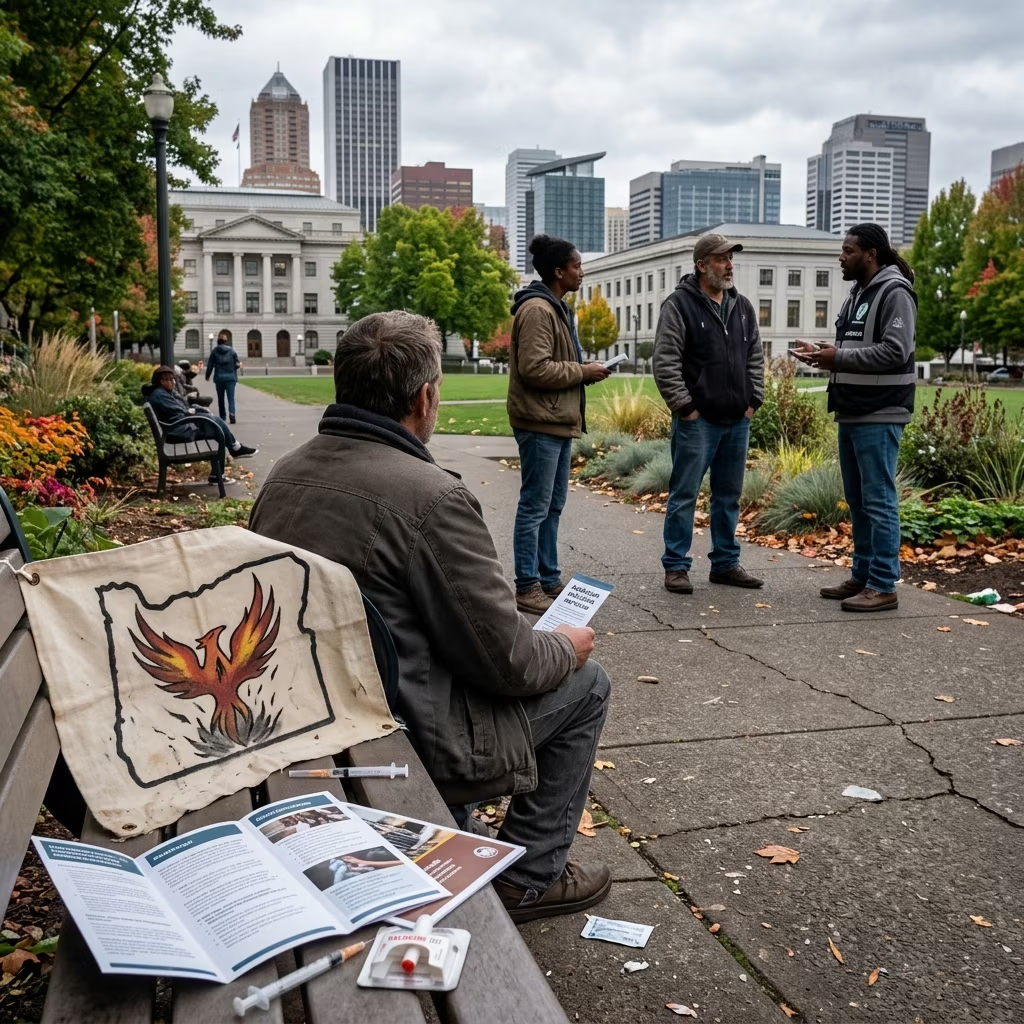
- Harm reduction (such as naloxone distribution and safer‑use supplies)
- Low‑barrier substance use treatment
- Transitional and supportive housing
Timeline: From Passage to Revision
| Year | Key Event | Impact on Law and Services |
|---|---|---|
| 2020 | Voters approve Measure 110 | Oregon adopts a health‑focused approach to personal drug possession and creates a dedicated treatment fund. |
| Feb 2021 | Decriminalization takes effect | Most personal possession offenses become Class E violations with a $100 fine or health assessment option. |
| July 2021 | SB 755 enacted | Clarifies violation procedures and establishes Behavioral Health Resource Networks (BHRNs). |
| 2024 | HB 4002 passed | Recriminalizes possession of controlled substances while maintaining expanded treatment funding. |
| 2025 | SB 610 enacted | Adjusts oversight structure for the BHRN program, shifting certain decision‑making roles. |
The 2024 Revisions: Recriminalization of Possession
In 2024, Oregon’s legislature enacted House Bill 4002, which significantly changed the legal landscape that Measure 110 had created. Responding to concerns about public safety, visible street drug use, and overdose trends, HB 4002 largely reversed the decriminalization of possession.
What Changed Under HB 4002
Starting September 1, 2024, possession of small amounts of certain drugs was again treated as a criminal misdemeanor rather than a Class E civil violation. According to publicly available summaries:
- Possession of specified “hard” drugs can carry up to six months in jail.
- Courts may waive jail time if an individual enters and complies with mandatory treatment programs.
- The shift reintroduces criminal records for many possession cases, which may impact employment and housing.
However, HB 4002 did not dismantle the treatment infrastructure created by Measure 110. State materials indicate that the BHRN program and cannabis tax funding for treatment continue, although the enforcement environment is more punitive than under full decriminalization.
Implications for Individuals Facing Drug Possession Issues
For people who use drugs, Measure 110 and its revisions have changed both the legal risks and the treatment options available. Understanding these implications can help individuals and their attorneys navigate the system more effectively.
Legal Exposure
- During full decriminalization (2021–2024): Most small‑quantity possession resulted in a ticket-like civil violation, not a criminal charge, with an option to avoid fines through assessment.
- After HB 4002 (from September 2024 onward): Possession of many controlled substances can again lead to criminal charges, possible jail, and a criminal record, although courts may steer some individuals to treatment as an alternative.
Access to Treatment and Support
Even though possession has been recriminalized, the statewide treatment and recovery network remains a central part of Oregon’s strategy. Individuals can seek support through BHRNs without necessarily waiting for a citation or criminal case.
Examples of available supports include:
- Free or low‑cost screenings and assessments
- Peer support from people with lived experience of substance use and recovery
- Harm reduction services aimed at reducing overdose and infection risk
- Connections to detox, outpatient, and residential treatment programs
- Assistance with housing, which is often critical to sustained recovery
Measure 110 in Context: Policy Debates and Lessons
Measure 110 made Oregon the first U.S. state to broadly decriminalize personal possession of drugs. It immediately became a focal point in national debates about how best to address substance use and overdose crises.
Supporters argued that criminalization had failed to reduce drug use and had caused significant collateral damage, while health‑oriented policies would reduce stigma and encourage people to seek help. Critics raised concerns about implementation challenges, local capacity for treatment, and visible public drug use in some communities.[10] The subsequent recriminalization under HB 4002 reflects ongoing tensions between public health approaches and traditional criminal justice responses.
Key Takeaways for Policy and Practice
- Decriminalization without robust, accessible treatment infrastructure may face political backlash; building capacity takes time and sustained funding.
- Redirecting cannabis tax revenue is one way to fund treatment, but it can reduce funds previously earmarked for other public uses.
- Legal changes must be accompanied by clear guidance for courts, law enforcement, and communities to avoid confusion and uneven application.[10]
Frequently Asked Questions About Oregon’s Measure 110
Is personal possession of drugs still decriminalized in Oregon?
Not in the same way it was immediately after Measure 110 passed. Between February 2021 and September 2024, most personal possession of small amounts of controlled substances was treated as a Class E civil violation. After HB 4002, those offenses are largely recriminalized as misdemeanors, although treatment alternatives remain available.
Did Measure 110 change penalties for selling or manufacturing drugs?
No. Measure 110 primarily changed penalties for personal, non‑commercial possession of controlled substances. Manufacturing, distributing, or trafficking drugs remains criminal and can involve serious penalties.
How did Measure 110 increase access to treatment?
The measure dedicated cannabis tax revenue and other funds to pay for treatment, recovery, and harm reduction services across the state. It required the creation of Addiction Recovery Centers and, later under SB 755, Behavioral Health Resource Networks that provide screenings, assessments, peer support, treatment, and housing.
What is a Class E violation?
A Class E violation is a non‑criminal offense created by Measure 110 for certain personal possession cases. It carries a maximum $100 fine, which may be waived if the individual completes a health assessment or treatment screening. Class E violations do not involve jail or typical criminal penalties.
Where can people in Oregon get help for substance use?
Oregon residents can seek support through local Behavioral Health Resource Networks funded by OHA. These networks connect individuals to screening, counseling, harm reduction, treatment, and housing services. The state also supports helplines such as the Alcohol and Substance Helpline and the 988 crisis line for immediate assistance.
Practical Tips for Navigating Measure 110‑Related Issues
- If you receive a citation for drug possession, ask about options to connect with treatment or screening programs that may reduce or alter legal consequences.
- Consult a criminal defense attorney familiar with Oregon’s evolving drug laws, especially given the transition from decriminalization back to criminal penalties.
- Explore local BHRN services even if you are not facing charges; these programs are designed to be accessible and low‑barrier.
- Stay informed about ongoing legislative changes, as Oregon’s approach to drug policy continues to evolve in response to public health and safety concerns.[10]
References
- Oregon Measure 110, Drug Decriminalization and Addiction Treatment Initiative (2020) — Ballotpedia. 2020-11-03. https://ballotpedia.org/Oregon_Measure_110,_Drug_Decriminalization_and_Addiction_Treatment_Initiative_(2020)
- Measure 110 – Oregon Judicial Department Statistics and Implementation Summary — Oregon Judicial Department. 2024-03-01. https://www.courts.oregon.gov/about/Documents/BM110Statistics.pdf
- Measure 110 (2020) Background Brief — Oregon Legislative Policy and Research Office. 2021-09-01. https://www.oregonlegislature.gov/lpro/Publications/Background-Brief-Measure-110-2020.pdf
- Behavioral Health Resource Network (BHRN) Program — Oregon Health Authority. 2025-03-15. https://www.oregon.gov/oha/hsd/amh/pages/measure110.aspx
- 2020 Oregon Ballot Measure 110 — Summary of legislation and subsequent amendments. 2024-04-10. https://en.wikipedia.org/wiki/2020_Oregon_Ballot_Measure_110
- Decriminalizing Drug Use in Oregon: Lessons Learned from Early Implementation of Measure 110 — DrugDecrimOregon (research collaboration). 2023-06-01. https://www.drugdecrimoregon.org/
- After rolling back Ballot Measure 110, Oregon’s drug recriminalization plans come into focus — Oregon Public Broadcasting. 2024-08-29. https://www.opb.org/article/2024/08/29/measure-110-drug-law-deflection-posession-crime-law-oregon-recriminalization-decriminalization/