
Oregon Rules for Rescuing Pets in Hot Cars
Understand when Oregon law lets you intervene to protect a pet trapped in a vehicle.
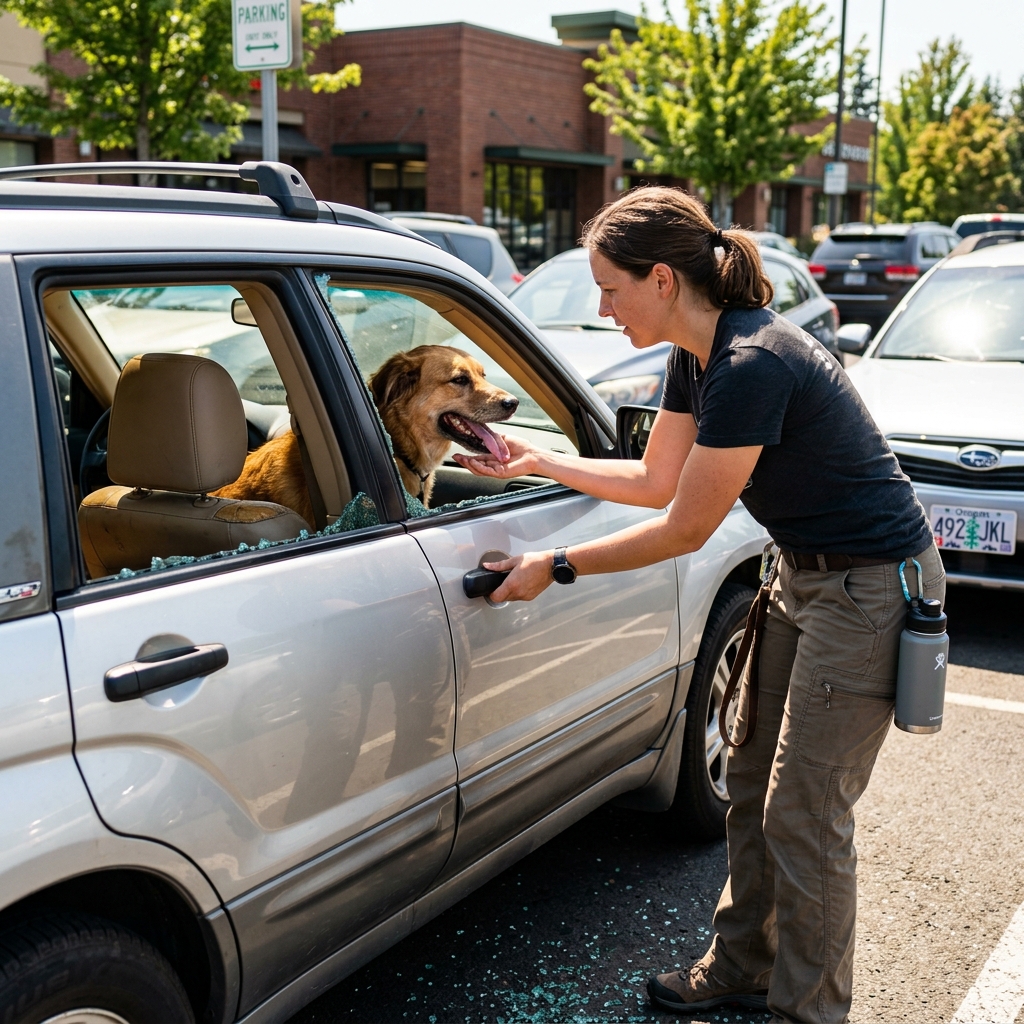
When Oregon Law Lets You Act
Seeing a pet trapped in a parked car can create a difficult split-second decision. Oregon law now gives private citizens a narrow path to intervene when an animal is in immediate danger, but it does not create a free pass to break into any vehicle whenever an animal is unattended. The legal protection applies only when specific conditions are satisfied, and those conditions are designed to limit unnecessary damage while still allowing lifesaving action.
The core idea is simple: if an animal appears to face imminent harm and no reasonable alternative exists, a person may enter the vehicle to remove the animal without criminal or civil liability, so long as the statutory requirements are followed.
What the Law Is Trying to Prevent
Hot cars can become dangerous quickly, even when the weather does not feel extreme. A parked vehicle can trap heat and create a life-threatening environment for a pet much faster than many people expect. That is why Oregon’s law focuses on preventing imminent harm rather than waiting for a crisis to become obvious or irreversible.
The law is also built around the idea of responsible intervention. It is not intended to encourage impulsive window smashing or confrontation. Instead, it creates a structured emergency response that starts with a good-faith belief of danger, includes notification to authorities, and ends with staying near the animal until help arrives.
The Conditions You Must Meet Before Entering a Vehicle
To qualify for legal protection, a person must satisfy several requirements at the time of the rescue attempt. Oregon’s statute and related public guidance describe the same essential checklist.
- The vehicle must be locked, or there must be no reasonable way for the animal to get out without help.
- You must reasonably believe the animal is in imminent danger of suffering harm.
- You must notify law enforcement or emergency services before entering the vehicle, or as soon as reasonably possible afterward.
- You may use only the minimum force necessary to get inside and remove the animal.
- You must remain with the animal in a safe place near the vehicle until law enforcement, emergency responders, or the owner arrives.
These conditions matter because the legal shield depends on compliance. If a person skips the call to authorities, uses excessive force, or leaves the scene immediately after removal, the protection may not apply.
How to Judge Whether the Animal Is in Immediate Danger
Oregon’s law uses the phrase “reasonable belief,” which means the person acting must have an objective basis for thinking the animal faces imminent harm. In practice, that could include signs of heavy panting, distress, visible weakness, collapse, lack of water, or a vehicle parked in conditions that make the interior unsafe.
Importantly, the law does not require waiting until a pet loses consciousness. A reasonable, good-faith judgment that delay could lead to serious injury is enough to justify action if the other legal conditions are met.
Why Calling Authorities Comes First
One of the most important requirements is notifying police, animal control, or emergency services. Oregon’s rule expects a rescuer to involve authorities either before entering the car or as soon as reasonably possible after entry.
This step serves several purposes. First, it creates a record that the intervention was made in an emergency. Second, it gives responders a chance to reach the scene quickly. Third, it helps prevent misunderstandings if the vehicle owner returns while the rescue is underway.
If nearby businesses are present, some public-safety guidance suggests asking staff to make announcements describing the vehicle and its location while emergency help is on the way. That can be useful when the owner may be inside a store, restaurant, or other nearby location.
What “Minimum Force” Means in Practice
Oregon law allows entry “by force or otherwise,” but only to the extent necessary to reach the animal and stop the emergency. This means the safest legal approach is the least destructive one that still allows a timely rescue.
Examples of minimum-force conduct may include opening an unlocked door, using an accessible method of entry, or breaking a window only when there is no realistic alternative. The legal standard is not about the least dramatic action; it is about the smallest amount of force reasonably needed under the circumstances.
Because the law is tied to reasonableness, a person who damages property in a manner that goes beyond what the emergency required may lose the benefit of statutory protection.
What Happens After the Pet Is Removed
Rescue does not end the moment the animal is out of the vehicle. Oregon’s law requires the rescuer to stay with the animal in a safe location until law enforcement, emergency responders, or the owner arrives. That rule helps ensure the pet receives help, avoids becoming lost or frightened, and remains available to authorities if needed.
If the animal appears sick or overheated, getting veterinary care quickly is important. Public health and animal welfare resources emphasize that heat stress can continue to cause harm even after the immediate danger passes.
How This Law Balances Rescue and Property Damage
Breaking a car window is a serious act, and Oregon law does not erase the fact that a vehicle has been damaged. What the statute does is provide immunity from criminal or civil liability when a rescuer follows the required steps and acts in good faith.
That balance reflects two competing interests. On one side is the property owner’s interest in keeping their vehicle intact. On the other is the urgent need to protect an animal from heat-related injury or death. The statute resolves that conflict by permitting intervention only when the need is immediate and the rescuer behaves responsibly.
Examples of Responsible Steps Before You Intervene
Not every situation requires breaking a window immediately. When time allows, a person can take several sensible steps before resorting to force.
- Look for the driver in nearby stores or public spaces.
- Ask a business employee to make an announcement over the loudspeaker if one is available.
- Write down the car’s make, model, color, and license plate number.
- Call 911 if the animal appears to be in serious distress.
- Contact animal control if the situation is urgent but not yet at the level of a life-threatening emergency.
These actions can sometimes solve the problem without property damage. They also show that the rescuer acted thoughtfully and in good faith if the situation later becomes a legal issue.
What the Law Does Not Protect
The statute is not a general permission slip to enter cars out of curiosity or convenience. It does not protect someone who guesses that an animal may be uncomfortable but has no reasonable basis for believing harm is imminent.
It also does not protect a person who uses excessive force, fails to notify authorities, or leaves the scene after the animal is removed. Those omissions can undermine the statutory defense and create exposure to criminal or civil claims.
Helpful Comparison: Legal Rescue vs. Unsafe Action
| Situation | Likely Legal Result | Why It Matters |
|---|---|---|
| You call 911, confirm danger, and use only necessary force | Likely protected | Matches the statute’s required steps |
| You break in without contacting authorities and leave immediately | Not likely protected | Fails the notification and stay-with-the-animal requirements |
| You see a pet that seems warm but not distressed | Unclear and risky | May not satisfy the imminent danger standard |
| You remove the animal and remain nearby until responders arrive | Likely protected if other conditions are met | Complies with the post-entry duty to stay |
What Vehicle Owners Should Know
For pet owners, the safest rule is straightforward: do not leave an animal unattended in a vehicle under conditions that could create a danger. Public guidance from Oregon agencies and animal welfare organizations consistently warns that even short periods in parked cars can become dangerous.
Owners should also understand that if a rescuer follows Oregon’s legal requirements, the owner may have little practical recourse for the resulting damage. The law is designed to prioritize the animal’s safety over minor property loss when an emergency is genuine and the rescuer acts correctly.
Frequently Asked Questions
Can anyone rescue a pet from a hot car in Oregon?
Yes, Oregon’s Good Samaritan-style law applies to members of the public, not just law enforcement, as long as the statutory requirements are satisfied.
Do I have to call police before breaking the window?
The law requires notifying law enforcement or emergency services before entry or as soon as reasonably possible afterward, and public guidance recommends calling first whenever time permits.
Can I be sued for damaging the car?
If you comply with the law’s conditions and act in good faith, the statute says you are not subject to criminal or civil liability for the entry.
What if the pet owner appears while I am trying to help?
Remain calm, explain the situation briefly, and follow the requirement to stay with the animal until authorities, emergency responders, or the owner takes over.
Does the law apply only to dogs?
No. Oregon’s law protects domestic animals, and state and local guidance discuss animals more broadly than only dogs.
When in Doubt, Act Carefully and Document the Scene
Because these incidents often unfold quickly, documentation can matter. Writing down the vehicle description, license plate, time, location, and steps you took can help show that your actions were limited to an emergency response.
The best approach is to think in terms of necessity, not impulse. Call for help, assess danger, use the smallest effective method to remove the animal, and stay on scene. Those are the features Oregon law expects from someone who chooses to intervene.
References
- When Can You Save a Pet Locked in a Car? — Super Lawyers. 2026-07-10. https://www.superlawyers.com/resources/criminal-defense/oregon/when-can-you-save-a-pet-locked-in-a-car/
- Oregon Becomes 11th State to Pass “Good Samaritan Law” to Protect Dogs Left in Hot Cars — Animal Legal Defense Fund. 2017-07-05. https://aldf.org/article/oregon-becomes-11th-state-pass-good-samaritan-law-protect-dogs-left-hot-cars/
- Table of State Laws that Protect Animals Left in Parked Vehicles — Animal Legal & Historical Center. 2026-07-10. https://www.animallaw.info/topic/table-state-laws-protect-animals-left-parked-vehicles
- What to do if you see a child or dog locked in a hot car — KOIN. 2022-07-19. https://www.koin.com/weather/heat-wave-july-2022/what-to-do-if-you-see-a-child-or-dog-locked-in-a-hot-car/
- DA’s Office reminds public about dangers of leaving a child, animal in a hot car — Multnomah County District Attorney’s Office. 2023-07-03. https://www.mcda.us/index.php/news/2399
- Hot Weather Safety for Pets – Resources — Oregon Humane Society. 2026-07-10. https://www.oregonhumane.org/hot-weather-safety-for-pets-resources/
Similar Articles








Read full bio of medha deb




