
Adoption In Oregon: 7 Practical Steps For Prospective Parents
A practical guide to who can adopt, consent rules, home studies, and Oregon’s adoption process.
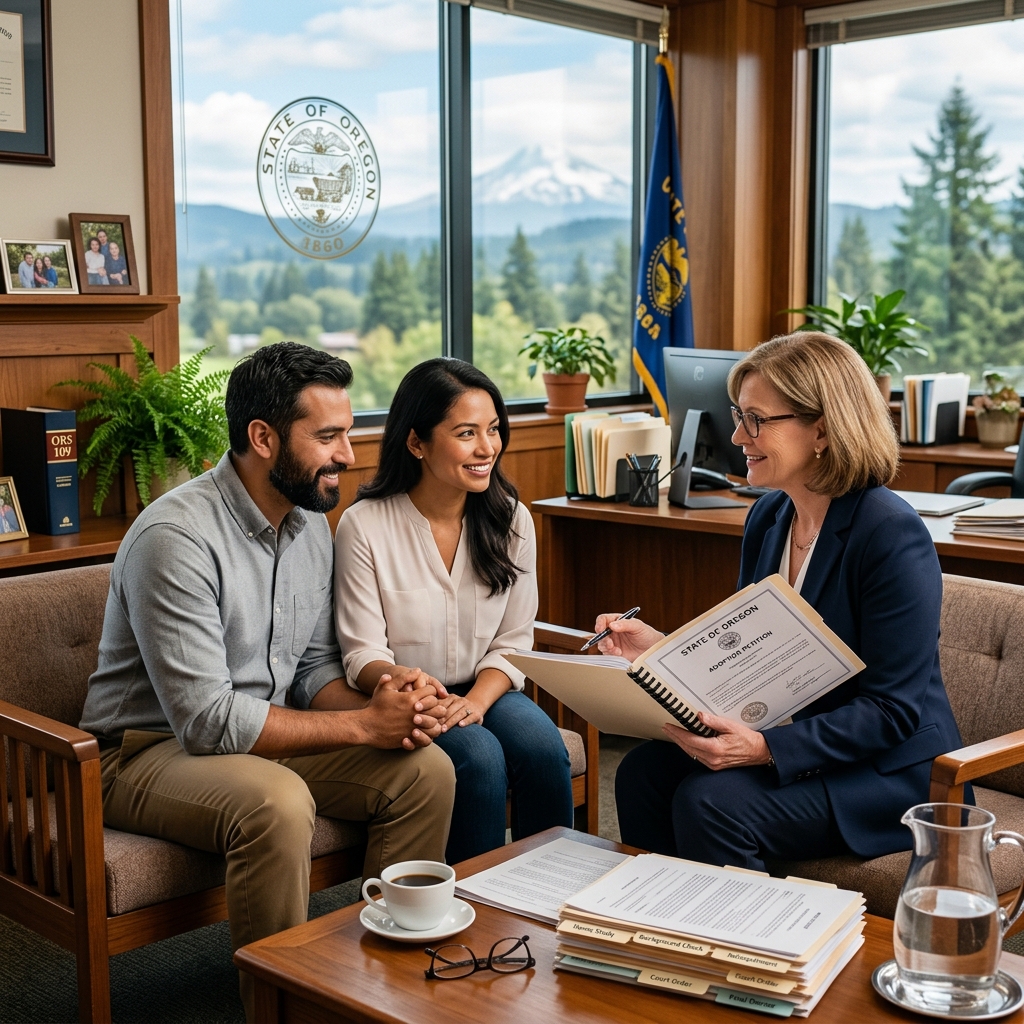
Adoption in Oregon creates a permanent legal parent-child relationship, and the process is shaped by state statutes, agency rules, and court review. Whether a family is pursuing a foster care adoption, a private placement, or an independent adoption, the same core legal questions usually arise: who may adopt, whose consent is required, what screening is necessary, and when a court can finalize the case.
This guide breaks down the main rules in plain language. It focuses on the practical steps families often face, while also explaining the legal standards that protect children, birth parents, and prospective adoptive parents.
What adoption does under Oregon law
In Oregon, adoption permanently transfers parental rights from the child’s legal parent or parents to the adoptive parent or parents. Once the court enters a final adoption judgment, the adoptive parent becomes the child’s legal parent for all purposes, including custody, support, inheritance, and decision-making.
Because adoption changes legal rights so dramatically, Oregon requires a formal court process rather than a private agreement alone. The court must see evidence that the adoption is lawful, that required consents are valid, and that the proposed home meets the state’s standards.
Who may adopt in Oregon
Oregon law allows a wide range of adults to adopt. The state does not limit adoption to married couples, and single adults may also qualify if they meet the legal and practical requirements. In many cases, the key threshold is age, residency, and the ability to provide a safe and stable home.
Common eligibility points include the following:
- The prospective adoptive parent must generally be at least 21 years old.
- At least one required party in the adoption must have an Oregon residency connection for at least six months in many adoption situations.
- The applicant must be financially able to support the child.
- The applicant must be physically and mentally able to care for the child.
- The applicant must pass background screening and a home study, unless a waiver applies.
These requirements are designed to ensure that adoption placements are stable and that the child’s needs can be met over the long term.
Residency and court filing rules
Residency plays an important role in Oregon adoption law. For some adoptions, Oregon requires that one of the relevant parties be a resident of the state for at least six months before the petition is filed. In practice, this rule can affect whether an adoption may be filed in Oregon at all and which court has venue.
Venue, or the proper county for filing, depends on the adoption type. For a minor child, Oregon law looks to the county with the child’s most significant connection or the county where the licensed adoption agency is located. This means that families should confirm the correct county before filing, especially when more than one location could seem appropriate.
Types of adoption commonly used in Oregon
Oregon families usually pursue one of three broad adoption paths. Each route has its own process, paperwork, and timing.
| Type of adoption | Typical setting | Key feature |
|---|---|---|
| Foster care adoption | Children in state custody | Managed through state child welfare systems |
| Private agency adoption | Licensed agency placements | Agency supervises matching and placement |
| Independent adoption | Private arrangement outside foster care | Often used for relatives, stepchildren, or known placements |
Foster care adoptions are handled through Oregon’s child welfare system and often begin when a child cannot safely return home. Private agency adoptions involve a licensed agency. Independent adoptions are more common when the child is already known to the family, such as a stepparent or relative adoption.
Consent and termination of parental rights
Before a child can be adopted, the legal rights of the child’s current parent or parents generally must be addressed. In most minor adoptions, the biological parents must either consent to the adoption or have their parental rights terminated through a lawful process.
Oregon also requires consent from certain adoptees. If the person being adopted is 14 or older, that person’s consent is generally required as well. This rule recognizes that older children and adults should have a voice in whether the adoption proceeds.
Consent issues can become complicated when paternity has not been established, when a parent is absent, or when a court must decide whether consent can be waived or replaced by a termination order. Because these issues can affect the validity of the adoption, careful legal review is often necessary.
Home studies and background checks
A home study is one of the most important parts of the Oregon adoption process. It is a formal assessment of the prospective adoptive home, and it usually includes interviews, background checks, home visits, and review of the family’s ability to care for a child.
Oregon generally requires approval of a current home study in a minor adoption unless a waiver is available. The home study is used to confirm that the petitioner meets the state’s minimum standards for adoptive homes.
Typical components of the review include:
- Criminal background checks for adult household members.
- Child abuse and neglect screening.
- Interviews with the prospective parent and sometimes other household members.
- Assessment of physical safety, emotional stability, and parenting capacity.
- Review of financial ability and household readiness.
For children in state custody, Oregon also expects training and other preparation designed to help families support a child’s long-term needs.
Waiting periods, placement reports, and court approval
Adoption is not finalized immediately after placement. In a minor adoption, Oregon law requires the court to wait at least 90 days after service of the petition and required documents on the Director of Human Services before ruling, unless the department waives the waiting period.
The court also expects a complete filing package before it can enter judgment. For example, the record typically must include the petition, proof of an approved home study, the required placement report unless waived, and the Adoption Summary and Segregated Information Statement. These filings help the court confirm that legal requirements have been satisfied and that the adoption is in the child’s best interests.
Expenses that may be allowed in an adoption
Oregon law allows certain expenses to be paid in connection with an adoption, but it draws a hard line between legitimate pregnancy-related support and illegal payment for the child. The purpose of allowable expenses is to help offset the burdens of pregnancy and childbirth, not to treat adoption like a sale.
Permissible categories may include:
- Legal fees
- Medical costs
- Living costs
- Travel expenses
These expenses must be reviewed by an Oregon court. By contrast, payment for the placement of a child is illegal, including gifts or favors offered in exchange for the adoption itself. Families should be careful to document all payments and seek legal guidance before covering any expense.
Advertising and adoption intermediaries
Oregon restricts who may advertise adoption services. According to available guidance, it is illegal for anyone other than licensed child-placing agencies or the state office responsible for children and families to advertise for adoption online or otherwise. This rule helps prevent exploitation and ensures that adoption placements are handled by authorized entities.
Because advertising rules can be easy to overlook, families considering an independent adoption should verify whether an attorney, agency, or other participant is legally allowed to provide matching or advertising services in the specific situation.
Special federal and interstate rules
Some Oregon adoptions involve more than state law alone. If the child is crossing state lines, the Interstate Compact on the Placement of Children, often called ICPC, may apply before the child can legally leave the state. If the child is eligible for protection under the Indian Child Welfare Act, or ICWA, additional federal requirements may also apply.
These laws can affect timing, notice, placement approval, and who must be involved in the case. Families should account for these extra steps early, because interstate and tribal matters can slow the process if they are not addressed from the beginning.
Adoption through foster care, agency placement, or a known match
Each adoption route has a different starting point. Foster care adoption usually begins with a child who cannot safely return home. Oregon’s child welfare system may first look to relatives or people already connected to the child. Private agency adoption uses a licensed agency to guide the placement and legal steps. Independent adoption is often used when the adoptive family already knows the child or the birth parents and is working through a direct agreement with legal oversight.
Families often choose the route that best matches their circumstances, but the legal requirements remain serious in every setting. Even when everyone agrees, the court still needs proof that the adoption complies with Oregon law.
Practical steps for prospective adoptive parents
Although every case is different, a typical adoption journey in Oregon often includes several recurring steps:
- Confirm that the proposed adoption type is legally available.
- Check residency, age, and household eligibility.
- Complete background screening and a home study.
- Obtain required consents or resolve termination issues.
- Prepare and file the court petition and supporting documents.
- Wait for any required supervision period or statutory waiting time.
- Attend the court hearing and obtain the final judgment.
Because mistakes in paperwork or consent can delay finalization, many families work with an attorney or adoption agency to avoid procedural errors.
Frequently asked questions
Can a single person adopt in Oregon?
Yes. Oregon adoption law does not require adoptive parents to be married, and single adults may qualify if they meet the state’s legal standards.
Does the child have to agree to the adoption?
If the adoptee is 14 or older, the adoptee’s consent is generally required. Younger children usually do not have the legal power to consent in the same way.
Can relatives adopt in Oregon?
Yes. Relative adoptions are common, especially in independent adoption settings or when a child is already connected to the family.
Is a home study always required?
In a minor adoption, a current approved home study is generally required, though certain waivers may apply.
Are adoption payments allowed?
Some pregnancy-related expenses may be allowed if they are reviewed by a court, but paying for the child’s placement is illegal.
How long does adoption take?
The timeline depends on the type of adoption, the home study process, the court schedule, and whether interstate or federal rules apply. Foster care and agency cases may also involve waiting periods and supervisory requirements.
References
- Oregon Adoption Laws You Should Know — American Adoptions. n.d. https://www.americanadoptions.com/oregon-adoption/oregon-adoption-laws
- Child Adoption in Oregon — Oregon Law Help. n.d. https://oregonlawhelp.org/topics/family/non-traditional-families/child-adoption-oregon
- ORS 109.276 — Petition for adoption — Oregon Legislature/Public Law. n.d. https://oregon.public.law/statutes/ors_109.276
- Adoption and Guardianship — Oregon Department of Human Services. n.d. https://www.oregon.gov/odhs/adoption/pages/default.aspx
- Home Study Requirements for Prospective Parents in Domestic Adoption — Child Welfare Information Gateway / U.S. Department of Health and Human Services. n.d. https://www.childwelfare.gov/resources/home-study-requirements-prospective-parents-domestic-adoption-oregon/
- Division 120 Adoption — Oregon Secretary of State. n.d. https://secure.sos.state.or.us/oard/displayDivisionRules.action?selectedDivision=1882
- Oregon foster care and adoption guidelines — AdoptUSKids. n.d. https://adoptuskids.org/adoption-and-foster-care/how-to-adopt-and-foster/state-information/oregon
Similar Articles








Read full bio of medha deb


