
Opening a Chick-fil-A Franchise: Complete Guide
Discover the unique path to becoming a Chick-fil-A operator: low entry fees, high commitment, and corporate-backed expansion.
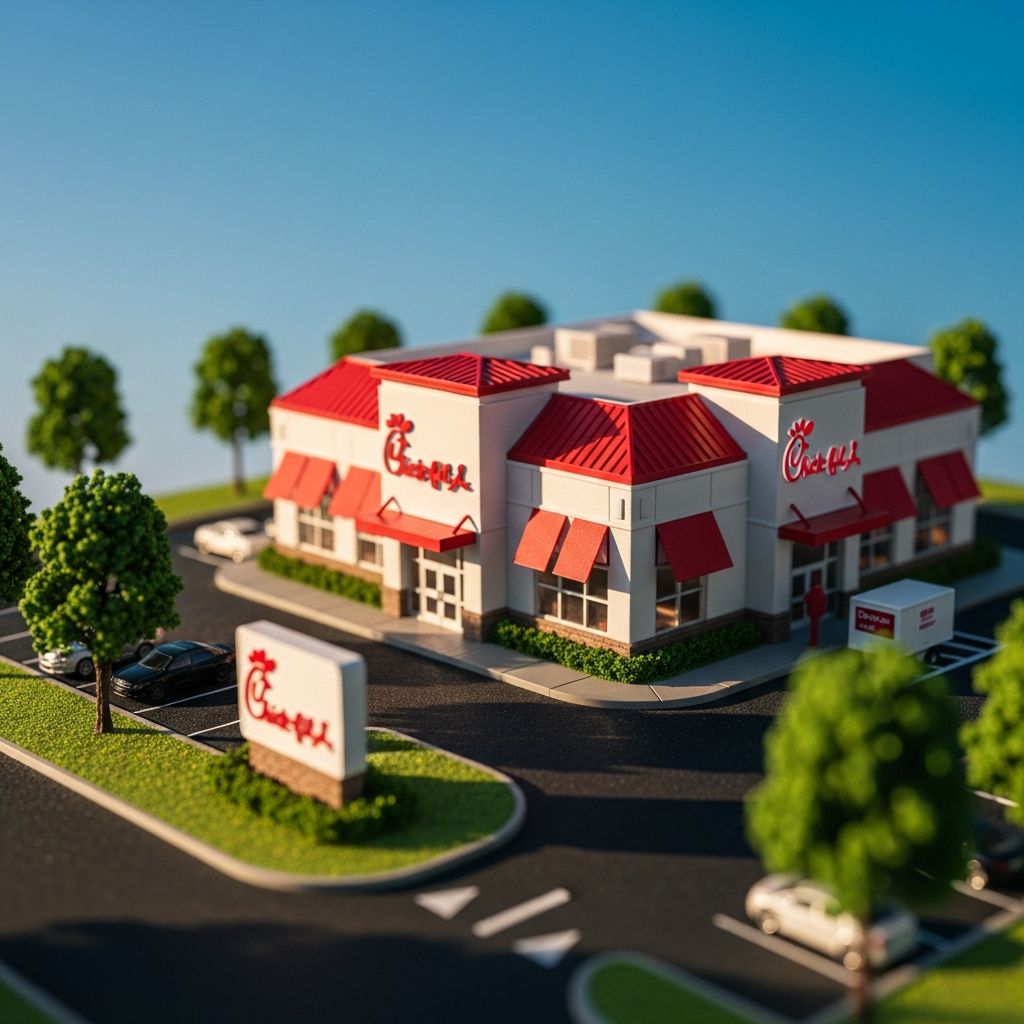
Chick-fil-A’s franchise model stands out in the quick-service restaurant industry by offering a low initial investment while demanding full operational commitment from operators. The company covers major startup expenses like property and equipment, leasing them back to franchisees who manage daily activities.
The Distinctive Chick-fil-A Business Model
Unlike traditional franchises where owners invest heavily in assets and build equity, Chick-fil-A retains ownership of the restaurant, land, and equipment. Operators pay a modest $10,000 upfront fee and handle ongoing lease payments equivalent to 15% of sales plus 50% of pretax profits. This structure minimizes financial barriers to entry but eliminates opportunities to sell the business or pass it to heirs, as no equity accrues to the operator.
Operators must dedicate themselves full-time to a single location, with no side businesses allowed, ensuring hands-on leadership. Chick-fil-A selects candidates through a highly competitive process, approving fewer than 1% of applicants, prioritizing alignment with corporate values like community service and customer focus.
Financial Breakdown: What You’ll Actually Pay
The allure begins with accessibility: no minimum net worth or liquid assets required beyond the $10,000 fee, which cannot be financed directly by the company. Chick-fil-A funds construction, real estate, and equipment, but operators cover operational kickoff costs.
| Cost Category | Estimated Range |
|---|---|
| Initial Franchise Fee | $10,000 |
| Opening Inventory | $18,000 – $95,000 |
| First Month Equipment Lease | $750 – $5,000 |
| First Month Location Lease | $1,400 – $90,000 |
| Opening Insurance | $300 – $12,000 |
| Miscellaneous (Utilities, Signage, Hiring) | $250,000 – $2,000,000 |
| Total Initial Investment | $265,000 – $2,275,000 |
Ongoing fees are performance-based, tying operator earnings directly to restaurant success while keeping corporate skin in the game. Item 19 in the Franchise Disclosure Document reveals earnings data for select units, aiding informed decisions.
Who Qualifies as an Ideal Operator?
Chick-fil-A targets proven leaders with business acumen, financial responsibility, and a passion for growth. Key traits include:
- Full-time dedication without other ventures
- Demonstrated leadership and results-driven mindset
- Financial stability and clean history
- Community involvement and value alignment
- U.S. legal work authorization and English proficiency
No multi-unit ownership for new operators; exceptional performers may earn additional opportunities later. The process mirrors elite hiring, with interviews, background checks, and area viability assessments.
Navigating the Application and Selection Journey
Prospective operators start online, submitting detailed financials, leadership history, and preferred regions. Chick-fil-A evaluates market potential before advancing candidates. Successful applicants undergo multi-week training, covering operations, service standards, and company culture.
Review the Franchise Disclosure Document (FDD) and agreement meticulously, detailing obligations, royalties, and restrictions like Sunday closures—a principle prioritizing rest over revenue. Transitions in non-traditional sites (e.g., campuses) to this model enhance tech integration like apps and delivery.
- Complete detailed application with finances and preferences.
- Await review and initial interviews.
- Participate in assessments and training.
- Sign agreements and prepare for launch.
Day-to-Day Realities of Operating a Location
Operators immerse in all facets: staffing, inventory, customer service, and maintenance. Corporate provides marketing, supply chain, and tech support, enforcing uniformity. High-volume drive-thrus and polite service define the brand, driving above-average sales despite closures.
Challenges include intense selectivity, no equity buildup, and limited units per operator, capping scalability. Sunday closures forgo peak traffic but foster employee loyalty and distinct branding.
Profit Potential and Long-Term Viability
Average unit volumes exceed industry norms, with operators netting competitive incomes after splits—though exacts vary by location and management. The model’s profitability hinges on operational excellence, as fees scale with performance.
Expansion targets Midwest, Mountains, Northeast, California, Texas, and Florida, signaling growth for qualified applicants. No semi-absentee or home-based options; full involvement is non-negotiable.
Pros and Cons: Is It Right for You?
| Advantages | Disadvantages |
|---|---|
| Low $10,000 entry; corporate funds big costs | No equity, sales, or inheritance |
| Comprehensive training and support | Full-time only, single-unit start |
| Strong brand, high sales potential | <1% approval rate |
| Value-driven culture | Sunday closures limit revenue |
For hands-on entrepreneurs valuing stability over ownership, it’s compelling; equity-seekers may look elsewhere.
Frequently Asked Questions (FAQs)
What’s the minimum cash needed for a Chick-fil-A franchise?
The initial fee is $10,000, with total startup ranging $265K–$2.275M covered partly by leases.
Can I finance the franchise fee or own multiple locations?
No company financing for the fee; new operators limited to one unit.
Does Chick-fil-A support E-2 or EB-5 visas?
No, it does not accommodate these visa types.
Why are Chick-fil-A restaurants closed on Sundays?
A core principle for rest and worship, prioritizing values over profits.
How selective is the franchise approval process?
Less than 1% of applicants succeed, akin to top universities.
Are there multi-unit or passive ownership options?
Initially single-unit and hands-on only; top performers may expand.
Chick-fil-A’s approach blends opportunity with discipline, suiting committed leaders ready for its rigors. Applications open periodically; prepare thoroughly for this coveted role.
References
- How to Open a Chick-fil-A Franchise – 2026 Guide — United Capital Source. 2026. https://www.unitedcapitalsource.com/blog/chick-fil-a-franchise/
- Own a Chick-fil-A Franchise — Franchise.com. 2026. https://www.franchise.com/franchise/chick-fil-a
- Chick-fil-A Franchise Cost and Requirements for 2025 — IFPG. 2025. https://www.ifpg.org/top-franchises/chick-fil-a
- Chick-fil-A is transitioning licensed restaurants to owner-operator model — Nation’s Restaurant News. 2023. https://www.nrn.com/quick-service/chick-fil-a-is-transitioning-licensed-restaurants-to-owner-operator-model
- Chick-fil-A Franchise Cost & Opportunities 2026 — FranchiseHelp. 2026. https://www.franchisehelp.com/franchises/chick-fil-a/
- What type of franchise opportunities does Chick-fil-A offer? — Chick-fil-A Official Site. Accessed 2026. https://www.chick-fil-a.com/customer-support/careers/franchise-opportunities/what-type-of-franchise-opportunities-does-chick-fil-a-offer
- Franchise Information and Opportunities — Chick-fil-A Official Site. Accessed 2026. https://www.chick-fil-a.com/franchise
Similar Articles








Read full bio of medha deb


