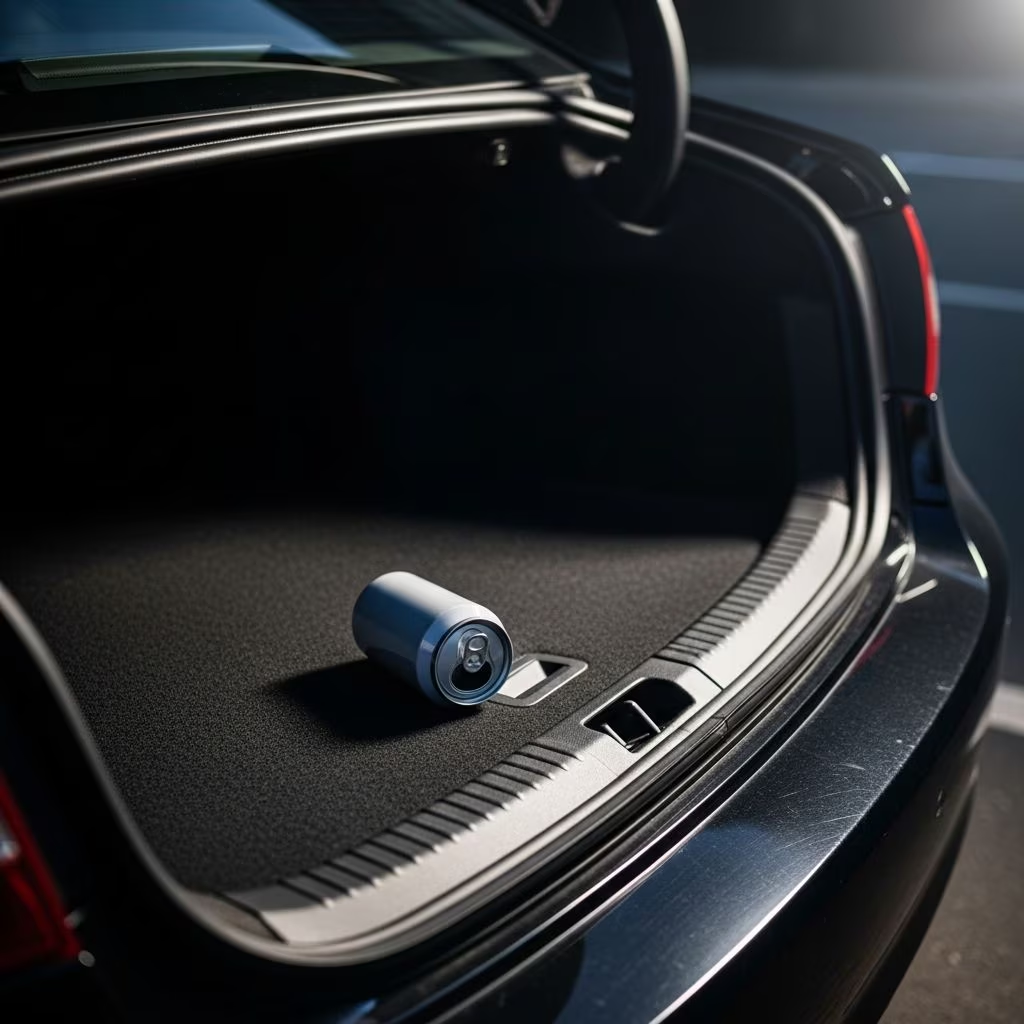
Many drivers assume that as long as alcohol is not in their hands, they are safe from open container violations. The reality is more technical: most states focus on where alcohol is stored in the vehicle and whether it can be easily reached by the driver or passengers. This article explains how open container rules generally work in the United States, why the trunk is usually treated differently, and how these laws interact with DUI and underage drinking rules.
1. What Is an “Open Container” in a Vehicle?
Open container laws do not only target people who are actively drinking. They usually apply whenever there is an alcoholic beverage in a container that has been opened, has a broken seal, or is partially empty inside a motor vehicle on a public road.
- Alcoholic beverage: typically beer, wine, liquor, or mixed drinks with more than a minimal alcohol content.
- Open container: any bottle, can, cup, or other receptacle that has been opened, resealed, or is not factory sealed.
- Passenger compartment: the area of the vehicle where the driver and passengers sit, including reachable storage such as glove compartments or center consoles in many jurisdictions.
Some states extend these rules to cannabis products as well, treating open marijuana packaging similarly to open alcohol containers while in a vehicle.
2. Why the Trunk Is Usually Treated Differently
In many U.S. jurisdictions, the key legal distinction is whether the alcohol is accessible to the occupants while the vehicle is in motion. Because the trunk is normally sealed off from the cabin, it is often considered an acceptable place to transport open containers.
- Typical rule: an open alcohol container may be legally transported if it is kept in the trunk or in another locked area not reachable from the driver’s or passengers’ seats.
- No trunk vehicles: for hatchbacks, SUVs, and pickup trucks, open containers usually must be placed in an area not normally occupied by people, such as a locked storage box or truck bed.
- Glove compartments: many state statutes explicitly say glove compartments and other internal storage count as part of the passenger area, so they are not safe places for open containers.
The policy goal is straightforward: keeping alcohol physically out of reach reduces the opportunity and temptation to drink while driving, supporting broader impaired-driving prevention strategies promoted by agencies like the National Highway Traffic Safety Administration (NHTSA).
3. Federal Baseline vs. State Open Container Laws
The United States has a federal open container standard that influences state law, but each state writes and enforces its own rules. Under the federal Transportation Equity Act for the 21st Century, states are encouraged to prohibit open alcoholic beverage containers in the passenger area of vehicles on public roads, with specific minimum elements that state laws must include to comply.
However:
- States retain flexibility in details such as penalties, definitions of passenger compartment, and exceptions for certain vehicles.
- Some states have stricter provisions than the federal baseline; a few remain more permissive in specific situations.
Because of this variation, drivers should always confirm the specific rule set in their own state or any state they drive through.
4. How States Typically Classify Common Storage Locations
The table below summarizes how many state laws conceptually treat common areas in a vehicle. This is a general overview, not a substitute for local legal advice.
| Location in Vehicle | Typical Legal Treatment for Open Alcohol | Key Reasoning |
|---|---|---|
| Trunk (separate from cabin) | Generally allowed storage | Not accessible to occupants while driving; specifically permitted in many statutes. |
| Glove compartment / center console | Often prohibited | Usually defined as part of the passenger area because driver can easily reach it. |
| Back seat area | Usually prohibited | Passengers can access the container and may drink in transit. |
| Hatch or cargo area in SUV/wagon | Depends on design and statute | Some laws treat this as passenger area unless separated or locked; others allow if not normally occupied. |
| Truck bed (open pickup) | Often permitted with conditions | Not normally occupied by people while driving; statutes may allow open containers here if local law is followed. |
| Locked rooftop or external cargo box | Generally treated like trunk | Out of reach and sometimes expressly allowed as a “locked compartment” in state codes. |
5. Typical Penalties for Open Container Violations
In many states, a standard open container violation for an adult driver or passenger is handled as a non-criminal infraction or minor offense, often with a relatively low fine. However, the seriousness can increase quickly in certain circumstances.
- Standard adult violation: commonly an infraction with a fine (for example, some jurisdictions set a maximum fine around $250).
- Underage involvement: when an under-21 driver or passenger is in possession of alcohol in a vehicle, it is often charged as a misdemeanor, sometimes carrying potential jail time, higher fines, and license consequences.
- Combined with DUI: if an open container is found along with evidence of impaired driving, penalties can escalate and may impact sentencing, license suspension, and insurance consequences.
- Record impact: in some states, an open container conviction can add points to a driver’s motor vehicle record, which may lead to higher insurance premiums or administrative sanctions.
State driver licensing agencies and safety programs, often guided by NHTSA recommendations, emphasize that even minor alcohol-related violations can indicate heightened crash risk and may justify monitoring or corrective actions.
6. How Underage Drivers Are Treated Differently
Open container rules operate alongside zero-tolerance policies for under-21 drivers. Many states criminalize simply possessing alcohol in a vehicle when you are under the legal drinking age, regardless of whether the container is open.
- Some state laws explicitly make it an offense for a person under 21 to drive or ride in a vehicle with alcohol, except in narrow circumstances such as work-related duties or transport under parental supervision.
- These offenses often carry potential misdemeanor penalties, including fines, possible jail time, and mandatory license suspensions.
- Universities and colleges may impose separate disciplinary consequences for students based on campus alcohol policies, even for off-campus incidents.
As a result, an underage person riding in a car with alcohol in the trunk—open or not—may face legal risk that would not apply to an adult in the same situation, depending on the state’s specific statutes.
7. Exceptions for Limousines, Buses, and Other Hired Vehicles
Many states carve out exceptions to open container rules for certain types of vehicles where passengers are not responsible for driving, such as:
- Chartered buses and motor coaches
- Licensed limousines
- Some taxis and app-based ride services when authorized by local law
Typical features of these exceptions include:
- The driver may not drink or have access to open alcohol.
- Passengers may be allowed to consume alcohol in the cabin if the vehicle meets regulatory and licensing criteria.
- Some laws eliminate the exception if passengers under 21 are present, or they impose strict age-verification rules.
Commercial carriers are usually subject to additional safety, licensing, and insurance requirements, consistent with broader federal motor carrier safety programs.
8. Practical Tips for Transporting Leftover Alcohol Safely
Everyday situations—such as leaving a restaurant with a partially finished bottle of wine—create common open container questions. While the exact rules vary, the following practical steps often align with how state statutes are structured:
- Use the trunk whenever possible. Place any opened or resealed alcohol in the trunk before you drive away. If your vehicle has a pass-through from the back seat, keep it closed.
- For vehicles without a true trunk, use a locked storage box, an external cargo carrier, or—if allowed—an area not normally used by passengers, such as a truck bed.
- Keep containers sealed or resealed. Some state laws treat properly re-corked or resealed wine as less problematic, particularly when stored in the trunk or another separate compartment.
- Do not rely on the glove box. In many states, glove compartments are legally considered part of the passenger area and cannot be used to store open containers.
- Separate alcohol from underage passengers. If anyone under 21 is in the vehicle, even lawful transport of alcohol may create additional risks, so extra caution is warranted.
When in doubt, the most conservative approach is the safest: treat any non-factory-sealed alcohol as an open container and store it as far from occupants as reasonably possible.
9. Common Legal Defenses in Open Container Cases
While this article does not provide legal advice, certain recurring themes appear in open container cases across multiple states:
- Container was lawfully stored. If the alcohol was in the trunk, a locked external compartment, or another area clearly outside the passenger space, defense lawyers often argue that the statute was not violated.
- No knowledge or control. In some situations, a driver may contend they did not know a passenger had an open container or that the alcohol was in a bag or area they did not control.
- Improper traffic stop or search. If police lacked legal grounds to stop the vehicle or to search inside, evidence of the open container may be challenged under constitutional protections against unreasonable searches and seizures.
- Questionable proof of alcohol content. For unusual beverages or homemade products, the prosecution may need to show that the liquid meets the statutory definition of an alcoholic beverage.
Because procedural and evidentiary rules vary widely, anyone facing an open container charge should consult a qualified local attorney who understands both state statutes and local court practices.
10. Frequently Asked Questions (FAQs)
Q1: Is it always legal to keep an open container in my trunk?
Not always. Many states allow open containers in the trunk or a similar locked compartment, but underage possession rules, special local ordinances, or probation conditions can still make it illegal in specific cases.
Q2: What if my car is an SUV or hatchback with no separate trunk?
In vehicles without a traditional trunk, the law often requires that open containers be placed in an area not normally occupied by passengers or in a locked container. Some states treat the open cargo area as part of the passenger compartment if it is easily reachable, so locked storage is usually the safer option.
Q3: Can passengers drink alcohol while I drive if I’m sober?
In most private vehicles, no. Open container laws usually apply to both drivers and passengers, meaning passengers cannot legally drink alcohol in the passenger area while the vehicle is on a public road. Limited exceptions may exist for licensed limousines or similar for-hire vehicles when specific regulatory conditions are met.
Q4: Do these rules also apply to cannabis?
In a number of states that have legalized recreational cannabis, open container concepts now apply to marijuana and cannabis products as well. Open or unsealed cannabis packaging often must be stored in the trunk or another area not accessible to passengers while driving, similar to open alcohol.
Q5: If I get a DUI, does having an open container make it worse?
An open container by itself is usually a separate, less serious offense. However, when combined with a DUI charge, it can influence how prosecutors view the case, may lead to multiple charges, and could affect sentencing or license consequences, depending on the jurisdiction.
Q6: How can I find the exact rule in my state?
The safest approach is to review your state’s motor vehicle or alcohol statute and, if necessary, speak with a licensed attorney. State government websites often publish the full text of traffic and alcohol laws, and many departments of transportation also provide plain-language summaries of impaired-driving and open container policies.
References
- California Vehicle Code Sections 23221–23229: Alcoholic Beverages and Marijuana in Vehicles — California Legislature. Various dates (current through recent session). https://leginfo.legislature.ca.gov/
- 23 U.S.C. § 154 — Open Container Requirements — United States Congress / U.S. Code. 1998 (current as amended). https://uscode.house.gov/view.xhtml?req=granuleid:USC-prelim-title23-section154
- What Is California’s Open Container Law? — Walkup, Melodia, Kelly & Schoenberger. 2023-05-18. https://seriousaccidents.com/personal-injury-resources/what-is-californias-open-container-law/
- California Open Container Laws — Shouse Law Group. 2024-01-10 (last updated). https://www.shouselaw.com/ca/defense/laws/open-container/
- Digest of Impaired Driving and Selected Beverage Control Laws — National Highway Traffic Safety Administration (NHTSA). 2022-12-01. https://www.nhtsa.gov/document/digest-impaired-driving-and-selected-beverage-control-laws
- Alcohol and Other Drug Prevention on College Campuses: A Comprehensive Planning and Evaluation Guide — U.S. Department of Education. 2001-01-01. https://www2.ed.gov/offices/OPE/PPSS/alcoholprev.html
- Motor Carrier Safety Assistance Program (MCSAP) — Federal Motor Carrier Safety Administration (FMCSA). 2024-02-15. https://www.fmcsa.dot.gov/mcsap-basic-incentive-grant/mcsap-basic-incentive-grant