
When Online Reviews Cross the Line into Defamation
How small businesses and reviewers can navigate harsh online feedback, legal defamation risks, and safe ways to respond on platforms like Yelp.
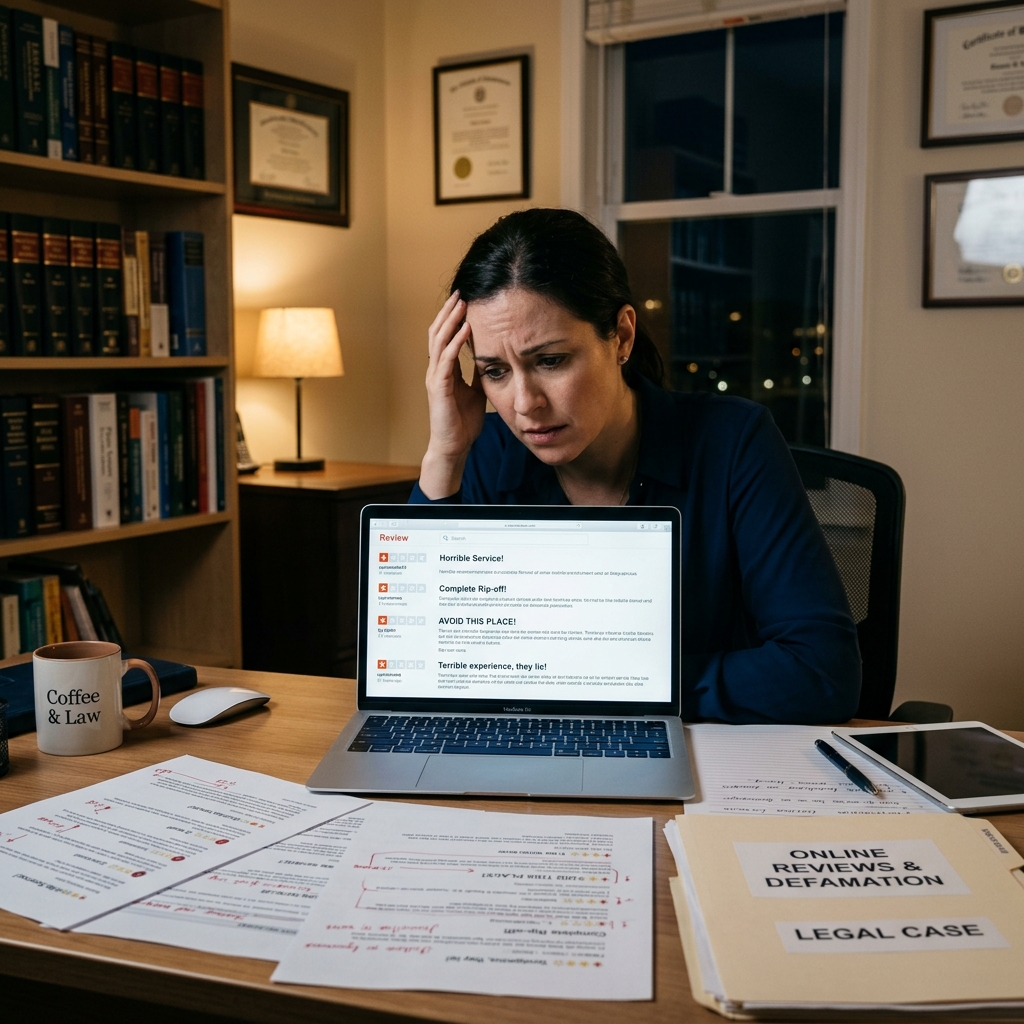
Online review platforms such as Yelp, Google, and similar sites have transformed how customers choose where to spend their money. A few sentences typed in frustration can influence hundreds of people and significantly affect a business’s reputation and bottom line. At the same time, reviewers enjoy strong free‑speech protections, and platforms receive powerful legal immunity for content posted by their users. Understanding where legitimate criticism ends and defamation begins is essential for both business owners and reviewers.
This article explains the legal framework behind online reviews, what counts as defamation, how U.S. law protects review platforms, and practical strategies for dealing with harmful posts. It is inspired by a legal analysis of Yelp’s review system but is fully original and focuses on helping small businesses and consumers navigate this complex area.
Online Reviews: Opportunity and Risk for Small Businesses
Online review platforms offer important benefits but also bring serious risks. Business owners often feel vulnerable when a negative review appears, especially when they believe the statements are inaccurate or unfair. At the same time, consumers rely heavily on reviews and often assume they are entitled to say anything they wish.
Business Benefits of Review Platforms
- Visibility and marketing – A strong review profile can attract new customers without additional advertising costs.
- Feedback loop – Reviews can highlight service issues, allowing businesses to improve operations.
- Social proof – Consistent positive reviews build trust and credibility for new or small businesses.
Risks and Pain Points
- Reputational damage – A single harsh review can deter potential customers, especially when a business has few reviews.
- Misleading or false claims – Statements that exaggerate or misstate facts can snowball as others repeat them.
- Difficulty removing content – Because platforms are generally immune from liability for user posts, they are under little legal pressure to remove reviews.
- Stress and time costs – Responding to negative reviews and monitoring multiple platforms can strain limited small‑business resources.
What Is Defamation in the Context of Online Reviews?
Defamation law is the primary legal tool available when a review is more than just harsh—it is false and harmful. Defamation generally covers two forms:
- Libel – Defamation in written or fixed form, including online posts and reviews.
- Slander – Defamation expressed in speech, such as spoken statements or videos.
While state laws vary, many jurisdictions recognize several core elements of defamation:
| Element | Typical Requirement |
|---|---|
| False statement of fact | The statement must assert or imply factual information that is untrue. |
| Publication | The statement must be communicated to at least one person other than the subject. |
| Fault | At minimum, negligence in failing to verify the truth; higher standards may apply for public figures or certain claims. |
| Harm to reputation | The statement must tend to injure reputation or cause actual damage, such as loss of business. |
These elements illustrate why defamation cases based on online reviews can be challenging: the plaintiff must prove not only that a statement is false, but also that it caused reputational harm and was published with at least negligent disregard for the truth.
Fact vs. Opinion: A Crucial Distinction
Courts generally protect opinions under the First Amendment, while allowing claims based on false statements of fact. For example:
- Opinion (usually protected): “I think this was the worst meal I’ve ever had.”
- Potentially defamatory fact: “This restaurant regularly serves spoiled meat to customers.”
Statements that include verifiable specifics—such as alleging criminal conduct, fraud, or serious misconduct—are more likely to be treated as factual assertions. By contrast, subjective impressions, emotional reactions, or value judgments are far less likely to form the basis of a defamation claim.
Truth as an Absolute Defense
In U.S. defamation law, truth is a complete defense. Even if a truthful review is harsh or embarrassing, it is generally protected speech. Courts also recognize “substantial truth,” meaning that minor inaccuracies that do not change the overall gist of the statement will not defeat the truth defense.
For reviewers, this means that carefully describing actual experiences and avoiding exaggeration reduces legal risk. For businesses, it underscores the difficulty of suing simply because a review is negative; a claim will fail if the underlying statements are substantially accurate.
Why You Usually Cannot Sue the Platform: Section 230 Immunity
Business owners sometimes assume they can sue Yelp or a similar platform for hosting defamatory reviews. In most cases, this approach is legally barred by Section 230 of the Communications Decency Act (CDA).
Section 230 is a federal statute that gives “interactive computer services” broad immunity from liability for content created by third‑party users. In practice, this means:
- Yelp and comparable platforms are not treated as the publisher or speaker of user‑generated content.
- They generally cannot be sued for defamation based on what reviewers post, even if the content is clearly harmful or false.
- Courts have repeatedly upheld this immunity, and it preempts state defamation laws.
Section 230 does not protect the individual reviewer. If a review crosses the line into defamation, the potential legal claim is usually against the person who wrote it, not the website hosting it.
Can Online Reviews Be Legally Actionable?
Although many negative reviews are protected, courts have confirmed that online reviews can be defamatory when they meet the required elements. Cases often turn on factual disputes, such as whether a complained‑of incident really occurred or whether allegations of misconduct are accurate.
Proving defamation based on a review is challenging because plaintiffs must show that:
- The review contains false statements of fact, not just opinion.
- The statements are unprivileged and not shielded by specific statutory protections.
- The statements caused actual reputational harm or have a natural tendency to injure reputation.
Some states also have anti‑SLAPP statutes (Strategic Lawsuits Against Public Participation) that allow defendants to quickly dismiss lawsuits targeting their protected speech and, in some cases, recover attorney’s fees. These laws are designed to discourage meritless defamation suits that aim to silence criticism.
Practical Strategies for Businesses Facing Harmful Reviews
Legal action is only one option—and often a last resort. In many cases, businesses can resolve disputes or mitigate harm through effective communication and smart reputation management.
Step 1: Evaluate the Content Carefully
- Identify factual assertions – Separate statements of fact from opinions and emotional language.
- Check for accuracy – Review internal records, staff accounts, and relevant documents to determine whether the factual claims are true or partly true.
- Assess impact – Consider how visible the review is, whether it is one of many, and whether it appears credible to readers.
Step 2: Use Platform Tools to Respond
Yelp and similar platforms generally allow business owners to respond publicly to reviews and sometimes to contact reviewers privately. A thoughtful response can limit reputational damage and demonstrate professionalism.
Effective responses typically:
- Remain calm and courteous – Avoid arguments; focus on resolving the issue.
- Acknowledge concerns – Show that the business takes feedback seriously, even when it disagrees with certain claims.
- Offer solutions – Provide contact information or concrete steps to remedy the situation.
- Correct inaccuracies diplomatically – If a statement is demonstrably false, clarify the facts without attacking the reviewer.
Step 3: Seek Voluntary Removal or Correction
Some disputes can be resolved directly with the reviewer. Lawyers often advise attempting to persuade the poster to edit or remove false statements before considering litigation.
- Politely contact the reviewer through platform messaging tools, if available.
- Explain why specific claims are inaccurate and provide supporting information.
- Request a correction or removal rather than threatening immediate legal action.
In many cases, people are more receptive to cooperative communication than to confrontational demands.
When Legal Options Become Necessary
There are situations where reputational harm is serious and cooperative efforts fail. In such cases, businesses may need to explore formal legal remedies.
Consulting an Attorney
Because defamation law is complex and state‑specific, a business should consult an attorney experienced in media, internet, or business law before taking formal action. An attorney can:
- Evaluate whether the review meets the legal standards for defamation.
- Advise on the risk of anti‑SLAPP penalties in jurisdictions with those statutes.
- Draft demand letters or cease‑and‑desist communications aimed at resolving the dispute without litigation.
Identifying Anonymous Reviewers
Many reviewers post anonymously. Courts have developed standards for when businesses can compel platforms to disclose identifying information, often requiring a preliminary showing that the claim has merit. Typical requirements include:
- Presenting evidence that supports each element of defamation within the business’s control.
- Providing notice to the anonymous poster that disclosure is being sought.
- Specifying the exact statements alleged to be defamatory.
If a court orders disclosure, the business may then sue the reviewer directly. However, this process can be time‑consuming and costly, and success is not guaranteed.
Regulatory Complaints
In some cases involving deceptive or manipulative reviews, regulatory avenues may complement or substitute for defamation claims. For example, the U.S. Federal Trade Commission (FTC) investigates certain forms of misleading online endorsements and unfair business practices. Filing an FTC complaint is not a quick fix, but it may be appropriate when reviews suggest broader patterns of fraud or illegality.
Guidance for Reviewers: How to Speak Freely Without Legal Trouble
Individuals posting reviews also face risks, particularly if they exaggerate or fabricate facts. While anyone can be sued, knowing basic defamation principles can help reviewers stay on safe ground.
Best Practices for Writing Safer Reviews
- Stick to truthful experiences – Describe what actually happened, including dates, interactions, and specific issues.
- Label opinions clearly – Use phrases like “in my opinion” or “I felt” to signal subjective impressions.
- Avoid unsupported accusations – Do not claim fraud, criminal activity, or serious misconduct without solid evidence.
- Review before posting – Reread the content to check for accuracy and remove emotional overstatements.
What to Do If You Receive a Legal Threat Over a Review
Occasionally, businesses respond to negative reviews with threats of litigation or demands for removal. Many such threats are bluffs, but they should not be ignored.
- Do not panic – If your statements are truthful and clearly framed as opinion, the law generally protects you.
- Preserve evidence – Keep copies of receipts, messages, photos, and any documents that support your account.
- Seek legal advice – Consult a qualified attorney if you receive formal legal papers or serious threats.
- Consider clarification – If any portion of your review might be inaccurate, correcting or updating it can reduce risk.
Balancing Reputation Management and Free Speech
The tension between business reputation and consumer free speech is built into the modern online ecosystem. Laws such as Section 230 are designed to preserve open discussion and prevent platforms from becoming legal bottlenecks, while defamation doctrines aim to protect individuals and businesses from serious reputational harm caused by false statements.
For small businesses, the most effective approach usually combines:
- Proactive customer service and quality control.
- Thoughtful engagement with reviewers, including prompt responses.
- Strategic use of legal tools only when harm is significant and other remedies have failed.
For reviewers, responsible posting, clarity about opinions, and strict honesty help protect both their rights and the integrity of consumer information.
Frequently Asked Questions (FAQs)
1. Can a business sue me for posting a negative but honest review?
A business can file a lawsuit, but if your review is substantially truthful and mainly expresses opinion, defamation claims are unlikely to succeed. Truth is a complete defense, and courts protect honest criticism.
2. Is Yelp legally responsible for defamatory reviews posted by users?
In most circumstances, no. Section 230 of the Communications Decency Act shields platforms like Yelp from liability for user‑generated content. Legal claims usually must target the individual reviewer, not the website.
3. What should I do as a business owner if I find a clearly false review?
First, document the false statements and gather evidence. Then consider responding professionally on the platform, contacting the reviewer to request correction or removal, and consulting an attorney if the review causes substantial harm or appears defamatory.
4. How can I tell whether a statement in a review is opinion or fact?
Ask whether the statement is objectively verifiable. Claims about specific events, prices, or misconduct are typically factual. Statements describing personal impressions, feelings, or general quality judgments are usually treated as opinion and receive strong legal protection.
5. What is an anti‑SLAPP law and why does it matter for online reviews?
Anti‑SLAPP statutes allow courts to quickly dismiss lawsuits that target protected speech on matters of public concern and can award attorney’s fees to the defendant. For reviewers, these laws can deter businesses from filing weak defamation suits intended to silence criticism.
References
- 47 U.S.C. § 230 (Communications Decency Act) — U.S. Congress. 1996-02-08. https://www.law.cornell.edu/uscode/text/47/230
- Help, Yelp! What to do if you are being defamed online — Coddington, Hicks & Danforth LLP. 2015-06-01. https://www.ch-law.com/blog/2015/06/help-yelp-what-to-do-if-you-are-being-defamed-online/
- Can someone sue me for posting an honest Yelp review? — Avvo Legal Q&A. 2015-10-15. https://www.avvo.com/legal-answers/can-someone-sue-me-for-posting-an-honest-yelp-revi-2664789.html
- Ask a Business Attorney: How to Handle Bad Yelp Reviews (Legally) — Business Attorney Jamie Trull (YouTube). 2018-08-20. https://www.youtube.com/watch?v=urfMAUMdlzc
- Defamation in the World of Online Reviews — KRCL Law Firm. 2014-07-10. https://www.krcl.com/insights/defamation-world-online-reviews
- Dealing with False or Negative Online Reviews — FCW Law Firm. 2019-03-21. https://fcwlawfirm.com/blog/dealing-with-false-or-negative-online-reviews/
Similar Articles








Read full bio of Sneha Tete


