
Online Ordination and Weddings in Tennessee
Understanding how Tennessee law treats online‑ordained ministers and what couples must know before planning a friend‑officiated wedding.
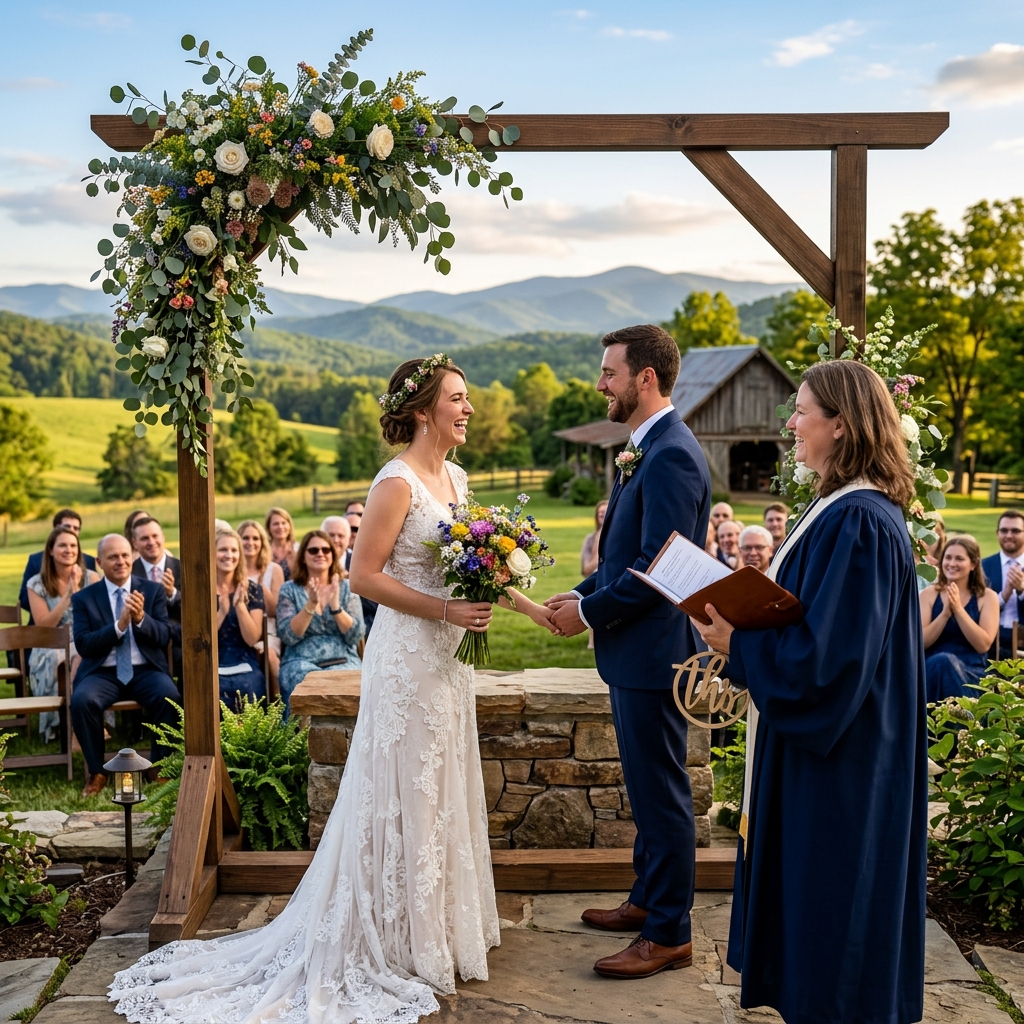
Many couples want a close friend or relative to officiate their wedding, and online ordination services have made that idea easy to turn into reality. In Tennessee, however, the rules for who may legally perform a marriage ceremony are more complex than in many other states. This guide explains how Tennessee law treats online‑ordained ministers, why the issue has been controversial, and what couples and officiants need to do to ensure a marriage is legally valid.
Why Online Ordination Became a Legal Flashpoint
Online ordination allows individuals to become ministers through a quick digital process rather than through traditional religious training or membership in a local congregation. In most U.S. states, these online‑ordained ministers can legally perform weddings so long as they meet basic statutory requirements for officiants. Tennessee, however, has taken a significantly more restrictive approach.
Historically, Tennessee law authorized “regular ministers, preachers, pastors, priests, rabbis and other spiritual leaders” to solemnize marriages. Over time, online ministries such as the Universal Life Church (ULC) began ordaining people who wished to officiate weddings for friends and family. Some Tennesseans used these ordinations to preside over ceremonies without being part of a traditional congregation.
Concerns arose among lawmakers about whether instant, click‑based ordinations reflected a “considered, deliberate, and responsible” religious act and whether such officiants met the legislative intent behind the statute. In response, the state tightened its rules on who qualifies as a minister for marriage purposes and specifically targeted online ordination in 2019.
Tennessee’s Statute on Who May Officiate Marriages
The core provisions governing who may perform weddings in Tennessee are found in Tennessee Code Annotated § 36‑3‑301. The statute lists categories of people authorized to solemnize marriages, including certain public officials and religious leaders. The religious categories remain broad, but a key amendment added language that directly addresses online ordination.
In 2019, the legislature added a sentence stating that persons receiving online ordination may not solemnize the rite of matrimony. This amendment was intended to transform what had previously been an advisory interpretation into an explicit statutory ban. Under the amended language, ordination is disqualified if it is conducted online, regardless of how serious or structured the process may be.
The policy rationale offered for the change focused on ensuring that officiants are genuinely tied to recognized religious organizations and that ordination involves real oversight and training rather than a purely automated process. Critics argued that the ban interfered with religious freedom and unfairly targeted certain groups, including couples whose ceremonies are often officiated by friends through online ministries.
Key elements of Tennessee’s approach
- Ordination must come from a recognized religious organization that engages in regular religious activities and maintains a structure for training and authorizing ministers.
- Ordination must be deliberate, not instantaneous or solely based on filling out an online form without substantive review.
- Persons whose ordination occurs online are, by statute, barred from solemnizing marriages in Tennessee under the 2019 amendment, although enforcement has been affected by litigation.
The 2019 Ban on Online‑Ordained Ministers
The 2019 legislative change drew attention nationwide because it squarely addressed the growing practice of friend‑officiated weddings via online ministries. The amendment clarified that online ordination, as such, is insufficient to confer authority to perform legal marriages in Tennessee. At the same time, the law confirmed that marriages conducted before July 1, 2019, by online‑ordained ministers would remain valid, preventing retroactive annulment of existing unions.
Shortly after the law was set to take effect, several ministers and organizations filed suit in federal court, arguing that the ban violated constitutional protections for religious freedom and equal protection. A federal judge issued an order temporarily blocking enforcement of the statute, allowing internet‑ordained ministers to continue officiating weddings while the case proceeded.
Because of this ongoing litigation and subsequent interpretations, the legal status of online‑ordained ministers has been in flux, and couples who rely on such officiants need to pay close attention to current developments and local practice.
Practical consequences of the ban
- Couples who planned to have a friend ordained online officiate their wedding faced uncertainty about whether their marriage would be legally valid.
- Online ministries had to reevaluate their guidance for Tennessee residents, often advising them to confirm local requirements with county clerks.
- Traditional religious organizations and structured ordination programs emphasized that their more rigorous processes were designed to meet Tennessee’s “considered, deliberate” standard.
How Courts Have Approached Online Ordination
Tennessee’s debate is part of a broader national discussion about the legal status of online‑ordained ministers. Courts in different states have taken divergent approaches when asked to assess marriages officiated by such ministers.
| Jurisdiction | Approach to Online‑Ordained Ministers | Illustrative Outcome |
|---|---|---|
| New York | Requires clergy to be ordained by a “church” with a congregation and recognized structure. | In one case, a marriage was annulled because the ULC minister officiating did not meet statutory requirements. |
| Various other states | Statutes broadly recognize ministers, including those ordained online, as long as basic conditions are satisfied. | Courts in some jurisdictions have upheld the validity of marriages performed by online‑ordained ministers. |
| Tennessee | Specifically prohibits online‑ordained ministers from solemnizing marriages by statute, though enforcement has been contested in court. | Effectively requires ordination through a recognized religious entity using a deliberate process. |
These differing approaches underline the importance of state‑specific research when planning a wedding. A minister who is fully qualified in one state may not hold the same legal authority in another.
Ordination Requirements for Wedding Officiants in Tennessee
While the 2019 statute centers on online ordination, Tennessee law also emphasizes the nature of the religious organization and the ordination process itself. Guidance from religious training programs in Tennessee highlights several expectations for anyone seeking to officiate weddings.
- Credible religious organization: The entity providing ordination should be a recognized religious body that conducts regular worship and offers training for ministers, not merely an automated website.
- Deliberate ordination process: Tennessee law favors ordination based on a “considered, deliberate, and responsible act,” which typically involves coursework, mentorship, or formal evaluation.
- Ongoing religious role: Officiants are expected to function as spiritual leaders within their religious community, not solely as one‑time wedding officiants.
Organizations that train Tennessee wedding officiants often include both legal education and ministry preparation, emphasizing that ministers must understand not only religious aspects of the ceremony but also the civil requirements that make a marriage legally binding.
Marriage License Rules and the Officiant’s Legal Duties
Regardless of how a minister is ordained, Tennessee’s marriage license procedures are critical to the validity of a marriage. The couple and officiant share responsibility for complying with these rules.
Obtaining the marriage license
- Couples must apply for a marriage license from the appropriate county clerk’s office before the ceremony.
- The license is generally valid for a limited period (for example, 30 days), and there is usually no mandatory waiting period before the ceremony can be held.
- Identification, fees, and compliance with age or consent requirements are part of the application process.
During the ceremony
- The officiant must ensure that the license is present at the ceremony and properly completed.
- Tennessee often requires witnesses of legal age to attend and sign the license, creating a clear record that the marriage occurred.
- The officiant’s role is not purely symbolic; they attest to the ceremony and the couple’s consent.
After the ceremony
- The officiant must sign the marriage license and return it to the issuing county clerk’s office within the required timeframe, commonly three days.
- Failure to return the license promptly can delay or jeopardize legal recognition of the marriage.
- Some jurisdictions expect the officiant to use an official title and provide information about the religious body they represent when filling out the license.
These procedural steps can be just as important as the ordination status of the officiant. Even a fully qualified minister can cause legal complications if the license is mishandled.
Guidance for Couples Wanting a Friend to Officiate
Many couples still hope to involve a close friend or relative as officiant, despite Tennessee’s restrictions on online ordination. There are practical ways to honor that desire while respecting legal requirements.
Options to consider
- Have a legally qualified officiant and a ceremonial friend officiant. A minister who meets Tennessee’s criteria can conduct the legal portion of the ceremony, while a friend leads readings, vows, or personal elements.
- Use a structured religious training program. Some organizations in Tennessee offer ordination and training that are designed to meet the “deliberate” standard, allowing a friend to become a recognized minister through a more substantial process.
- Consult the county clerk. Before finalizing plans, couples should ask the clerk’s office what documentation and qualifications they expect from an officiant and whether any local registration is required.
Risk management tips
- Keep copies of the officiant’s ordination credentials and any correspondence with the county clerk about their eligibility.
- Confirm that the officiant understands the deadlines and technical requirements for completing and returning the license.
- If there is any doubt about the officiant’s status, consider having a backup minister who clearly meets Tennessee’s criteria.
Common Misunderstandings About Online Ordination in Tennessee
Uncertainty about the 2019 law and subsequent litigation has led to conflicting advice, including statements that online ordination is completely illegal or, conversely, that county clerks have no role in assessing an officiant’s qualifications. It is important to distinguish between different aspects of the issue.
- “Illegal” vs. “not legally recognized.” The central question is not criminal liability but whether a marriage solemnized by a particular officiant will be recognized as valid under state law.
- Clerk’s role vs. court’s role. County clerks may issue licenses and accept documentation, but courts ultimately decide the validity of a marriage if it is challenged, as seen in other states where marriages were annulled after litigation.
- Temporary court orders. Injunctions or temporary blocks can allow online‑ordained ministers to perform weddings while a case proceeds, but these orders can change, so couples should seek up‑to‑date information.
Frequently Asked Questions (FAQs)
Can an online‑ordained minister legally officiate my wedding in Tennessee?
Tennessee passed a law in 2019 stating that persons who receive online ordination may not solemnize marriages. A federal judge temporarily blocked enforcement of that law, allowing online‑ordained ministers to continue officiating while litigation is pending. Because the legal landscape can change, couples should verify current requirements with a lawyer or county clerk before relying on online ordination alone.
Will my marriage be invalid if my officiant’s online ordination is later questioned?
In some states, courts have annulled marriages when the officiant did not meet statutory requirements for clergy. Tennessee law attempts to avoid retroactive invalidation for marriages performed before the effective date of the 2019 statute, but future cases could still raise questions. When possible, use an officiant whose qualifications are unlikely to be challenged.
Do I need to register my minister with the county before the wedding?
Some local governments require ministers to register or present proof of ordination before performing weddings. Requirements vary by county, so officiants should contact the clerk’s office in advance and ask what documentation is needed.
How important is returning the marriage license after the ceremony?
Returning the signed marriage license to the county clerk within the specified timeframe (often three days in Tennessee) is vital to legal recognition of the marriage. If the license is not returned, the marriage may not be properly recorded, which can cause problems later when proving marital status.
Can my friend lead the ceremony if they are not a legally recognized officiant?
Yes, many couples divide roles: a legally qualified minister performs the statutory elements required for a valid marriage, while a friend leads readings, vows, or other portions of the ceremony. This approach allows personal participation without risking the legal status of the marriage.
References
- A Ban On Internet-Ordained Ministers In Tennessee Paused By Judge — NPR. 2019-07-13. https://www.npr.org/2019/07/13/739043318/tennessee-lawmakers-aim-to-ban-weddings-by-internet-ordained-ministers
- When Friends Preside Over Weddings: Tennessee Fights the Online Ministers — Justia Verdict (J. Grossman). 2019-09-10. https://verdict.justia.com/2019/09/10/when-friends-preside-over-weddings-tennessee-fights-the-online-ministers
- The Legality of Performing Weddings and Other Ceremonies as an Ordained Minister — Universal Life Church. 2023-01-01 (approx.). https://getordained.org/blog/the-legality-of-performing-weddings-and-other-ceremonies-as-an-ordained-minister
- Become Ordained in Tennessee — Christian Leaders Alliance. 2022-06-01 (approx.). https://www.christianleadersalliance.org/become-ordained-in-tennessee/
- Becoming a Tennessee Wedding Officiant — Christian Leaders Institute. 2022-06-01 (approx.). https://www.christianleadersinstitute.org/about/christianministry/what-is-pastor/how-to-become-an-ordained-minister/become-a-wedding-officiant/becoming-a-tennessee-wedding-officiant/
- How to get Ordained in Tennessee to Officiate — Universal Life Church. 2021-05-01 (approx.). https://www.ulc.org/officiate-a-wedding/tennessee
Similar Articles








Read full bio of Sneha Tete


