
Online Ordination: Valid for Wedding Ceremonies?
Discover if priests ordained online can legally officiate weddings across U.S. states, key legal challenges, and practical steps to ensure validity.
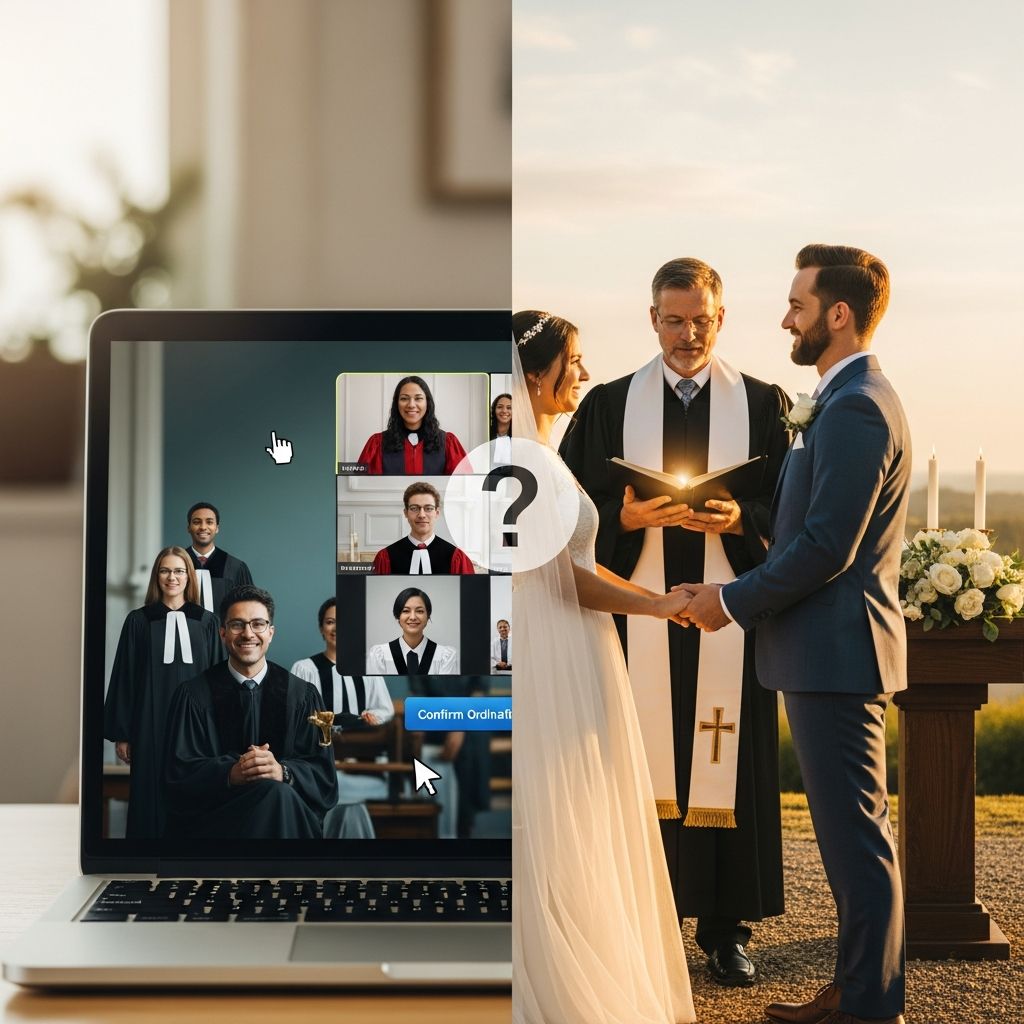
Online ordination has democratized access to ministerial roles, allowing everyday individuals to step into the role of wedding officiant with just a few clicks. But does this digital path confer the same legal authority as traditional seminary training? The answer hinges on jurisdiction-specific laws, making it a patchwork of permissions and restrictions across the United States.
The Rise of Digital Ministry and Its Legal Foundations
In the digital age, organizations like the Universal Life Church (ULC) and American Marriage Ministries (AMM) have ordained millions online, granting them credentials to lead ceremonies. This surge stems from the First Amendment’s protection of religious freedom, which courts have interpreted to include non-traditional ordination methods. For instance, ULC’s model emphasizes inclusivity, welcoming all faiths without prerequisites, enabling quick entry into officiating roles.
Historically, officiants were limited to judges, justices of the peace, or clergy from established denominations. Today, online platforms fill a gap for personalized weddings, where friends or family desire to lead the vows. Legally, ordination must align with state statutes defining ‘clergy’ or ‘minister’—terms often broadly construed to include online-ordained individuals.
Navigating State-by-State Legal Recognition
U.S. marriage laws are state-regulated, leading to diverse stances on online ordination. Most states embrace it fully, but outliers impose hurdles.
Permissive Jurisdictions: Broad Acceptance
In California, New York, and Texas, online-ordained ministers hold equal footing with traditional clergy. Couples file the marriage license post-ceremony, attaching the officiant’s ordination certificate—no further scrutiny on ordination method. These states view ordination as a religious act shielded from excessive government interference.
- California: Explicitly authorizes ‘ordained ministers’ without method specification.
- New York: Recognizes ULC and AMM credentials routinely.
- Texas: County clerks accept online proofs seamlessly.
This acceptance empowers over 1.6 million AMM-ordained individuals to officiate legally nationwide where permitted.
Restrictive Areas: Challenges and Court Battles
Not all states align. Virginia limits recognition, arguing online processes lack substance equivalent to established religious bodies. Tennessee’s 2019 law once barred such officiants, but ULC litigation secured a settlement affirming rights. These cases highlight ongoing tensions between state oversight and religious liberty.
| State | Status | Key Requirement |
|---|---|---|
| Virginia | Restricted | Must prove affiliation with ‘recognized’ religious body |
| Tennessee | Resolved via settlement | Online ordination now valid post-court win |
| California | Fully Recognized | Ordination certificate suffices |
| Pennsylvania | Case-by-Case | May require additional registration |
Couples in uncertain states should consult county clerks pre-ceremony to avoid invalid marriages.
Religious Perspectives on Digital Ordination
While secular laws dominate legality, faith traditions impose doctrinal limits. Catholics, for example, deem non-Catholic ordinations invalid, prohibiting participation to avoid scandal or false ecumenism. A lay Catholic might officiate civilly as a judge but not via online ‘ordination’ from bodies like ULC.
Contrastingly, non-denominational groups like AMM and ULC promote universal access, aligning with progressive views on ministry. Christian Leaders Institute offers structured online paths with training and endorsements for credibility. This spectrum underscores that legal validity ≠ religious legitimacy.
Practical Steps to Become a Legally Authorized Officiant
Aspiring officiants follow these steps for compliance:
- Get Ordained: Use reputable platforms like ULC (free, instant) or AMM (501(c)(3) church).
- Obtain Credentials: Download certificates, letters of good standing.
- Check Local Laws: Visit state vital records or county sites for officiant registration.
- Prepare Ceremony: Ensure couples secure license beforehand; return signed post-wedding.
- Register if Needed: Some counties require officiant filing (e.g., Florida).
Training enhances efficacy—Christian Leaders’ 10-hour program covers scripts and legalities. Always retain copies of documents.
Common Pitfalls and How to Avoid Invalid Marriages
Mistakes void ceremonies: forgetting license return (60-day windows common), using unaccepted ordinations, or skipping registrations. In 2023, Virginia invalidated hundreds of ULC weddings, prompting lawsuits. Solutions include dual officiants or notary alternatives where viable.
For international couples, U.S. online ordinations rarely translate abroad—check apostille needs.
Frequently Asked Questions
Can anyone get ordained online to officiate weddings?
Yes, platforms like ULC and AMM ordain without prerequisites, granting legal authority in most states.
Is ULC ordination valid everywhere in the U.S.?
No, Virginia restricts it; always verify locally.
What if I’m from a specific religion, like Catholic?
Catholics should avoid non-Catholic ordinations; pursue state-approved roles like justice of the peace.
How long does online ordination take?
Minutes for ULC; structured programs like AMM or CLI add training time.
Do I need to register as an officiant?
Depends on state—many no, but check county clerks.
Future Trends in Officiant Laws
Court wins favor inclusivity, but legislative pushes persist. As online ordination grows, expect uniform federal guidelines or Supreme Court clarity. For now, diligence ensures memorable, legal unions.
References
- The Legality of Performing Weddings and Other Ceremonies as an Ordained Minister — GetOrdained.org. 2024. https://getordained.org/blog/the-legality-of-performing-weddings-and-other-ceremonies-as-an-ordained-minister
- Can I be Ordained Online to Officiate a Wedding? — Catholic Answers. 2023-10-15. https://www.catholic.com/qa/can-i-be-ordained-online-to-officiate-a-wedding
- American Marriage Ministries | Free Online Ordination — American Marriage Ministries. 2026-01-20. https://theamm.org
- Universal Life Church: Become Ordained & Officiate a Wedding — Universal Life Church. 2025. https://www.ulc.org
- Get Ordained Online – Licensed Christian Wedding Officiant — Christian Leaders Institute. 2024-05-12. https://www.christianleadersinstitute.org/get-ordained-online-2/
Similar Articles








Read full bio of Sneha Tete




