
Online Bullying, LGBTQ+ Youth, and the Law
Exploring how cyberbullying harms LGBTQ+ teens, the legal landscape around online abuse, and what families, schools, and platforms can do.
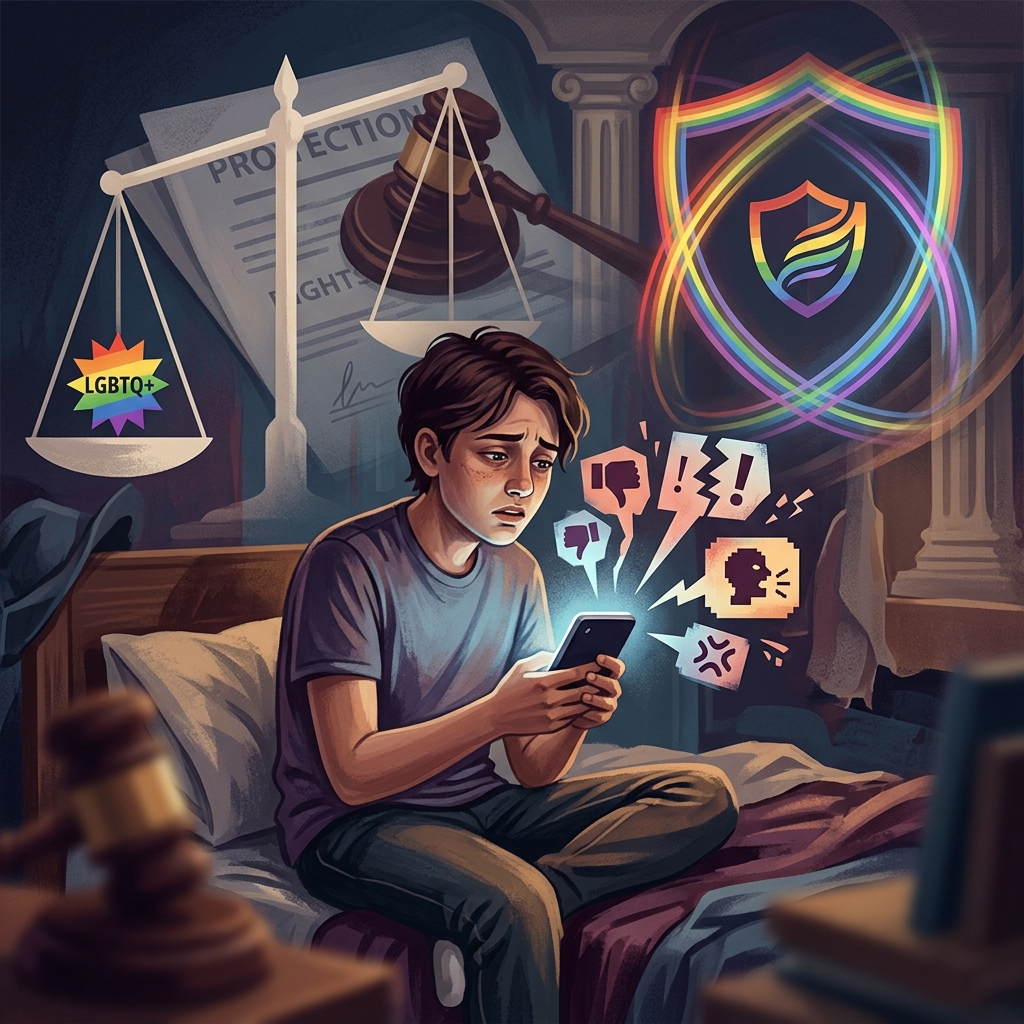
Digital spaces are central to how young people build friendships, explore identity, and seek support. For many LGBTQ+ teens, the internet can offer acceptance and community that may be lacking offline. Yet the same platforms that provide connection can also expose them to relentless online bullying, harassment, and threats—sometimes with tragic consequences.
This article examines the intersection of cyberbullying, LGBTQ+ youth, and the legal system. Drawing on current research and legal principles, it explores what online bullying looks like, how it affects mental health and suicide risk, what legal tools may apply, and how families and schools can respond when abuse unfolds on screen.
Understanding Cyberbullying in the LGBTQ+ Context
Bullying is generally defined as repeated, aggressive behavior intended to harm, intimidate, or coerce someone who is perceived as vulnerable or different. When these behaviors move online—into social media platforms, text messages, group chats, and gaming environments—they become cyberbullying.
For LGBTQ+ youth, online abuse often blends traditional bullying dynamics with sexual orientation or gender identity-based hostility. Research consistently shows that LGBTQ+ young people face higher rates of cyberbullying compared with their heterosexual and cisgender peers.
Common Forms of Online Bullying
Online bullying targeting LGBTQ+ teens can take many forms, including:
- Targeted slurs and hate speech based on sexual orientation or gender identity.
- Outing or threatening to reveal a young person’s LGBTQ+ identity without consent.
- Spreading rumors and false accusations in group chats or public posts.
- Sexual harassment, including unwanted sexual messages or nude images.
- Doxxing—sharing personal information such as addresses or phone numbers.
- Exclusion and shunning, such as coordinated efforts to ostracize someone from online communities.
These behaviors can occur through private messages, public posts, anonymous accounts, or even coordinated campaigns by peers or strangers. Because digital content can be shared widely and instantly, the impact of a single incident can be amplified and repeated, making it difficult for a young person to escape.
How Often Does It Happen?
Recent data illustrate the scope of the problem:
- In the United States, nearly half of all teens report being victims of cyberbullying at some point.
- LGBTQ+ middle school students are particularly vulnerable, with over half reporting being cyberbullied.
- One large study found LGBTQ+ students experienced cyberbullying at significantly higher rates than non-LGBTQ youth, both over their lifetime and in the most recent 30 days.
- Globally, high rates of online bullying have been reported among LGBTIQ+ youth in multiple countries, including China, Singapore, and India.
This evidence paints a clear picture: LGBTQ+ youth are disproportionately targeted by online harassment, and the problem reaches far beyond any single school or country.
Mental Health and Suicide Risk: Why Online Abuse Matters
Cyberbullying is not merely an online inconvenience; it can produce serious psychological harm. For LGBTQ+ youth already confronting stigma and discrimination, ongoing online harassment can intensify feelings of isolation, fear, and hopelessness.
Psychological Consequences of Cyberbullying
Studies have linked bullying and cyberbullying to a range of negative mental health outcomes among LGBTQ+ young people, including:
- Depression and persistent sadness.
- Anxiety and chronic stress.
- Social withdrawal and isolation from peers.
- Substance use as a coping mechanism.
- Post-traumatic stress symptoms after severe or prolonged harassment.
These outcomes are not limited to the immediate aftermath of bullying. Long-term exposure to harassment and minority stress can contribute to chronic mental health conditions and even physical health problems, such as increased risk of cardiovascular disease and immune system challenges.
Bullying and Suicide Risk Among LGBTQ+ Youth
One of the most alarming findings in recent research is the link between bullying and suicide attempts. The Trevor Project has reported that LGBTQ+ students who were bullied in the past year had three times greater odds of attempting suicide compared to those who were not bullied, regardless of whether the bullying occurred in-person or electronically.
| Experience in Past Year | Relative Odds of Suicide Attempt |
|---|---|
| No reported bullying | Baseline odds |
| Bullying (in-person or online) | Approximately 3x baseline |
While research does not claim that any single incident of cyberbullying directly “causes” suicide, the evidence shows that harassment is a powerful risk factor. For vulnerable teens, repeated online abuse may intensify existing mental health challenges and reduce access to supportive relationships or safe environments.
Legal Perspectives: When Does Online Bullying Become a Legal Issue?
Online bullying often raises complex legal questions. Families and schools may wonder when harmful digital behavior crosses the line from cruel speech to unlawful conduct. The answer depends on jurisdiction, but several common legal concepts are frequently relevant.
Harassment, Threats, and Hate-Motivated Conduct
In many legal systems, certain forms of online behavior can be prosecuted or addressed through civil remedies, especially when they involve:
- Threats of violence or credible threats to a person’s safety.
- Targeted harassment that is severe, pervasive, and directed at an individual.
- Hate-motivated harassment targeting protected characteristics such as sexual orientation or gender identity.
- Non-consensual sharing of intimate images or sexually explicit content.
Depending on local law, these behaviors may fall under criminal statutes (e.g., harassment, stalking, hate crimes) or civil claims (e.g., intentional infliction of emotional distress, invasion of privacy). Schools may also be legally obligated to respond when bullying interferes with a student’s ability to access education.
School Responsibilities and Affirming Environments
Even though cyberbullying occurs online, schools often play a crucial role in prevention and response. Research from The Trevor Project has shown that LGBTQ+ students who described their schools as LGBTQ-affirming had significantly lower odds of being bullied compared to those in non-affirming environments.
This suggests that school policies and climate can indirectly influence legal risk. Institutions that ignore or tolerate harassment may face claims under anti-discrimination laws, human rights statutes, or education regulations when students are denied safe, equal access to education because of bullying.
Digital Platforms: Responsibility and Limits
Social media platforms, messaging applications, and gaming companies sit at the center of cyberbullying. Most publish community standards forbidding harassment, hate speech, and non-consensual sexual content, and they offer tools for reporting abusive behavior.
Platform Tools and Safety Features
Common platform tools include:
- Reporting mechanisms for abusive posts or accounts.
- Blocking or muting features to limit contact.
- Privacy settings that control who can contact or view a user’s content.
- Data retention and law enforcement cooperation policies.
These tools can be vital in stopping immediate harassment, but they may not address underlying trauma or systemic bias. Moreover, platforms may be legally shielded from liability for user-generated content in some jurisdictions, complicating efforts to hold them accountable.
Prevention and Response: Supporting LGBTQ+ Teens
Given the heightened vulnerability of LGBTQ+ youth to cyberbullying, a multi-layered response is essential. Families, schools, communities, and health professionals all have roles to play.
Protective Factors That Reduce Harm
Research and practice suggest several protective factors that can mitigate the impact of online bullying:
- Affirming school climate: Clear policies against bullying, inclusive curricula, and visible support for LGBTQ+ students.
- Supportive family relationships: Acceptance and open communication about identity and online experiences.
- Access to mental health care: LGBTQ+-competent counselors and crisis services.
- Peer support networks: Gay-straight alliances or similar student groups.
- Digital literacy and resilience: Skills for managing privacy, recognizing abuse, and seeking help.
Practical Steps for Parents and Caregivers
Parents and caregivers may feel overwhelmed by the speed and complexity of online interactions. Yet they can make a meaningful difference by combining emotional support with practical action:
- Initiate nonjudgmental conversations about digital life, including how the young person feels about their online spaces.
- Take reports of harassment seriously, even if the abuse is not visible to adults.
- Document abusive content (screenshots, dates, usernames) in case school or legal intervention becomes necessary.
- Help adjust privacy settings and block or report harassing accounts.
- Connect teens with professional support if they show signs of depression, anxiety, or suicidal thoughts.
Strategies for Schools and Educators
Schools can address cyberbullying proactively through policy and practice:
- Adopt explicit anti-bullying policies that cover both offline and online conduct, including LGBTQ-specific protections.
- Provide teacher training on recognizing and responding to cyberbullying and minority stress.
- Offer anonymous reporting mechanisms for students experiencing bullying.
- Collaborate with counselors to support affected students and address the broader school climate.
- Engage students in peer-led initiatives promoting respect and inclusion.
Intersection of Law, Ethics, and Technology
Legal rules alone cannot solve the complex social and psychological dynamics of cyberbullying. Instead, they operate alongside ethical considerations and technical realities.
From an ethical perspective, online behavior targeting LGBTQ+ teens raises questions about freedom of expression, privacy, and the responsibility of peers and bystanders. Legally, balancing these interests often involves weighing free speech protections against the rights of individuals to be free from targeted harassment and threats.
Technologically, platforms face challenges in detecting abusive content at scale, distinguishing harmful speech from legitimate discourse, and respecting privacy while responding swiftly to danger. These tensions underscore the need for ongoing dialogue among lawmakers, technologists, educators, and youth themselves.
FAQs: Cyberbullying, LGBTQ+ Youth, and Legal Concerns
Is cyberbullying against LGBTQ+ teens more common than against other youth?
Yes. Multiple studies have found that LGBTQ+ young people experience higher rates of bullying and cyberbullying than their non-LGBTQ peers, both in school and online.
Does online bullying directly cause suicide?
Research does not claim a direct, one-to-one causal relationship. However, bullying—online or offline—is a significant risk factor for suicide attempts among LGBTQ+ youth. Those who report being bullied have roughly three times greater odds of attempting suicide than those who are not bullied.
When should families consider legal action?
Legal action may be considered when online behavior involves threats of violence, severe and repeated harassment, hate-motivated abuse, or non-consensual sharing of intimate images. Families should consult local laws and, when possible, seek advice from legal professionals to assess options.
What can schools do if cyberbullying happens off campus?
Policies vary by jurisdiction, but many schools address off-campus behavior when it substantially disrupts the educational environment or interferes with a student’s safety. Schools can provide support, coordinate with families, and, where appropriate, involve law enforcement or other agencies.
How can LGBTQ+ teens protect themselves online?
While the burden should not fall solely on young people, practical steps include using strong privacy settings, limiting personal information, blocking and reporting abusive accounts, saving evidence of harassment, and reaching out to trusted adults or organizations when abuse occurs.
References
- The Online Experiences of LGBTQ+ Youth — Digital Wellness Lab. 2024-05-01. https://digitalwellnesslab.org/research-briefs/the-online-experiences-of-lgbtq-youth/
- Bullying of LGBTQ+ Children and Adolescents in Schools — Frontiers in Psychiatry. 2024-03-05. https://www.frontiersin.org/articles/10.3389/fpsyt.2024.1493745
- Bullying and Suicide Risk among LGBTQ Youth — The Trevor Project. 2021-10-01. https://www.thetrevorproject.org/research-briefs/bullying-and-suicide-risk-among-lgbtq-youth/
- Bullying, Cyberbullying, and LGBTQ Students — University at Buffalo, Alberti Center. 2019-01-01. https://ed.buffalo.edu/content/dam/ed/alberti/docs/Bullying-Cyberbullying-LGBTQ-Students.pdf
- LGBTIQ+ Youth: Bullying and Violence at School — UN Free & Equal. 2018-06-01. https://www.unfe.org/know-the-facts/challenges-solutions/lgbtiq-youth-bullying-and-violence-at-school
Similar Articles








Read full bio of medha deb


