
Beyond the Ballot Box: Oklahoma Reshapes Justice Reform
How a grassroots movement reshaped criminal justice reform.
Introduction
The pursuit of systemic criminal justice reform in the United States is rarely characterized by sudden, sweeping legislative victories. Instead, it is an arduous and protracted effort defined by incremental progress, strategic grassroots mobilization, and the gradual shifting of public consciousness. A profound illustration of this complex dynamic unfolded in Oklahoma during the 2020 election cycle with the introduction of State Question 805. While the ballot measure ultimately failed to pass at the polls, the campaign infrastructure and public discourse it generated engineered a seismic shift in how voters, policymakers, and communities understand the devastating impact of mass incarceration. By challenging long-held assumptions about punishment and public safety, the movement transformed the political landscape. This article explores the core mechanics of sentence enhancements, the unique context of Oklahoma’s prison crisis, the mobilization of local advocates, and how a defeated ballot initiative managed to achieve a lasting cultural victory that transcends the ballot box.
The Architecture of Mass Incarceration: Sentence Enhancements
To fully grasp the significance of the reform movement, it is essential to understand the legal mechanisms that artificially inflate prison populations. Chief among these mechanisms are sentence enhancements. In the criminal justice system, sentence enhancements are legal provisions that allow or mandate judges to increase a defendant’s prison term based on their prior criminal history. Originally marketed to the public as a tool to incapacitate dangerous, repeat violent offenders, these laws have been aggressively applied to low-level, nonviolent crimes.
The result is a compounding effect of punishment. An individual who commits a minor nonviolent offense—such as simple drug possession or petty theft—might normally face a brief sentence, probation, or mandated treatment. However, if that individual has a prior felony record, prosecutors can leverage sentence enhancement laws to multiply the potential prison time, often turning short sentences into decades behind bars. This dynamic effectively punishes people multiple times for their past mistakes, long after they have already served their original sentences. It shifts the focus of the justice system away from the context of the current offense and rehabilitative potential, and instead institutionalizes a cycle of permanent marginalization. For nonviolent offenders, sentence enhancements act as a relentless anchor, ensuring that true reintegration into society remains perpetually out of reach.
Ground Zero: Analyzing Oklahoma’s Unique Incarceration Crisis
Oklahoma serves as a stark and sobering case study for the devastating socio-economic effects of punitive sentencing laws. For decades, the state has grappled with an incarceration crisis of unprecedented proportions, consistently ranking among the top jurisdictions in the nation—and by extension, the world—for its per capita imprisonment rate. According to comprehensive data analyzed by the Prison Policy Initiative and the Bureau of Justice Statistics, Oklahoma locks up a higher percentage of its citizens than almost any independent democracy on earth.
The crisis is particularly acute among marginalized populations and women. Historically, Oklahoma has held the tragic distinction of having one of the highest female incarceration rates nationwide. The vast majority of these women are nonviolent offenders, often driven into the justice system by unaddressed underlying issues such as chronic poverty, untreated mental health disorders, and severe substance abuse.
Consider the statistical landscape of the state’s penal system:
- Overall Incarceration: The state locks up hundreds of individuals per 100,000 residents, vastly outpacing the national average and overcrowding existing facilities.
- Female Incarceration: Women are disproportionately impacted, separating thousands of mothers from their children and destabilizing family structures across multiple generations.
- Nonviolent Offenses: A significant portion of the prison population is serving extended sentences for property and drug-related crimes, a crisis explicitly exacerbated by harsh enhancement laws.
This harsh environment created a desperate need for a paradigm shift, setting the vital stage for grassroots organizations to intervene and demand systemic accountability.
The Financial Toll: How Over-Incarceration Drains Public Resources
Beyond the profound moral and social costs, the financial burden of over-incarceration places a staggering strain on public resources. Maintaining a bloated prison system requires hundreds of millions of taxpayer dollars annually—funds that are subsequently diverted away from critical community investments such as public education, healthcare infrastructure, and preventative social services.
Every year an individual is kept behind bars due to a sentence enhancement, the state incurs significant housing, medical, and administrative costs. Studies continually suggest that lengthy prison terms for nonviolent offenses yield diminishing returns for public safety. In fact, removing individuals from their communities, stripping them of their earning potential, and branding them with insurmountable criminal records often increases recidivism. The advocates behind the state’s reform movement recognized that by framing sentence enhancements not only as a human rights issue but also as an issue of fiscal responsibility, they could build a broader, more bipartisan coalition capable of challenging the deeply entrenched tough-on-crime narrative.
The Grassroots Crusade: Forging the Campaign for Reform
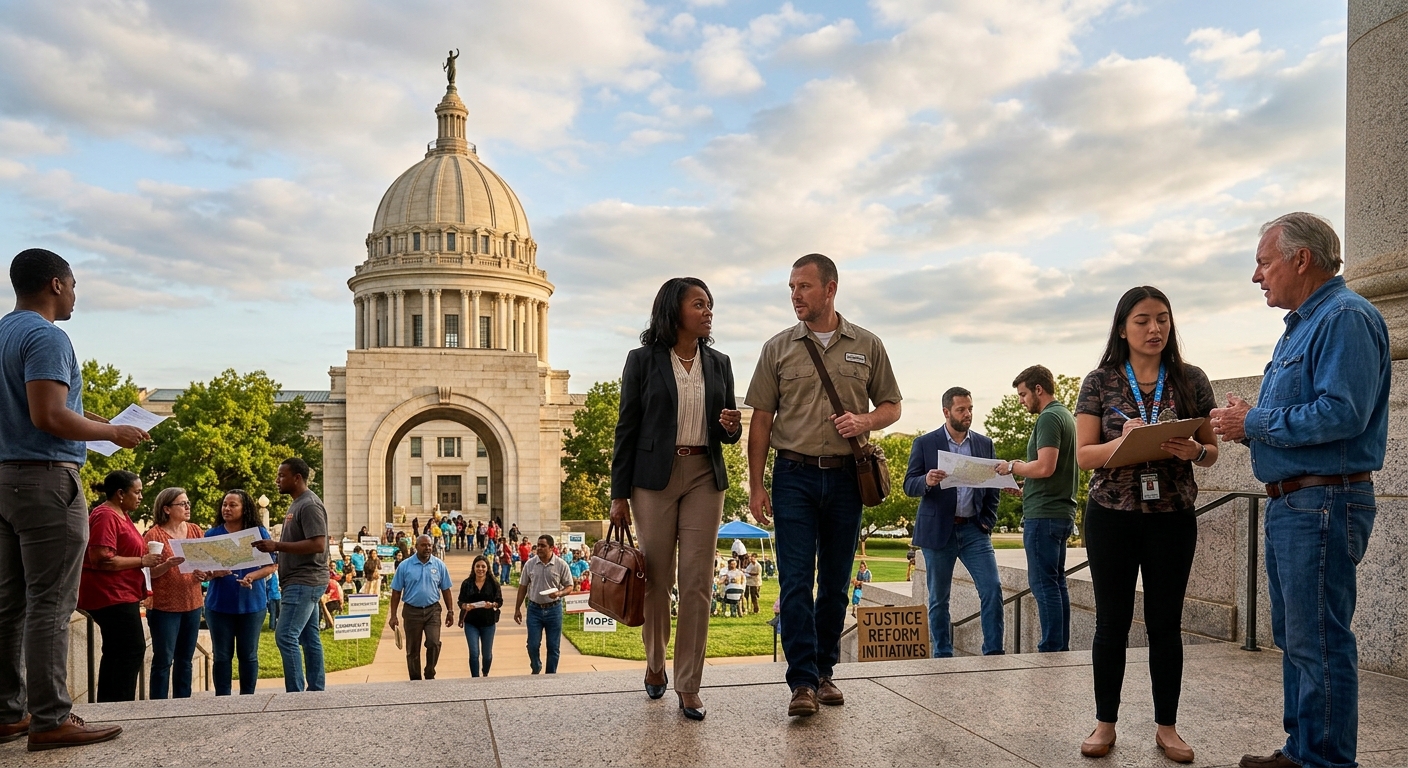
The sheer scale of Oklahoma’s incarceration crisis birthed a powerful, community-driven counter-movement. A diverse coalition of civil rights organizations, local advocates, faith leaders, and directly impacted families banded together to challenge the status quo. State Question 805 was born from this urgent collaboration. The initiative sought a constitutional amendment that would explicitly prohibit the use of prior nonviolent felony convictions to enhance the statutory range of punishment for subsequent nonviolent felonies.
Organizing a statewide campaign of this magnitude required immense logistical coordination and resilience, particularly against the backdrop of an unprecedented global pandemic. Organizers engaged in rigorous signature-gathering efforts, successfully navigating stringent legal thresholds to secure the measure’s place on the November 2020 ballot. They deployed comprehensive digital campaigns, organized socially distanced rallies, and utilized targeted voter education drives. The grassroots coalition systematically dismantled the fear-based rhetoric typically employed by opposition groups. By fostering civic engagement at the neighborhood level, the campaign empowered ordinary citizens to recognize their collective agency in dismantling the architecture of mass incarceration.
Humanizing the Data: The Strategic Power of Lived Experience
A central, strategic pillar of the campaign was its unwavering commitment to storytelling. For too long, the political discourse surrounding criminal justice had been dominated by abstract statistics and dehumanizing legal jargon. The reform coalition recognized that to change minds, they first had to change hearts. They accomplished this by elevating the lived experiences of those directly traumatized by the carceral state.
Formerly incarcerated individuals, their children, and their parents were positioned not merely as subjects of the campaign, but as its foremost spokespeople and leaders. They shared harrowing accounts of facing decades in prison for minor property crimes, detailing the psychological toll of prolonged separation and the systemic barriers to reentry. This humanizing approach forced voters to confront the harsh reality that those suffering under extreme sentencing laws were not irredeemable threats, but neighbors, parents, and community members struggling with poverty or addiction. By replacing the stigma of a criminal record with the dignity of human resilience, the movement shattered the monolithic stereotypes that had historically sustained public support for punitive justice policies.
Redefining Electoral Victory: The Lasting Cultural Shift
When the final votes were tallied in the November 2020 election, the ballot initiative was defeated, with approximately 61% of voters rejecting the measure. However, assessing the success of the reform movement solely through the binary lens of an electoral win or loss obscures the profound structural and cultural changes it catalyzed. In the realm of systemic advocacy, redefining the narrative is often the critical first step toward eventual legislative victory.
Despite the setback at the polls, the campaign achieved several monumental victories. First, it forced sentence enhancements—a previously obscure legal mechanism—into the center of statewide political debate. It educated millions of voters on the nuanced drivers of mass incarceration. Second, the movement built an unprecedented, resilient infrastructure of grassroots organizers and volunteers that remains active and highly mobilized today. Third, it established a new political baseline; policymakers and candidates are now routinely forced to articulate their stances on criminal justice reform, rather than defaulting to archaic tough-on-crime posturing. The campaign shattered the illusion of consensus around punitive sentencing, proving that a significant, vocal percentage of the electorate demands a more compassionate, evidence-based approach to public safety and rehabilitation.
A National Playbook: Lessons for Future Reform Movements
The legacy of this initiative extends far beyond state lines, serving as a critical playbook for advocates and policymakers nationwide. As other jurisdictions grapple with the financial and human costs of overcrowded prisons, the Oklahoma experience offers invaluable strategic lessons. It demonstrates the necessity of building unconventional, bipartisan coalitions that unite fiscal conservatives with progressive civil rights advocates. It underscores the unparalleled power of centering directly impacted voices to cut through political polarization.
Moreover, it highlights that systemic reform is a marathon, not a sprint. A single lost election does not signal the end of a movement; rather, it often serves as a crucible that refines strategies and deepens community resolve. The cultural shift achieved by the campaign proves that when you change the narrative and educate the electorate, you lay the indispensable groundwork for future legislative triumphs. The fight against mass incarceration requires persistence, and the groundwork laid in 2020 continues to inspire subsequent efforts to dismantle oppressive sentencing laws across the country.
Frequently Asked Questions
What was the primary goal of the 2020 ballot initiative?
The initiative aimed to amend the state constitution to prevent prosecutors and judges from using prior, nonviolent felony convictions to enhance or increase the prison sentences for subsequent nonviolent offenses. The goal was to reduce the state’s exceptionally high incarceration rate and promote proportional sentencing.
What exactly are sentence enhancements?
Sentence enhancements are legal rules that allow the justice system to add years, or even decades, to a person’s prison sentence based on factors like their previous criminal record. While originally intended for serious, violent repeat offenders, they have often been used to impose extreme sentences on individuals committing minor, nonviolent crimes.
Why is Oklahoma often cited in discussions about mass incarceration?
The state has historically maintained one of the highest overall incarceration rates in the United States, as well as one of the highest female incarceration rates in the world. Its reliance on strict sentencing laws and enhancements has resulted in thousands of nonviolent offenders serving lengthy prison terms.
Did the defeat of the initiative end the reform movement?
No. While the measure did not pass, the campaign successfully built a massive grassroots infrastructure, educated the public about the mechanisms of mass incarceration, and permanently shifted the political discourse. This established a strong foundation for future criminal justice reform efforts.
References
- Oklahoma State Question 805, Criminal History in Sentencing and Sentence Modification Initiative (2020) — Ballotpedia. 2020-11-03. https://ballotpedia.org/Oklahoma_State_Question_805,_Criminal_History_in_Sentencing_and_Sentence_Modification_Initiative_(2020)
- Oklahoma profile — Prison Policy Initiative. https://www.prisonpolicy.org/profiles/OK.html
- Prisoners in 2022 – Statistical Tables — Bureau of Justice Statistics. 2023-11-30. https://bjs.ojp.gov/library/publications/prisoners-2022-statistical-tables
- Oklahoma voters reject both state questions — The Frontier. 2020-11-03. https://www.readfrontier.org/story/oklahoma-voters-reject-both-state-questions/
Similar Articles








Read full bio of medha deb


