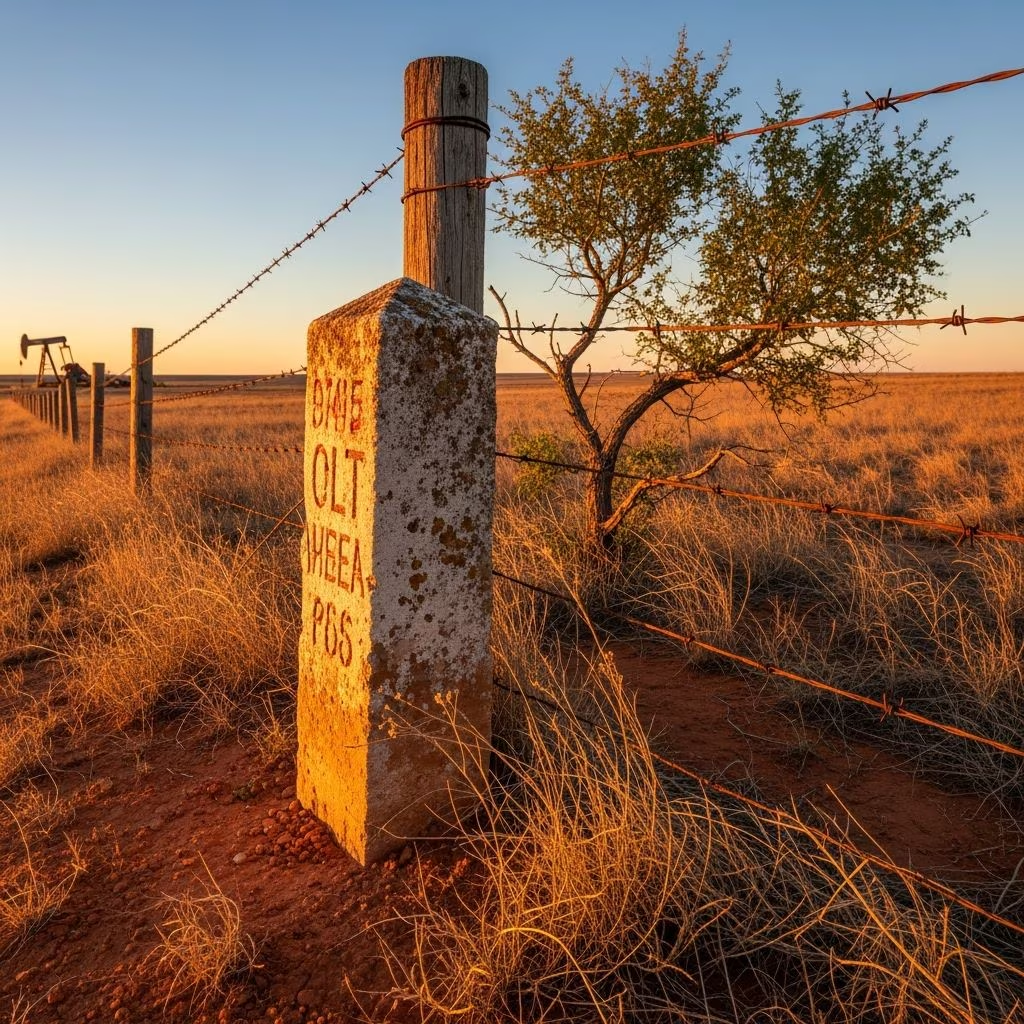
Adverse possession is a legal doctrine that allows someone who occupies land they do not formally own to eventually obtain legal title if they meet strict requirements for a long period of time. In Oklahoma, these rules are defined in state statutes and court decisions, and they affect both landowners and people who have long used another person’s property without permission.
What Is Adverse Possession Under Oklahoma Law?
In Oklahoma, adverse possession is sometimes described as title by prescription. The Oklahoma statutes provide that long-term occupancy, for the period specified in the laws on limitations, can create a legal title good against all others. In simple terms, if a person treats land as their own for long enough, in a very particular way, the law may eventually recognize them as the owner.
The key time period for most claims to recover real property in Oklahoma is 15 years. If the true owner does not bring a timely legal action to recover the property within that period, and if the occupant’s use satisfies all the elements described below, the occupant can seek to quiet title in their own name.
Core Legal Elements of Adverse Possession in Oklahoma
Oklahoma courts have broken adverse possession into several required elements. Missing any one of these generally defeats a claim.
- Actual possession – The claimant must physically use or occupy the land, not just claim it on paper.
- Open and visible use – The occupation must be obvious to anyone who looks; it cannot be secretive or hidden.
- Exclusive control – The claimant must act as if they are the only owner, not sharing possession with the record owner or the public.
- Hostile or adverse – The use must be without the owner’s permission and inconsistent with the owner’s rights; this does not require ill will, only that it is non-permissive.
- Continuous for the statutory period – The elements above must exist, without major interruption, for at least 15 years.
- Claim of ownership against all others – The possessor must act under a claim of right, as though they are the true owner, against all competing titles.
Oklahoma appellate decisions emphasize that courts look at the overall pattern of behavior: fencing, building structures, paying taxes, maintaining the land, and excluding others can all be evidence of adverse possession when combined over time.
Time Limits and the 15-Year Requirement
Oklahoma’s limitations statute states that actions to recover real property must generally be brought within fifteen years. If the record owner fails to act within this period while another person is in qualifying possession, their right to sue can be barred, and the occupant may obtain title by prescription.
Important timing points include:
- The 15-year period usually begins when the occupant first starts meeting all adverse possession elements (actual, open, exclusive, hostile, continuous).
- Short, casual, or permissive use normally does not start the clock running.
- Gaps in occupancy or abandonment may break the continuity needed for a successful claim.
Color of Title and Tax Payment Requirements
In addition to the 15-year period, Oklahoma has distinctive rules about color of title and property taxes for some adverse possession situations.
Color of title generally means a written instrument, such as a deed or tax deed, that appears to give ownership but is legally defective in some way. Oklahoma law often requires that a claimant seeking to rely on adverse possession must obtain a tax-assessor–issued title after paying property taxes for a set period, especially when the record owner has not been paying those taxes.
Key points frequently discussed in practice guides on Oklahoma law include:
- Many adverse possession claims depend on the claimant having color of title obtained through the local tax assessor.
- To receive that tax title, the claimant generally must pay property taxes on the land for a defined number of consecutive years (often five years) while the record owner fails to do so.
- Once the claimant has such a tax title, they may satisfy both the tax payment and color of title components that support an adverse possession theory.
The statutory 15-year period for real property actions still applies; paying taxes and securing color of title are additional pieces that strengthen or are required for certain claims.
How Oklahoma Courts Evaluate Occupant Behavior
Court decisions interpreting Oklahoma adverse possession law examine how the occupant has actually treated the land during the claimed period. The more an occupant behaves like a true owner, the more likely a court is to view their possession as adverse.
| Factor | Examples of Behavior Suggesting Adverse Possession |
|---|---|
| Use and improvement | Building or maintaining fences, structures, driveways; clearing brush; mowing; landscaping. |
| Control and exclusivity | Locking gates, posting “no trespassing” signs, preventing others from using the land as of right. |
| Visibility | Open use visible to neighbors and the record owner; no attempt to hide occupancy. |
| Financial responsibility | Paying property taxes, utilities, or special assessments associated with the land. |
Defenses and Strategies for Oklahoma Landowners
Property owners who want to protect their land from adverse possession claims have practical tools available. Many defenses focus on defeating one or more of the required elements described earlier.
Common Legal Defenses
- Permission – If the owner can show that the occupant had permission to be on the property (for example, by a license, lease, or written consent), the occupancy is not “hostile,” and adverse possession typically fails.
- Interruption of possession – Evidence that the owner re-entered, removed the occupant, or otherwise regained control can break continuity before 15 years passes.
- Shared or non-exclusive use – If the owner or the general public continued to use the land in a way inconsistent with exclusive possession, the exclusivity element may be missing.
- Timely lawsuit – Filing a quiet title, ejectment, or similar action before the 15-year period runs prevents the statute of limitations from operating in favor of the occupant.
Practical Steps for Owners to Reduce Risk
- Pay all property taxes and assessments on time, and keep records of payment.
- Inspect vacant or distant parcels regularly to detect unauthorized use early.
- Post signs, maintain fences, and respond promptly if someone begins to encroach.
- Put agreements in writing when allowing neighbors to use a driveway, path, or strip of land, so the use clearly remains permissive.
- Consult a real estate attorney promptly if a neighbor or occupant starts asserting an ownership claim or files a quiet title action.
Special Situations: Squatters, Neighbors, and Holdover Tenants
Adverse possession arises in many different everyday scenarios. Oklahoma law applies the same basic elements, but the facts can look very different from case to case.
- Informal boundary shifts between neighbors – A fence built in the wrong location or a driveway across a property line may lead one neighbor to occupy a strip of land long enough to claim it, if all elements are met.
- Squatters on vacant land – Individuals who move onto abandoned rural or urban properties sometimes attempt to meet the statutory period, pay taxes, and obtain color of title.
- Holdover tenants – A tenant who stays after a lease expires can be a complication. In many situations their original entry was permissive, which works against hostility unless circumstances change and the landlord clearly withdraws consent.
Legislative Attention and Possible Changes
Because adverse possession can shift ownership without a traditional sale, it draws attention from lawmakers. Oklahoma legislators have considered language that would strengthen protections for landowners—for example, by clarifying that long-term payment of taxes by the owner can block certain adverse possession claims even when someone else occupies the land.
Anyone facing a real dispute should confirm whether there have been recent amendments to Oklahoma’s statutes or new appellate decisions that affect how adverse possession works in practice.
When to Seek Legal Advice
Adverse possession cases are fact-intensive and can involve complex issues of title, surveys, tax records, and past use. Oklahoma bar publications and practitioner materials repeatedly caution that such disputes should be handled with the assistance of a qualified real estate attorney, especially when litigation or a quiet title action is likely.
Professional guidance is especially important when:
- A neighbor claims to own part of your land by long use.
- You have occupied and cared for a property for many years without a deed and want to know whether you can secure title.
- Tax deeds, foreclosure histories, or complex chains of title are involved.
- The land is valuable, encumbered by easements, or tied to business operations.
Frequently Asked Questions About Oklahoma Adverse Possession
Q: How many years are required for adverse possession in Oklahoma?
A: For most claims involving recovery of real property, Oklahoma requires at least 15 years of qualifying possession before adverse possession can be asserted.
Q: Does paying property taxes help an adverse possession claim?
A: Yes. Paying property taxes for several consecutive years often supports an adverse possession claim, and in Oklahoma many claimants must pay taxes and obtain a tax-assessor title (color of title) to complete their claim.
Q: Can I lose my land if I keep paying taxes but someone else is using it?
A: Continued payment of taxes strongly supports your ownership and is one factor that can limit adverse possession claims. Proposed legislative language in Oklahoma has aimed to ensure that an owner who pays all taxes during the claimed period is better protected against losing title, but you should confirm current law with counsel because details can change.
Q: Is permission the same as adverse possession?
A: No. If you allow someone to use your land, their possession is generally permissive, not hostile, and does not satisfy a core requirement of adverse possession. Clear written permission often helps prevent later disputes.
Q: What should I do if a neighbor says they own part of my property?
A: Gather your deeds, surveys, and tax records, document how the land has been used, and consult an Oklahoma real estate attorney promptly. You may need a survey, negotiation, or a quiet title action to resolve the boundary or ownership issue under Oklahoma law.
References
- Oklahoma Statutes § 12-93: Limitation of real actions — Oklahoma Legislature. 2024. https://law.justia.com/codes/oklahoma/title-12/section-12-93/
- Adverse Possession in Oklahoma — Kania Law (OKC Civil Attorneys). 2020-10-01 (approx.). https://www.okcattorneys.net/oklahoma-city-business-law-attorneys/what-is-adverse-possession-in-oklahoma-and-some-changes-to-the-law
- Oklahoma Squatter’s Rights & Adverse Possession Laws — DoorLoop. 2023-07-15 (approx.). https://www.doorloop.com/laws/oklahoma-squatters-rights
- Oklahoma Squatter’s Rights & Adverse Possession Laws [2025] — Innago. 2025-01-10 (approx.). https://innago.com/oklahoma-squatters-rights/
- What Happens If Someone Says They Own My Property? — Pence Law Firm, P.C. 2022-05-18. https://www.pencelawok.com/blog/what-happens-if-someone-says-they-own-my-property/
- What Is Adverse Possession Under Oklahoma Law? — Wirth Law Office Muskogee. 2021-08-02. https://www.muskogeeattorney.pro/muskogee-lawyer-blog/2021/08/what-is-adverse-possession-under-oklahoma-law/
- Adverse Possession in Oklahoma — Oklahoma Society of Land Surveyors. 2013-04-01 (approx.). https://www.osls.org/blogpost/976719/201876/Adverse-Possession-in-Oklahoma