
Establishing Business Credibility in NYC Without Office Overhead
Secure a prestigious Manhattan address for your business without expensive lease commitments.
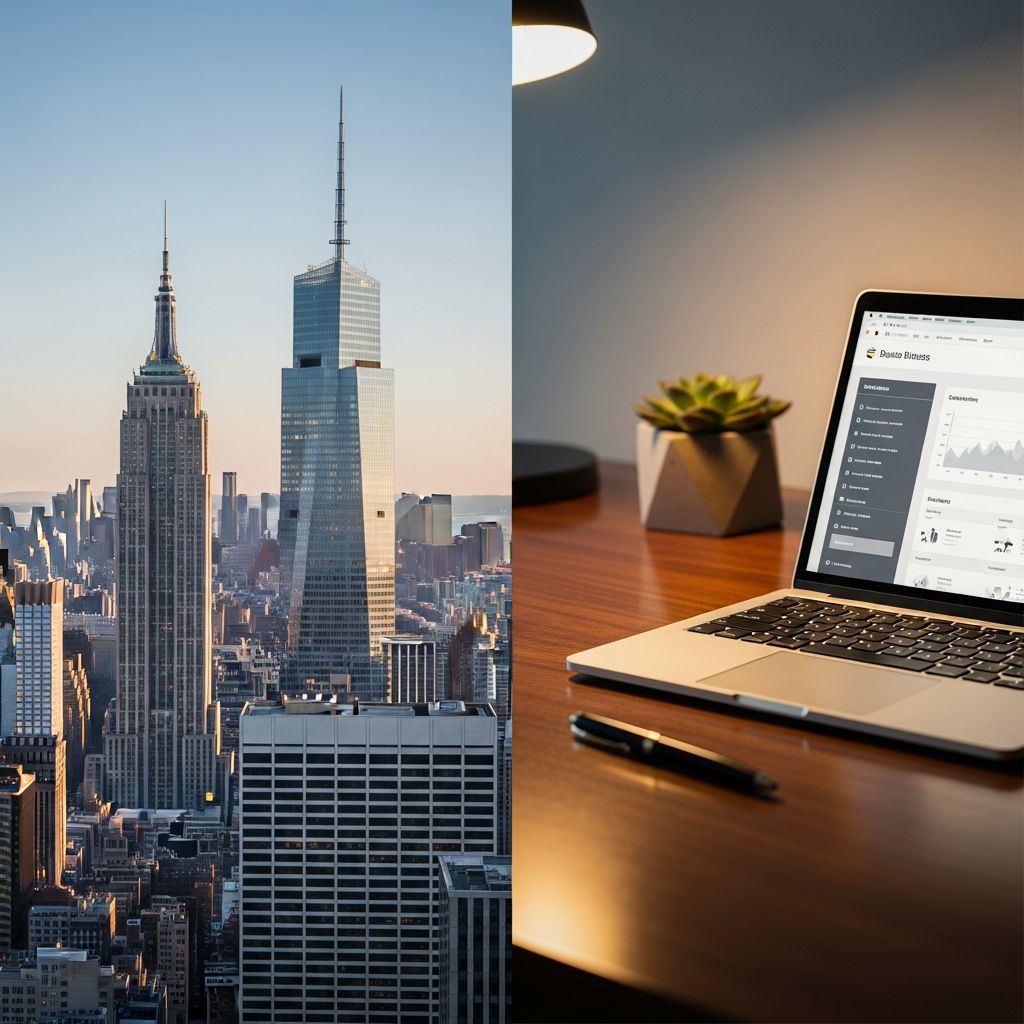
Building Professional Presence in New York Without Physical Office Space
Entrepreneurs and established businesses alike recognize that having a New York City address carries significant professional weight. The challenge has traditionally been that securing physical office space in Manhattan requires substantial financial commitment, with commercial lease prices reaching into thousands of dollars monthly. For businesses operating remotely, maintaining a home-based operation, or establishing a presence in multiple markets, the economics of traditional office leasing become prohibitively expensive. Virtual business addresses have emerged as a practical solution that allows companies to claim prestigious Manhattan locations while maintaining operational flexibility and controlling costs.
The landscape of business operations has fundamentally shifted, particularly following the normalization of remote work across industries. Many professionals have discovered they can run successful enterprises without maintaining a dedicated physical office. However, the absence of a legitimate business address creates challenges for credibility, client perception, and legal compliance. A virtual address service bridges this gap by providing a real street address, mail handling capabilities, and professional services that elevate business image without the overhead traditionally associated with commercial real estate.
Understanding Virtual Address Services and Their Core Functions
Virtual address services operate by assigning clients a legitimate street address in prime business locations throughout Manhattan. Unlike a traditional PO box, which is clearly marked and often perceived as impersonal, a virtual address is a real street address that belongs to a professional business center or office building. This distinction matters significantly for business legitimacy and professional perception.
The fundamental service components include mail reception and management. When mail arrives at the virtual address, trained staff receives it and notifies clients. Many services digitize incoming mail by creating scanned PDFs of documents, allowing clients to view correspondence from anywhere using secure online portals or mobile applications. This digital-first approach eliminates the need for physical mail to be present at a home or office location.
Beyond mail handling, many virtual address providers offer supplementary services that enhance business operations:
- Professional phone numbers with call forwarding and voicemail capabilities
- Meeting room access for client consultations and business meetings
- Receptionist services to greet visitors and manage appointments
- Fax receiving and sending capabilities
- Mail forwarding to any location worldwide
- Document scanning and secure storage
These layered services allow businesses to project a fully operational office presence despite conducting work remotely. A client calling a virtual office phone number experiences a professional interaction, potentially including a receptionist answering with the business name, without the client needing to know the work actually happens elsewhere.
Manhattan Neighborhoods and Address Prestige
Location selection within New York City significantly impacts the professional perception created by a virtual address. Certain Manhattan neighborhoods carry particular prestige and industry associations that influence how businesses using those addresses are perceived.
Park Avenue, located on the Upper East Side, represents old-money wealth and financial sophistication. Businesses using Park Avenue addresses often position themselves in finance, investment management, or luxury services. The address itself communicates stability, established success, and high-net-worth client relationships. Professional services firms, investment advisors, and luxury retail brands frequently select Park Avenue addresses to reinforce their market positioning.
Fifth Avenue in Midtown Manhattan commands attention as one of the world’s most recognizable addresses. Located near Rockefeller Center and premium retail establishments, Fifth Avenue addresses convey prestige and prominence. Technology companies, luxury brands, and firms seeking maximum visibility often choose Fifth Avenue locations to enhance brand perception and client confidence.
Wall Street and the surrounding Financial District addresses appeal to financial services companies, investment firms, and companies wanting to position themselves within the banking and trading industries. These locations carry historical significance and industry-specific credibility that matters when marketing to financial clients and investors.
The choice of address becomes part of business branding strategy. A consulting firm selecting a Park Avenue address signals different positioning than one selecting a Wall Street address, though both communicate professionalism and establishment presence. Virtual address services recognize this and typically offer multiple location options to match various business profiles.
Cost Comparison: Virtual Addresses Versus Traditional Office Space
The financial advantages of virtual addresses become immediately apparent when compared to traditional commercial leasing. New York City commercial real estate represents one of the highest-cost markets in the United States. Even small office spaces in secondary Manhattan locations command premium prices, with many leases requiring minimum terms of one to three years.
Virtual address services begin at significantly lower price points. Basic virtual mailing address plans start around $9.99 to $14.99 monthly, providing a real street address and mail handling. Services including phone numbers and meeting room access typically range from $29 to $69 monthly, depending on the specific provider and location prestige. Premium virtual office packages with enhanced amenities may reach $199 or more monthly, but this remains a fraction of actual office lease costs.
Traditional Manhattan office space, by comparison, averages $20 to $40+ per square foot annually, depending on location. A modest 200-square-foot office would cost approximately $4,000 to $8,000 monthly before considering utilities, furniture, equipment, building maintenance fees, and other operational expenses. Over a 12-month period, a basic virtual address service costs between $120 and $828, while minimal traditional office space costs exceed $48,000 before ancillary expenses.
This economic comparison explains why businesses across diverse industries and company sizes utilize virtual addresses. Startups can establish professional presence during early-stage development without consuming capital that could otherwise fund operations or marketing. Established remote workers and independent professionals can maintain credibility with clients and business contacts without unnecessary overhead. Businesses operating in multiple cities can establish local presence in each market without maintaining physical offices.
Legal and Compliance Considerations
Businesses considering virtual addresses must understand the legal framework governing their use. Virtual addresses are legitimate business tools and comply with regulations in all fifty states. However, specific requirements vary based on business structure and jurisdiction.
For business registration purposes, virtual addresses function as legitimate business addresses. Limited liability companies, corporations, and sole proprietorships can register using virtual address locations. When filing formation documents with state authorities, the virtual address appears as the official business address. This supports legal compliance and ensures proper receipt of government correspondence and regulatory notices.
Mail-related regulations require clients to verify their identity when establishing virtual address services. Postal Inspection Service Form 1583, which authorizes a third party to receive mail on behalf of someone, typically requires submission along with government-issued identification. This verification process protects against mail fraud while enabling virtual address operations to function legally.
Some specialized professions face additional restrictions on address usage. Certain regulated industries, including law practices and medical practices, may have specific requirements about how addresses are displayed or represented. However, virtual addresses themselves operate within legal bounds for virtually all business types when properly disclosed.
Businesses should maintain clarity about their actual operational location for tax purposes and regulatory compliance. Virtual address services provide professional presence and legitimate mail handling, but cannot substitute for truthful disclosure about where business actually operates. This distinction becomes important for tax filings, business insurance, and regulatory compliance in the specific jurisdiction where operations occur.
Digital Mail Management and Remote Access
Modern virtual address services emphasize digital-first mail management. Rather than requiring clients to pick up physical mail or arrange periodic forwarding, most services scan incoming documents and provide secure online access through web portals or mobile applications.
The digital process typically works as follows: mail arrives at the physical address, reception staff logs the item, and digital imaging creates searchable PDF files. Clients receive notifications (often via email or through the mobile app) that new mail has arrived. Using their secure account, clients can view document images, download files, forward mail to another address, or request shredding of sensitive documents.
This digital approach offers several advantages. Clients can access their mail from anywhere globally, reviewing correspondence during travel or from multiple office locations. The text-searchable PDF format enables quick document retrieval without physically reviewing files. Businesses can maintain organized document records within the virtual mail system. Sensitive documents can be securely shredded rather than forwarded, reducing identity theft risk.
For businesses handling significant mail volume, this digital organization becomes particularly valuable. Rather than managing physical filing systems, businesses maintain organized digital archives accessible to multiple team members with appropriate permissions. This supports compliance requirements and streamlines document management for audits or client requests.
Selecting the Right Virtual Address Solution
Businesses evaluating virtual address providers should assess several key factors. The first consideration involves identifying the address location that best supports business positioning. Should the address communicate financial services expertise, technology innovation, luxury retail positioning, or general business professionalism? Different neighborhoods and specific addresses align with different industry perceptions.
Service comprehensiveness represents the second critical factor. Basic mailing address plans serve businesses requiring only address and mail handling functionality. More comprehensive packages including phone numbers, voicemail, call forwarding, and meeting room access support businesses wanting full virtual office capabilities. The most extensive packages include receptionist services and administrative support, appropriate for companies requiring client-facing professionalism.
Volume considerations matter for ongoing costs. Virtual address plans typically include allowances for mail items per month, with overage fees if volume exceeds plan limits. Businesses should realistically assess expected mail volume to select appropriate plans and avoid unexpected charges.
Accessibility and user interface quality affect day-to-day experience. Evaluating the mobile app and web portal functionality helps ensure the platform provides intuitive access to mail and account management. Customer service responsiveness matters when issues arise or account adjustments are needed.
Provider reputation and longevity provide confidence that the service will remain stable. Established providers with substantial customer bases and years of operation in the virtual address industry demonstrate reliability and sustainability.
Frequently Asked Questions About Virtual Addresses
Q: Can I use a virtual address to register my business legally?
A: Yes, virtual addresses are legitimate business addresses recognized by state authorities for business registration purposes. You can file articles of incorporation or organization using a virtual address. However, some states require disclosure of the actual location where business operates for tax and regulatory purposes.
Q: What happens if I receive a package from a carrier like FedEx or UPS?
A: Most virtual address services accept packages from all major carriers including USPS, FedEx, UPS, DHL, and Amazon. Reception staff processes packages the same as mail, notifies you of arrival, and can forward packages or hold them for pickup depending on your instructions and service agreement.
Q: Can clients and vendors visit me at my virtual address?
A: Many virtual office services include meeting room access that allows you to conduct client meetings at the address location. You typically reserve conference rooms in advance, and reception staff greets your clients professionally. This provides the ability to meet clients at your prestigious business address without maintaining permanent office space.
Q: How quickly will I receive notifications about incoming mail?
A: Digital notification timing varies by provider. Most services notify clients within one business day of mail arrival through email or mobile app notifications. Premium services may offer same-day scanning and notification for expedited access.
Q: Are there any businesses that cannot use virtual addresses?
A: Virtual addresses operate legally for virtually all business types. However, certain regulated professions including law firms and medical practices may have specific requirements about how business addresses are represented or disclosed. Additionally, some business licenses require a physical location where specific activities occur, though the business address itself can still be virtual.
Q: What security measures protect my mail and documents?
A: Reputable virtual address providers implement security measures including secure online access with encryption, trained staff handling physical mail, background-checked employees, surveillance systems, and secure storage protocols. Documents are typically shredded upon your request rather than kept indefinitely.
Q: Can I have mail forwarded internationally?
A: Many virtual address services support international mail forwarding. Costs and delivery times vary based on destination country. Some providers maintain partnerships with international logistics providers to facilitate global mail delivery.
Integrating Virtual Addresses Into Business Operations
Successfully implementing a virtual address requires thoughtful integration into business operations. The address should appear consistently across all business materials including websites, business cards, email signatures, social media profiles, and marketing materials. Consistency reinforces professional presence and brand credibility.
Communication with clients about the address approach depends on business context. Many businesses simply list the address without explanation, as virtual offices have become standard in various industries. For business models where client meetings occur frequently at the address, mentioning virtual office capabilities during outreach can be presented as professional flexibility and cost-consciousness.
Coordination between the virtual address provider and business operations ensures smooth mail and message handling. Establishing clear protocols about mail forwarding, package receiving, and message delivery prevents miscommunications and ensures important correspondence receives proper attention.
Phone number integration deserves particular attention. If the virtual address package includes a local phone number with call forwarding, ensuring calls route to appropriate business contact points matters for client experience. Voicemail greetings should sound professional and match the business image conveyed by the prestige address.
Virtual addresses enable business flexibility while maintaining professional credibility. Whether a startup bootstrapping operations, an established company testing new markets, or a remote professional managing client relationships, virtual addresses provide a practical solution combining economic efficiency with business legitimacy.
References
- Virtual Offices New York, NYC – Get a Business Address — iPostal1. https://ipostal1.com/new-york-ny-virtual-address.php
- Get a Virtual Address in New York City Without Paying Rent — LegalZoom. https://www.legalzoom.com/articles/get-a-virtual-address-in-new-york-city-without-paying-rent
- NYC Virtual Office + Mail, Meeting Space & Phone — Manhattan Virtual Office. https://www.manhattanvirtualoffice.com
- New York Virtual Office — Northwest Registered Agent. https://www.northwestregisteredagent.com/business-address/virtual-office/new-york
- Get a New York City Virtual Address at 40 Wall St. — DaVinci Virtual. https://www.davincivirtual.com/loc/us/new-york/new-york-city-virtual-offices/facility-677
- New York Mailing Address — Anytime Mailbox. https://www.anytimemailbox.com/new-york-ny
Similar Articles








Read full bio of medha deb


