
North Dakota Marriage Age Rules and License Guide
Understand North Dakota’s marriage age limits, consent rules, and license steps before you walk down the aisle.
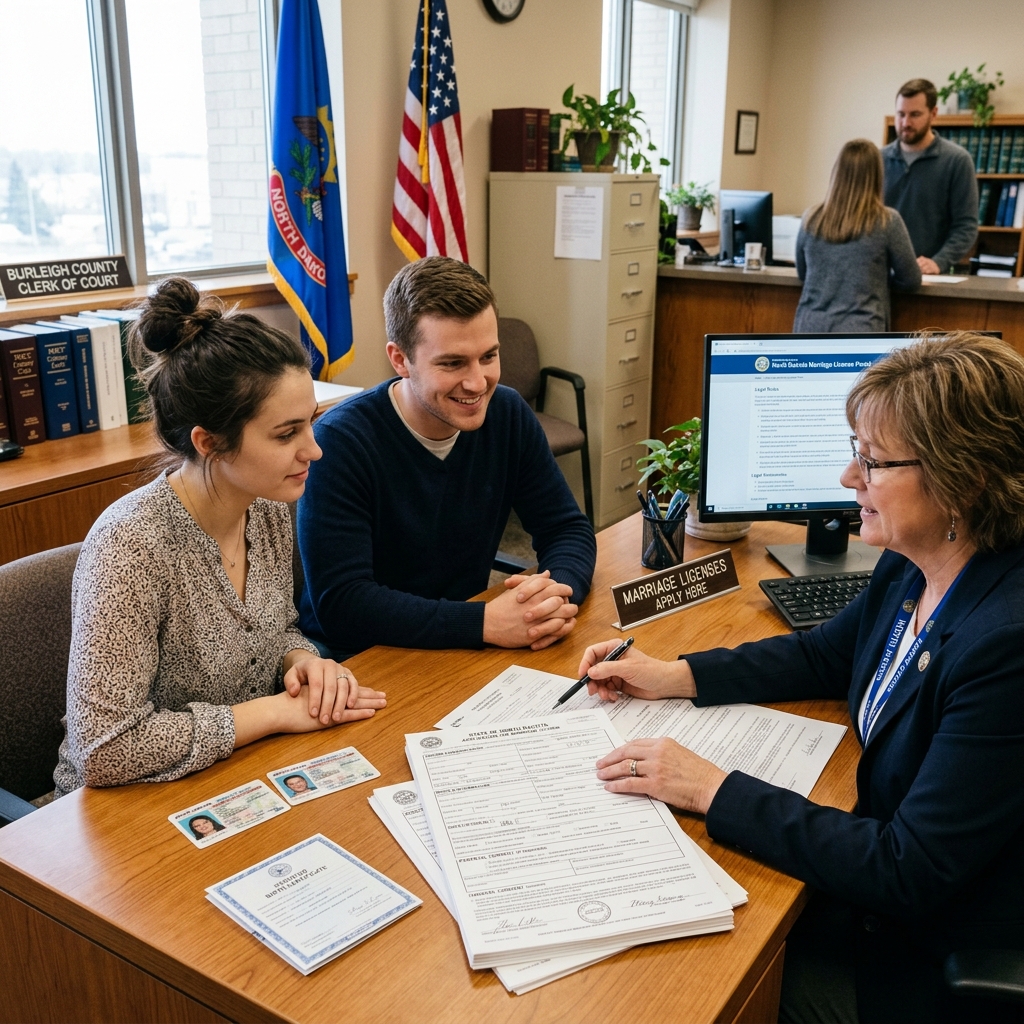
North Dakota has specific rules about who may marry, what age is considered old enough to consent, and when a parent or guardian must be involved. Understanding these requirements is essential for making sure your marriage is legally valid and properly recorded.
This guide walks through the minimum age to marry, situations requiring parental consent, basic license procedures, and related legal issues such as annulment, all based on the state’s statutes and county-level instructions.
Overview of Marriage Age Requirements in North Dakota
North Dakota law sets a clear framework for the lawful age to marry and the conditions under which minors may marry. The rules are defined in the North Dakota Century Code and applied uniformly by county offices that issue marriage licenses.
- Standard legal age: 18 years or older to marry without extra approvals.
- Minor marriage: 16 or 17 years old may marry only with proper parental or guardian consent.
- Absolute minimum age: Under 16 cannot receive a marriage license under any circumstances.
These rules are meant to ensure that both parties have the legal capacity to consent and that younger individuals receive additional protection and oversight before entering a marriage.
Legal Capacity to Marry: What the Statute Says
The North Dakota Century Code explains who is legally capable of consenting to and consummating a marriage. The key provision is NDCC 14-03-02, which defines lawful age.
| Age Group | Can a License Be Issued? | Conditions |
|---|---|---|
| 18 and older | Yes | May marry without parental or guardian consent if not otherwise disqualified. |
| 16–17 | Yes | License only with written consent of parent or legal guardian and proof of age. |
| Under 16 | No | License may not be issued even if parents or guardian consent. |
The law also makes clear that an otherwise qualified unmarried person aged 18 or older is presumed capable of consenting to marriage.
Parental Consent Requirements for 16- and 17-Year-Olds
North Dakota allows 16- and 17-year-olds to marry, but only under strict conditions designed to safeguard minors. County offices enforcing NDCC 14-03 require documented parental involvement.
Who must give consent?
- A parent with legal custody; or
- A legal guardian if there is no parent able to consent.
The consenting adult must be someone legally responsible for the minor’s care, not a relative without formal authority.
How consent is documented
- Written, signed consent: County offices typically require a signed consent form, often notarized.
- Personal appearance: Many counties require parents or guardians to appear with the minor when applying for the license and present valid identification.
- Proof of age: A state-issued ID, driver’s license, or passport is commonly requested to confirm the minor’s age.
Without this documented consent, a license cannot be issued to a 16- or 17-year-old, and any marriage could be vulnerable to later legal challenges.
Child Marriage Limits and Recent Legal Changes
North Dakota law now fully prohibits marriage for individuals under 16 years old, closing a space that previously allowed younger minors to marry under special circumstances.
According to reporting on House Bill 1450, enacted in 2019, the state removed any remaining avenues for marriage by persons younger than 16, even with court involvement. Since then:
- Age 16–17: Marriage is legal only with parental or guardian consent and proof of age.
- Under 16: No marriage license may legally be issued, and such a marriage cannot be lawfully recognized.
Advocacy groups note that this still constitutes a form of child marriage because minors under 18 may marry, but under more constrained conditions than in many states that have moved to ban all marriage under 18.
Applying for a Marriage License in North Dakota
Although this guide focuses on age, knowing the basic licensing process helps ensure that the marriage complies with both state law and local administrative requirements. County recorder or clerk offices manage license applications.
Basic steps to obtain a marriage license
- Visit a county office: Applicants go to a county recorder or designated office in North Dakota. Some counties require appointments; others accept walk-ins.
- Appear in person: Both parties must generally be present when applying for the license.
- Provide identification: Valid photo ID such as a driver’s license, state ID card, or passport is required.
- Document prior marriages: If previously divorced, applicants must provide a certified copy of the divorce decree from the court that granted the divorce.
- Pay the fee: Counties charge a license fee (often around $65), payable by approved methods such as cash or card depending on the county.
Each county may have slight procedural variations, but the underlying legal requirements—including age and consent rules—remain the same statewide.
Key license conditions to remember
- No waiting period: There is generally no mandatory waiting time between license issuance and the ceremony.
- License expiration: Licenses are typically valid for a limited period (often 60 days) and must be used before they expire.
- Social Security numbers: Applicants are commonly asked to provide Social Security numbers on the application.
- Name changes: North Dakota allows surname and, in some cases, middle name changes at the time of marriage, subject to statutory rules.
Failing to meet any of these conditions—including age and consent requirements—can prevent the county from issuing a license or may affect the validity of the marriage later.
Who May Officiate a Marriage and Witness Requirements
After obtaining a license, North Dakota requires that the marriage be solemnized by an authorized officiant and witnessed by others, ensuring proper documentation of consent.
- Authorized officiants: Judges, magistrates, and ordained ministers or priests may perform marriages in the state.
- Witnesses: The ceremony must include at least two witnesses who sign the marriage certificate along with the officiant.
- Declaration of consent: The couple must affirm their intention to marry in the presence of the officiant and witnesses.
These requirements help create a clear record that both parties freely consented, which is particularly important when one party is a minor who needed parental authorization.
Annulment Related to Age and Consent
North Dakota recognizes that some marriages may be legally defective from the outset, including when a party lacks the legal capacity to marry or when the required consent is missing. In such cases, an annulment may be available.
Common grounds tied to age and consent
- Underage without legal consent: A spouse who was under 18 and could not give legal consent may have grounds for annulment.
- 16–17 without parental consent: If a person between 16 and 18 married without required parental or guardian consent, the marriage may be annulled.
- Fraud, force, or incapacity: Annulment may also be available when consent was obtained through fraud, coercion, or when a spouse was of unsound mind or physically unable to enter marriage.
Time limits apply to annulment actions, and they vary depending on the reason. For age-related grounds, actions usually must be brought within a few years of the marriage or before the underage party reaches a certain age.
Practical Tips for Minors and Families Considering Marriage
Because marriage has long-term legal and personal consequences, families should approach marriage involving a minor with caution and full awareness of legal requirements.
- Consult legal counsel: Before a 16- or 17-year-old marries, parents and minors may benefit from legal advice about rights, obligations, and future consequences.
- Confirm county procedures: Contact the county recorder in advance to learn exactly what documentation and forms are needed, including notarized consent forms and identification requirements.
- Consider long-term implications: Marriage can affect education plans, financial responsibilities, and access to certain benefits. These practical considerations are as important as meeting legal thresholds.
- Know annulment risks: If legal requirements—especially parental consent—are not properly met, the marriage may be vulnerable to later annulment actions.
Frequently Asked Questions (FAQ)
What is the minimum age to marry in North Dakota?
The absolute minimum age is 16. Individuals under 16 cannot legally receive a marriage license, even with parental consent or court involvement.
Can a 17-year-old get married without parental consent?
No. Anyone aged 16 or 17 must have written consent from a parent or legal guardian before a county can issue a marriage license.
Is child marriage completely banned in North Dakota?
No. While marriage under 16 is barred, North Dakota still permits 16- and 17-year-olds to marry if statutory consent requirements are satisfied.
What documents do minors need to provide when applying for a marriage license?
Minors typically must provide a valid photo ID to prove age and a written, often notarized, consent statement from a parent or guardian. The parent or guardian may need to appear with identification.
What happens if someone marries without the required parental consent?
If a 16- or 17-year-old marries without legally required consent, the marriage may be subject to annulment based on lack of capacity or missing consent, provided an action is filed within the applicable time limits.
Does North Dakota impose an age gap limit between spouses?
North Dakota’s primary focus is on minimum age and consent. Unlike some jurisdictions, current official state sources emphasize lawful age and parental consent rather than a specific age-gap restriction.
Do we need a blood test or premarital counseling to marry in North Dakota?
North Dakota does not require blood tests or premarital counseling for a marriage license. The key requirements are age, identity documentation, any prior divorce records, and payment of the license fee.
Summary: Key Takeaways on Marriage Age in North Dakota
- Anyone 18 or older may marry without parental consent if otherwise qualified.
- Individuals aged 16–17 may marry only with documented parental or guardian consent and proof of age.
- Those under 16 cannot be issued a marriage license under any circumstances.
- County offices enforce these rules through identification checks, consent forms, and standardized procedures across North Dakota.
- Failure to follow age and consent rules can lead to denial of a license or open the door to annulment challenges later.
References
- North Dakota Century Code Title 14, Chapter 03 — North Dakota Legislative Assembly. 2024-01-01. https://ndlegis.gov/cencode/t14c03.pdf
- Is child marriage ever legal in North Dakota? — North Dakota News Cooperative. 2023-06-15. https://www.newscoopnd.org/factbrief-childmarriage/
- Marriage Information — Burleigh County Recorder. 2024-03-01. https://www.burleigh.gov/departments/recorder/marriage-information/
- Applying for a Marriage License — Grand Forks County, ND. 2024-02-01. https://www.gfcounty.nd.gov/government/tax-equalization-office/marriage-license-applications
- Marriage License Requirements — Ward County, ND – Official Website. 2024-04-01. https://www.co.ward.nd.us/199/Marriage-License-Requirements
- How to Get Married in North Dakota — DocDraft Legal Guides. 2026-01-10. https://www.docdraft.ai/legal-guides/getting-married/north-dakota
- Can I Get An Annulment? — Legal Services of North Dakota. 2022-05-01. https://lsnd.org/can-i-get-an-annulment/
Similar Articles








Read full bio of Sneha Tete


