
North Dakota Employment Law: Key Basics Employers Need To Know
Understand key North Dakota rules on hiring, pay, hours, leave, discrimination, and termination before workplace disputes arise.
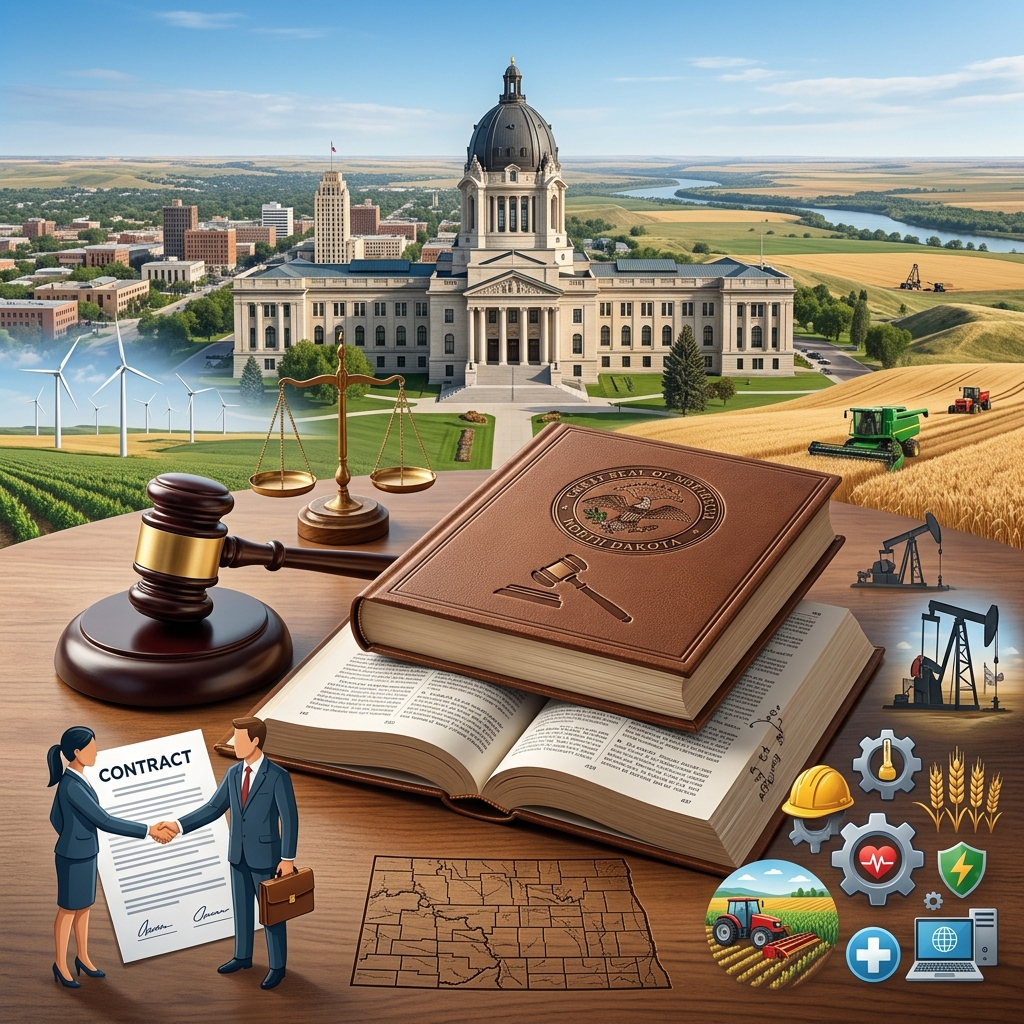
North Dakota employers and workers operate under a blend of federal labor protections and state-specific rules. Understanding how these laws interact is critical for setting fair workplace policies, avoiding costly disputes, and protecting employee rights. This guide walks through the major areas of North Dakota employment law, from hiring and pay to time off, safety, and termination.
1. The Employment Relationship in North Dakota
Most private employment in North Dakota is considered at-will. This means that, unless there is a contract stating otherwise, either the employer or the employee can end the relationship at any time and for almost any reason, so long as the reason is not illegal (such as discrimination or retaliation for protected activity). Employment contracts, collective bargaining agreements, or company policies may modify how termination must occur, but they cannot override protections in federal or state law.
Key features of the typical at-will relationship in North Dakota include:
- Either party may terminate employment without advance notice.
- Employers may set workplace rules and performance expectations, provided they do not conflict with labor and human rights laws.
- Written agreements, including offer letters and employee handbooks, may create enforceable rights if they promise specific job protections.
2. Anti-Discrimination and Equal Opportunity Protections
North Dakota supplements federal civil rights law with a broad Human Rights Act enforced by the state Department of Labor and Human Rights. The state law applies to most employers with at least one employee for more than a quarter of the year, and it governs hiring, firing, pay, promotion, and other terms and conditions of employment.
2.1 Protected Characteristics
Under the North Dakota Human Rights Act, employers may not discriminate in employment decisions based on protected characteristics such as:
- Race or color
- Religion
- Sex (including pregnancy and related conditions)
- National origin
- Age
- Physical or mental disability
- Marital status
- Status with regard to public assistance
- Participation in lawful activity off the employer’s premises during nonworking hours that does not directly conflict with essential business-related interests
These protections mirror many federal laws but also extend further in some areas, such as protections related to lawful off-duty conduct.
2.2 Disability and Reasonable Accommodation
Employers may not discriminate because of a mental or physical disability and must provide reasonable accommodations for qualified employees with disabilities, unless doing so would impose an undue hardship. Examples of accommodations include modified schedules, reassignment of non-essential tasks, or assistive technology. The employer and employee typically engage in an interactive process to identify workable solutions consistent with state policy and federal law under the Americans with Disabilities Act (ADA).
2.3 Equal Pay for Men and Women
North Dakota has a state-level equal pay law requiring men and women to be paid equally for comparable work that demands similar skill, effort, and responsibility. Differences in pay are allowed only if they are based on legitimate, non-gender factors, such as:
- Seniority systems
- Merit systems
- Production-based systems
- Bona fide factors like education, training, or experience
Employers cannot fix an equal-pay violation by lowering someone else’s pay; instead, they must raise wages to bring them into compliance.
3. Wages, Minimum Wage, and Pay Practices
North Dakota largely follows federal standards for minimum wage and adopts several additional pay-related rules, such as paycheck timing, final pay, and paid time off payouts.
3.1 Minimum Wage
North Dakota uses the federal minimum wage under the Fair Labor Standards Act (FLSA), which is currently $7.25 per hour for most non-exempt private-sector employees. Employers must also comply with any higher federal requirements that apply to specific categories of workers or federal contractors.
3.2 Pay Frequency and Pay Statements
State law requires employers to pay wages at least once each calendar month on regular paydays that are clearly communicated in advance. With each paycheck, employers must provide a written pay statement containing information such as:
- Total hours worked (for non-exempt employees)
- Rate of pay
- Gross wages and net wages
- Itemized deductions
The written pay statement requirement helps employees verify whether they are being paid correctly and assists in resolving wage disputes.
3.3 Final Paychecks and PTO Payout
When an employment relationship ends, North Dakota law generally requires all wages to be paid by the next regular payday, regardless of whether the separation was voluntary or involuntary. Involuntarily terminated employees can receive final payment by certified mail or other agreed methods.
North Dakota also requires employers to pay out earned paid time off (PTO) at the employee’s regular rate when employment ends, subject to any lawful conditions communicated in company policies. Employers may use “use-it-or-lose-it” policies for PTO if workers have a reasonable chance to use the time or know about the policy.
4. Overtime, Hours, and Break Requirements
Although North Dakota has a relatively light regulatory framework compared to some states, it incorporates key federal wage-and-hour rules and adds a specific meal-break requirement.
4.1 Overtime Pay
North Dakota follows federal overtime rules under the FLSA and also includes them in its administrative code. Non-exempt employees must be paid 1.5 times their regular rate for all hours worked over 40 in a single workweek. Overtime is calculated on a weekly basis; employers cannot average hours over multiple weeks to avoid overtime obligations.
Some employees may be exempt from overtime, typically including certain executive, administrative, professional, and outside sales employees who meet both salary and duties tests under federal law. As of recent federal regulations, the salary threshold for many white-collar exemptions is at least $684 per week, though employers should monitor updates from the U.S. Department of Labor.
4.2 Meal and Rest Breaks
North Dakota requires a 30-minute unpaid meal period in specific circumstances. An employer must provide at least a 30-minute break when:
- An employee works more than five hours in a shift, and
- Two or more employees are on duty at the same time.
Employers and employees can agree to waive the meal period, but the agreement should be clear and documented to avoid disputes. Shorter rest breaks of 20 minutes or less, if provided, are generally considered paid time under federal law.
4.3 Typical Workweek and Full-Time Status
While North Dakota law does not strictly define full-time work, in practice full-time employment is often considered to be 30 to 40 hours per week, consistent with how many federal benefits and employment regulations distinguish between full-time and part-time work. Individual employers may adopt their own policies on what counts as full-time for purposes of benefits, but they must apply those policies consistently and without discrimination.
Table: Core Wage and Hour Rules in North Dakota
| Topic | Rule | Source Level |
|---|---|---|
| Minimum wage | $7.25/hour for most non-exempt workers | Federal (FLSA), adopted by ND |
| Overtime threshold | Over 40 hours in a workweek | Federal & ND code |
| Overtime rate | 1.5 × regular hourly rate | Federal & ND code |
| Meal break | 30 minutes for shifts > 5 hours when 2+ employees on duty | State law |
| Final paycheck | Due by next regular payday after separation | State law |
5. Leave, Time Off, and Work–Life Balance
North Dakota does not mandate extensive paid leave benefits, but workers may be covered by federal leave laws and employer policies.
5.1 Vacation, Sick Leave, and Holiday Pay
North Dakota law does not require employers to provide paid vacation, paid sick leave, or paid holidays. However, if an employer voluntarily offers such benefits, the terms of the policy or contract typically govern how leave is earned, used, and paid out. Because state law can require payout of earned PTO at termination, employers should draft written policies carefully and communicate them clearly to employees.
5.2 Family and Medical Leave
Many North Dakota employers are covered by the federal Family and Medical Leave Act (FMLA), which provides eligible employees up to 12 weeks of unpaid, job-protected leave per year for certain family and medical reasons, such as the birth or adoption of a child or a serious health condition. FMLA applies to employers with at least 50 employees and includes specific eligibility requirements related to length of service and hours worked.
5.3 Jury Duty and Civic Obligations
Employers cannot fire, penalize, or threaten employees for serving on a jury in North Dakota. Although employers are not generally required to pay for time spent on jury duty, they must allow employees to participate without adverse employment actions tied to their service.
6. Youth Employment and Limits on Minors’ Work
North Dakota regulates the employment of minors to protect education and health. The state establishes a minimum age for most work, limits the hours young teens may work, and restricts hazardous occupations.
6.1 Minimum Age and Work Certificates
The general minimum age for employment in North Dakota is 14, with certain exceptions for agricultural or entertainment work under specific conditions. Minors ages 14 and 15 must usually obtain an Employment and Age Certificate before they can work. These certificates help ensure that the job and work schedule comply with state and federal child labor laws.
6.2 Hour and Time-of-Day Limits for 14- and 15-Year-Olds
North Dakota limits the times and number of hours younger teens may work, especially during the school year. Under state rules consistent with federal child labor protections, 14- and 15-year-olds may generally:
- Work between 7:00 a.m. and 7:00 p.m. (extended to 9:00 p.m. from June 1 through Labor Day)
- Work up to 3 hours on a school day and 8 hours on a non-school day
- Work up to 18 hours during a school week and 40 hours during a non-school week
Youth employment is also restricted in many hazardous occupations, such as certain construction, manufacturing, or driving jobs. Employers should review state laws and federal rules under the U.S. Department of Labor’s child labor regulations before hiring minors.
7. Workplace Safety and Enforcement Agencies
Employers in North Dakota must provide a workplace free from recognized hazards that cause or are likely to cause death or serious physical harm. Workplace safety is primarily governed by federal Occupational Safety and Health Administration (OSHA) standards, along with state agencies that oversee labor and human rights issues.
7.1 North Dakota Department of Labor and Human Rights
The North Dakota Department of Labor and Human Rights administers and enforces key state labor laws, including wage and hour requirements and anti-discrimination protections. The department:
- Investigates complaints about unpaid wages or illegal deductions
- Handles discrimination charges under the state Human Rights Act
- Educates employers and workers on their rights and responsibilities
- Publishes guidance and links to relevant statutes and administrative rules
Workers who believe their rights have been violated can contact the department for assistance or to file a formal complaint.
7.2 Workers’ Compensation and Injury Protections
North Dakota maintains a mandatory workers’ compensation system to cover medical costs and wages for employees injured on the job. While specific coverage and benefit rules are administered separately from wage-and-hour law, employers must generally maintain workers’ compensation coverage and promptly report work-related injuries, consistent with state law and insurance regulations.
8. Common Compliance Mistakes and Best Practices
North Dakota’s relatively concise set of employment statutes does not mean employers face few compliance risks. Many disputes arise from misunderstandings about how federal and state rules interact. Employers can reduce risks by focusing on several recurring problem areas.
8.1 Misclassification of Employees
Improperly treating non-exempt workers as exempt from overtime, or classifying employees as independent contractors when they act like employees, can lead to significant back pay and penalties under federal and state law. Employers should review job duties and pay structures against FLSA standards to determine whether workers are properly classified.
8.2 Inconsistent Application of Policies
Discipline, promotion, scheduling, and leave policies that are not applied consistently can give rise to discrimination or retaliation claims, even when not intended. Written, consistently enforced policies that are neutral on their face and in practice help demonstrate compliance with the Human Rights Act.
8.3 Poor Documentation
Inadequate records of hours worked, pay rates, performance issues, and accommodation discussions make it harder to defend against claims. Employers should keep detailed time records for non-exempt employees and retain documentation relating to employment decisions for appropriate periods consistent with federal and state recordkeeping requirements.
9. Frequently Asked Questions About North Dakota Employment Laws
Does North Dakota require employers to offer paid vacation or sick leave?
No. North Dakota does not require private employers to provide paid vacation, sick leave, or holiday pay. However, if an employer chooses to offer these benefits, the terms in their written policies or contracts typically control, and earned PTO may need to be paid out at termination under state law.
Can my employer fire me for no reason in North Dakota?
Because North Dakota is generally an at-will employment state, an employer may terminate an employee for any lawful reason or no stated reason at all. However, employers may not fire someone for an illegal reason, such as discrimination on a protected basis or retaliation for filing a complaint about wages or discrimination.
Am I entitled to a lunch break during my shift?
North Dakota law requires a 30-minute meal break when an employee works more than five hours and at least two employees are on duty, unless there is a written agreement to waive the break. Breaks of 20 minutes or less are typically treated as paid work time under federal law.
What should I do if I think my employer is not paying me correctly?
First, ask your employer for clarification and review your pay stubs, company policies, and any employment agreement. If the issue is not resolved, you may contact the North Dakota Department of Labor and Human Rights to file a wage claim or seek guidance on your options.
How can employers stay current on changes to North Dakota employment law?
Employers should regularly review updates from the North Dakota Department of Labor and Human Rights and monitor federal updates from the U.S. Department of Labor. Consulting with knowledgeable legal counsel and reviewing company policies annually can also help ensure ongoing compliance with both state and federal requirements.
References
- Employment and labor laws in North Dakota 2026 guide — Multiplier. 2026-01-15. https://www.usemultiplier.com/us-state-guides/north-dakota
- North Dakota Employment and Labor Laws — Paylocity. 2024-05-20. https://www.paylocity.com/resources/tax-compliance/state-laws/north-dakota/
- North Dakota employment law overview — Brightmine (formerly XpertHR). 2023-09-30. https://www.brightmine.com/us/resources/hr-compliance/north-dakota-employment-law/
- North Dakota Administrative Code Title 46, Article 2, Chapter 7 — North Dakota Legislative Branch. 2022-08-01. https://ndlegis.gov/prod/acdata/pdf/46-02-07.pdf
- Home | Department of Labor and Human Rights — North Dakota Department of Labor and Human Rights. 2025-02-10. https://www.nd.gov/labor/home
- Laws and Rules — North Dakota Department of Labor and Human Rights. 2025-02-10. https://www.nd.gov/labor/laws-and-rules
- Quick and Easy Guide to Labor & Employment Law: North Dakota — Baker, Donelson, Bearman, Caldwell & Berkowitz, PC. 2021-06-01. https://www.bakerdonelson.com/easy-guide-north-dakota
Similar Articles








Read full bio of Sneha Tete




