
Serving the Nation, Waiting for a Nation: The Struggle for Noncitizen Military Naturalization
Immigrant soldiers face immense bureaucratic barriers to citizenship despite sacrificing for the United States.
Introduction
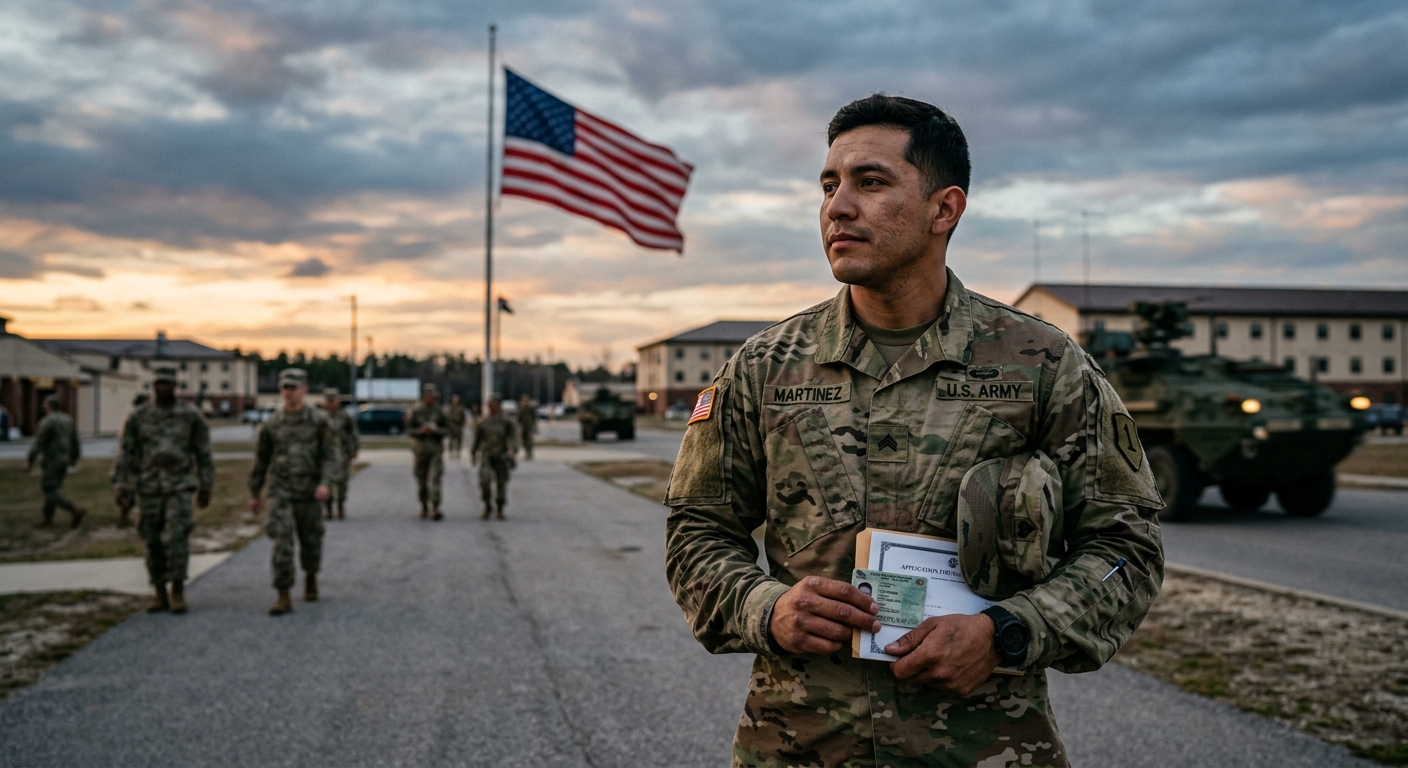
The United States Armed Forces have long relied on the courage and dedication of noncitizen service members. From the Revolutionary War to modern global conflicts, immigrants have donned the uniform, often motivated by a deep sense of patriotism for their adopted country and the promise of a modernized, expedited path to U.S. citizenship. However, the reality of military naturalization in the twenty-first century has frequently fallen short of this fundamental promise. Today, thousands of immigrant soldiers find themselves entangled in a bureaucratic labyrinth, facing extreme delays in their citizenship applications. Instead of experiencing the swift naturalization process enshrined in federal law, these service members are forced to battle administrative backlogs, policy reversals, and a severe lack of interagency coordination. The prolonged uncertainty not only jeopardizes their military careers but also places their fundamental right to reside in the United States at risk, creating a system where those who defend the nation are left waiting indefinitely for the nation to embrace them.
The Historical Context and Legal Framework
The tradition of noncitizens serving in the U.S. military is older than the nation itself. Recognizing the immense sacrifices made by these individuals, Congress established legal frameworks designed to accelerate their integration into American society. The Immigration and Nationality Act (INA) provides specific avenues for service members to bypass the traditional, often lengthy, civilian naturalization queues.
- INA Section 328: This section applies to noncitizens who have served honorably in the U.S. Armed Forces for at least one year during peacetime. It allows them to apply for naturalization without meeting the standard continuous residence and physical presence requirements, provided they file their application while still in service or within six months of an honorable discharge.
- INA Section 329: During designated periods of armed conflict or hostilities, this provision is activated. It permits noncitizens who serve honorably in active-duty status to immediately apply for naturalization, waiving any specific duration of service or age requirements. Given that the U.S. has been in a designated period of hostilities since September 11, 2001, many modern service members fall under this category.
Despite these clear legislative mandates designed to fast-track citizenship for those defending the country, the practical implementation has been heavily bottlenecked by shifting military policies, rigorous background checks, and stringent immigration enforcement priorities.
The Rise and Fall of the MAVNI Program
One of the most ambitious and ultimately controversial attempts to integrate immigrant talent into the military was the Military Accessions Vital to the National Interest (MAVNI) program. Launched in 2008, MAVNI allowed the Department of Defense (DoD) to recruit specific noncitizens—such as international students and certain temporary visa holders—who possessed critical skills vital to national security. These skills primarily included specialized medical expertise and proficiency in strategic foreign languages.
In exchange for their service, MAVNI recruits were promised an expedited path to citizenship. The program was highly successful in attracting top-tier talent. However, the political climate surrounding immigration began to shift drastically. Heightened security concerns led the DoD to mandate increasingly rigorous, multi-tiered background checks for MAVNI recruits. By 2016, the program was effectively frozen, and it was officially suspended shortly thereafter.
The suspension left thousands of recruits in a devastating state of limbo. Because they could not clear the newfound, backlogged security protocols, many were barred from shipping out to basic training. Without attending basic training, they could not obtain the honorable service designation required to apply for citizenship under INA Section 329. Reports from 2018 revealed that the U.S. Army had even begun quietly discharging some of these immigrant recruits without clear explanations, effectively closing their pathway to citizenship and rendering some vulnerable to immediate deportation.
The Anatomy of Bureaucratic Delays
The core of the current crisis lies in the fractured coordination between the Department of Defense and U.S. Citizenship and Immigration Services (USCIS). To apply for military naturalization, a service member must first secure a Form N-426 (Request for Certification of Military or Naval Service). This document, signed by an authorized military official, proves that the individual has served honorably.
Historically, obtaining this certification was a routine administrative step. However, policy changes within the DoD temporarily extended the amount of time a recruit had to serve before they were even eligible to request the N-426. Even after the certification is finally obtained, the application is handed over to USCIS, an agency historically plagued by chronic backlogs, budget constraints, and severe staffing shortages.
A comprehensive 2022 investigation by the Government Accountability Office (GAO) highlighted systemic flaws in this dual-agency process. The GAO found that naturalization applications from service members plummeted by 78 percent between fiscal years 2017 and 2018, primarily due to DoD policy alterations. Furthermore, the report revealed that the military services lacked standardized procedures to ensure the timely processing of service certifications, and that interagency monitoring between the DoD, USCIS, and the Department of Veterans Affairs (VA) was sorely lacking, creating an environment ripe for catastrophic delays.
The Human Cost and Professional Toll
The impact of these systemic delays extends far beyond paperwork; it inflicts a profound human and professional cost on the individuals who volunteered to serve. For a soldier, sailor, airman, or marine, lacking U.S. citizenship is a massive professional liability. Noncitizens are legally barred from holding security clearances. Without a clearance, service members are restricted from pursuing specialized military occupational specialties (MOS), deploying on certain critical intelligence missions, or advancing to higher ranks as officers.
Beyond professional stagnation, the psychological burden is immense. Many immigrant soldiers enlist with the understanding that their service will secure a stable, legal future for themselves and their families. When that promise is delayed indefinitely, it creates overwhelming anxiety. Temporary visas can easily expire while soldiers wait for their security clearances to clear, technically rendering them undocumented while they are actively wearing the uniform of the United States military.
Tragically, this bureaucratic failure has led to the deportation of honorably discharged veterans. In situations where citizenship applications were stalled or abandoned due to administrative confusion, veterans who later committed civilian infractions found themselves stripped of their residency and exiled to countries they barely remembered. The fear of ending up as a deported veteran casts a long, terrifying shadow over noncitizen service members currently fighting for their naturalization rights.
Legal Battles and Demands for Reform
Faced with a system that seems fundamentally broken, immigrant service members and civil rights organizations have increasingly turned to the federal court system to demand accountability. Various legal advocates have filed class-action lawsuits challenging the excessive processing delays and arbitrary discharges.
The primary legal argument often relies on the Administrative Procedure Act (APA), which mandates that federal agencies conclude matters presented to them within a “reasonable time.” Plaintiffs argue that keeping naturalization applications in a holding pattern for years violates both the APA and the clear statutory intent of the INA. In several high-profile cases, federal judges have ruled in favor of the service members, compelling USCIS to adjudicate the delayed applications and forcing the military to reconsider arbitrary discharges of MAVNI recruits.
These legal victories, while crucial for individual plaintiffs, highlight the need for systemic, sweeping reforms rather than piecemeal litigation. The fact that a soldier must sue their own government to obtain the citizenship they were legally promised is indicative of a deeply flawed administrative framework that requires immediate legislative attention.
Pathways to a Functional System
Fixing the military naturalization process requires decisive action and renewed, transparent cooperation between the Department of Defense and the Department of Homeland Security. Policy experts and advocates have proposed several key reforms to restore the integrity of the process:
- Restoring On-Site Basic Training Naturalization: In the past, USCIS officers were stationed at military basic training sites. Recruits could complete their naturalization interviews and take the oath of allegiance before even graduating from boot camp. Reinstating this initiative would drastically reduce processing times and eliminate the need for service members to chase down paperwork while deployed globally.
- Streamlining Form N-426 Processing: The DoD must enforce strict, standardized timelines across all military branches for the issuance of honorable service certifications. Bureaucratic delays at the command level should not unilaterally prevent a soldier from initiating their citizenship application.
- Improving Interagency Data Sharing: As explicitly recommended by the GAO, creating comprehensive tracking systems that monitor a noncitizen’s progress from recruitment through final naturalization would ensure that individual applications do not fall through the administrative cracks.
Key Legislation and Policies Impacting Military Naturalization
Understanding the current legal landscape requires familiarity with the primary statutes that govern the naturalization process for soldiers. The table below outlines the primary mechanisms and policies impacting service members:
| Legislation / Policy | Description | Impact on Service Members |
|---|---|---|
| INA Section 328 | Governs naturalization through peacetime military service, requiring a minimum of one year of honorable service. | Waives standard continuous residence and physical presence requirements for eligible personnel. |
| INA Section 329 | Governs naturalization during designated periods of active hostilities, with no minimum service time required. | Allows immediate application for expedited citizenship upon earning an honorable active-duty service certification. |
| MAVNI Program | Former DoD recruitment program designed for noncitizens possessing critical language or medical skills. | Brought thousands of highly skilled immigrants into the military before its controversial suspension and subsequent legal battles. |
| Kendell Frederick Act (2008) | Aims to simplify the naturalization application process for active-duty personnel stationed overseas or domestically. | Allows USCIS to utilize DoD-collected fingerprints, thereby reducing repetitive background check hurdles and delays. |
Frequently Asked Questions (FAQs)
Can a noncitizen join the U.S. military?
Yes. Lawful Permanent Residents (Green Card holders) are fully eligible to enlist in the U.S. military. In the past, specialized programs like MAVNI also allowed certain non-immigrant visa holders to enlist, though that program is currently suspended.
What causes the major delays in military naturalization?
Delays are primarily caused by a combination of stringent DoD background checks, the remarkably slow issuance of honorable service certifications (Form N-426) by military commanders, and chronic processing backlogs within USCIS.
Why is citizenship important for a military career?
Without U.S. citizenship, service members cannot obtain necessary security clearances. This restriction prevents them from accessing sensitive information, bars them from serving in specialized units, and severely limits their opportunities for promotion and career advancement across all branches.
Can immigrant veterans be deported?
Unfortunately, yes. If an immigrant veteran does not successfully complete the naturalization process during or immediately after their service, and later commits certain criminal offenses as a civilian, they can be permanently stripped of their residency and deported, despite having honorably served the country.
Conclusion
The dedication of noncitizen service members remains an indispensable cornerstone of the United States Armed Forces. These individuals willingly place their lives on the line for a country they are legally and bureaucratically fighting to call their own. The pervasive administrative delays, suspended programs, and policy barriers they face are far more than just bureaucratic inefficiencies; they represent a fundamental breach of trust between the government and its defenders. Ensuring a timely, transparent, and fair naturalization process is not merely a matter of compassionate immigration policy—it is a strict matter of military readiness, national security, and moral integrity. Fulfilling the historic promise of expedited citizenship is the absolute minimum a grateful nation owes to those who volunteer to stand on the front lines and defend it.
References
- Naturalization Through Military Service — U.S. Citizenship and Immigration Services (USCIS). 2024-10-11. https://www.uscis.gov/military/naturalization-through-military-service
- MILITARY NATURALIZATIONS: Federal Agencies Assist with Naturalizations, but Additional Monitoring and Assessment Are Needed (GAO-22-105021) — U.S. Government Accountability Office (GAO). 2022-09-14. https://www.gao.gov/products/gao-22-105021
- AP NewsBreak: US Army quietly discharging immigrant recruits — The Associated Press (Garance Burke). 2018-07-05. https://apnews.com/article/38334c4d061e493fb108a9463071bb1a
Similar Articles








Read full bio of medha deb


