
Ninth Circuit Says Dealership Service Staff Earn Overtime
Understanding how a key Ninth Circuit decision affects overtime rights for customer service workers at automobile dealerships.
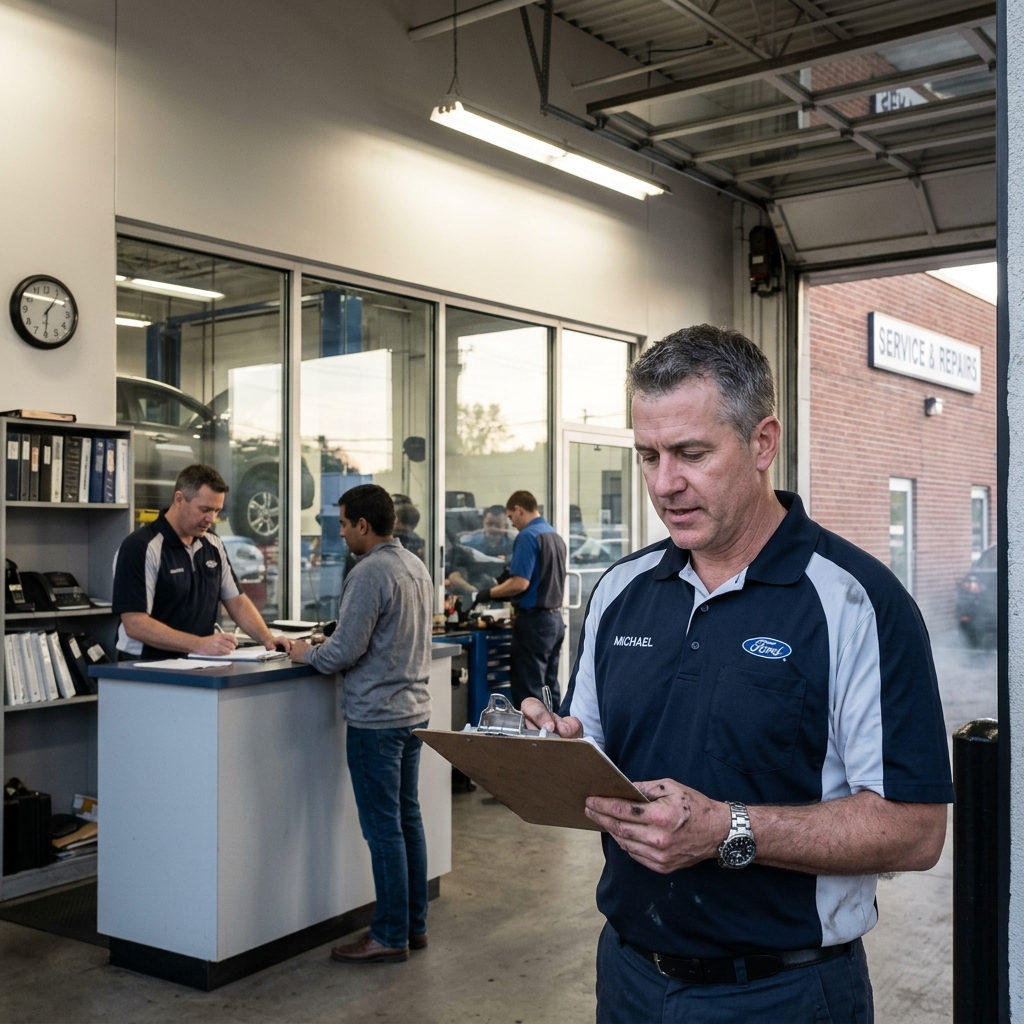
Customer-facing employees at automobile dealerships sit at the intersection of sales, service, and wage-and-hour law. In a closely watched dispute, the U.S. Court of Appeals for the Ninth Circuit held that certain dealership service workers are entitled to overtime pay under the federal Fair Labor Standards Act (FLSA), rejecting arguments that they fall within a specialized exemption for auto-industry employees.
This decision deepened a circuit split and ultimately set the stage for Supreme Court review of how broadly courts should read the FLSA exemption for “any salesman, partsman, or mechanic primarily engaged in selling or servicing automobiles” at qualifying dealerships. The case highlights how statutory wording, regulatory guidance, and judicial philosophy can significantly change whether thousands of workers qualify for overtime pay.
Background: Overtime Rules and the Auto Dealer Exemption
The FLSA generally requires covered employers to pay non-exempt employees overtime wages of at least one-and-a-half times their regular rate for hours worked over 40 in a workweek, and to keep detailed records of those hours. The statute also contains targeted exemptions for specific industries or job categories. One of those carve-outs is the auto dealer exemption in 29 U.S.C. § 213(b)(10)(A), which excuses certain dealership employees from the federal overtime requirement.
The exemption covers:
- Salesmen primarily engaged in selling or servicing automobiles, trucks, or farm implements.
- Partsmen who primarily sell vehicle parts or components.
- Mechanics who physically repair or maintain vehicles at covered nonmanufacturing dealerships.
Historically, courts read FLSA exemptions narrowly, on the theory that Congress wrote them as exceptions to a broad remedial statute designed to protect workers’ pay. Under this approach, employers had to show that employees clearly fit within the statutory terms before avoiding overtime obligations.
Who Are Dealership Service Workers?
The controversy centers on employees often referred to as service advisors or customer service writers at car dealerships. These workers are not line mechanics; they do not typically perform physical repairs themselves. Instead, they occupy a customer-facing role that mixes sales and coordination.
Typical duties include:
- Greeting customers and identifying vehicle problems and concerns.
- Recommending maintenance and repair services and explaining options.
- Preparing and updating repair orders for the service department.
- Communicating with technicians and customers about work status.
- Suggesting additional services, accessories, or parts.
Dealers have long argued that these employees are salesmen because they sell services to vehicle owners, and that they are “primarily engaged in servicing automobiles” by directing and overseeing the repair process. Workers, by contrast, have often contended that they function more like non-exempt customer service staff who should receive overtime pay when they work more than 40 hours per week.
The Ninth Circuit’s Reading: No Exemption, Overtime Required
In a key decision involving a California dealership, the Ninth Circuit concluded that service advisors do not fall within the statutory auto dealer exemption and therefore are entitled to overtime under federal law. The court relied on several interpretive tools:
- Plain language of the statute – The terms “salesman, partsman, or mechanic” did not expressly include service advisors, and the court declined to add a new category not named by Congress.
- Narrow construction of exemptions – Applying the traditional rule that FLSA exemptions should be narrowly interpreted, the court refused to stretch the exemption beyond its clear text.
- Legislative history – The court examined the history of the auto dealer exemption and found no indication that Congress intended to exempt customer service advisors who do not themselves sell vehicles or perform hands-on mechanical work.
On this reading, a service advisor is not a “salesman” in the sense the statute uses that term, because the exemption historically focused on employees selling vehicles, parts, or performing repairs, not selling service packages or acting as customer intermediaries. The Ninth Circuit therefore allowed the workers’ overtime claims to proceed.
Circuit Split and Supreme Court Involvement
The Ninth Circuit’s ruling stood in tension with decisions and practices in other jurisdictions, creating a split over whether dealerships could treat service advisors as overtime-exempt. That division brought the issue to the Supreme Court in Encino Motorcars, LLC v. Navarro, where the Court addressed the same FLSA provision and group of employees.
In a 5–4 decision issued on April 2, 2018, the Supreme Court reversed the Ninth Circuit and held that service advisors are exempt from FLSA overtime as “salesmen primarily engaged in servicing automobiles” under § 213(b)(10)(A). Justice Clarence Thomas, writing for the majority, concluded that:
- The ordinary meaning of “salesman” includes workers who sell services, not just those who sell physical goods.
- Service advisors are “primarily engaged” in servicing automobiles because they are integral to the servicing process even if they do not personally turn wrenches.
- The FLSA contains no textual basis for a general rule that exemptions must be narrowly construed, undermining the interpretive framework the Ninth Circuit used.
By reading the exemption in a more expansive, text-focused way, the Supreme Court effectively limited the reach of the Ninth Circuit’s earlier overtime-friendly interpretation and reduced the likelihood of similar claims succeeding under federal law in the auto dealership context.
Key Differences in Judicial Approaches
| Issue | Ninth Circuit Approach | Supreme Court Approach |
|---|---|---|
| Interpretation of “salesman” | Focused on vehicle sales; reluctant to extend to service-only roles. | Used ordinary meaning; included those who sell services for vehicles. |
| Scope of “servicing automobiles” | Emphasized hands-on repair or maintenance work. | Included roles integrally involved in the service process, not just mechanics. |
| Construction of FLSA exemptions | Narrowly construes exemptions as exceptions to a remedial statute. | Rejected narrow construction as a default rule; focused on text and context. |
| Outcome for service advisors | Non-exempt; eligible for overtime under federal law. | Exempt; not entitled to FLSA overtime when covered by § 213(b)(10)(A). |
Practical Implications for Dealerships
Even with the Supreme Court’s clarification, the Ninth Circuit’s reasoning remains important for understanding how wage-and-hour rights can differ between jurisdictions and between federal and state law. Auto dealers must consider several practical implications:
1. Federal vs. State Wage-and-Hour Laws
While the Supreme Court’s decision answered the federal question for service advisors under the FLSA, it did not automatically resolve how state courts interpret state overtime laws. Many states, including California, have wage-and-hour statutes and regulations that:
- Provide broader overtime protections than the FLSA.
- Use different exemption language or categories.
- Maintain the principle of narrowly construing exemptions.
As a result, a service advisor may be exempt from overtime under federal law but still entitled to overtime under a particular state’s statute, depending on how that state defines exempt categories and interprets its own exemptions.
2. Risk of Misclassification
Dealerships that automatically treat all service advisors as exempt may face significant risk if state law is more protective than federal law. Misclassification can lead to:
- Liability for unpaid overtime going back multiple years.
- Payment of liquidated damages or penalties.
- Exposure to attorneys’ fees and class or collective actions.
Employers should periodically audit job descriptions, actual duties, pay practices, and recordkeeping to ensure that classifications remain defensible under both federal and applicable state standards.
3. Documentation and Job Design
Clear documentation of service advisors’ responsibilities can help demonstrate whether they fit within the exemption as interpreted by the Supreme Court. For example, written descriptions and training materials might emphasize:
- Sales responsibilities (e.g., selling services and parts).
- Engagement in the servicing process (e.g., overseeing repair orders).
- Non-routine, higher-level decision making related to customer service and repairs.
At the same time, if a dealership prefers to treat certain employees as non-exempt and pay overtime, it can design roles with more clerical tasks and less sales and servicing responsibility, thereby avoiding borderline classification questions.
Implications for Workers
For service advisors and similar dealership employees, the Ninth Circuit’s original ruling underscored how job titles alone do not control overtime rights. What matters is the combination of federal law, state law, and the specific functions performed on a day-to-day basis.
Workers considering an overtime claim should pay attention to:
- Actual duties – Do they primarily sell services and coordinate repairs, or handle mostly clerical or customer-service tasks?
- Hours worked – Are they consistently working more than 40 hours per week without additional pay?
- Jurisdiction – Do they live in a state that offers stronger overtime protections than the FLSA?
- Written policies – How does the dealership classify them, and are time records kept accurately?
Legal counsel can help employees evaluate whether federal or state law may still provide a basis for overtime recovery despite the Supreme Court’s broader reading of the auto dealer exemption.
Compliance Checklist for Auto Dealerships
To manage risk and align with evolving case law, dealerships can use the following high-level checklist:
- Review classifications – Confirm which employees are treated as exempt or non-exempt and why.
- Compare federal and state law – Identify states where more protective wage-and-hour rules apply.
- Update job descriptions – Ensure they accurately reflect exempt duties where claimed.
- Train managers – Educate supervisors on overtime rules, recordkeeping, and off-the-clock work risks.
- Monitor legal developments – Track new court decisions or legislative changes that could affect exemptions.
Frequently Asked Questions (FAQ)
Are all service advisors now exempt from overtime under federal law?
Under the Supreme Court’s decision in Encino Motorcars, LLC v. Navarro, service advisors employed by qualifying auto dealerships are generally treated as exempt from FLSA overtime if they fit within the statutory language as salesmen primarily engaged in servicing automobiles. However, individual circumstances and job duties still matter, and state law may impose different requirements.
Does the Ninth Circuit’s ruling still have any effect after the Supreme Court’s decision?
The Supreme Court’s ruling supersedes the Ninth Circuit’s interpretation on the federal question, but the Ninth Circuit’s analysis remains part of the broader judicial conversation on how to read exemptions and may influence future cases involving other categories of workers or related state-law claims.
If my state has stricter wage-and-hour laws, which rules apply?
Employers must comply with both federal and state law. When state law is more protective of employees—for example, by offering narrower exemptions or more generous overtime rules—employers in that state must follow the stricter standard, even if federal law would allow an exemption.
Can a dealership avoid overtime liability simply by changing job titles?
No. Courts focus on the real-world duties employees perform, not the job titles assigned to them. Renaming a role “service advisor” or “sales consultant” will not create an exemption if the underlying tasks do not match the statutory criteria.
What steps should dealerships take immediately?
Dealerships should review their service department staffing models, confirm classifications in light of both the Supreme Court decision and applicable state law, update job descriptions and policies as needed, and consult legal counsel to ensure solid documentation and compliance.
References
- Ninth Circuit Rules Service Advisors at Automotive Dealerships Are Not Exempt from Overtime Pay — FordHarrison LLP. 2017-01-09. https://www.fordharrison.com/ninth-circuit-rules-service-advisors-at-automotive-dealerships-are-not-exempt-from-overtime-pay
- Supreme Court Rules Car Dealership Service Advisors Exempt from FLSA Overtime Pay — Duane Morris LLP. 2018-04-03. https://www.duanemorris.com/alerts/supreme_court_rules_car_dealerships_service_advisors_exempt_flsa_overtime_pay_0418.html
- Supreme Court Finds that Car Dealership Service Personnel Exempt from FLSA Overtime Requirements — Butler Snow LLP. 2018-04-06. https://www.butlersnow.com/news-and-events/supreme-court-finds-that-car-dealership-service-personnel-exempt-from-flsa-overtime-requirements
- How the Supreme Court’s New Overtime Decision May Affect Employers — SHRM / YouTube podcast discussion of Encino Motorcars decision. 2018-04-06. https://www.youtube.com/watch?v=wq0hgF7RqO0
- US Supreme Court Says No Overtime Pay for Auto Service Advisors — Squire Patton Boggs Employment Law Worldview Blog. 2018-04-03. https://www.employmentlawworldview.com/us-supreme-court-says-no-overtime-pay-for-auto-service-advisors/
Similar Articles








Read full bio of medha deb




